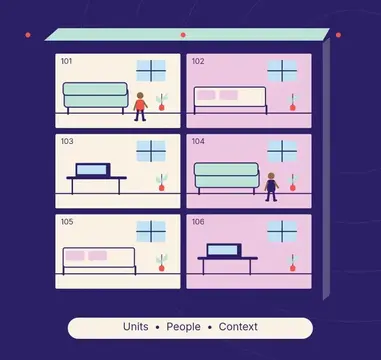
- Unit lease pricingSynced
- Unit sales pricingPosted
- Amenity pricingReady
- Storage units and boat slipsOn track
- One-time chargesApproved
Rioo Management · Pricing Strategies
Rental Pricing & Charge Management Software
Price every space deliberately
Rental pricing and charge management in RIOO sets prices and fees for every space, inside a property management system built natively on Oracle NetSuite. Lease and sale pricing, amenities, storage, boat slips, and one-time and recurring charges, all managed in one place. Bulk updates go exactly where you aim them.
| Type | Current | Market | Suggested |
|---|---|---|---|
| Studio | $1,280 | $1,340 | $1,325 |
| 1 bed | $1,520 | $1,560 | $1,555 |
| 2 bed | $1,850 | $1,820 | Hold |
Pricing is a portfolio decision, made one space at a time
A rent increase that's right for one building can be wrong for the one next door. Amenity fees, storage, parking and slips all add up to meaningful income, yet they often live in spreadsheets outside the system that bills them. RIOO keeps every price where it's charged, against the unit or amenity, so pricing decisions and billing never drift apart.
Capabilities
What you can price
Unit lease pricing
Base rent by unit, with term-based and flexible pricing.
Unit sales pricing
List and quote prices for units you sell.
Amenity pricing
Clubhouses, gyms, event spaces and other bookable amenities.
Storage units and boat slips
Ancillary spaces priced and billed like any other space.
One-time charges
Application, move-in, administrative and other single charges.
Recurring charges
Maintenance fees, utilities and services, set at lease level when terms differ by tenant.
Bulk pricing updates
Apply changes across properties, buildings or unit types, and exclude the units, properties or lease types you choose.
How it works
How does pricing strategies work in RIOO?
Pricing strategies in RIOO runs inside Oracle NetSuite. The properties, units, leases, tenants and vendors it uses are native NetSuite records, so each step updates the same data finance reports on. There is no separate system to sync, and every action keeps an audit trail. The steps below show how the work flows.
- 01
Define pricing structures
for units, amenities and ancillary spaces.
- 02
Attach charges
at portfolio, property or individual lease level.
- 03
Review and update
Run scoped bulk updates and exclude exceptions before you apply them.
- 04
Bill
Charges flow into invoicing and the tenant ledger in RIOO Finances, with no re-entry.
Insight and guardrails
RIOO surfaces market trends and pricing insights to inform decisions, and can alert you when a proposed rent or adjustment conflicts with configured local rent limits. Pricing decisions remain yours. RIOO gives you the context and the controls.
What changes
What changes when pricing strategies runs on NetSuite?
When pricing strategies runs on NetSuite through RIOO, operational work and accounting stop being two separate jobs. Transactions post to the general ledger as they happen, reports use the same records as daily work, and controls come from NetSuite roles and approvals. The changes below are the ones teams usually notice first.
- Ancillary income is capturedbecause every space has a price and a charge.
- Changes land preciselywith scoped bulk updates and explicit exclusions.
- Billing matches pricingbecause both live on the same record in NetSuite.
- Finance sees the effectin revenue reporting by property and unit.
In detail
Pricing levers to configure
Base rents
by unit type, floor, view or size
Amenity premiums
such as parking, storage, pet fees and premium finishes
Lease-term pricing
with different rates for different term lengths
Concessions
such as free months or move-in specials, recorded on the lease
Renewal increases
with rules and approvals
Commercial escalations
fixed, stepped or indexed
Governing price changes
Price changes affect revenue directly, so they deserve control. Approval workflows for discounts above a limit, logged concessions and loss-to-lease reporting keep pricing decisions visible to finance and owners.
What is a rental pricing strategy?
A rental pricing strategy is the set of rules an operator uses to decide what each space should cost: base rent by unit type, premiums for features, lease-term pricing, concessions, renewal increases and ancillary fees. In RIOO these rules live with the unit and lease records in NetSuite, so the price quoted, the lease signed and the charge billed all match.
Good pricing balances occupancy against rate. Push rents too hard and vacancy rises, along with turn costs and marketing spend; price too cautiously and loss-to-lease builds quietly across the portfolio. The discipline comes from pricing at the level where demand actually differs, such as floor, view, size or term, and from reviewing the result with data rather than instinct.
How it works
How do bulk price updates work in RIOO?
Bulk price updates in RIOO apply a change, such as a percentage increase or a new amenity fee, to a defined scope of properties, buildings or unit types, with explicit exclusions reviewed before anything is saved. The update changes asking prices on unit records and new charge templates; existing leases change only through renewals or notices.
- 01
Choose the scope
Select properties, buildings, unit types or amenity types.
- 02
Define the change
Percentage, fixed amount or a new price, with rounding rules.
- 03
Exclude exceptions
Remove units under renovation, affordable units or leases with fixed terms.
- 04
Preview
Review old and new prices side by side, with totals by property.
- 05
Approve
Changes above a threshold route to an approver.
- 06
Apply and log
Prices update, and the change is recorded with who made it and when.
Explore by topic
Pricing measures, defined
Loss-to-lease
Loss-to-lease is the gap between the market or asking rent for occupied units and the rent actually being charged under current leases. A growing loss-to-lease signals that renewals are lagging the market, and it is the main input when planning renewal increases.
Effective rent
Effective rent is the average rent over a lease after concessions such as free months or move-in discounts. Two leases with the same headline rent can have different effective rents, which matters when comparing deals or reporting to owners.
Ancillary income per unit
Ancillary income per unit is the monthly income from parking, storage, pet fees, amenity bookings and services divided by occupied units. Because RIOO prices these spaces as records with charges, the figure comes straight from billed income rather than estimates.
Mapped to NetSuite
How are concessions and incentives recorded in NetSuite?
Concessions and incentives in RIOO are recorded on the lease and reflected in charges or credits, so their effect on income is visible by property and period. Residential move-in specials typically reduce rent income when they apply, while commercial rent-free periods and incentives are usually spread over the lease term under straight-line rules.
See straight-line rent revenue recognition for the commercial treatment.

- IncentiveFree first month (residential)NetSuite treatmentCredit against the first rent chargeLower rent income in that month
- IncentiveRecurring discountNetSuite treatmentReduced recurring charge on the leaseEffective rent visible per lease
- IncentiveRent-free period (commercial)NetSuite treatmentStraight-line adjustment across the termSmoothed revenue under ASC 842 or IFRS 16
- IncentiveTenant improvement allowanceNetSuite treatmentLease incentive asset, amortisedShown separately from rent
- IncentiveWaived feeNetSuite treatmentCredit memo against the feeFee income shown net of waivers
Explore by topic
Rent increase rules by market
United States
Rent regulation is set by states and cities. California's statewide law caps annual increases for many older properties, Oregon has a statewide cap, and cities such as New York and Los Angeles run their own rent stabilisation regimes. Notice periods for increases also vary by state.
United Kingdom
Under the Renters' Rights Act in England, increases for most private tenancies are made once a year through a formal notice, and tenants can challenge an increase at tribunal. See the Renters' Rights Act guide for timing and notice details.
Australia
States and territories generally limit residential rent increases to once every 12 months and require written notice, commonly 60 days. Some also require the method of calculating increases to be stated in fixed-term agreements.
Singapore and the UAE
Singapore's private rental market has no general rent control, so increases are negotiated at renewal. In Dubai, allowable increases on renewal are linked to the official rental index, and notice of changes is required before the contract ends.
Use cases
Ancillary pricing opportunities operators often miss
Ancillary spaces and services can add meaningful income when each one is a priced record rather than an informal arrangement.
Reserved and covered parking
Price bays by location and type instead of bundling them into rent.
Storage and bike lockers
Rent them monthly with their own occupancy.
Pet rent and fees
Apply consistent pet charges where local law allows.
Amenity bookings
Guest suites, event rooms and rooftop spaces with booking fees.
Furnished and short-term premiums
Higher rates for furnished units or shorter terms.
Who is RIOO's pricing module NOT for?
RIOO's pricing module is not an algorithmic revenue management engine that sets daily rents from competitor and demand data. It manages price structures, bulk changes, concessions and guardrails, and surfaces pricing insight, but operators who want fully automated daily repricing typically use a specialist tool and apply its recommendations in RIOO.
It is also not designed for hospitality-style nightly rates with seasonal yield rules. Short-stay operators pricing by night and channel should look at a property management system built for bookings, while RIOO focuses on lease-based residential and commercial pricing.
Talk to a specialist
See pricing strategies on your own portfolio.
Bulk updates go exactly where you aim them.
Can I exclude certain units from a bulk price change?
Yes. Bulk updates can be scoped selectively, excluding specific units, properties or lease types before anything is saved. Typical exclusions are affordable or regulated units, units under renovation and leases with fixed contractual terms. The preview shows old and new prices side by side, so exclusions can be checked before the change is applied.
Can recurring charges be set per lease rather than portfolio-wide?
Yes. Recurring charges can be configured on individual leases, so tenants in the same property can have different fee structures, such as one paying for two parking bays and another for storage. Portfolio or property templates set the defaults, and lease-level overrides record exactly what each tenant agreed to pay.
Does RIOO flag prices that exceed local rent-control limits?
RIOO can alert you when a proposed rent or adjustment conflicts with rent rules you have configured, such as an annual cap or a once-a-year increase limit. Rules differ widely between US cities and states, UK legislation, Australian states and Dubai's rental index, so configured rules should be reviewed with legal advisers.
Do pricing changes affect existing leases automatically?
Generally no. Changing asking prices updates unit records and charge templates for new leases, while existing leases change only through a renewal, an agreed amendment or a valid rent increase notice. That protects contractual terms and gives tenants the notice local law requires. Confirm the exact behaviour during implementation.
Can different lease terms carry different rents?
Yes. Rent can vary by lease term, for example a lower monthly rate on a 12-month lease than on a 6-month lease, reflecting turnover risk. Term-based prices are set on the unit or unit type and offered at quoting, so the agreed rent flows directly into the lease and its charge schedule.
How do we see the effect of a price change on revenue?
Because prices and charges live on the same NetSuite records, rent income reports by property and unit type show the effect as new leases and renewals take up the new prices. Comparing asking rent with in-place rent, through loss-to-lease reporting, shows how much of the change is still to flow through.
Related
Related to pricing strategies


Put a deliberate price on every space you manage.