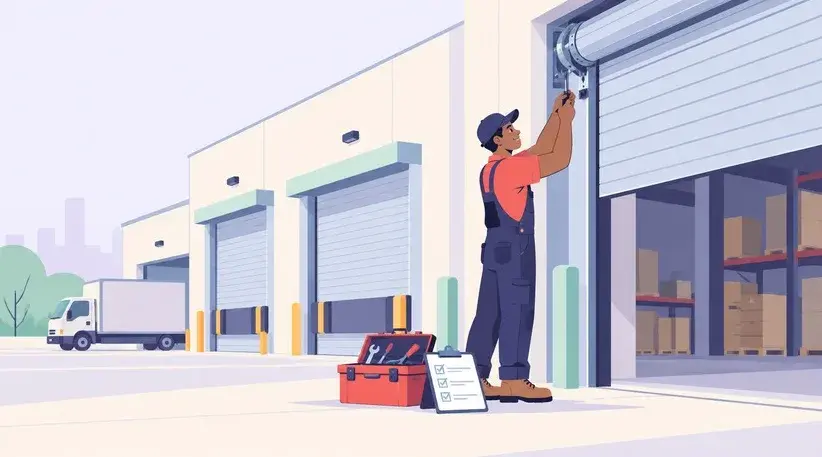
Structured leases for warehouses, industrial units and open land
Rioo Professional · Industrial & Warehouses
Industrial Property Management Software on NetSuite
Keep the doors open and the assets running
Industrial buildings, warehouses and open land, managed with long-term leases, space use, asset maintenance, safety documentation and vendor coordination in one system, and the financials native to NetSuite.
Gateway Logistics Park
| Unit | Type | Rent | Status |
|---|---|---|---|
| WH-1 | 62,000 sf | $38,750 | Current |
| WH-2 | 48,000 sf | $30,000 | NNN |
| WH-3 | 35,000 sf | $21,875 | Expiring |
Downtime is the tenant's problem, and then yours
For an industrial tenant, a broken dock leveler or a failed sprinkler inspection isn't an inconvenience. It stops operations. Industrial landlords live with high-value equipment, strict safety requirements and long, financially significant leases. The system has to keep assets running, keep safety records current and keep lease obligations visible years in advance.
What is industrial property management software?
Industrial property management software manages warehouses, distribution centres, light industrial units, flex space and open yards: long net leases, recoveries, critical building systems, safety inspections and capital planning. RIOO Professional does this inside Oracle NetSuite, so the lease, the asset register and the accounting for each site share one set of records.
Industrial portfolios look simple on a rent roll, with fewer tenants and longer terms, but the obligations are dense. A single lease can split roof, structure, paving, sprinklers and dock equipment between landlord and tenant, and a missed inspection can affect insurance cover for the whole building. The value of the system is keeping each obligation attached to the asset and the lease clause it comes from.
How RIOO helps
Long-term leases, fully visible. Agreements, renewal schedules, escalations, compliance milestones and lease terms in one dashboard, so long leases don't hide deadlines.
Space and occupancy. Track occupancy and storage allocation across buildings and yards to see how space is used.
Preventive maintenance for critical assets. Scheduled servicing, asset condition monitoring, inspection tracking and vendor coordination move maintenance from reactive to planned.
Safety and compliance records. Safety inspection logs, compliance documentation and audit-ready reports kept together.
Financial oversight. Rental income, operating expenses and capital expenditure tracked in real-time dashboards, with portfolio reporting from NetSuite.
Leasing management →Maintenance planning & scheduling →Utilities & assets →Income & expense management →
How it works
How does industrial & warehouses work in RIOO?
Industrial and warehouse portfolios run on RIOO in five steps, from registering sites and critical assets to reporting income, operating costs, capital spend and compliance by site. Lease terms and asset schedules set up in the first steps drive the billing, maintenance and reporting that follow.
- 01
Register
sites, buildings, units, yards and critical assets.
- 02
Capture
lease terms, escalations and milestones.
- 03
Schedule
preventive maintenance and safety inspections.
- 04
Coordinate
vendors and track completion.
- 05
Report
income, OpEx, CapEx and compliance by site.
How it works
How are industrial net leases billed and reconciled?
Industrial net leases are billed as base rent plus the tenant's share of taxes, insurance and operating costs, usually as monthly estimates reconciled once a year. In a triple-net lease the tenant bears most property costs; RIOO records which costs the lease makes recoverable, bills estimates, and produces the year-end reconciliation from actual NetSuite expenses.
- 01
Abstract the lease
Record base rent, escalations, the recoverable cost categories, caps and the tenant's share of the building or park.
- 02
Bill base rent and estimates
Monthly invoices carry rent and estimated taxes, insurance and operating costs as separate items.
- 03
Code actual costs
Property tax bills, insurance premiums and service contracts post as vendor bills to recoverable cost pools.
- 04
Handle direct-paid costs
Where the tenant pays utilities or services directly, nothing is billed, but evidence of payment can be stored on the lease.
- 05
Reconcile annually
Compare estimates billed with the tenant's share of actual cost, applying caps and exclusions.
- 06
True up
Invoice the balance due or issue a credit, with a statement the tenant can audit. See CAM reconciliation software.
Compare
Which industrial building systems need planned maintenance?
Industrial buildings need planned maintenance for the systems that stop tenant operations or affect safety when they fail: sprinklers and fire alarms, roofs, dock equipment, HVAC, electrical distribution and paving. RIOO holds each system as an asset with its service schedule, responsible party and inspection evidence, so obligations are visible per site.
Service intervals should follow the applicable codes, insurer requirements and manufacturer guidance for each site.
| Building system | Why it matters | Typical evidence kept in RIOO |
|---|---|---|
| Sprinklers and fire alarms | Life safety and insurance conditions | Inspection certificates and test reports |
| Roof | Water ingress damages stock and structure | Survey reports, repair history, warranty |
| Dock levelers and doors | Failures stop loading operations | Service records and repair work orders |
| HVAC and rooftop units | Temperature control for goods and staff | Service visits and filter changes |
| Electrical distribution | High loads and safety testing | Test certificates and thermal surveys |
| Paving and yards | Heavy vehicle wear and trip hazards | Condition surveys and resurfacing costs |
In detail
What can RIOO do for industrial & warehouses?
RIOO gives industrial and warehouse landlords seven core capabilities: structured net leases, an asset registry, recurring safety inspections, vendor scheduling, a tenant portal, capital and operating cost tracking, and multi-site reporting. Each one works from the same NetSuite records, so a lease clause, an asset and its costs stay connected.
Asset registry with service history, warranties and lifecycle planning
Recurring inspections for fire, safety and critical equipment
Vendor scheduling and performance tracking
Tenant portal for service requests and invoices
CapEx and OpEx tracking by property
Multi-site reporting across entities
What we don't overclaim
Industrial software marketing often promises logistics optimization, security monitoring or automated layout reconfiguration. RIOO is a property management and property accounting platform.
In detail
Industrial specifics
RIOO keeps obligations, recoveries and capital assets visible, which matters because a single tenant can be most of a property's income.
Large single-tenant leases with triple-net structures
Tenant responsibility for maintenance, with landlord obligations defined by lease
Yard, dock and parking areas as leasable or chargeable space
Long-term escalations and options
Roof, structure and paving as major capital assets
Use cases
Which questions decide landlord or tenant repair responsibility?
Five lease questions decide whether a repair belongs to the landlord or the tenant in an industrial building. RIOO stores the answers on the lease abstract, so a work order can show who pays before a vendor is booked, which avoids repairs being paid by the owner and never recovered.
Which elements does the tenant repair?
Many net leases give the tenant interior, dock and equipment repairs, such as dock levellers, doors, lighting and the tenant's own racking. Record the split on the lease abstract by element, so a work order raised for a dock door shows who pays before a vendor is booked.
Who owns roof, structure and foundations?
These are often retained by the landlord, even in triple-net leases, because they are long-life structural elements. Check whether the lease lets the landlord recover their cost, and whether the tenant must report defects promptly, because both affect who pays and how quickly repairs are arranged.
Is replacement treated differently from repair?
Some leases split ordinary repair from capital replacement, so a tenant fixes a heating unit but the landlord replaces it at end of life. Capture that distinction on the lease, because it decides whether a cost is a recoverable operating expense or a capital item on the landlord's books.
Are costs recoverable through service charges?
Landlord-performed work may still be recoverable from tenants through service charges or operating expense recoveries, subject to caps and exclusions in the lease. Tag each cost to its recovery pool when the bill is approved, so year-end reconciliations include it and nothing the lease allows is left unrecovered.
What must be returned at lease end?
Reinstatement and dilapidations clauses define the condition at handback, such as removing racking, repairing floors or restoring office fit-outs. Record those obligations and the move-out date on the lease, so inspections, schedules of dilapidations and any settlement are planned well before the tenant leaves the building.
Mapped to NetSuite
How do industrial repairs and capital projects post to NetSuite?
Industrial repairs and capital projects post to NetSuite according to what they are: routine repairs are operating expenses coded to the site, replacements that extend an asset's life are capitalised as fixed assets, and tenant-responsible repairs are rebilled. RIOO carries the site, building and asset on each transaction so the treatment is visible in reports.
See fixed assets and depreciation for how capitalised work is depreciated.

- Industrial eventDock door repairRIOO recordWork order with vendor billRepairs expense for the site
- Industrial eventRoof replacementRIOO recordCapital project with vendor billsFixed asset, depreciated through FAM
- Industrial eventTenant-caused damageRIOO recordWork order flagged as rechargeableInvoice to the tenant
- Industrial eventAnnual sprinkler inspectionRIOO recordRecurring maintenance taskRecoverable operating expense
- Industrial eventPaving resurfacingRIOO recordProject linked to the yard assetCapitalised or expensed per policy
In detail
How do industrial leases differ by market?
Industrial leases differ by market in how repair and cost obligations are framed, and RIOO records those terms per lease rather than assuming one model. A portfolio across the US, UK, Australia, Singapore and the UAE can therefore keep each market's lease structure intact while reporting on one NetSuite ledger.
United States
Triple-net leases are common, with tenants paying taxes, insurance and maintenance, and reconciliations each year.
USUSD01
United Kingdom
Full repairing and insuring leases place most repair costs on the tenant, with dilapidations claims at lease end.
UKGBP02
Australia
Net leases recover outgoings, and GST at 10% applies to commercial rent and recoveries.
AUAUDGST03
Singapore
Many industrial sites sit on land leased from JTC, so head-lease terms and land rent need tracking alongside sub-leases.
SGSGD04
United Arab Emirates
Many logistics sites sit in free zones whose authorities set their own leasing rules, and commercial rent is generally subject to 5% VAT.
AEAEDVAT05
Who is RIOO for industrial property NOT for?
RIOO for industrial property is not a warehouse management or yard management system. RIOO serves the landlord: leases, recoveries, building assets, inspections and accounting. Tenants managing inventory, slotting, dock appointments or fleet movements need operational logistics software, which can sit alongside the landlord's systems but is not replaced by RIOO.
It is also not a building automation or security monitoring platform. RIOO can store inspection results and alarm test evidence, but live sensor data, access control and CCTV stay in dedicated building systems.
Industrial & warehouses in practice
A five-site logistics portfolio has sprinkler systems, rooftop units and dock equipment on different service intervals. Every interval is a recurring task in RIOO. Inspection certificates are stored on the asset. When a tenant reports a jammed door, the vendor gets a work order with the door's full service history, and the repair cost posts to that site's expense line.
What changes
What changes when industrial & warehouses runs on NetSuite?
When industrial & warehouses runs on NetSuite through RIOO, operational work and accounting stop being two separate jobs. Transactions post to the general ledger as they happen, reports use the same records as daily work, and controls come from NetSuite roles and approvals. The changes below are the ones teams usually notice first.
- Less unplanned downtimefor tenants.
- Audit-ready safety records
- No missed lease milestoneson long-term agreements.
- Clear CapEx planningfrom asset history.
Checklist
Industrial lease abstract checklist
- Leased area for buildings, yards, trailer parking and outdoor storage.
- Base rent, escalation type and review dates.
- Recoverable cost categories, caps, exclusions and tenant share.
- Repair split for roof, structure, dock equipment and paving.
- Insurance obligations and required certificates.
- Renewal, expansion and termination options with notice dates.
- Reinstatement and dilapidations obligations at lease end.
Talk to a specialist
See industrial & warehouses on your own portfolio.
Industrial buildings, warehouses and open land, managed with long-term leases, space use, asset maintenance, safety documentation and vendor coordination in one system, and the financials native to NetSuite.
How does RIOO streamline industrial maintenance?
RIOO streamlines industrial maintenance by putting preventive schedules, asset condition notes, inspection tracking and vendor coordination on one platform. Each critical system, such as sprinklers, dock equipment or rooftop units, has its own service history, and every work order carries the site and asset, so repair costs post to the right property in NetSuite.
How does RIOO support safety and compliance?
RIOO supports industrial safety and compliance by keeping inspection logs, certificates and compliance documents on the asset and site they relate to, with recurring tasks for each required inspection. Teams can see what is due or overdue by site, and audit-ready reports show completed inspections with their evidence when insurers or authorities ask.
How are industrial leases managed?
Industrial leases are managed as structured records in RIOO, covering the full lifecycle: base rent, escalations, recoveries, repair obligations, renewals, options and milestones. Those terms drive billing and reminders automatically, and asset managers see every lease's position in one dashboard, which matters when a single tenant provides most of a site's income.
Can RIOO manage open land as well as buildings?
Yes. RIOO manages open land as well as buildings, including yards, storage land and trailer parking, as commercial property types with their own leases, rent and recoveries. Land can be linked to the site it serves or managed as a separate property, and its income and costs report alongside warehouses in NetSuite.
Can RIOO track yards, trailer parking and outdoor storage?
Yes. RIOO can record yards, trailer parking and outdoor storage as leasable or chargeable areas linked to the site, either within a building lease or as separate agreements. Each area can carry its own rent, recovery share and occupancy status, so income from outdoor space is reported alongside the warehouse it serves.
Related
Related to industrial & warehouses



Keep every site safe, serviced and on schedule.