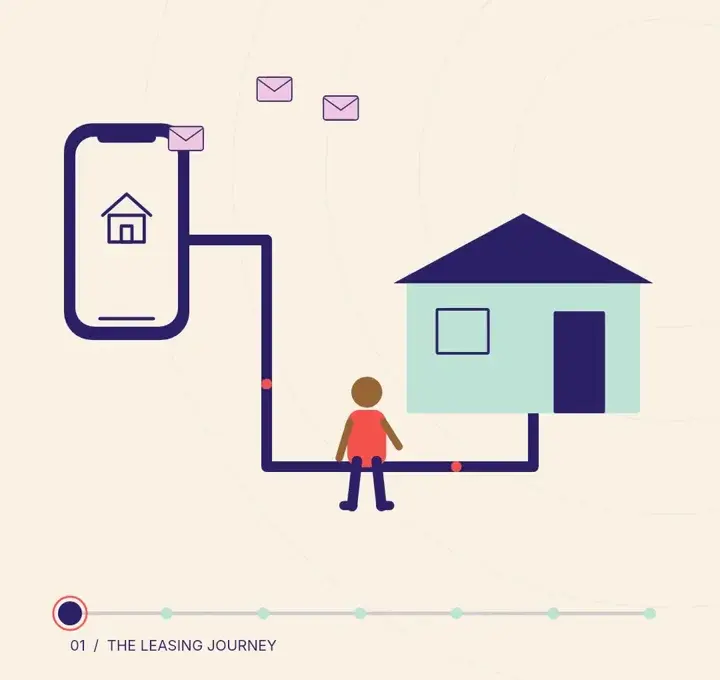
- Unit specifications and availabilityOn track
- Flexible pricingApproved
- ListingsLive
- Digital agreementsSynced
- EscalationsPosted
Rioo Leasing & Sales · Leasing Management
Lease & Leasing Management Software on NetSuite
Lease faster, with terms that bill themselves
Leasing management in RIOO runs the lease from listing to renewal inside a property management system built natively on Oracle NetSuite. Unit specifications, flexible pricing, listings, digital agreements, escalations, early termination terms, renewals and analytics, managed in one place and connected to the ledger.
Leases · expiring soon
| Unit | Tenant | Ends | Status |
|---|---|---|---|
| 3C | A. Novak | In 45 days | Offer sent |
| 5F | K. Mensah | In 60 days | No response |
| 7A | D. Rossi | In 75 days | Renewed |
A lease is a financial instrument
Residential or commercial, a lease defines a stream of charges over time, often with escalations, concessions, options and termination terms. Getting those terms right at signing decides whether billing is right for years. RIOO treats the lease as the structured source of every charge, not a PDF filed after the fact.
What is lease management software?
Lease management software records every lease as structured data, covering parties, units, dates, rent, deposits, escalations, concessions, options and documents, and uses those terms to drive billing, renewals and reporting. RIOO manages residential and commercial leases inside Oracle NetSuite, so each lease term produces its charges as NetSuite transactions from the start date.
The distinction that matters is between storing a lease and running it. A document repository holds the signed PDF; lease management software turns its terms into schedules that bill, remind and report without anyone retyping them. That is why errors at signing are so costly: a wrong escalation date or a concession entered as a note rather than a term will repeat on every invoice until someone notices.
How it works
How does leasing management work in RIOO?
Leasing management in RIOO runs in six stages, from preparing a unit to monitoring expiries. The agreement executed in stage four becomes the source of every charge in stage five, so billing, deposits and escalation schedules start from the same terms the tenant signed.
- 01
Prepare
the unit, with specifications, pricing and media.
- 02
Market
it on your channels.
- 03
Convert
inquiries to applications and screened applicants.
- 04
Execute
the agreement digitally with every party.
- 05
Activate
Charges, deposits and escalation schedules are created, and billing begins on the start date.
- 06
Monitor
leasing performance and upcoming expiries.
How it works
How does a lease renewal run in RIOO?
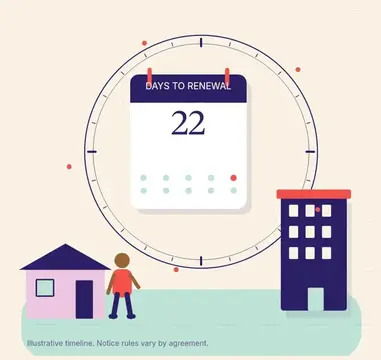
A lease renewal in RIOO runs as a dated workflow that starts a set number of days before expiry, such as 90 days for residential or 12 months for commercial. RIOO prepares the offer from current terms and your pricing rules, tracks the response, and on signature updates the lease and regenerates future charges from the new start date.
- 01
Renewal window opens
The workflow starts on the configured day before expiry and assigns the lease to an agent.
- 02
Offer prepared
New rent is proposed from pricing strategies and any rent increase rules for the jurisdiction.
- 03
Offer sent
The tenant receives the offer in the portal or by email, with the notice period your rules require.
- 04
Response tracked
Accepted, countered or declined offers are recorded with dates.
- 05
Renewal signed
E-signature captures every party, and the executed version is stored with its audit trail.
- 06
Charges regenerated
Future rent and recurring charges update from the renewal start date; a decline opens the move-out process instead.
In detail
What can RIOO do for leasing management?
RIOO leasing management covers ten capabilities, from unit availability and pricing to digital agreements, escalations, renewals and leasing analytics. Each one works from the structured lease record in NetSuite, so marketing, leasing, finance and maintenance all see the same terms and dates for every unit.
Unit specifications and availability
that leasing, marketing and maintenance share.
Flexible pricing
by term, unit type and season, drawn from your pricing strategies.
Listings
on your channels and connected listing services.
Digital agreements
from your templates, with multi-party e-signature.
Escalations
scheduled in the lease and applied on their effective dates.
Early termination terms
with penalties and settlement documented.
Renewal workflows
that start a set number of days before expiry.
Communications and feedback
at defined lease milestones, such as after move-in or at six months.
Leasing analytics
availability, conversion, time to lease and expiries.
Tamper-evident records
Signed agreements are stored with an audit trail, so the executed version can't be altered.
Lease data that drives everything
Parties, unit, term dates, rent, escalations, deposits, recurring charges, concessions, options and documents. When these are structured on the lease rather than written only in a PDF, billing, renewals, reporting and accounting all run from the same terms.
Compare
Which lease terms should be captured as structured data?
Every lease term that changes money, dates or obligations should be captured as structured data rather than left in the document: rent, deposits, escalations, concessions, recurring charges, term dates, options and parties. In RIOO, each structured term drives a specific downstream action, which is what keeps billing and reminders accurate for the full term.
| Lease term | What it drives in RIOO |
|---|---|
| Parties and guarantors | Who is billed, who signs and who is notified |
| Unit or suite | Occupancy, unit income and work-order context |
| Start, end and notice dates | Billing start, renewal workflow and expiry reports |
| Base rent and frequency | The recurring billing schedule |
| Escalations | New rent on each effective date |
| Concessions and rent-free periods | Zero or reduced charges, and straight-line adjustments where used |
| Deposits | Deposit receipt and liability tracking to refund |
| Recurring charges | Parking, pets, storage, utilities or service charges |
| Options and break clauses | Dated reminders for asset and leasing teams |
Mapped to NetSuite
How do lease charges reach the NetSuite general ledger?
Lease charges reach the NetSuite general ledger as invoices generated from the lease's billing schedule, using items mapped to income accounts. Deposits post to a liability account, concessions reduce the amount billed or post to a contra-revenue account, and each transaction carries the property, unit and lease, so reports reconcile without exports.

- Lease activityLease activatedNetSuite recordBilling schedule created, no GL entry
- Lease activityRent dueNetSuite recordInvoice to the tenant customer record
- Lease activityDeposit collectedNetSuite recordDeposit receipt held as a liability
- Lease activityConcession appliedNetSuite recordReduced charge or contra-revenue line
- Lease activityEscalation effectiveNetSuite recordNew invoice amounts from the effective date
- Lease activityEarly termination feeNetSuite recordOne-time invoice to fee income
Residential and commercial in one engine
Residential leasing is about volume and speed. Commercial leasing is about complexity: escalations, options, recoveries and longer terms. RIOO supports both from the same leasing engine, so mixed portfolios don't need two systems or two processes.
Use cases
What do lease signing rules require in each market?
Lease signing rules in each market decide which documents a tenant must receive, whether the lease must be registered and when duty is paid. RIOO stores templates, disclosures and registration references per jurisdiction, so the signing step produces the right package for each property rather than one generic agreement.
United States
Electronic signatures are generally valid under federal and state e-signature laws, and many states require specific disclosures, such as lead-based paint notices for older homes.
United Kingdom
Landlords in England must give tenants prescribed documents, such as deposit protection information, and tenancy terms are changing under the Renters' Rights Act. See Renters' Rights Act readiness.
Australia
Residential leases use standard forms set by each state or territory, with bond lodgement after signing. See RIOO in Australia.
Singapore
Stamp duty on tenancy agreements is paid to IRAS within a set period after signing. See RIOO in Singapore.
United Arab Emirates
Dubai tenancy contracts are registered through Ejari, which tenants need for utilities and residency services. See RIOO in the UAE.
Who is RIOO lease management NOT for?
RIOO lease management is not general contract lifecycle software for non-property agreements such as supplier or employment contracts. It is built for landlords and property operators managing leases of their own space, where each lease drives billing, deposits and occupancy. Corporate occupiers tracking leases they rent from others should confirm lessee-side scope first.
It is also not designed for nightly or weekly holiday bookings, which need reservation and channel management tools rather than lease workflows.
Leasing management in practice
An office tenant's lease includes a 3% annual escalation, a rent-free fit-out month and a break option at year three. In RIOO, those terms are captured at signing. The free month bills at zero, the escalation applies on its anniversary without anyone setting a reminder, and the break date appears on the asset manager's expiry report two years before it matters.
What changes
What changes when leasing management runs on NetSuite?
When leasing management runs on NetSuite through RIOO, operational work and accounting stop being two separate jobs. Transactions post to the general ledger as they happen, reports use the same records as daily work, and controls come from NetSuite roles and approvals. The changes below are the ones teams usually notice first.
- Shorter vacancywith a faster path from inquiry to signature.
- Billing accuracyfrom structured lease terms.
- No missed escalationsor renewal windows.
- Clear leasing performanceby property, unit type and agent.
Checklist
Lease abstract quality checklist
- Every party, guarantor and notice address is recorded.
- Start, end, notice and option dates match the signed document.
- Base rent, frequency and first billing date are correct.
- Escalations have type, rate or amount, and effective dates.
- Concessions are entered as terms, not as notes.
- Deposit amount and holding method follow the jurisdiction's rules.
- Recurring charges use the right items and income accounts.
- The executed agreement is attached and locked.
Talk to a specialist
See leasing management on your own portfolio.
Unit specifications, flexible pricing, listings, digital agreements, escalations, early termination terms, renewals and analytics, managed in one place and connected to the ledger.
Can multiple parties sign the same lease?
Yes. Multiple parties can sign the same RIOO lease in one coordinated e-signature workflow: co-tenants, guarantors, landlord representatives and managers each sign from their own device, in the order you set. The lease activates only when every required signature is complete, and the executed version is stored with its audit trail.
Are signed leases protected from changes?
Yes. Signed leases are stored as executed agreements with an audit trail, so the signed version cannot be altered after the fact. Later changes, such as rent amendments, renewals or early terminations, are recorded as separate dated amendments on the lease, which keeps the original agreement and every change visible for audits and disputes.
Can feedback surveys trigger at lease milestones?
Yes. Feedback surveys can be configured to trigger at defined lease milestones, such as a week after move-in, at six months or before the renewal window opens. Responses are kept on the tenant's profile, so leasing and property teams can spot service problems early and use the feedback in renewal conversations.
Does RIOO forecast occupancy demand?
RIOO planning tools use historical occupancy, lease expiries and current leasing activity to support occupancy forecasts by property and unit type. Teams use them to anticipate vacancies, plan pricing and schedule turns ahead of peak move-out periods. Confirm the forecast horizons and data sources available for your portfolio in a demo.
Does RIOO send adverse action notices?
RIOO screening workflows support configurable notices at each stage, including notices to applicants who are declined or approved with conditions based on screening results. Your team remains responsible for the legal content of each notice and for meeting the requirements of each jurisdiction.
Can a lease be signed for more than one unit?
Yes. A single RIOO lease can cover more than one unit or space, such as an apartment with a parking space and storage, or a commercial tenant with several suites. Each space keeps its own rent and occupancy, while the tenant receives one coordinated invoice and the lease stays the single record of the agreement.
Related
Related to leasing management



Sign the lease once. Bill it correctly for its whole term.