Property management, built natively on Oracle NetSuite

Request a demo

Platform

Six connected areas on one NetSuite system of record.

Solutions

Start from the places you manage, the business you run, your role or the workflow you want to fix.

NetSuite

Property management built natively on NetSuite, not synced to it.

Integrations

External tools exchange data with RIOO. Core property and financial records stay in NetSuite.

Markets

Localised pages for the five markets RIOO serves, with the rules that change how property is run.

Resources

Answers for choosing, implementing and running property management on NetSuite.

Company

The team behind the NetSuite-native property platform.

Platform · Finances

Rent collection services: a managed workflow from due date to resolved

RIOO gives property teams a structured collections operation: delinquency queues by property, reminder cadences, late fees and grace periods applied consistently, payment plans, escalation rules and reporting. Every step is recorded on the tenant ledger in NetSuite, so collections, finance and property managers work from the same balance.

What does rent collection involve after the due date?

Most rent is paid on time. The work is in the rest: payments that fail, tenants who pay late or in part, disputes about charges, and accounts that need a plan or legal action. Rent collection services is the operational process that handles those cases fairly, consistently and within the law.

This page covers that collections operation. For tenant payment channels such as the portal, app and autopay, see online rent collection tools. For the overall capability, from charges to accounting, see collecting rent payments.

TriggercaughtmissedAlert raisedFound lateTask assignedManual chaseResolved on recordExposure grows

Why does collections need its own process?

Late rent is the largest controllable risk to a property's cash flow. Without a written process, follow-up depends on individual staff, fees are applied inconsistently, legal deadlines are missed and residents are treated differently, which creates fair housing risk. A defined workflow with automatic steps fixes all four.

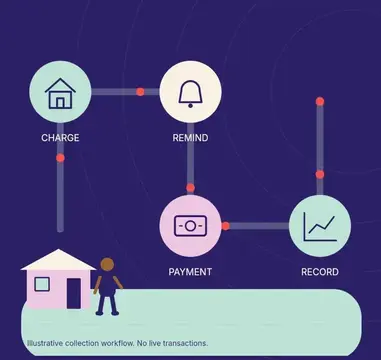
1Charge2Invoice3Pay4Apply5Reconcile

Which collections metrics matter most?

Track the collection rate by a set day each month, arrears by age bucket, number of residents on payment plans and their completion rate, notices served, legal referrals, write-offs as a share of billed rent and recovery from former residents. Review them by property each month.

Unapplied cashTracked liveArrears ageTracked liveOn-time paymentsTracked liveAutopay useTracked live

Compare

What is a delinquency workflow?

A delinquency workflow is the fixed sequence of steps a property team follows when rent is late: reminders, late fees, a formal notice, a payment plan offer, a demand or notice to pay or quit, and finally referral to legal action or a collection agency. A written workflow treats every resident consistently and keeps the team within local law.

Set timings to follow your lease and local law.

Delinquency workflownoun · property managementA written workflow treats every residentconsistently and keeps the team within locallaw. Set timings to follow your lease and localTypical stepRecord in RIOO1 to 3Glossary
Day after due dateTypical stepRecord in RIOO
1 to 3Friendly reminder with pay linkMessage on the tenant timeline
After grace periodLate fee posts if allowedLate fee invoice
7 to 10Formal late noticeNotice on the lease
10 to 15Payment plan offerPlan schedule against open invoices
Per local lawNotice to pay or quitNotice with service date
After notice expiresLegal referralStatus and documents on the lease

How it works

How does a delinquency workflow run?

A delinquency workflow runs on a timeline from the due date: autopay runs and reminders go out on day 0, a late fee applies after the grace period, staff contact the tenant and offer a payment plan, then formal notices follow under local law, with each step recorded.

Payment…Matches invoice?YesNoReview…DueAuto-appliedInstantUpdate ledger
  1. 01

    Day 0, due date

    Rent is due; autopay runs; a reminder goes to tenants without autopay.

  2. 02

    After grace period

    Unpaid accounts receive a late notice; the late fee posts where allowed.

  3. 03

    Queue

    Accounts appear in the property's delinquency queue, sorted by amount and age.

  4. 04

    Contact

    The manager calls or messages, records the outcome, and agrees a payment date or plan.

  5. 05

    Follow-up

    Missed promises trigger the next step automatically.

  6. 06

    Formal notice

    If required, a jurisdiction-specific notice is generated and served, with the ledger as evidence. See the US state law library.

  7. 07

    Resolution

    The balance is paid, a plan completes, or the account moves to legal or post-move-out recovery.

How do you keep collections fair and compliant?

Apply the same rules to every tenant on the same terms, document every contact, respect local limits on late fees, notice periods and contact methods, and pause automated reminders when a dispute or hardship arrangement is in place. RIOO's configuration and records make consistency visible; the policy itself should follow your counsel's guidance.

Document retentionReminder setRole permissionsUp to dateAudit trailUp to datePolicy checksEvidence stored

Use cases

How should payment plans be structured?

Payment plans should be structured with written terms covering amounts, dates and what happens if a payment is missed; instalments the tenant can realistically meet; current rent kept up to date alongside arrears; automatic reminders; and a clear review point if the plan fails.

Residentportal / appBankand GL postedCheque scanACHCardAutopay$160M+ monthly rent through RIOOApplied to ledger instantly
01

Written terms

Amounts, dates and what happens if a payment is missed.

02

Realistic instalments

Sized to what the resident can pay alongside current rent.

03

Current rent first

Plans cover arrears, with ongoing rent still due on time.

04

Fee treatment

Decide whether late fees are paused while the plan is kept.

05

Automatic tracking

Missed instalments trigger follow-up without manual checks.

How it works

How do you collect from former residents?

You collect from former residents by completing the move-out inspection and itemising deductions, applying the deposit, sending a final statement within the legal deadline, following up through the forwarding address, and passing unpaid balances to a collection agency or writing them off.

Hi Omar,Rent due on the 1st$3,500Pay nowPaymentsAmenitiesVisitorsPackagesPaymentreceivedRequestscheduled
  1. 01

    Complete the move-out inspection and itemise deductions.

  2. 02

    Apply the deposit to unpaid charges.

  3. 03

    Send a final statement within the legal deadline.

  4. 04

    Offer a payment arrangement before referral.

  5. 05

    Refer remaining balances to an agency if policy allows, and record the referral.

  6. 06

    Write off uncollectable balances with approval and an audit trail.

Checklist

Which rules limit collections activity?

The rules that limit collections activity include late-fee caps and grace periods by state or city, notice requirements before eviction, restrictions on partial payments, debt collection laws for former residents, housing programme rules, and limits on when and how often tenants can be contacted.

Receivables agingWestgateCurrent$145k1–30$109k31–60$26k61–90$19k90+$13kDay-3 reminderautoLate feeautoArrangementauto
  • Late-fee caps and grace periods by state or city.
  • Required notice content, delivery method and waiting periods before filing.
  • Fair debt collection rules when third parties collect.
  • Protections for residents in certain housing programmes.
  • Temporary local moratoriums or emergency rules.
  • Fair housing: apply the same policy to every resident.

Why does NetSuite-native matter for collections?

Collections conversations go wrong when the manager's balance and the accountant's balance differ. In RIOO the tenant ledger is the NetSuite customer record, so the delinquency queue, the aged receivables report and the general ledger all show the same number. RIOO reports $160M+ collected in monthly rent on riooapp.com.

Why it mattersBank feeds by handPayments unappliedArrears found lateCash in limbonumbers

In detail

What does RIOO provide for collections teams?

RIOO provides collections teams with delinquency queues by property, age bucket and amount, automated reminders and late fees, payment plans with instalment tracking, notice templates, a contact history on every account, and reporting on collection rates, all on NetSuite tenant ledgers.

Delinquency queues

Lists of past-due accounts by property, age bucket and amount, assigned to the right manager or collections specialist.

Reminder cadences

Automated texts and emails before the due date, on the day, after the grace period and at set intervals, with templates per jurisdiction.

Late fees and grace periods

Fees calculated by property or lease terms and local caps, applied automatically after the grace period.

Payment plans

Agreed instalments recorded on the account, with reminders and tracking of each instalment.

Disputes

Charges under dispute flagged, with notes and evidence, so reminders pause where appropriate.

Escalation

Rules that move accounts from reminders to calls, formal notices and, where necessary, legal referral.

Notes and evidence

Every call, message, promise to pay and notice recorded on the tenant record.

Reporting

Collections rate, delinquency by age, promises kept and recovery after move-out.

What is the difference between in-house collections and a collection agency?

In-house collections cover current residents and recent arrears, where the relationship still matters and the goal is to keep the resident paying. Collection agencies usually handle balances from former residents after move-out, working on commission. Before referral, the balance should be final, with deposit deductions applied and an itemised statement sent.

GGross-upEEstoppelSStraight-line rentNNOI

Who is RIOO's collections workflow NOT for?

RIOO's collections workflow is not for licensed debt collection agencies, and it does not provide legal representation in eviction proceedings. It supports operators collecting their own rent, or rent on behalf of owners, using their own staff, gateways and NetSuite ledgers.

Strong fitNot a fitMixed portfoliosSingle small…Finance-led teamsNo ERP plannedRuns NetSuiteVacation rentalsHonest fit check

Compare

Which collections metrics should you track?

The collections metrics to track are collection rate by due date and month-end, delinquency by age bucket, autopay and online payment adoption, payment plan success, late fees waived, write-offs and bad debt. The table explains what each metric shows about your collections process.

Tenant ledger · Unit 18Oak PlazaRefDescriptionAmountL-01Metric$70.00L-02What it shows$40.00L-03Collected vs billed$60.00L-04Workload and risk$115.00L-05Policy consistency$70.00Payment posted
MetricWhat it shows
Collected vs billed (month to date)Overall collection performance
Delinquency by age bucketWhere balances are getting older
Accounts on payment plansWorkload and risk
Promise-to-pay kept rateEffectiveness of conversations
Late fees charged vs waivedPolicy consistency
Recovery after move-outEffectiveness of final-account follow-up

Talk to a specialist

See rent collection services on your own portfolio.

Every step is recorded on the tenant ledger in NetSuite, so collections, finance and property managers work from the same balance.

FAQ

Rent collection services FAQs

Still curious? Ask the team.

What are rent collection services?

Rent collection services are the processes that follow up unpaid rent: reminders, late fees, payment plans, escalation and formal notices, plus reporting on delinquency. RIOO provides the software workflow that property teams use to run these steps consistently on NetSuite tenant ledgers, with every action recorded on the account.

Does RIOO collect rent on our behalf?

No. RIOO is software that your own team uses to bill rent, take payments and run collections. Payments are processed through integrated gateways directly into your bank accounts, and RIOO does not hold funds or act as a collection agency for your residents or tenants.

Can late fees be automated?

Yes. RIOO can apply late fees automatically once the grace period ends, using rules set per property or lease, such as a flat amount or a percentage of rent. Keep each rule within the limits your advisers confirm for each state or country, because late-fee caps and grace periods vary widely.

Can we set up payment plans for tenants?

Yes. Payment plans in RIOO are recorded on the tenant's account with instalment dates and amounts, and reminders go out before each instalment. Staff can see which instalments were kept or missed, and the plan's terms and history stay on the ledger as evidence if further action is needed.

How does RIOO help with evictions for non-payment?

RIOO keeps the tenant ledger, notices served and contact history that support an eviction filing for non-payment, and generates jurisdiction-specific notices from templates. Staff can export a clear payment history for the court. Every legal step, from notice to filing, should follow your counsel's advice.

Can late fees be waived?

Yes. Late fees in RIOO can be waived with a recorded reason and an approval, for example for a first-time late payment or a bank error. Requiring a reason and approver keeps waivers consistent across properties and auditable, and reports show how many fees were waived and by whom.

Can collections notices be sent automatically?

Yes. Reminders and collections notices can be generated on a schedule from your RIOO workflow, such as a reminder on the due date and a past-due notice after the grace period. Formal notices with legal effect are queued for staff review before sending, so wording and timing stay compliant.

How are write-offs recorded?

Write-offs in RIOO post in NetSuite against the tenant balance and the bad debt expense account, with an approval step and a recorded reason. The former resident's ledger keeps the written-off amount for any later recovery, and reports show write-offs by property and period for finance and owners.

Should we report rent payments to credit bureaus?

Many operators report positive rent payments to credit bureaus to help residents build credit, which can also encourage on-time payment. It requires resident consent and a reporting partner that sends payment data to the bureaus. Consider it as a resident benefit rather than a collections tool.

How do we treat residents on housing assistance?

For residents on housing assistance, track the resident's share and the agency's share of rent separately on the ledger, so collections only chase the amount the resident actually owes. Follow programme rules on late fees, notices and payment timing, which often differ from your standard collections policy.

Can owners see delinquency for their properties?

Yes. Owner reporting in RIOO includes aged receivables, delinquency by tenant and collection rates for each property the owner holds. Because the data comes from NetSuite ledgers, owners see the same figures as your finance team, and statements can show collections alongside income and expenses.

Bring last month's delinquency list. We'll turn it into a workflow.