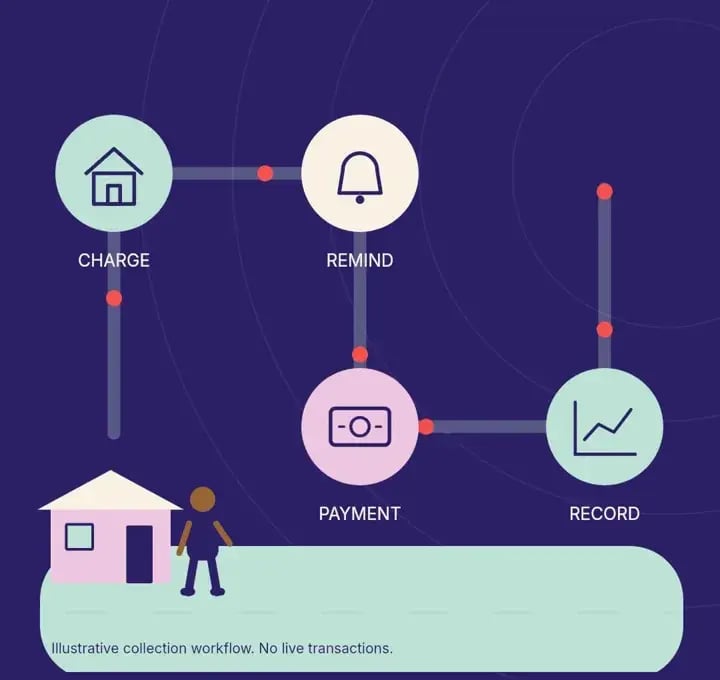
- Automated billingReady
- Branded invoicesOn track
- Online paymentsApproved
- Payment allocation rulesLive
- Reminders and delinquency alertsSynced
Rioo Finances · Rent Collection & Payments
Online Rent Collection & Payment Software
Rent is due on the 1st. The ledger knows by the 2nd.
Online rent collection in RIOO is part of a property management system built natively on Oracle NetSuite. Branded invoices, online payment through connected gateways, reminders, late fees, grace periods and deposits. Every payment posts to the tenant ledger and the general ledger, so collections and accounting never disagree.
Rent collection · July
| Property | Billed | Collected | Status |
|---|---|---|---|
| Harbor View | $412k | $398k | On track |
| Oak Park | $188k | $171k | Follow up |
| Maple Court | $96k | $95k | On track |
Applied to tenant ledgersReal time
Collections is a finance job
Rent collection often sits with leasing, but its consequences land in finance: receivables, cash position, delinquency and the month-end close. That's why RIOO places collections in RIOO Finances. A payment isn't just marked "received." It's applied, posted and visible in the receivables report the moment it lands.
How it works
How does rent collection & payments work in RIOO?
Rent collection & payments in RIOO runs inside Oracle NetSuite. The properties, units, leases, tenants and vendors it uses are native NetSuite records, so each step updates the same data finance reports on. There is no separate system to sync, and every action keeps an audit trail. The steps below show how the work flows.
- 01
Charges generate
from the lease's rent schedule and recurring fees.
- 02
Invoices go out
by email and appear in the tenant portal.
- 03
Tenants pay
online, set up recurring payments, or pay by other accepted methods.
- 04
Payments apply
to the tenant ledger by your allocation rules.
- 05
The GL updates
Cash and receivables reflect the payment, with no batch import.
- 06
Exceptions surface
so late or partial payments trigger reminders, fees or a manager review.
Explore by topic
How payment application works
Oldest charge first
The default for most residential portfolios: each payment settles the oldest open charge, which keeps aging reports clean and late fees fair.
Rent before fees
Some jurisdictions and lease forms require rent to be paid before fees or other charges. RIOO can apply payments in a configured priority order.
Specific invoice
Commercial tenants often pay against a named invoice; payments apply exactly as remitted, with unapplied cash held on account.
In detail
What can RIOO do for rent collection & payments?
RIOO handles rent collection & payments with capabilities built on NetSuite records rather than a separate database. Each capability below works with the same properties, leases, tenants and ledger, so operations and finance see one version of the data. Capabilities are configured to your policies during implementation, without custom code for routine changes.
Automated billing
from lease charges: rent, recurring fees and one-time charges.
Branded invoices
configurable per property to reflect its identity.
Online payments
through connected gateways (Cardknox, AsiaPay and Cybersource are in the directory), plus recurring automated collections that tenants authorize once.
Payment allocation rules
Apply partial payments to the oldest balance, current rent, or a custom order set by your policy.
Reminders and delinquency alerts
with configurable timing.
Late fees and grace periods
set by property or lease.
Security deposits
tracked from collection to refund.
Rent-change notices
issued in line with configured notice periods.
Transaction history
visible to your team and to tenants in the portal.
Seeing risk early
RIOO flags tenants whose payment patterns suggest risk, and shows the data clearly so managers can act early with a reminder, a conversation or a review of terms. RIOO informs the decision. Your team makes it.
Collections the resident appreciates
A clear balance, a pay button, a receipt and a history. Residents get what they expect from any modern service, from any device, at any hour.
In detail
Collection practices that reduce delinquency
Because payments post with property context, delinquency reports reflect today's position rather than last week's batch.
Make paying easy
portal, mobile and recurring payments.
Send reminders before the due date, not just after.
Apply late fees consistently, under the lease and local law.
Offer payment plans with clear documentation.
Review delinquency weekly, by property and age.
Use cases
Three pages, three angles on rent collection
RIOO covers rent collection from three directions. This page is the overall capability; the other two go deeper on one side of it.
Collecting rent payments (this page)
Charges, billing schedules, payment application, receipts and the accounting behind every rent payment.
Online rent collection tools
The tenant-facing channels: portal, mobile app, autopay and payment methods. See online rent collection tools.
Rent collection services
Collections operations: delinquency, reminders, payment plans, notices and the managed follow-up workflow. See rent collection services.
In detail
Billing patterns RIOO handles
Monthly residential rent
Fixed rent plus recurring charges such as parking, storage and pet rent, billed on the same date.
01
Commercial rent with escalations
Fixed steps or CPI-linked increases applied on the review date without manual edits. See commercial lease administration.
02
Recoveries and service charges
Monthly estimates for CAM or service charges, reconciled at year-end. See CAM reconciliation.
03
Utility recharges
Submetered or RUBS-allocated utilities added to the tenant's bill. See resident utility billing.
04
Proration
Partial-month rent at move-in and move-out calculated from lease dates.
05
Concessions and free rent
Discounts recorded as concessions so income reporting stays accurate.
06
Deposits, prepayments and credits
Not every receipt is rent. Security deposits are held as liabilities until move-out; prepayments sit as customer credits and apply to the next invoices automatically; concessions post as credits against the charge they relate to, so reports show both gross rent and the concession. Because each of these is a distinct NetSuite record, the rent roll, aging and deposit register stay accurate without manual reclasses at month-end.
What is a good rent collection rate?
Most operators track the share of billed rent collected by a set day, such as the fifth or the end of the month. Targets depend on asset class and market, so compare each property with its own history and the portfolio average rather than a single industry number.
Mapped to NetSuite
From lease to cash, mapped to NetSuite

- Rent eventLease charges set upNetSuite recordBilling schedule on the leaseRecurring rent, parking and fees
- Rent eventRent billedNetSuite recordInvoiceReceivable by tenant and property
- Rent eventTenant paysNetSuite recordCustomer paymentCash applied to oldest or chosen charges
- Rent eventDeposit takenNetSuite recordDeposit liabilityHeld apart from income
- Rent eventPayment returnedNetSuite recordPayment reversalCharges reopen, fee optional
- Rent eventBank clearedNetSuite recordBank reconciliationCash matched to deposits
Explore by topic
Collection by portfolio type
Residential
High volume, small balances and predictable dates. Autopay adoption, reminders and online payment drive results, and late fees must follow state or local limits.
Commercial
Fewer, larger invoices with escalations, recoveries and sometimes tax. Tenants pay against specific invoices, often by bank transfer, and disputes are usually about recoveries rather than rent. Statements and clear invoice detail matter more than portals.
Student and affordable housing
Payments may come from guarantors, parents or housing agencies as well as residents. Separate ledgers for tenant share and subsidy keep each payer's balance clear, and installment schedules follow the academic year or programme rules.
What changes
What changes when rent collection & payments runs on NetSuite?
When rent collection & payments runs on NetSuite through RIOO, operational work and accounting stop being two separate jobs. Transactions post to the general ledger as they happen, reports use the same records as daily work, and controls come from NetSuite roles and approvals. The changes below are the ones teams usually notice first.
- Current receivablesat any moment.
- Less manual chasingwith automated reminders and fees.
- Fewer disputeswith transparent history and consistent allocation.
- A cleaner closebecause collections already live in the GL.
A month of rent, day by day
Day 25 of the prior month. Charges for next month are generated from lease billing schedules, including escalations, recoveries and utility recharges.
Day 28. Residents get a reminder with a portal link; autopay customers get notice of the upcoming debit.
Day 1. Invoices are issued; autopay payments run; receivables appear by property in NetSuite.
Days 2 to 5. Online payments apply automatically. Bank deposits are matched and unapplied cash is reviewed daily.
Day 6. Late fees post where the lease and local law allow, and the delinquency workflow starts. See rent collection services.
Month-end. Collection rates, aging and deposit balances are reviewed; nothing needs reconciling between systems.
By the numbers
Rent collection & payments on RIOO, in numbers
Figures as published on riooapp.com.
$160M+collected in monthly rent through RIOO
400K+tenants and occupants
180k+units managed across the US and Canada
52+states
Checklist
Rent collection health checklist
- Share of rent paid online and by autopay, by property.
- Collection rate by the 5th and by month-end.
- Aging of receivables in 0–30, 31–60 and 60+ day buckets.
- Returned payments and the reasons behind them.
- Unapplied cash older than seven days.
- Deposits held reconciled to the liability account.
Talk to a specialist
See rent collection & payments on your own portfolio.
Every payment posts to the tenant ledger and the general ledger, so collections and accounting never disagree.
How are partial payments applied?
Partial payments are applied by the rules you configure: oldest balance first, current rent first, or a custom order by charge type. The tenant ledger then shows exactly which charges were paid and which remain open, and late fees follow the remaining balance according to your grace period settings.
Can tenants set up automatic recurring payments?
Yes. Tenants can authorise recurring payments in the portal, and collections then process automatically on the scheduled date each month. Each payment is applied to the tenant ledger and posted to NetSuite like any other receipt, and a failed attempt notifies both the tenant and the property team.
Can each property have its own invoice branding?
Yes. Invoice templates can be configured at property level, so each building or brand shows its own logo, address, payment instructions and footer text. Tenants see the brand they rent from, while finance still bills, collects and reports all properties from the same NetSuite account.
Does RIOO decide what to do about high-risk payers?
No. RIOO flags tenants whose payment behaviour suggests risk, such as repeated late or returned payments, and surfaces the ledger history and contact record. Your managers decide what action to take, whether a reminder call, a payment plan or formal notice, in line with policy and local law.
Which payment gateways are supported?
RIOO's integrations directory lists Cardknox, AsiaPay and Cybersource as connected payment gateways. Whichever gateway is used, payments are applied to the tenant ledger and posted to NetSuite in the same workflow. Payment methods and country coverage vary by gateway, so confirm support in each market you collect in.
Does RIOO support partial payments?
Yes, where your policy allows. Partial payments apply to open charges according to your allocation rules, and the remaining balance stays visible on the tenant ledger and aging reports. Some jurisdictions treat accepting partial rent as affecting possession rights, so set acceptance rules per property with legal advice.
Can rent and recoveries be billed on one invoice?
Yes. Rent, recoveries, utilities and fees can be billed together on one invoice, with each line posting to its own income account in NetSuite. Tenants receive a single document to pay, while finance can still report rent, service charges and utility income separately by property.
How are security deposits accounted for?
Security deposits post to a liability account, not income, and are tracked by tenant and lease until they are applied or refunded. At move-out, approved deductions offset the liability and the balance is refunded, so the deposit account for each property reconciles to deposits held on active leases.
What reports show collection performance?
Collection performance is shown by the rent roll, receivables aging, collection rate by property, delinquency lists and unapplied cash reports, all running on live NetSuite data. Because payments post as they arrive, managers can check collections mid-month instead of waiting for a reconciled month-end report.
Can owners see collections for their properties?
Yes. Owner statements show billed, collected and outstanding amounts by property, drawn from the same NetSuite records the property team uses. Statements can be scheduled for email delivery, and access for owners can be restricted to their own properties so co-owners in other assets see nothing of each other.
Related
Related to rent collection & payments


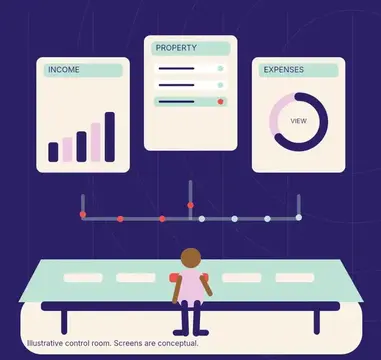

Collect rent and close the books on the same records.