- Tenancy historyOn track
- Lease agreements and billingApproved
- Payments and delinquencyLive
- Service requestsSynced
- CommunicationsPosted
Rioo Management · Unified Customer View
Tenant Management Software on NetSuite
Know the person, not just the unit
One profile brings together tenancy history, payments, service requests, communications and documents, across every unit and property a customer is connected to. It covers the whole relationship, from first inquiry to renewal.
Customer · L. ChenUnit 1B
| Record | Detail | When | Status |
|---|---|---|---|
| Lease | LS-2291 · 12 mo | Month 1 | Active |
| Invoice | INV-8812 | This month | Paid |
| Request | SR-1182 | This week | Open |
The cost of a fragmented customer
A resident calls about a charge. The leasing agent sees the lease, the accountant sees the ledger, and maintenance sees the open request that probably explains why they're upset. Nobody sees all three. A unified customer view puts the whole relationship on one screen, so the first person who answers can actually help.
What is a unified customer view in property management?
A unified customer view in property management is one profile per tenant, resident or commercial occupier that brings together their leases, units, charges, payments, deposits, requests, messages and documents. In RIOO, the profile is built on the NetSuite customer record, so the balance staff see is the receivable finance reports, not a copy.
Most property teams already have this information; it is just spread across a leasing system, an accounting package, a maintenance tool and several inboxes. A unified view changes the quality of conversations more than the quantity of data. The person answering a call about a charge can see the charge, the lease clause behind it and the open repair that is probably the real complaint.
How it works
How does unified customer view work in RIOO?
A unified customer view in RIOO works by attaching each stage of the relationship to the same profile, from first inquiry through tenancy and multiple units to renewal or move-out. Nothing needs merging later, because every module writes to the one profile as the relationship develops.
- 01
Inquiry
A prospect's first contact creates a record that follows them through application and screening.
- 02
Tenancy
Once a lease is signed, billing, payments and requests attach to the same profile.
- 03
Multiple units
If a customer rents more than one space, such as an apartment plus parking, or several commercial suites, everything consolidates into one profile.
- 04
Renewal or move-out
The full history stays on record after the lease ends, for reference and compliance.
Compare
How does RIOO build one profile from many records?
RIOO builds one profile by attaching every record created during a customer's relationship to the same person, from first inquiry to move-out. Each module writes to that profile as it works, so nobody has to merge contacts or copy notes, and the history survives staff changes, unit transfers and renewals.
| Relationship stage | Records attached to the profile |
|---|---|
| Inquiry | Lead source, contact details and showing notes |
| Application | Application form, documents and screening results |
| Lease | Signed agreement, terms, deposits and addenda |
| Billing | Invoices, payments, credits and current balance |
| Service | Maintenance requests, work orders and satisfaction feedback |
| Communication | Notices, reminders, announcements and replies |
| Inspections | Move-in and move-out condition reports with photos |
| Move-out | Deposit disposition, forwarding address and final statement |
In detail
What's in the profile
Tenancy history
across every unit and property, past and present.
Lease agreements and billing
including charges, deposits and rent schedules.
Payments and delinquency
with transaction history and current balance.
Service requests
and their status.
Communications
with automated notices and reminders logged automatically.
Documents and inspections
applications, screening results, signed leases and inspection reports.
Contacts and addresses
managed centrally.
Custom alerts
such as a notification three days after rent is overdue, a lease nearing expiry or an escalated request.
What a profile can include
Contact details and household members, current and past leases, units and properties, balances and payment history, deposits, service requests, communications, documents and notes.
In detail
Which profile signals help predict renewals?
Profile signals that help predict renewals are the patterns that show whether a resident or tenant is settled or frustrated. RIOO keeps them on one profile, so leasing teams can segment customers before the renewal window opens and spend their time where an early conversation is most likely to change the outcome.
Payment consistency
On-time payments and autopay enrolment usually signal stability.
01
Service experience
Repeated or slow-to-close requests are a common reason residents leave.
02
Portal engagement
Regular logins and responses to notices suggest an engaged customer.
03
Household changes
New occupants, pets or parking needs can mean a unit transfer rather than a move-out.
04
Feedback scores
Survey responses at lease milestones give an early read on satisfaction.
05
Mapped to NetSuite
How does the profile connect to NetSuite customer records?
The RIOO profile connects to NetSuite through the customer record, which holds the tenant's balance, transactions and contacts. Leases, units and requests link to that customer, so one person or company renting several spaces has one receivable and one history, while reports can still break income and occupancy down by unit and property.

- Profile elementTenant or residentNetSuite recordCustomer
- Profile elementCo-tenants and guarantorsNetSuite recordContacts linked to the customer
- Profile elementCommercial tenant with several sitesNetSuite recordCustomer with leases at each property
- Profile elementBalance and agingNetSuite recordCustomer receivables
- Profile elementPayments and creditsNetSuite recordCustomer payments and credit memos
- Profile elementDeposit heldNetSuite recordDeposit transactions against the customer
For residential and commercial relationships
In residential, the profile helps community managers resolve issues quickly and keep residents longer. In commercial, it gives account-level context across suites, sites and contracts, which is useful when a retailer with several locations negotiates a renewal.
Privacy by role
Not everyone needs to see everything. Role-based access lets maintenance see contact and access details without financial data, while finance sees balances without unnecessary personal notes.
How it works
How do teams use the profile in a renewal conversation?
Teams use the RIOO profile in a renewal conversation to see the whole relationship before making an offer: payment history, open and past requests, satisfaction feedback, the current rent and the market rent. That context helps decide between a standard increase, a retention offer or a conversation about an unresolved service issue first.
- 01
Open the profile
Review payment record, balance and any returned payments over the lease term.
- 02
Check service history
Look for repeated or open requests that could affect the decision to stay.
- 03
Read recent messages
Note complaints, compliments or changes in household.
- 04
Compare rents
Set the current rent against the proposed renewal rent and local increase rules.
- 05
Make the offer
Send the renewal from the profile, so the offer and response are logged.
Use cases
How should tenant data be governed in each market?
Tenant data should be governed by the privacy law of each market where a property sits, because profiles hold personal, financial and sometimes screening information. RIOO supports role-based access and retention settings, while your privacy policy and advisers decide what is collected, who can see it and how long it is kept.
United States
Screening reports fall under the Fair Credit Reporting Act, and several states, such as California, have their own consumer privacy laws.
United Kingdom
UK GDPR and the Data Protection Act 2018 govern tenant data, including access requests and retention.
Australia
The Privacy Act 1988 and the Australian Privacy Principles apply to many property businesses.
Singapore
The Personal Data Protection Act 2012 sets consent, purpose and retention rules.
United Arab Emirates
The federal Personal Data Protection Law applies in most of the country, with separate regimes in some free zones.
Before and after: one resident call
Before. A resident calls about a charge. The manager checks the leasing system for the lease, emails accounting for the ledger, searches email for the maintenance thread and calls back an hour later, still unsure.
After. The manager opens the resident's profile: lease, charges, payments, open requests and recent messages on one screen. The charge was a pet fee added at renewal, and the signed addendum is attached. The call takes three minutes.
Who is the RIOO unified customer view NOT for?
The RIOO unified customer view is not a marketing CRM or customer data platform for mass campaigns to prospects. It serves the operational relationship with applicants, residents and tenants, and it keeps that history alongside leases and accounting. Lead nurturing at scale and paid advertising audiences belong in marketing tools, which can feed inquiries into RIOO.
It is also not a place to store information without a purpose. Profiles should hold what the tenancy needs, under your privacy policy, rather than everything that can be collected.
What changes
What changes when unified customer view runs on NetSuite?
When unified customer view runs on NetSuite through RIOO, operational work and accounting stop being two separate jobs. Transactions post to the general ledger as they happen, reports use the same records as daily work, and controls come from NetSuite roles and approvals. The changes below are the ones teams usually notice first.
- Faster, better answersto resident and tenant questions.
- Fewer handoffsbetween leasing, finance and maintenance.
- Better renewal conversationsinformed by payment and service history.
- A defensible recordof every interaction.
Checklist
Customer data quality checklist
- One profile per person or company, with duplicates merged before go-live.
- Current email and mobile number for every resident.
- Co-tenants, guarantors and emergency contacts linked correctly.
- Commercial tenants linked to every lease and site.
- Retention periods set for former tenants by jurisdiction.
- Role access reviewed so staff see only what their job needs.
Talk to a specialist
See unified customer view on your own portfolio.
It covers the whole relationship, from first inquiry to renewal.
If a tenant has units in several properties, do they get several profiles?
No. A tenant with units in several properties gets one RIOO profile, which brings together every lease, payment, deposit, request and message across those units. The profile sits on a single NetSuite customer record, so the tenant has one balance and history, while reports can still show each unit and property separately.
Are automated reminders logged to the profile?
Yes. Automated notices and reminders that RIOO sends, such as rent due reminders, overdue notices, renewal offers and maintenance updates, are logged on the customer's profile with the date and channel. Staff can see exactly what a resident was told and when, which helps in disputes and keeps conversations consistent across the team.
Can we set our own alert thresholds?
Yes. Alert thresholds in RIOO are configurable, so you decide when staff are notified: for example, three days after rent becomes overdue, 120 days before a lease expires or when a maintenance request is escalated. Thresholds can differ by property or portfolio, and alerts appear against the customer profile they relate to.
What happens to the history after move-out?
After move-out, the customer's history stays on their RIOO profile for reference and compliance, including the final statement, deposit disposition and inspection reports. How long it is kept depends on your configured retention policies, which should follow privacy and record-keeping rules in each jurisdiction.
Can we segment customers to understand renewal behavior?
Yes. RIOO analytics can segment customers by payment patterns, service history, portal engagement and lease activity, so teams can see which groups tend to renew and which tend to leave. Leasing teams use those segments to plan renewal offers and early retention conversations before the renewal window opens.
Can a company tenant with several locations have one profile?
Yes. A commercial tenant with several stores, offices or warehouses can have one RIOO profile linked to every lease and site, with one receivable balance in NetSuite. Account managers see the whole relationship before a renewal or dispute, while reports still show income, recoveries and service requests for each location separately.
Related
Related to unified customer view

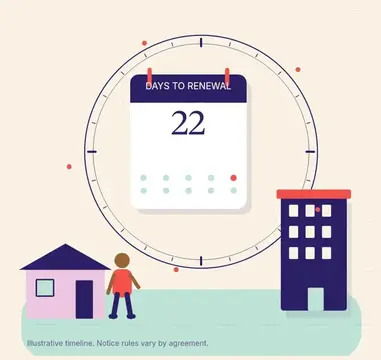


Give every person on your team the whole story.