Let’s be honest: managing buildings today isn’t just about fixing leaks; it’s about protecting millions in asset value. U.S. EPA and Department of Energy data show energy can swallow around one-third of an office building’s operating budget, and about 30% of that energy is still wasted, eroding NOI.
CRE leaders are already shifting focus from pure cost-cutting to portfolio optimization and experience. In this guide, we’ll unpack what Asset Property Management is, why it matters for your business, and how to run it with data, automation, and real-time insight.
Key Takeaways
- Asset Property Management links daily operations with long-term financial goals so every property functions as a performance asset, not just managed space.
- Small shifts in NOI drivers, better leases, lower opex, and stronger tenant retention can create significant jumps in asset valuation.
- Managing assets through a full lifecycle (acquire → onboard → optimize → reposition → exit) ensures consistent performance and reduced risk.
- True effectiveness comes from aligning strategy, operations, tenants, compliance, and data into one unified system.
- RIOO enables this alignment by centralizing leasing, finance, maintenance, tenant engagement, and real-time insights into one platform.
What Exactly is Asset Property Management?
Asset property management means strategically overseeing your real estate portfolio, from initial purchase to final sale, to squeeze maximum value over its full lifecycle.
Unlike basic upkeep, it tracks every asset's financial performance, physical condition, and market potential using precise metrics like Internal Rate of Return (IRR) and capitalization rates. This ensures decisions drive long-term wealth, not just short-term fixes.
Here's the breakdown of its core elements:
- Fixed Assets (Buildings/Land): Long-term holdings valued at $500K+ per property. Managers optimize via lease restructuring, e.g., converting vacant office space to short-term rentals, boosting NOI by 15-20% annually.
- Movable Assets (Equipment/Furniture): Shorter lifespan items (3-10 years) like HVAC systems or appliances. Track depreciation schedules (straight-line method) to claim faster tax deductions, avoiding IRS audits.
Also Read: The Hidden Costs of Skipping the Details in Property Setup
Now that you know what asset property management covers, let's cut through the confusion: how does it stack up against the day-to-day grind of traditional property management?
Asset Property Management vs. Traditional Property Management
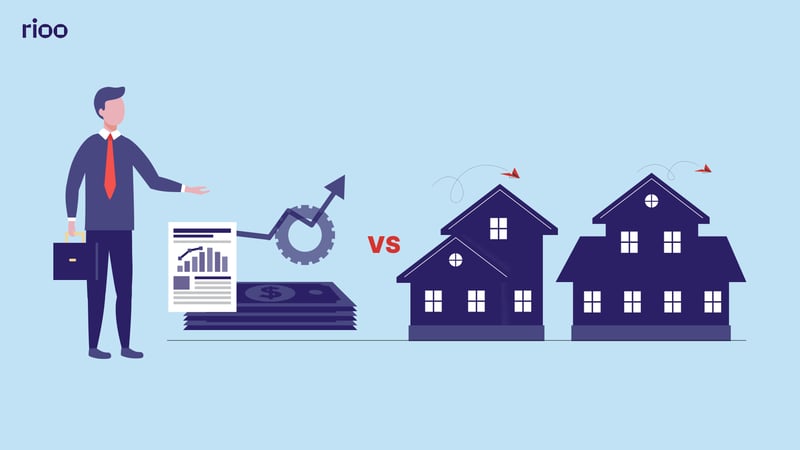
Asset property management zooms out to maximize your entire portfolio's long-term value (think 5-10 year ROI strategies), while traditional property management handles the immediate tenant-facing tasks (daily/quarterly ops). The key split? One builds wealth strategically; the other keeps lights on tactically.
Here’s a clear comparison at a glance:
|
Aspect |
Asset Property Management |
Traditional Property Management |
|
Primary Goal |
Portfolio ROI |
Operational stability |
|
Time Horizon |
5-10 years |
Daily/quarterly |
|
Key Responsibilities |
Market analysis, financing, repositioning |
Leasing, repairs, collections |
|
Success Metrics |
Cap rates, equity growth |
NOI (net operating income), vacancy rates |
|
Team Involved |
CFOs, investors, strategists |
On-site managers, maintenance crews |
Asset and property managers collaborate seamlessly, asset teams provide strategic targets, while property teams execute daily ops to hit them, such as 95% occupancy. Alignment prevents silos: mismatched priorities cost 15-20% in lost NOI, but synced efforts via shared dashboards boost portfolio value.
You now know what asset property management is, so the next logical question is: is this something you really need, or is it just for giant funds and REITs?
Who Actually Needs Asset Property Management?
Not every landlord, asset property management shines for those with scale or complexity, where untracked assets bleed annual value through depreciation or market mismatches.
Small single-family owners (1-5 units) skip it for basic tools, but portfolios over 10 properties demand it to hit 15% IRR targets amid rising costs.
Specific personas who need it now:
1. Owners With Multiple Properties
If you manage 3+ income-generating assets, you need strategic oversight to maximize returns. Active asset management consistently outperforms passive “hold and hope” approaches.
2. Companies That Rely on Real Estate
Businesses with warehouses, clinics, offices, or industrial sites need it because real estate often represents 20–40% of total assets, making performance improvements financially significant.
3. Landlords in Regulated or Competitive Markets
Strict codes, ESG rules, or high vacancy demand require smarter investment decisions and compliance-focused oversight.
4. Institutional Investors & Funds
REITs, private equity, and family offices need asset property management to meet return targets, manage risk, and standardize reporting.
5. Owners Undergoing Major Changes
Redevelopment, ESG upgrades, refinancing, or repositioning all require asset-level planning.
You’ve seen who needs this, now let’s talk about why Asset Property Management directly changes your numbers, not just your workflows.
Why Asset Property Management Matters for Your Business?
Asset Property Management matters because it connects what happens inside the building with what shows up on your P&L and valuation. Below are the reasons why property management matters:
1. It Increases Asset Value
Property value is tied to NOI, calculated as NOI ÷ cap rate. Even small NOI gains can raise asset value significantly.
2. It Reduces Costly Tenant Turnover
Replacing a tenant can cost thousands per unit when you factor in vacancy, repairs, and admin. Asset management improves lease strategy and tenant experience to reduce churn.
3. It Protects You in a Regulated, ESG-Driven Market
Investors and regulators increasingly judge buildings on ESG performance, cost efficiency, and compliance. Asset-level planning helps you avoid penalties and preserve long-term value.
Also Read: Cash Flow Challenges in Property Management—And How to Solve Them
You know why it matters, now let’s break down what you actually need to manage well if you want your assets to perform, not just “exist”.
Core Components of Effective Asset Property Management
Effective Asset Property Management usually rests on five core components that connect strategy, operations, tenants, risk, and data. Here are the five major components of asset property management:
1. Strategic & Financial Direction
A clear roadmap that defines what each asset should achieve. It includes:
- Target NOI, yield, and long-term value
- CapEx vs. OpEx planning (what to upgrade, what to cut)
- Lease and pricing strategy aligned with market goals
It ensures every asset has a defined purpose not just day-to-day activity.
2. Operational Performance Management
Ensures buildings run efficiently, safely, and with predictable costs. Core actions are:
- Shift from reactive to preventive maintenance
- Track major cost drivers (energy, repairs, security)
- Monitor occupancy, usage, and equipment performance
The outcome is lower operating costs with fewer disruptions.
3. Tenant & Relationship Management
Stability comes from the right tenants and stronger retention. The focus areas:
- Fit-for-asset tenant mix
- Experience metrics: response times, complaints, comfort
- Transparent reporting to owners and financial stakeholders
The result is higher renewals, steadier cash flow, and better rent performance.
4. Risk, Compliance & ESG Oversight
Protects asset value by keeping properties safe, legal, and future-ready. Key elements are:
- Regulatory compliance (fire safety, accessibility, inspections)
- Risk mapping (aging systems, climate exposure, tenant concentration)
- ESG planning for energy, emissions, waste, and certification.
This helps in avoiding fines, failures, and “brown discount” depreciation.
5. Data, Insights & Performance Tracking
The intelligence layer that powers every asset decision. Here’s what to track:
- NOI, occupancy, energy use, maintenance patterns
- Service performance, vendor efficiency, downtime
- Cross-asset comparisons to find weak spots and opportunities
Replace guesswork with measurable, data-driven control.
Now let’s put these core building blocks on a timeline so you can see how Asset Property Management actually plays out from “should we buy this?” to “is it time to sell?”.
Asset Property Management Lifecycle
The lifecycle isn't linear, it's a repeating cycle where every phase feeds data back to sharpen the next one, turning one-off properties into compounding portfolio powerhouses.
Here’s the detailed phase-by-phase breakdown:
1. Acquisition & Underwriting
This phase determines whether the asset is worth owning. The focus is on validating financial potential, identifying risks, and confirming the asset’s strategic fit.
Key actions:
- Assess market fundamentals: demand, rents, competition, regulation
- Analyze cash flow potential (rent roll, opex, CapEx, financing)
- Inspect building systems and compliance gaps
- Run stress tests: vacancy scenarios, interest rate shifts, opex increases
2. Onboarding & Stabilization
After acquisition, the priority is gaining operational control and ensuring the building is safe, compliant, and income-stable.
Key actions:
- Transfer leases, contracts, and maintenance data into systems
- Map equipment, warranties, past issues, and inspection cycles
- Fix high-risk or safety-critical problems immediately
- Review and renegotiate expensive or outdated vendor contracts
3. Optimization & Value-Add
Once stable, you focus on enhancing performance—lifting NOI, reducing waste, and improving tenant experience.
Key actions:
- Reduce opex (energy use, inefficient repairs, overlapping contracts)
- Shift to preventive maintenance to avoid breakdowns
- Refine tenant mix and restructure leases for better terms
- Implement tech solutions for automation and real-time insights
4. Repositioning or Repurposing
When market conditions shift or the asset underperforms, it may need strategic repositioning to stay relevant.
Key actions:
- Explore alternate uses (e.g., office → flex, retail → mixed-use)
- Upgrade layouts, amenities, and ESG performance
- Target new tenant segments aligned with demand trends
- Execute major retrofit programs where ROI is justified
5. Disposition & Capital Recycling
In the final stage, you evaluate whether to hold, refinance, or sell based on long-term returns and capital priorities.
Key actions:
- Compare current returns vs. original targets
- Assess future CapEx needs vs. expected value growth
- Decide between sale, refinance, or equity restructuring
- Redeploy capital into stronger, higher-yield opportunities
You’ve mapped the lifecycle in theory, now let’s plug in something real and see how a platform like RIOO actually makes this manageable day to day.
How RIOO Powers Modern Asset Property Management?
RIOO is a cloud-based property and asset management platform built on NetSuite that centralizes management, finance, leasing, maintenance, and tenant portals in one place for residential, commercial, student housing, and mixed-use portfolios.
Here’s how RIOO solutions complements asset property management:
- Property & Unit Management: Gives asset managers full visibility into property configuration, occupancy, rent roll, and unit performance.
- Leasing Management: Manages tenant acquisition, screening, contracts, renewals, and move-ins/outs in one workflow.
- Finance & Accounting: Automates rent charges, expense tracking, vendor payments, budgeting, and financial reporting.
- Maintenance Management: Streamlines preventive and corrective maintenance with scheduling, work orders, SLAs, and asset tracking.
- Tenant Portal: Enables tenants to pay online, raise issues, and track request status with consistent communication.
- Dashboards & Real-Time Reporting: Portfolio and asset-level dashboards for occupancy, revenue, expenses, collections, maintenance, and trends.
RIOO complements Asset Property Management by turning operations, finances, maintenance, and tenant experience into measurable, real-time insights that directly support higher NOI, lower risk, and stronger asset performance.
Book a Demo to see how RIOO supports your entire asset management lifecycle.
Summing Up,
Asset Property Management is no longer about reacting to what happens in your buildings; it’s about strategically shaping how your assets perform, appreciate, and generate stable income over time.
The businesses that excel today treat real estate as a dynamic, measurable asset class, not just a set of properties to maintain. That means understanding your NOI drivers, improving tenant outcomes, reducing operational waste, staying ahead of compliance and ESG pressures, and making investment decisions based on real-time performance.
This is exactly where RIOO transforms the game.
RIOO gives asset managers a single source of truth and the tools to execute value-boosting strategies with confidence. Whether you’re growing a portfolio, stabilizing assets, or planning long-term exits, RIOO ensures every decision is data-backed, efficient, and aligned with your assets' financial goals.
Take the first step toward smarter, more profitable Asset Property Management. See how RIOO empowers you to maximize returns, reduce risk, and elevate tenant experience, from day one.
FAQs
1. What’s the difference between asset performance reviews and property inspections?
Asset performance reviews analyze financial strength, risk, and long-term value, while property inspections look at physical condition and operational issues. Both together inform investment, capex, and leasing strategies.
2. How often should asset managers reevaluate rent strategies?
At least quarterly, or more frequently in volatile markets. This ensures rents match demand, market shifts, tenant quality, and portfolio yield targets.
3. Which financial reports matter most for asset-level decision-making?
Key reports include NOI statements, operating expense breakdowns, rent roll analytics, delinquency trends, and CapEx forecasts. These reveal income stability and cost pressures.
4. How does asset property management support ESG compliance?
It tracks energy use, emissions, waste, and equipment efficiency, helping identify upgrades that reduce regulatory risk and improve asset valuation.
5. When should an asset be considered for repositioning?
When occupancy declines, costs rise faster than revenue, tenant demand shifts, or the asset risks becoming non-compliant or operationally obsolete. This signals the need for strategic repositioning to protect value.



.svg)
.svg)


.svg)