Property managers overseeing offices, retail malls, industrial sites, and mixed-use portfolios face constant challenges. Spreadsheets often fail during CAM reconciliations, critical lease renewals get overlooked, and tenants grow frustrated with slow maintenance responses.
Managing complex NNN leases, pro-rata expense allocations, and investor reporting manually can quickly overwhelm teams. Errors in CAM calculations spark disputes, missed deadlines hurt profitability, and disconnected systems turn simple tasks into time-consuming hurdles.
This guide highlights the best commercial property management software for 2026, showcasing platforms that automate CAM reconciliation, simplify lease administration, and provide real-time financial visibility.
Key Takeaways
-
Commercial property management software automates CAM reconciliation, lease administration, and complex billing structures that residential platforms cannot handle.
-
Leading platforms like MRI Commercial Suite, AppFolio, and Rent Manager each serve different portfolio sizes and operational needs.
-
Essential features include automated CAM calculations, NNN lease support, maintenance tracking, robust accounting, and tenant portals.
-
Modern commercial software incorporates AI to automate routine tasks like maintenance scheduling, rent reminders, and predictive analytics.
-
RIOO delivers an all-in-one cloud platform built for both commercial and residential properties with real-time financial dashboards and customizable workflows.
Difference Between Commercial and Residential Property Management Software
Commercial and residential property management operate under fundamentally different business models. Choosing the wrong type of software can lead to inefficiency and unnecessary manual work.
|
Aspect |
Commercial Property Software |
Residential Property Software |
|
Lease Duration & Complexity |
5 to 10-year leases with rent escalations, percentage rent clauses, renewal options, and expansion rights Require detailed lease abstraction |
12-month leases with straightforward monthly rent payments and standard renewal terms |
|
Financial Structures |
NNN leases, where tenants pay property taxes, insurance, and CAM expenses Require automated pro-rata calculations and year-end reconciliation |
Simple monthly rent collection without complex expense allocations or cost recovery mechanisms |
|
Billing & Calculations |
CAM reconciliation, triple net calculations, base year stops, expense caps, CPI adjustments, and percentage rent tracking |
Fixed monthly rent with occasional utility billing and late fee calculations |
|
Tenant Relationships |
Business tenants with customized lease terms, build-out negotiations, and multiple decision-makers requiring CRM functionality |
Individual renters or families with standardized lease agreements and direct communication |
|
Reporting Requirements |
Detailed financial analysis, including occupancy rates, rental income per square foot, net operating income, variance analysis, and investor-grade dashboards |
Basic income statements, rent rolls, and occupancy reports for property owners |
|
Maintenance Operations |
Facilities management for HVAC systems, elevators, security systems, and parking structures, with costs allocated across multiple tenants and common areas |
Unit-specific maintenance with landlord responsibility and simpler work order tracking |
|
Compliance & Documentation |
ASC 842 and IFRS 16 lease accounting standards, commercial lease audits, environmental compliance, and extensive documentation requirements |
Fair Housing compliance, security deposit regulations, and tenant screening standards |
These operational differences explain why commercial property managers who try to adapt residential software face endless workarounds and manual processes.
Now let's explore why investing in commercial-specific software transforms operations beyond basic task management.
Advantages of Commercial Property Management Software
Investing in purpose-built commercial software delivers measurable improvements across operations. Here's what property managers gain.
-
Automated CAM Reconciliation: Commercial software automatically calculates tenant pro-rata shares using lease terms and square footage while tracking expenses in real time. This removes spreadsheet errors, speeds up year-end reconciliation, reduces tenant disputes, and delivers significant cost savings for large portfolios.
-
Centralized Lease Administration: All leases, amendments, and critical dates live in one digital system. Automated reminders prevent missed renewals and escalations, while lease abstraction and search tools make complex clauses easy to access and manage at scale.
-
Real-Time Financial Visibility: Cloud dashboards provide instant insight into revenue, expenses, occupancy, and net operating income across the portfolio. Accounting integrations eliminate duplicate data entry and support investor reporting without waiting for month-end closes.
-
Enhanced Tenant Communication: Tenant portals enable 24/7 access to maintenance requests, statements, and payments. Two-way messaging and mass notifications improve response times, create clear communication records, and strengthen tenant relationships.
-
Streamlined Maintenance Management: Work order systems assign tasks, track vendor performance, and log costs by property. Preventive maintenance schedules reduce emergencies, while automated cost allocation ensures accurate CAM billing.
-
Regulatory Compliance: The software maintains audit-ready documentation, enforces consistent lease calculations, and records all changes through detailed audit trails. Built-in reporting supports ASC 842 and IFRS 16 compliance with minimal manual effort.
These advantages demonstrate why commercial property managers who adopt specialized software report higher operational efficiency and tenant satisfaction.
Now the question is which software to use? We have listed the top ten for you.
10 Best Commercial Property Management Software for 2026
Selecting the right platform depends on portfolio size, property types, and operational priorities. Here are the top solutions.
1. RIOO
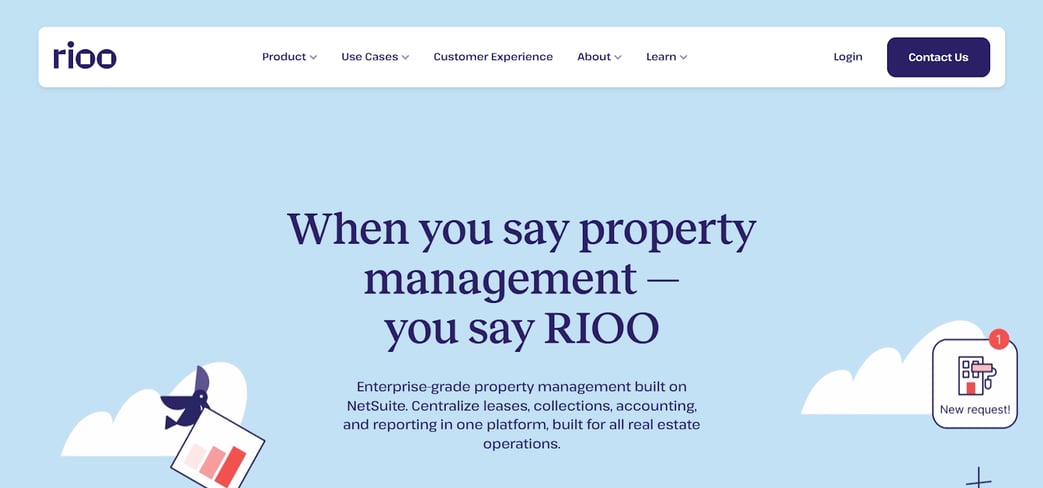
RIOO stands out as a comprehensive cloud-based platform designed for both commercial and residential property management. Built for medium to enterprise segments, RIOO unifies scattered data and disparate processes into one cohesive system.
Key Features:
-
Unified Platform: Integrates leasing, finance, maintenance, and tenant communication without jumping between systems
-
Real-Time Financial Visibility: Cloud-based architecture provides consolidated reporting down to individual transactions
-
Customizable Workflows: Adapts to unique business processes, whether managing offices, retail malls, or mixed-use properties
-
Automated Rent Collection: Set recurring schedules, late fees, and automatic reminders with tenant portal payments
-
Advanced Maintenance Management: Tenants submit requests through portals with photo uploads, while managers track resolution and assign vendors
-
Bank-Grade Security: End-to-end encryption and audit trails protect financial and operational data
Best For: Property management companies handling 100+ units across commercial and residential portfolios in the US, Canada, UK, Australia, Singapore, and Dubai.
Pricing: Custom Range
Why Choose RIOO: The platform manages over 180,000 sites and collects more than $150 million monthly, proving scalability for growing portfolios. Integration with NetSuite, Salesforce, and major payment processors creates seamless data flow.
2. Innago
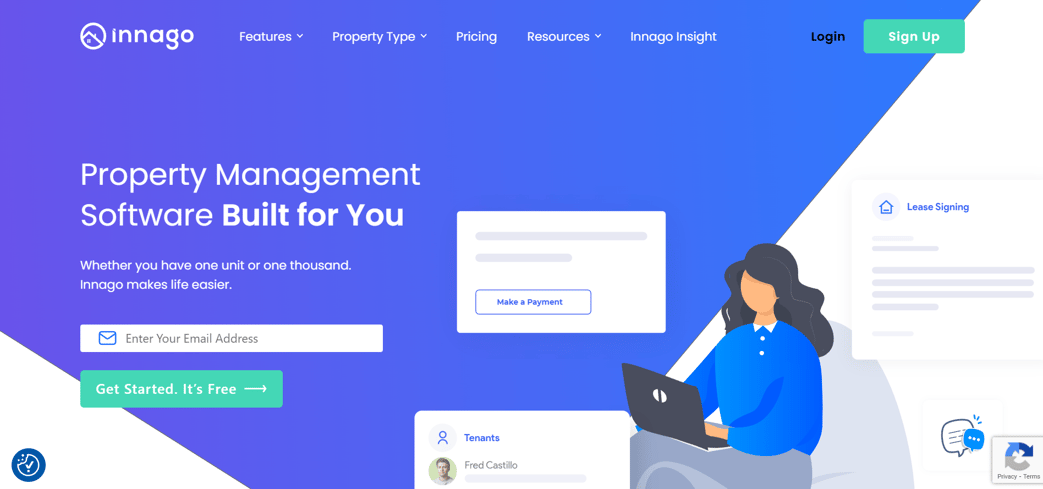
Innago offers a free property management solution with surprisingly robust features. While primarily residential-focused, it includes commercial property capabilities.
Key Features:
-
Online rent collection with automatic late fees
-
Digital lease signing and tenant screening
-
Maintenance request management with vendor coordination
-
Basic accounting and financial reporting
-
Tenant and owner portals
Best For: Small commercial landlords managing fewer than 50 units who need basic functionality without monthly fees.
Pricing: For you, it's free; for tenants, rental payments are there.
Considerations: Limited advanced commercial features like CAM reconciliation and complex lease structures. Better suited for straightforward commercial leases.
3. Buildium
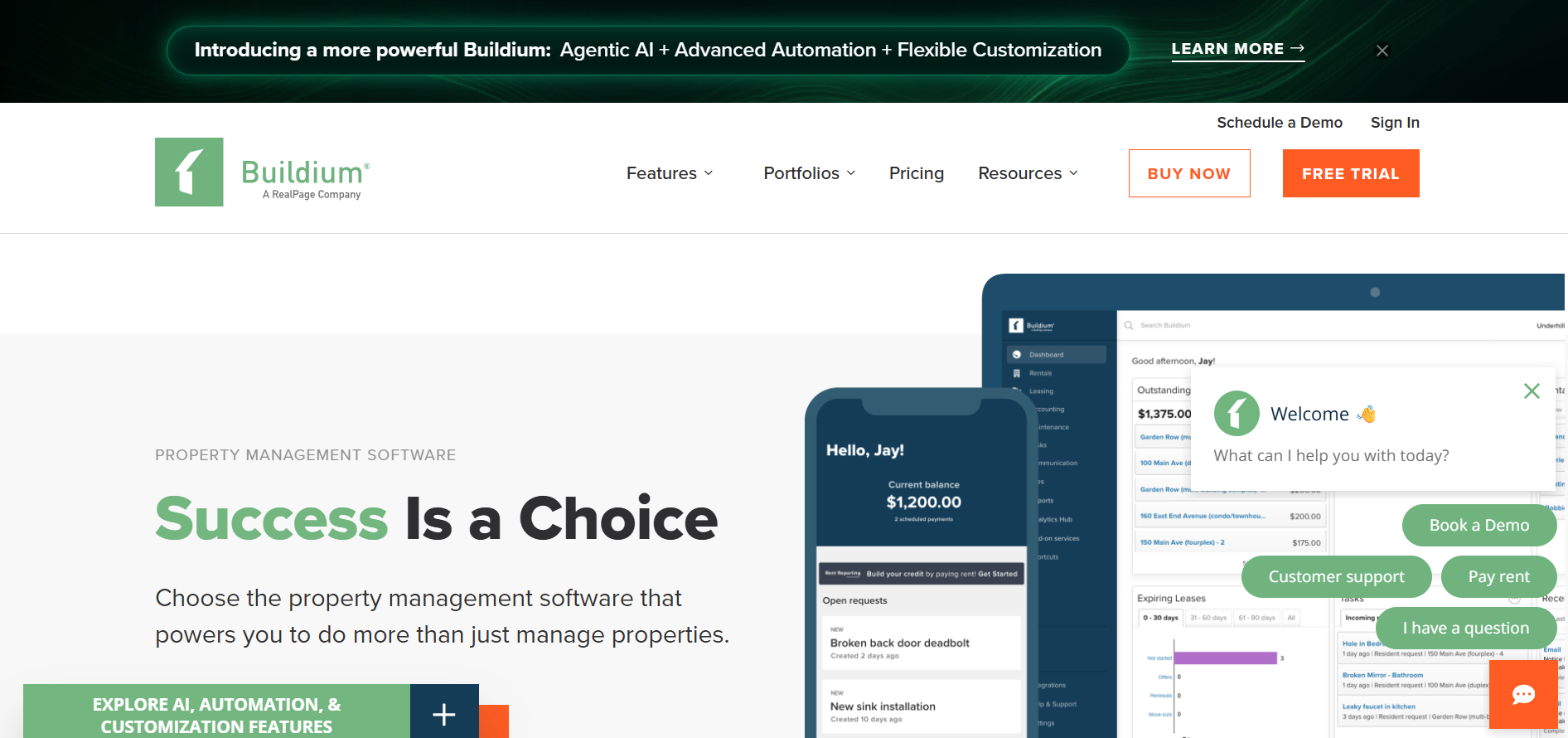
Buildium serves property managers with mixed portfolios, including residential and smaller commercial properties. The platform balances ease of use with comprehensive features.
Key Features:
-
Lease tracking with automated renewals
-
Online rent collection and accounting
-
Maintenance management with resident and vendor portals
-
Marketing tools with listing syndication
-
Financial reporting and owner statements
Best For: Property managers handling mixed portfolios with up to 15,000 units, including apartments, condos, HOAs, and smaller commercial spaces.
Pricing:
-
Essential: Starting at $62/month
-
Growth: Starting at $192/month
-
Premium: Starting at $400/month
Strengths: Strong residential foundation with commercial capabilities. Integration with QuickBooks simplifies accounting workflows.
4. AppFolio
AppFolio provides a cloud-based platform known for its clean interface and automation features. Originally residential-focused, it now includes commercial-specific tools.
Key Features:
-
AI-powered automation for maintenance assignments and rent collection
-
Comprehensive accounting with bank feeds
-
Tenant and owner portals with mobile apps
-
Marketing suite with listing management
-
Built-in CRM for prospect tracking
Best For: Small to mid-sized property management companies with 50+ units needing user-friendly software with strong automation.
Pricing: Starts at $280/month for the Core plan and scales with portfolio size.
5. DoorLoop
DoorLoop delivers an intuitive platform rated highly by commercial property managers. The software emphasizes speed and growth potential.
Key Features:
-
All-in-one management covering leasing, accounting, and maintenance
-
Automated workflows reduce manual data entry
-
Tenant screening and digital lease execution
-
Comprehensive reporting and analytics
-
Mobile-responsive design for on-the-go management
Best For: Growing property management businesses handling residential and commercial properties, seeking fast implementation.
Pricing: Starts at $59/month for up to 20 units with scaling options.
6. MRI Commercial Suite
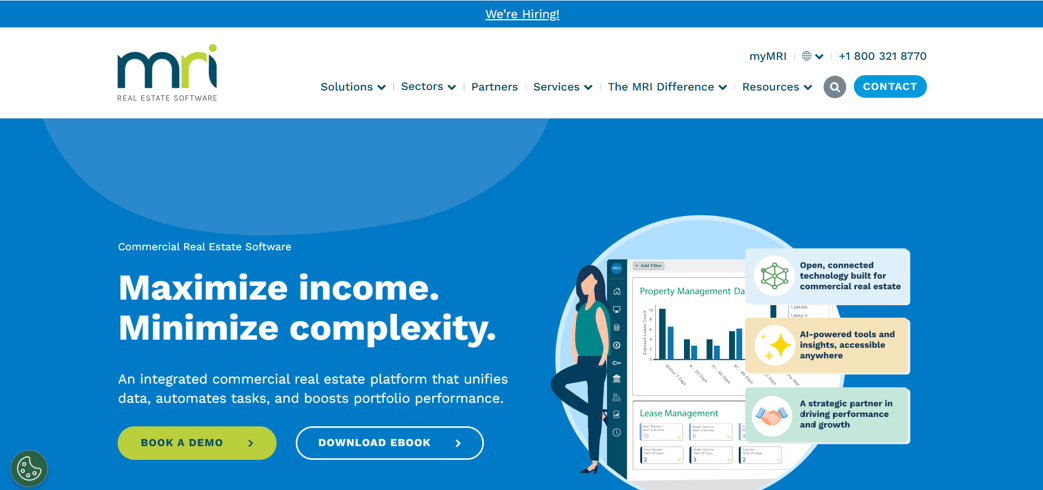
MRI Software represents an industry standard for large-scale commercial operations. Built specifically for office, industrial, and retail portfolios.
Key Features:
-
Advanced lease administration with automated calculations for rent escalations and CAM charges
-
Portfolio analytics and customizable reporting with data visualization
-
AI-powered lease abstraction extracts key terms automatically
-
Open platform architecture supports extensive integrations
-
Budget and forecasting tools for financial planning
Best For: Enterprise property managers with 50+ units handling complex commercial portfolios requiring deep functionality.
Pricing: Custom
Strengths: Proven scalability and extensive module options. Strong support for NNN leases and CAM reconciliation.
Considerations: Steeper learning curve and higher implementation costs. Some users report that the interface requires multiple clicks for routine tasks.
7. Rent Manager
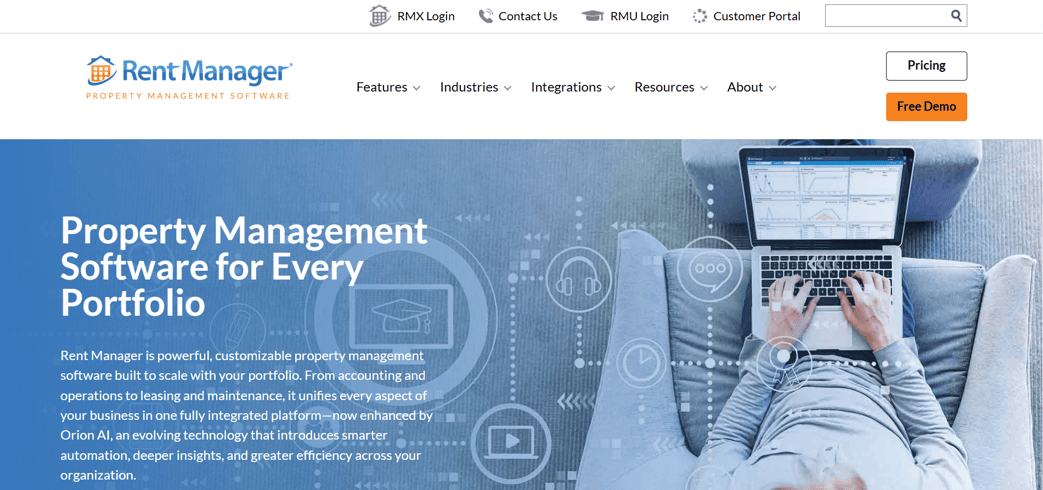
Rent Manager offers powerful customization for property managers handling diverse portfolios. Over 30 years of industry experience back the platform.
Key Features:
-
Double-entry accounting system with complete financial management
-
Smart Bills feature uses AI to automate invoice processing
-
Over 450 pre-defined reports plus a custom report builder
-
Extensive integration network with 200+ technology providers
-
Mobile apps for field operations
-
Orion AI enhances automation and provides deeper insights
Best For: Property managers with 100+ units across residential, commercial, and self-storage, needing high customization.
Pricing:
-
Basic: $1.00 per unit/month ($200 minimum)
-
Plus: $1.50 per unit/month ($300 minimum)
-
Premium: $2.50 per unit/month ($500 minimum)
Strengths: Deep feature set and customization options. Strong accounting capabilities handle complex financial scenarios.
8. Re-Leased
Re-Leased specializes in commercial property management with particular strength in retail and office properties.
Key Features:
-
Commercial lease management with automated rent reviews
-
Financial reporting tailored for commercial portfolios
-
Tenant portal for service requests and document access
-
Integration with accounting platforms
-
Portfolio performance dashboards
Best For: Commercial property managers in markets including the US focused on retail, office, and industrial properties.
Pricing: Custom
Strengths: Purpose-built for commercial operations with strong lease administration tools.
9. Crib
Crib provides modern property management software with emphasis on user experience and mobile-first design.
Key Features:
-
Mobile-optimized platform for property managers and tenants
-
Digital lease execution and tenant onboarding
-
Maintenance management with vendor coordination
-
Payment processing with multiple options
-
Real-time reporting and dashboards
Best For: Tech-forward property managers seeking modern interfaces and mobile accessibility.
Pricing: Custom
Strengths: Contemporary design and intuitive user experience appeal to younger management teams.
10. Yardi Voyager
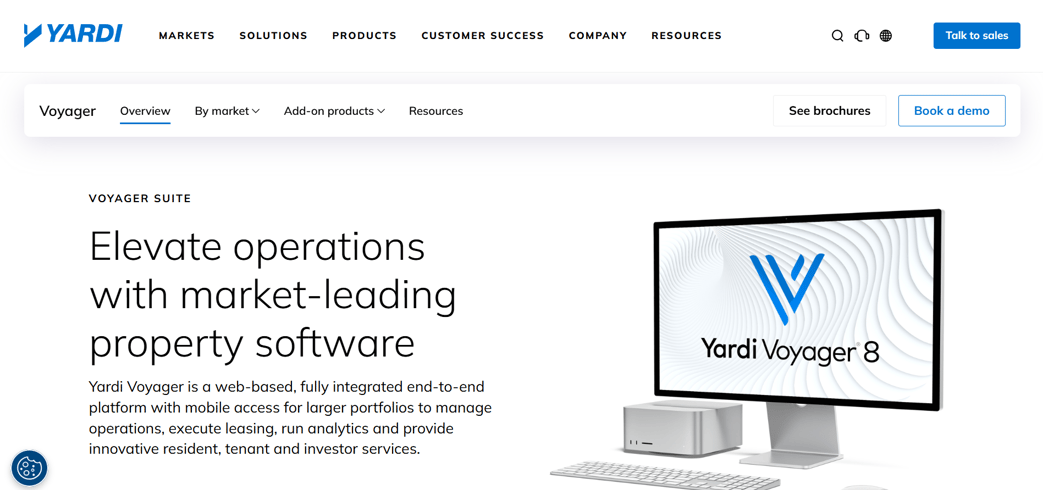
Yardi Voyager serves as an industry powerhouse for enterprise operations. The platform handles massive portfolios with diverse property types.
Key Features:
-
Comprehensive modules for lease management, construction, and energy management
-
Scalable from 10 to 1,000+ properties
-
Advanced accounting and financial reporting
-
Investment management tools for asset performance
-
Extensive training and support resources
Best For: Large enterprise operations managing 1,000+ properties across commercial, residential, and mixed-use portfolios.
Pricing: Custom
Strengths: Unmatched scalability and depth of features. Proven track record with major property management firms.
Considerations: Higher cost and longer implementation timeline. Requires significant training investment.
Now that you've seen the leading platforms, understanding which features matter most helps narrow your selection.
7 Features to Look For in a User-Friendly Commercial Property Management Software
Evaluating software requires focus on capabilities that directly impact daily operations and long-term success. Here are the critical features.
1. Automated CAM Reconciliation and NNN Lease Support
Commercial properties commonly operate under NNN and modified gross leases, making CAM accuracy essential. Software must support:
-
Automatic tenant pro-rata calculations based on leased square footage
-
Real-time expense tracking with clear categorization
-
Handling of caps, exclusions, and multiple lease structures
-
Year-end reconciliation of estimated vs. actual expenses
-
Automated tenant billing for overages or refunds
Manual CAM processes often lead to errors and disputes. Automation improves accuracy and transparency and reduces tenant audit requests.
2. Comprehensive Lease Administration
Commercial lease management requires tracking complex terms across many agreements. Essential capabilities include:
-
Centralized storage for leases, amendments, and exhibits
-
Lease abstraction with searchable key terms
-
Automated alerts for escalations, renewals, and critical dates
-
CPI-based rent adjustments and percentage rent calculations
-
Tracking of expansion, contraction, and early termination options
Automated reminders prevent missed escalations or renewals that directly impact revenue.
3. Robust Accounting and Financial Reporting
Commercial property accounting goes beyond rent collection. Look for software that offers:
-
Full double-entry accounting with general ledger support
-
Automated accounts payable and receivable
-
Bank reconciliation with live financial feeds
-
Budgeting tools and variance analysis
-
Custom financial reports for investors and stakeholders
-
Tax-ready expense categorization
Integration with platforms like QuickBooks or NetSuite ensures financial consistency and eliminates duplicate data entry.
4. Facilities Management and Maintenance Tracking
Ongoing maintenance across multiple assets requires structured workflows. Software should provide:
-
Work order creation and vendor or staff assignment
-
Preventive maintenance scheduling for critical systems
-
Mobile tools for technicians to log work and upload photos
-
Asset-level maintenance history for warranties and capital planning
-
Proper cost allocation to properties and GL accounts
-
Tenant portal integration for direct service requests
Digitized maintenance workflows reduce response times and create reliable documentation for inspections and transactions.
5. Tenant and Owner Portals
Tenants and owners expect self-service and transparency. Key portal features include:
-
Online rent payments with multiple payment options
-
Maintenance requests with photo uploads
-
Access to lease documents and communication history
-
Real-time account statements and payment status
-
Building announcements and emergency alerts
Owner portals mirror this transparency with financial reports, performance dashboards, and direct messaging.
6. Integration Capabilities and API Access
No platform operates in isolation. Strong integration support enables:
-
Seamless data flow with accounting systems
-
Payment processor connectivity for ACH and card payments
-
CRM integrations for tenant and prospect management
-
Secure document management system connections
-
Utility billing platform integration for cost recovery
API access allows custom integrations tailored to specific operational workflows.
7. Mobile Accessibility and Cloud-Based Access
Property management is not desk-bound. Cloud and mobile access should support:
-
Mobile inspections with photos and notes
-
Remote work order and vendor management
-
On-the-go access to rent and financial data
-
Tenant communication during site visits or travel
-
Real-time portfolio performance dashboards
Mobile access enables faster response times and more proactive property management.
These seven features separate purpose-built commercial platforms from basic property management tools.
Final Thoughts
Choosing commercial property management software in 2026 means matching features to portfolio complexity. The right platform centralizes operations, automates workflows, and provides financial transparency, freeing teams to focus on growth and tenant satisfaction.
RIOO offers a unified solution for managing both commercial and residential properties. Its cloud-based platform provides real-time financial visibility, customizable workflows, and enterprise-scale reliability—supporting 180,000+ sites and $150+ million in monthly collections—without sacrificing ease of use.
Ready to transform your commercial property management operations? Contact us now and join the 400,000+ tenants and occupants who experience better property management through technology.
Frequently Asked Questions
1. What is the Difference Between Property management Software and Lease Administration Software?
Property management software covers daily operations such as rent collection, accounting, maintenance, and tenant communication. Lease administration software focuses only on tracking lease terms, dates, and obligations. Most commercial managers need full property management platforms with built-in lease administration, not standalone tools.
2. Can One Software Platform Handle Both Residential and Commercial Properties?
Yes. Platforms like RIOO, Buildium, and Rent Manager support mixed portfolios. However, commercial users must ensure support for CAM reconciliation, NNN leases, and complex billing. Residential-first tools often lack depth for commercial operations.
3. How Long does Implementation Typically Take?
Implementation can take 2 weeks for simple platforms and up to 6 months for enterprise systems. Timelines depend on portfolio size, data migration, customization, and training needs. Enterprise platforms require phased rollouts and dedicated onboarding teams.
4. What Security Features Should Commercial Property Management Software Include?
Key features include data encryption, role-based access controls, two-factor authentication, automated backups, SOC 2 compliance, and detailed audit logs. Strong security is critical due to the sensitive financial and tenant data involved.

.svg)
.svg)


.svg)