Property maintenance doesn't wait for convenient moments. A burst pipe at 2 AM. A broken HVAC system during peak summer. These aren't just operational headaches; they're budget drains and killers of tenant satisfaction. Manual coordination across vendors, tenants, and maintenance teams creates bottlenecks that delay responses and inflate costs.
The real cost? Lost revenue from vacant units and emergency repairs that could have been prevented. Modern property management demands a smarter approach to property maintenance, shifting from reactive firefighting to proactive system management.
This guide breaks down everything you need to know, from understanding different maintenance types to implementing systems that actually work. Let's start by addressing the challenges keeping you up at night.
Key Takeaways
- Preventive maintenance reduces emergency repair costs by 12-18% and significantly extends asset lifespan.
- Four maintenance types, preventive, corrective, predictive, and cosmetic, each serve distinct operational purposes in property management.
- Automated maintenance tracking systems eliminate manual coordination, reduce response times, and improve vendor accountability.
- Property maintenance management software centralizes work orders, tenant requests, and compliance documentation on a single platform.
- Strategic maintenance planning directly impacts tenant retention rates, property values, and long-term ROI.
Also Read: Landlord's Essential Guide to Rental Property Maintenance
Common Challenges in Property Management Maintenance
Before we explore solutions, let's identify the pain points that make property maintenance so challenging for teams managing multiple properties.
The Spreadsheet Spiral
You're managing 300 units across five buildings. Maintenance requests arrive via email, phone calls, tenant portal messages, and sometimes sticky notes. Each request needs logging, vendor assignment, cost tracking, and completion verification. Excel spreadsheets multiply. Communication threads get buried.
Portfolio Complexity Across Property Types
Residential properties need routine inspections and quick tenant response times. Commercial spaces require specialized equipment maintenance and compliance documentation. Managing both simultaneously? Your maintenance team juggles different vendor networks, varying lease agreements, and inconsistent reporting formats.
Reactive vs. Preventive Maintenance Gap
Most property managers operate in a constant reactive mode. Why? Manual tracking makes it nearly impossible to consistently execute scheduled maintenance. Preventive tasks get pushed aside when emergency calls flood in.
Vendor Management Chaos
You have 15 different vendors. Each uses a different invoicing system. Payment terms vary. Quality consistency is hit-or-miss. Tracking work completion, managing accounts payable, and maintaining vendor performance records consume hours each week. There's no unified view of vendor spending or service quality metrics.
Tenant Communication Breakdown
Tenants submit maintenance requests. Then they wait. And wait. No status updates. No estimated completion times. Frustration builds. One unresolved maintenance issue triggers five complaint calls and three negative reviews. Tenant satisfaction plummets, directly impacting renewal rates.
Ready to eliminate maintenance chaos? Explore RIOO's facility management tools that turn scattered processes into streamlined workflows your team can actually follow.
Understanding Types of Property Maintenance
Maintenance of property isn't a single activity; it's a strategic framework. Knowing which type to deploy and when separates efficient operations from costly chaos.
Preventive Maintenance: Your First Line of Defense
Preventive maintenance stops problems before they start. Regular HVAC filter changes. Annual roof inspections. Quarterly plumbing checks. These scheduled activities extend equipment lifespan and prevent expensive emergency repairs.
Consider a multi-family property in Toronto. Monthly elevator inspections cost $200. Skipping them? An elevator breakdown during winter requires emergency repairs costing $8,000 plus lost tenant goodwill. Preventive maintenance isn't an expense; it's insurance against operational disasters.
Corrective Maintenance: Fixing What's Broken
Corrective maintenance addresses existing problems. A leaking faucet. Broken door locks. Cracked pavement in the parking lot. These repairs can't wait, but aren't immediate emergencies. Property maintenance management systems prioritize these tasks based on severity and impact.
Predictive Maintenance: Data-Driven Asset Management
Predictive maintenance uses performance data to anticipate failures. Smart thermostats flag HVAC systems operating inefficiently. Water sensors detect minor leaks before they become major floods. This approach requires integrated technology but delivers significant cost savings for large portfolios.
Cosmetic Maintenance: Protecting Property Value
Fresh paint. Landscaping upkeep. Common area cleanliness. Cosmetic maintenance directly impacts tenant perception and property marketability. In competitive rental markets across the US, UK, and Australia, visual property condition influences lease-up speed and achievable rent rates.
Understanding these maintenance types helps property maintenance managers allocate resources effectively. Each type requires different scheduling, budgeting, and execution strategies.
Also read: Guide to Comprehensive Property Maintenance Services
Key Benefits of Using Property Maintenance Software
Before looking at specific outcomes, it helps to understand what property maintenance software actually does and why it plays such a critical role in modern property operations.
What Is Property Maintenance Software and Why Is It Important?
Property maintenance software is a centralized system that helps property teams manage service requests, preventive maintenance, vendors, assets, and costs in one place. Instead of relying on emails, spreadsheets, and phone calls, all maintenance activity is tracked digitally, creating a single source of truth for both on-site teams and managers.
As portfolios grow, manual processes start to break down. Tasks get missed, response times slow, and costs become harder to control. Property maintenance software brings structure, visibility, and consistency to daily operations, ensuring work gets assigned, tracked, and completed on time.
The features matter, but the outcomes matter more. Here’s what actually changes when you implement comprehensive property maintenance software.
Also read: How Property Management Companies Can Streamline Maintenance with Smart Tools
Operational Efficiency That Scales
What efficiency looks like in practice:
- Property maintenance managers save significant time each week on administrative coordination.
- Work order processing time drops from lengthy manual handling to just a few minutes per request.
- Automated workflows eliminate most manual task assignment and follow-up calls.
- Portfolio growth no longer requires proportional increases in administrative headcount.
Whether you manage 50 units or 5,000, the system scales without adding operational complexity. Teams focus on improvements and exceptions instead of routine coordination.
Complete Financial Visibility
Maintenance costs are visible in real time, not weeks later in monthly reports. Spending can be tracked by property, unit, vendor, and maintenance type. Cost trends become clear early, enabling smarter budgeting and data-driven decisions instead of guesswork.
Improved Tenant Satisfaction and Retention
Fast, well-communicated maintenance has a direct impact on tenant satisfaction. Automated tracking and proactive updates reduce response times and keep tenants informed. Issues are resolved faster, and renewal rates improve as a result.
Preventive Maintenance That Actually Happens
Scheduled maintenance tasks are created automatically and tracked through completion. Vendors receive advance notifications, and work is verified within the system. This consistency extends asset lifespans and reduces costly emergency repairs, shifting budgets from reactive fixes to planned maintenance.
Vendor Accountability and Performance Tracking
Every work order captures response times, quality of work, and costs. Vendor performance becomes measurable and transparent. Underperforming vendors are identified quickly, strong partners are rewarded with consistent work, and negotiations are based on real performance data rather than anecdotes.
Stop wondering where your maintenance budget actually goes. Request a personalized RIOO demo, and we'll show you real-time cost tracking using your actual property portfolio as the example.
Why Integrated Property Management Platforms Beat Manual Systems?
Modern property maintenance management isn’t just about convenience. It’s about efficiency, cost control, and staying competitive.
- The Hidden Costs of Fragmented Operations
Spreadsheet-based tracking may look inexpensive, but labor costs add up quickly. Hours spent updating files and coordinating vendors led to delays, tenant complaints, emergency repairs, and higher turnover. Manual systems cost far more than they appear to cost.
- Automation Advantages
Automation eliminates repetitive work. Maintenance requests generate work orders automatically, vendors are notified instantly, and updates and financial records are created without manual effort. Processes stay consistent, and nothing falls through the cracks.
- Centralized Data Enables Better Decisions
Disconnected systems hide patterns. Integrated platforms reveal insights on maintenance trends, vendor performance, and ROI through real-time dashboards, enabling smarter decisions as portfolios grow.
- Compliance and Documentation
Integrated software automatically maintains complete audit trails for maintenance activity, vendor interactions, and tenant communication. This supports compliance, insurance claims, and dispute resolution, while manual systems often leave gaps and risks.
Also Read: Master the Property Maintenance Process for Better Results
How the RIOO App Transforms Property Maintenance Management?
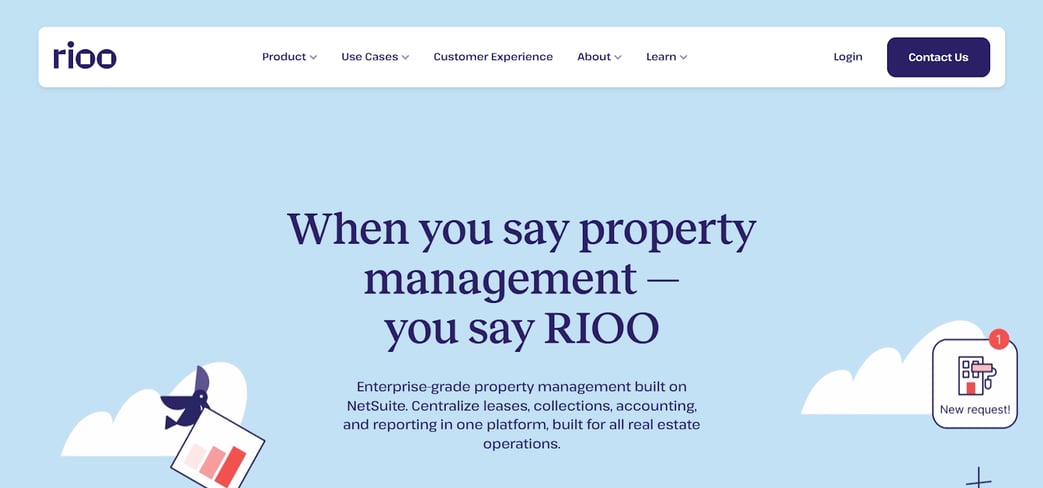
RIOO simplifies property maintenance by centralizing operations, making workflows more efficient across your entire portfolio.
- Core Property Functions
All property details, units, appliances, and service histories are stored in one searchable system. Customizable workflows automate maintenance requests, and real-time dashboards provide visibility across the portfolio.
- Leasing & Sales Integration
Move-ins and move-outs trigger automatic maintenance workflows. Lease management syncs tenant communication and rent collection to ensure accurate cost allocation and profitability data.
- Facility Management
Service requests, preventive maintenance, asset management, and utility monitoring all happen in one place. Response times improve, and completion rates rise.
- Finance & Accounting
RIOO tracks maintenance expenses, separating routine tasks from capital improvements. Real-time financial reports help optimize vendor and operational decisions.
- Portals & Mobile Access
Tenants submit requests with photos and receive automatic updates. Managers handle work orders and communications on the go, increasing efficiency.
- Integration Ecosystem
RIOO integrates with 30+ platforms, eliminating duplicate data entry and sync errors, while supporting regional differences across global operations.
Implementing Effective Property Maintenance Strategies
Technology provides the foundation, but execution determines results. Here’s how to build maintenance operations that work long-term.
- Start With a Maintenance Inventory
Catalog all major assets across your properties, including HVAC, plumbing, roofing, elevators, and parking areas. Document installation dates, warranties, and expected replacement timelines. Property management software simplifies this process by linking assets to properties and units and automatically maintaining complete service histories.
- Develop Preventive Maintenance Schedules
Effective schedules are based on asset type, climate conditions, and manufacturer recommendations. Technology automates execution by generating work orders, notifying vendors in advance, and tracking completion. Preventive maintenance moves from planning to consistent action.
- Establish Clear Communication Protocols
Clear communication keeps maintenance moving smoothly. Tenant portals allow 24/7 request submission with automatic confirmations.
- Build Strong Vendor Networks
Reliable vendors function as operational partners. Use consistent work volume, clear communication, and performance data to strengthen relationships, negotiate better pricing, and reward top performers.
- Monitor and Optimize Continuously
Maintenance strategies require ongoing review. Regularly track budgets, response times, and resource usage. Integrated platforms make monitoring easy through real-time dashboards and on-demand reports, enabling continuous improvement.
Conclusion
Maintenance of property determines whether your assets appreciate or deteriorate. Reactive approaches cost more, frustrate tenants, and accelerate equipment failures. Strategic maintenance management, supported by comprehensive technology platforms, protects property values while improving operational efficiency.
RIOO App delivers the integrated tools property maintenance managers need to shift from reactive chaos to proactive control. Automated workflows eliminate administrative burden. Real-time visibility enables better decisions. Tenant portals streamline communication. Comprehensive reporting connects maintenance activities to financial performance.
Whether you manage residential communities across the US, commercial properties in Singapore, or mixed-use portfolios spanning the UK and Australia, effective property maintenance management starts with the right systems. Stop letting fragmented tools and manual processes drain your time and resources.
Your maintenance team deserves better tools. Book your RIOO demo now, we'll customize the walkthrough to address your specific maintenance challenges and show you exactly how much time you'll save.
Frequently Asked Questions
1: What are the 4 types of property maintenance?
The four main types are preventive maintenance (scheduled upkeep), corrective maintenance (fixing existing issues), predictive maintenance (data-driven anticipation), and cosmetic maintenance (appearance preservation). Each serves distinct operational purposes in property management.
2: How much should I budget for property maintenance annually?
Industry standards suggest budgeting 1-2% of property value annually for routine maintenance, with an additional 1% reserve for unexpected repairs. Commercial properties typically require higher maintenance budgets than residential properties due to specialized equipment.
3: What is the difference between property maintenance and property management?
Property management encompasses all operational aspects, including leasing, tenant relations, finances, and compliance. Property maintenance specifically focuses on preserving and improving physical assets through repairs, upkeep, and preventive care.
4: How can I reduce property maintenance costs without sacrificing quality?
Implement preventive maintenance schedules to avoid expensive emergency repairs, negotiate vendor contracts based on performance data, use property management software to track costs and identify inefficiencies, and invest in quality materials that reduce long-term replacement frequency.
5: What property maintenance software features matter most?
Essential features include automated work order management, preventive maintenance scheduling, vendor management tools, tenant communication portals, mobile access for field teams, real-time reporting dashboards, and integration capabilities with existing accounting and operational systems.



.svg)
.svg)


.svg)