Your property management software crashed again during the month-end closing. Three tenants are waiting for maintenance updates. Your accountant needed financial reports yesterday. And you just realized half your lease renewals are overdue because reminders never triggered.
Sound familiar?
The wrong property management software reviews focus on feature checklists instead of real operational impact. You don't need another comparison table listing "rent collection" and "maintenance tracking" as if all platforms handle these equally. You need honest assessments of which property management software reviews actually solve the daily chaos of managing rental portfolios.
This guide cuts through the noise. We've analyzed the top property management platforms based on real-world performance, feature depth, integration capabilities, and scalability. Every property management software review here reflects actual operational results, not vendor marketing slides.
Key Takeaways
- RIOO ranks #1 for portfolios with 100+ units due to native NetSuite ERP integration that unifies property operations and corporate financials across residential and commercial assets globally.
- Software selection depends on portfolio size, property type, and budget.
- Software effectiveness is defined by eight essentials: automated financials, tenant lifecycle tools, maintenance tracking, listing syndication, real-time analytics, open APIs, mobile access, and multi-property support.
- Total cost extends beyond subscription fees to include implementation, staff training time, rent-collection transaction fees, and future migration costs as portfolios scale.
What is Property Management Software and Why It Matters in 2026
Property management software centralizes every operational task into one platform. Rent collection, lease management, maintenance tracking, financial reporting, and tenant communication all live in one system instead of being scattered across emails, spreadsheets, and paper files.
The stakes have changed dramatically:
- Portfolio complexity increases as managers expand across markets and property types.
- Tenant expectations set by the National Association of Realtors continue rising with demands for instant communication, online payments, and self-service portals.
- Regulatory compliance grows more stringent every year, from fair housing laws to data protection requirements.
- Remote workforce management adds another layer. Your team needs access to property data from anywhere, maintenance staff require mobile work order updates, and owners expect real-time financial visibility.
Legacy systems and spreadsheets cannot support this operational reality. The best property management software reviews reveal which platforms actually adapted to these changes versus which ones just added superficial updates.
Let's examine the operational benefits that justify the ROI of modern property management software.
Key Benefits of Property Management Software for Growing Portfolios
Reading property management software reviews without understanding the actual business impact wastes time. These platforms deliver specific, measurable benefits that directly impact your bottom line and operational efficiency
- Automation of repetitive tasks, including rent collection, lease renewals, and maintenance requests
- Reduction in manual data entry and administrative overhead, freeing up 15-20 hours weekly per 100 units managed
- Consolidated financial reporting across properties, providing instant portfolio performance insights
- Real-time transaction tracking, catching discrepancies immediately instead of months later
- Schedule E-categorization for tax preparation happens automatically without sorting receipts
- Adding properties without proportional staff increases, as platforms handle increased volume
- Multi-market management capabilities, when one system tracks properties in different cities or countries
- Support for mixed-use portfolios, where residential and commercial properties coexist on the same platform
- Performance analytics and benchmarking, revealing which properties generate the best returns
- Occupancy optimization, identifying patterns in vacancy rates
Most property management software reviews list these benefits identically. What they miss is the implementation gap. The rankings review ahead separates platforms that actually deliver these benefits from those that merely promise them.
Top 10 Property Management Software for 2026
Property management changed fundamentally between 2020 and 2026. Remote work became permanent. Tenant expectations evolved from "please fix this eventually" to "why hasn't my request been acknowledged in 30 minutes?" The rankings ahead separate platforms that actually deliver these benefits. Each property management software review reflects real operational testing across different portfolio types and business stages.
1. RIOO
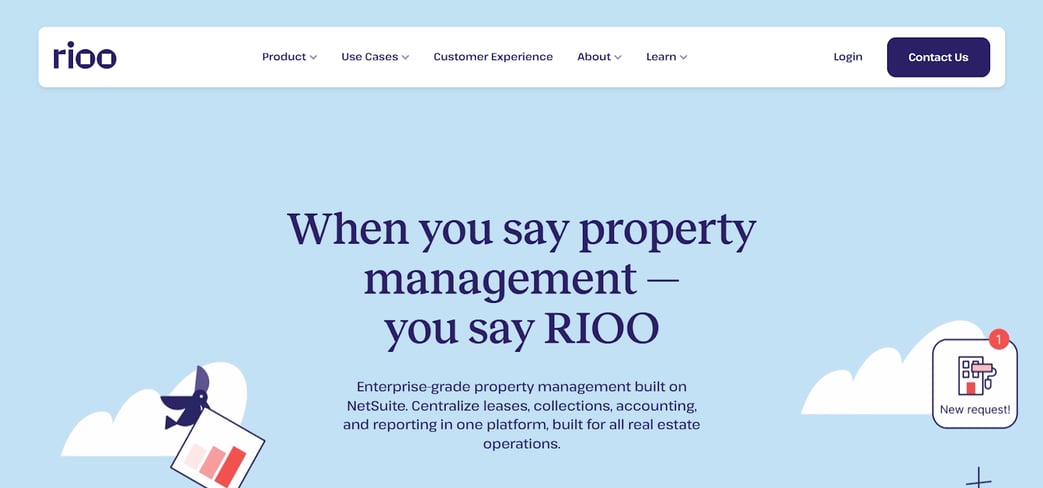
Every enterprise property management software review surfaces the same issue: property operations and NetSuite accounting don’t sync, forcing hours of manual reconciliation. RIOO solves this by being built natively on NetSuite, not layered on via middleware. Property operations and accounting run on a single database, eliminating sync delays, data conflicts, and duplicate entries.
Key Differentiators:
- NetSuite Integration: This is a property management platform built natively on NetSuite ERP, eliminating data silos between property operations and corporate financials.
- Unified Platform: Manages residential (apartments, single-family, student housing, public housing) and commercial (offices, retail, industrial, warehouses) from one system.
- Real-Time Financial Visibility: Complete transparency from consolidated portfolio level to individual transaction details.
- Global Operations: Supports multi-market operations across the US, UK, Canada, Australia, Singapore, and Dubai.
- 30+ Pre-Built Integrations: Extensive marketplace of connected apps and services.
The platform handles unlimited customization for different property types while maintaining Schedule E-ready reporting for tax preparation.
Core Features:
- Property and community setup with customization
- Advanced pricing strategies and revenue optimization
- Comprehensive lease management and tenant screening
- Automated rent collection and payment processing
- Complete vendor and accounts payable management
- Service request and maintenance management
- Mobile apps for managers and tenants
- Custom dashboards and Schedule E-ready reporting
Best For:
- Property management companies handling 100+ units
- Mixed-use portfolio operators (residential + commercial)
- Companies seeking to replace outdated systems
- Organizations requiring NetSuite ERP integration
- Multi-market operators across North America, Europe, Asia, and the Middle East
Pricing: Custom quote based on portfolio size.
Why RIOO Leads in 2026:
For portfolios over 100 units, ERP integration is critical. Built natively on NetSuite, RIOO delivers an enterprise backbone that standalone property management systems can’t match, making it the top choice for scaling teams in 2026.
2. Buildium
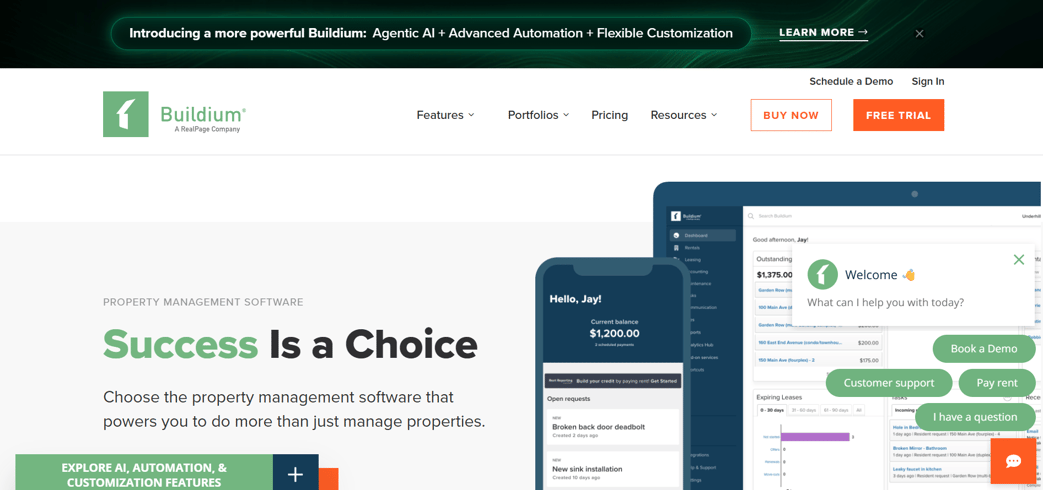
Buildium focuses intensely on residential property management for 20-500 unit portfolios instead of chasing enterprise features. This specialization shows in execution quality.
Key Features:
- Tenant screening integrates seamlessly with leasing workflows without manual data transfer.
- Maintenance tracking automatically routes work orders to the appropriate vendors.
- Owner portals deliver the financial transparency that clients demand without overwhelming complexity.
The Buildium Marketplace provides established third-party integrations that actually work. However, per-unit costs increase quickly for smaller portfolios. Commercial property capabilities remain limited. Advanced features require upgrading to Growth or Premium tiers.
Best For:
- Small to medium residential portfolios (20-500 units).
- Property managers focused primarily on apartments and single-family homes.
- Companies want comprehensive features with a moderate learning curve.
Pricing: Essential $62/month, Growth $192/month, Premium $400/month.
Why It Matters in 2026: Mid-sized residential operators need platforms that execute core functions reliably instead of promising enterprise features they'll never use.
3. AppFolio
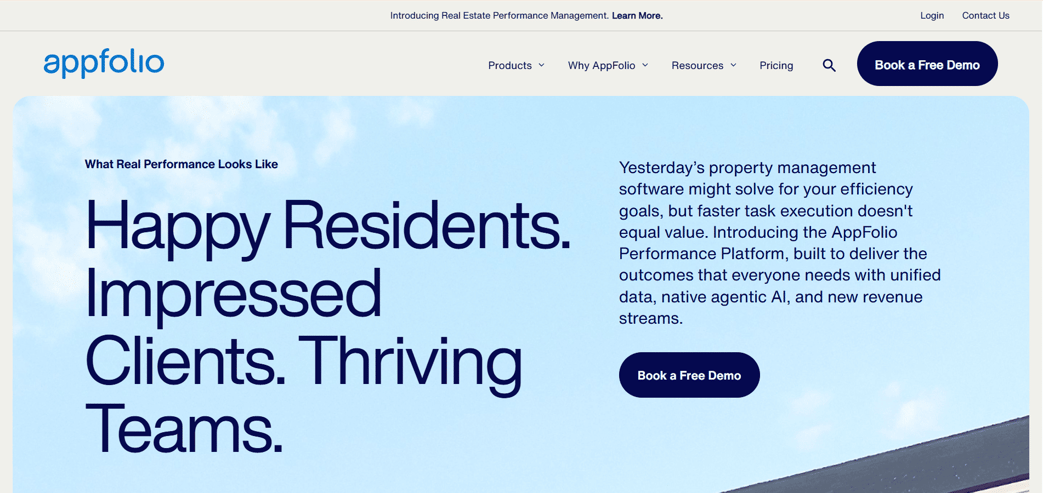
AppFolio's Realm-X AI Copilot genuinely reduces workload instead of creating new administrative tasks. It handles routine leasing communications, schedules showings, and manages renewal workflows effectively for 50-1,000 unit portfolios.
Key Features:
- The intuitive interface requires minimal training compared to enterprise platforms.
- AppFolio Stack marketplace provides meaningful integrations.
- Their mobile apps deliver strong field functionality.
However, minimum monthly fees start at $280 regardless of unit count. The platform struggles with very large enterprise portfolios above 1,000 units. Commercial property features lag behind residential capabilities significantly.
Best For:
- Mid-sized property managers (50-1,000 units).
- Build-to-rent portfolios.
- Teams seeking AI-powered automation.
- Property managers who want faster onboarding.
Pricing: Starting at $280/month (varies by unit count).
Why AppFolio Matters in 2026:
The Realm-X AI Copilot by AppFolio doesn't feel like a marketing gimmick bolted onto existing software. When you're managing 200 units with a small team, their AI agent genuinely reduces workload rather than creating new administrative tasks, making the difference between growth and burnout.
4. Yardi Voyager
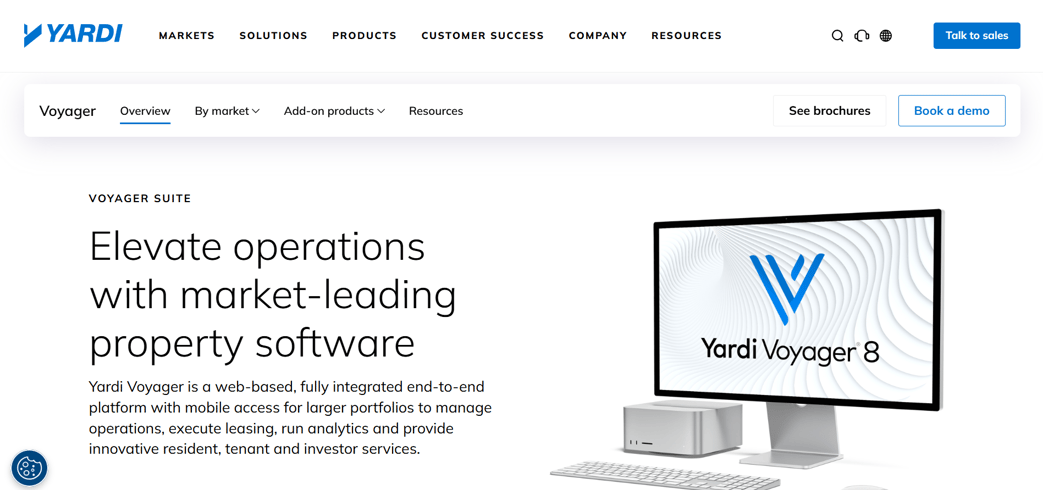
Yardi Voyager is the industry heavyweight for enterprise-level property management, particularly strong in multifamily and commercial real estate. Affordable housing compliance with 50 different state requirements? Yardi handles it. Global portfolio across 12 countries with different currencies and regulations? Already built in.
Key Features:
- The RentCafe resident portal delivers a modern tenant experience.
- Chat IQ AI handles routine inquiries effectively.
- Compliance tools cover virtually every regulatory requirement.
However, implementation requires serious effort and ongoing training investment. Pricing reaches enterprise levels quickly. The learning curve overwhelms small portfolios. Implementation timelines extend 4-6 months for complex deployments.
Best For:
- Large property management companies (1,000+ units).
- REITs and institutional investors.
- Affordable housing operators.
- Mixed-use enterprise portfolios.
Pricing: Custom pricing (typically high investment).
Why Yardi Voyager Matters in 2026:
Enterprise portfolios managing 1,000+ units with complex compliance requirements need platforms built specifically for that operational scale.
5. RealPage OneSite
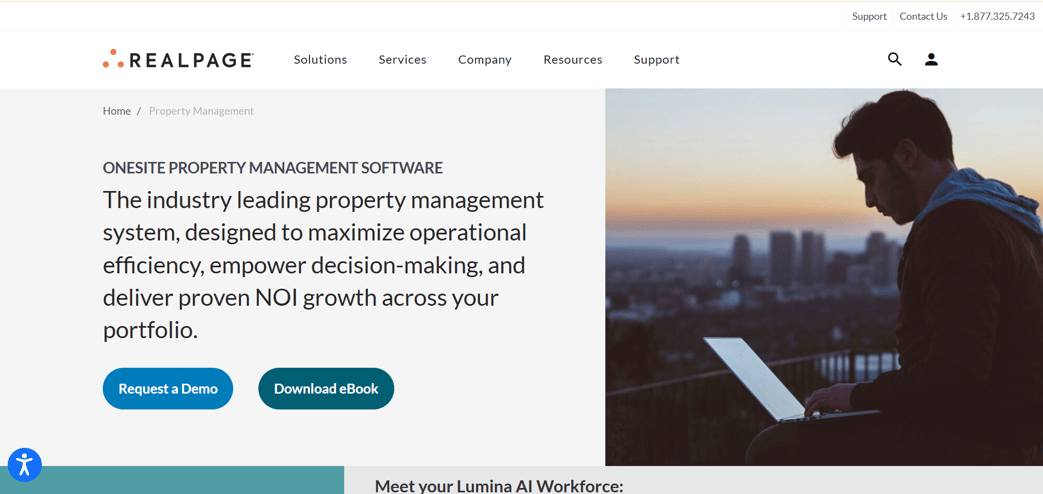
RealPage stands out for its data intelligence and revenue optimization tools. The platform excels at answering questions other systems can't address. Which amenities drive the highest rent premiums? How does your occupancy compare to market competitors? What pricing adjustments would optimize revenue without increasing vacancy?
Key Features:
- The AI revenue management and dynamic pricing tools deliver measurable NOI improvements for 500+ unit multifamily portfolios.
- Marketing automation and advanced analytics justify premium pricing through operational gains.
However, the pricing structure grows quickly complex. Implementation extends 60-90 days for larger portfolios. The platform suits larger operations better than small portfolios.
Best For:
- Large multifamily portfolios (500+ units)
- Companies prioritizing revenue optimization
- Data-driven property operators
- Mixed residential/commercial portfolios
Pricing: Contact for a custom quote.
Why It Matters in 2026:
Operators managing 500+ multifamily units where small occupancy improvements translate to significant revenue gains need analytics that justify platform costs through measurable returns.
6. Entrata
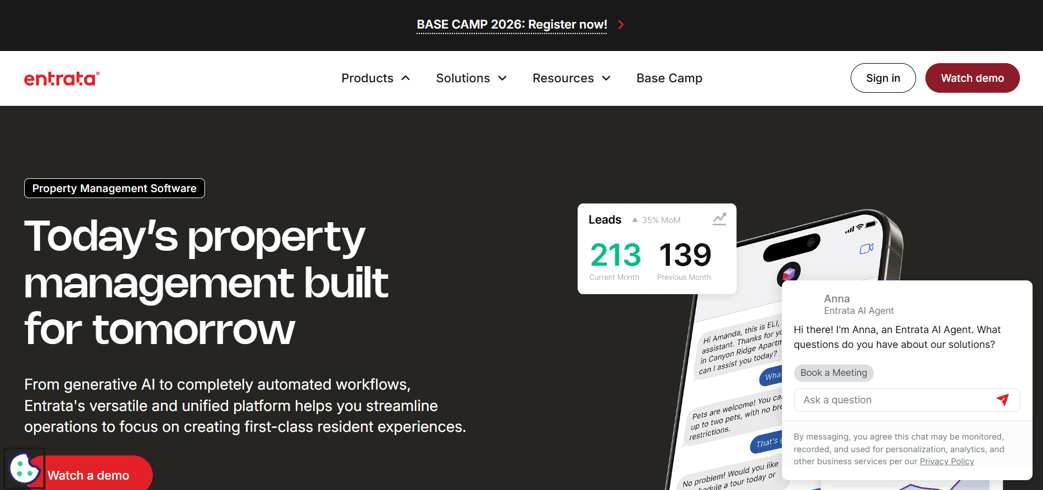
Entrata targets a specific market: growth-stage property managers who need enterprise capabilities without enterprise complexity.
Key Features:
- Their ELI+ Leasing AI handles routine inquiries effectively without constant supervision.
- An open API ecosystem allows genuine customization without requiring dedicated development teams.
- Student housing operators appreciate specialized roommate matching and academic calendar integration.
- The unified platform approach handles 200-2,000 units effectively.
However, pricing lacks transparency, requiring custom quotes. Smaller operators find the platform unnecessarily complex. Global market support remains limited compared to enterprise alternatives.
Best For:
- Growth-stage property managers.
- Student housing operators.
- Companies that are seeking automation.
- Mid to large portfolios (200-2,000 units).
Pricing: Contact for a custom quote.
Why Entrata Matters in 2026:
In 2026, student housing operators particularly appreciate Entrata's specialized features for roommate matching and academic calendar integration that other platforms treat as afterthoughts.
7. Propertyware
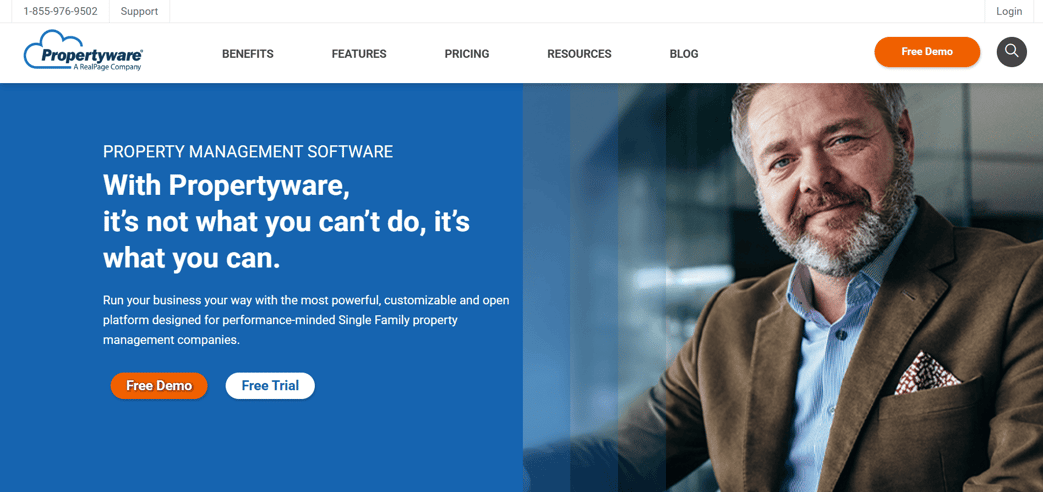
Propertyware recognized early that single-family property managers have different needs than multifamily operators. Scattered properties across different neighborhoods require different workflows than centralized apartment complexes. Propertyware is built specifically for this reality.
Key Features:
- Their customization capabilities prevent software from becoming operational bottlenecks as workflows evolve.
- Transparent per-unit pricing makes budgeting straightforward.
- Open API enables meaningful integrations.
However, setup fees equal 2x the monthly subscription, creating high initial costs. Commercial property capabilities remain limited. Customization requires technical knowledge. Per-unit costs compound quickly as portfolios grow.
Best For:
- Single-family home portfolios.
- Property managers who want customization.
- Companies managing 50-500 units.
- Operators who need flexible workflows.
Pricing:
- Basic: $1/unit/month ($250 minimum).
- Plus: $1.50/unit/month ($350 minimum).
- Premium: $2/unit/month ($450 minimum).
- Setup fee: 2x monthly subscription.
Why It Matters in 2026:
In 2026, the customization capabilities matter more than they initially appear. When you manage 200 single-family homes across 5 cities, the ability to create custom workflows for different property types and markets prevents your software from becoming an operational bottleneck.
8. TenantCloud
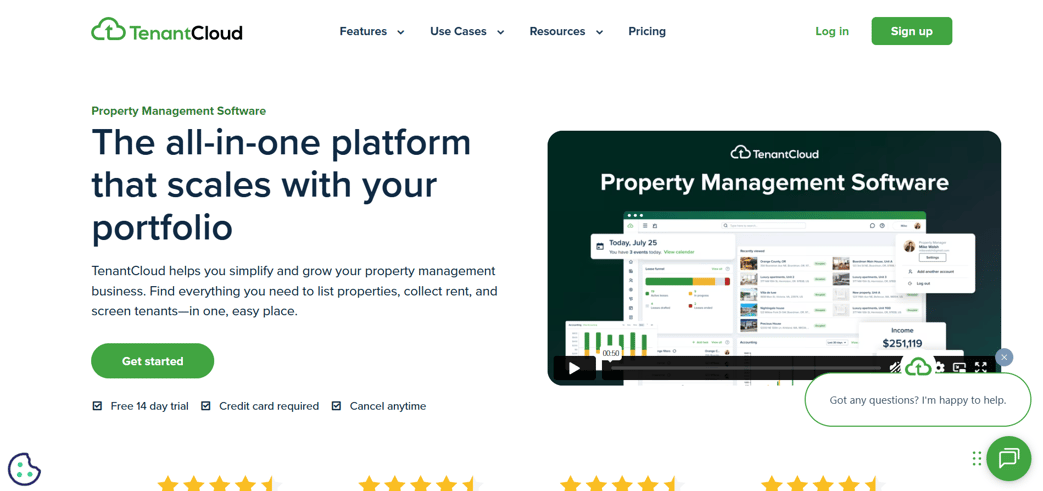
TenantCloud solves a specific problem: landlords managing 1-20 units who need basic property management tools without monthly subscription costs.
Key Features:
- TenantCloud's free tier covers essential functions for 1-20 unit landlords without monthly subscription costs.
- Online rent collection works reliably.
- Tenant screening reports arrive promptly.
- Digital leases handle standard agreements adequately.
- Cloud document storage provides basic organization.
However, financial reporting lacks depth for tax preparation. Maintenance tracking stays rudimentary without advanced workflow routing. Integration options remain minimal compared to paid platforms. The platform cannot scale beyond 20 units effectively without significant limitations.
Best For:
- Landlords with 1-20 units.
- New property managers.
- Budget-conscious operators.
Pricing: Free for basic features, paid plans $16.50-60/month
Why TenantCloud Matters in 2026:
Today, small landlords struggle in property management. But they need property management software before committing to paid platforms, and functional tools without an upfront financial commitment.TenantCloud provides genuine value to them.
9. Rent Manager
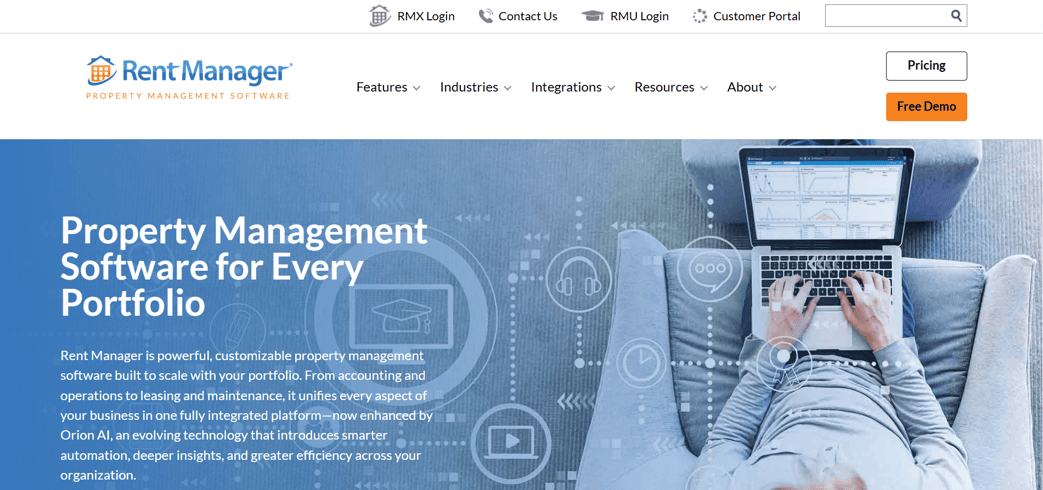
Rent Manager occupies an unusual position in current property management software reviews. It offers both cloud-based and desktop versions, when the entire industry moved to cloud-only years ago. This seems outdated until you encounter property managers with legitimate reasons for preferring local data storage.
Key Features:
- Rent Manager serves property managers in areas with unreliable internet or those working under contracts requiring specific data residency.
- Rent Manager University provides educational resources for ongoing training.
- The platform suits legacy system preferences rather than modern cloud-first teams.
However, the interface is old compared to modern alternatives. Implementation fees equal 2x monthly costs, creating a high initial investment.
Best For:
- Property managers who prefer desktop software.
- Companies with legacy system preferences.
- Mid-sized portfolios (100-500 units).
Pricing: Contact for a quote (Basic, Plus, Premium bundles). The implementation fee is 2x the monthly cost.
Why It Matters in 2026:
Property managers with legitimate reasons for local data storage need desktop options that have disappeared from most modern platforms. Rent Manager provides value to them.
10. Baselane

Baselane takes a finance-first approach rather than trying to be an all-in-one property management platform like Buildium or AppFolio. It is designed primarily for landlords who want tighter control over banking, bookkeeping, and tax reporting.
Key Features:
- Their integrated banking accounts eliminate manual transaction entry completely.
- Automated bookkeeping categorizes transactions correctly without constant oversight.
- Tax-ready reports are generated automatically for Schedule E preparation.
- It is cost-effective; the core plan costs nothing monthly.
However, property management features beyond financials remain limited. The platform cannot support portfolios beyond 50 units effectively. Commercial property support does not exist.
Best For:
- Small property investors.
- Landlords prioritizing financial tracking.
- Property managers with 1-50 units.
- Independent landlords.
Pricing:
- Core $0/month, Smart $20/month (annual billing)
Why Baselane Matters in 2026:
Small property investors managing 1-50 units who prioritize financial accuracy over comprehensive property management features need specialized tools at minimal cost. Baselane delivers exactly what matters most at minimal cost.
Property management software reviews typically end with platform comparisons. The real value comes from understanding which features actually matter for your specific situation. Marketing materials list hundreds of capabilities. Only eight truly determine whether your software becomes a productivity multiplier or an expensive administrative burden.
8 Key Features to Look for in Property Management Software
Choosing property management software based on brand recognition or price alone leads to expensive mistakes. The features you select determine whether your platform becomes a productivity multiplier or just another administrative burden.
Focus on these eight critical capabilities that directly impact daily operations.
- Financial Management: Automates rent collection, accounting, reconciliations, owner distributions, and tax compliance across entities and currencies. Supports ACH, credit cards, wire transfers, and has 1099 e-filing capabilities.
- Lease & Tenant Management: Manages the full tenant lifecycle, digital leases, screening, renewals, deposits, and self-service portals.
- Maintenance & Work Orders: Centralizes requests, vendor assignments, preventive maintenance, asset tracking, and service history.
- Marketing & Leasing: Accelerates leasing with listing syndication, lead tracking, online applications, and virtual tours.
- Reporting & Analytics: Delivers portfolio-level insights on occupancy, revenue, expenses, budgets, and tax readiness.
- Integrations: Connects banking, communication, smart devices, and third-party tools via APIs and marketplaces.
- Mobile Accessibility: Supports on-site work with full-feature mobile apps for both Android and iOS, offline access, alerts, and uploads.
- Property Type Flexibility: Scales across residential, commercial, student, condos, HOAs, affordable, and mixed-use portfolios.
Understanding these features provides the evaluation framework you need. But features alone don't guarantee success. However, the real challenge is selecting a platform that aligns with your specific business context, growth trajectory, and operational requirements.
Wrapping Up
Most property management software reviews stop at feature lists. But, the harder question remains: which platform actually delivers these capabilities in ways that improve your daily operations? Price varies dramatically. Implementation complexity differs wildly.
Your long-term scalability determines whether you're choosing a partner or just delaying your next migration. Your portfolio size, property types, and growth plans should drive software selection. A 10-unit landlord needs different tools than a 1,000-unit property management company. Choose platforms with open APIs and strong integration ecosystems.
For property management companies managing 100+ units across residential and commercial portfolios, RIOO's NetSuite-based platform delivers unmatched integration between property operations and financial management.
Our ability to handle multi-market operations across North America, Europe, Asia, and the Middle East, combined with 30+ pre-built integrations, positions it as the premier choice for scaling property management companies in 2026. Demo your portfolio transformation today.
Frequently Asked Questions
1. How Long Does Property Management Software Implementation Take?
Most implementations take 30–90 days, depending on portfolio size and data readiness. Small portfolios can go live in 2–4 weeks, while portfolios over 500 units typically need 60–90 days. Enterprise setups with custom integrations may take 4–6 months.
2. Can I Migrate Data From My Old Property Management System?
Yes. Most platforms support the migration of tenant, lease, financial, and maintenance data. Vendors usually provide templates or hands-on support. Cleaning and validating data beforehand is critical to avoid errors.
3. What Happens if the Property Management Software Company Goes Out of Business?
Choose financially stable vendors and confirm data ownership and export rights. Maintain regular downloadable backups. Enterprise users should ask about source code escrow for added protection.
4. Do Property Management Platforms Integrate with QuickBooks or Other Accounting Tools?
Most platforms integrate with QuickBooks via direct connections or APIs. Some, like RIOO, offer native NetSuite integration. Integration depth often varies by pricing tier.
5. How Secure is a Cloud-based Property Management Software?
Leading platforms use 256-bit encryption, SOC 2 Type II compliance, regular audits, and redundant backups. Look for GDPR and CCPA compliance. Cloud systems are generally more secure than desktop-based software.


.svg)
.svg)


.svg)