







The U.S. PropTech market reached $21.53 billion in 2025 and continues accelerating toward an estimated $76.84 billion by 2034. This growth isn't happening by chance. Property managers now face tenant expectations shaped by instant banking apps, one-click shopping, and seamless ride-sharing. Manual lease tracking, spreadsheet-based rent collection, and disconnected vendor communication no longer meet the mark.
PropTech companies are stepping into this gap with platforms that simplify repetitive tasks, consolidate financial data in real-time, and improve the tenant experience without adding headcount. The result? Portfolio owners can scale operations while maintaining service quality across hundreds or thousands of units.
Key Takeaways
- Property management firms are increasingly adopting PropTech platforms to simplify workflows, improve tenant experiences, and gain better operational control across growing portfolios.
- Leading proptech companies like RIOO, Yardi, AppFolio, and RealPage dominate property management software with enterprise-grade solutions for portfolios ranging from hundreds to hundreds of thousands of units.
- Transaction-focused platforms, including Zillow, Redfin, and Opendoo,r are transforming how properties are bought, sold, and listed through digital-first experiences.
- Emerging PropTech startups are leveraging AI and IoT to solve specific pain points in access control, maintenance management, and tenant communication.
- Property managers increasingly seek unified platforms that eliminate fragmented systems and reduce manual work across leasing, facility management, and financial operations.
The PropTech Revolution Reshaping U.S. Real Estate
Traditional property management relied on disconnected tools. Accounting lived in one system. Maintenance requests came through phone calls or emails. Lease renewals required manual tracking. Vendor payments needed separate approval workflows.
This fragmentation creates operational drag. Property managers spend hours reconciling data across platforms. Financial reporting lags behind real decisions. Tenant communications slip through cracks when information doesn't flow between systems.
PropTech companies emerged to solve these exact problems. They build platforms that treat property operations as interconnected workflows rather than isolated tasks. The best solutions simplify routine work while giving managers real-time visibility into portfolio performance.
The market responded. According to Fortune Business Insights, North America held 38.03% of the global PropTech market share in 2024, with the U.S. leading adoption across residential, commercial, and mixed-use properties.
Also read: The Impact of Artificial Intelligence on Property Management Platforms
Top 11 PropTech Companies Leading Innovation in 2026
The PropTech landscape offers solutions ranging from specialized point tools to comprehensive platforms. These ten companies represent the strongest combination of innovation, market adoption, and proven results across property management, transactions, and real estate operations.
1. RIOO
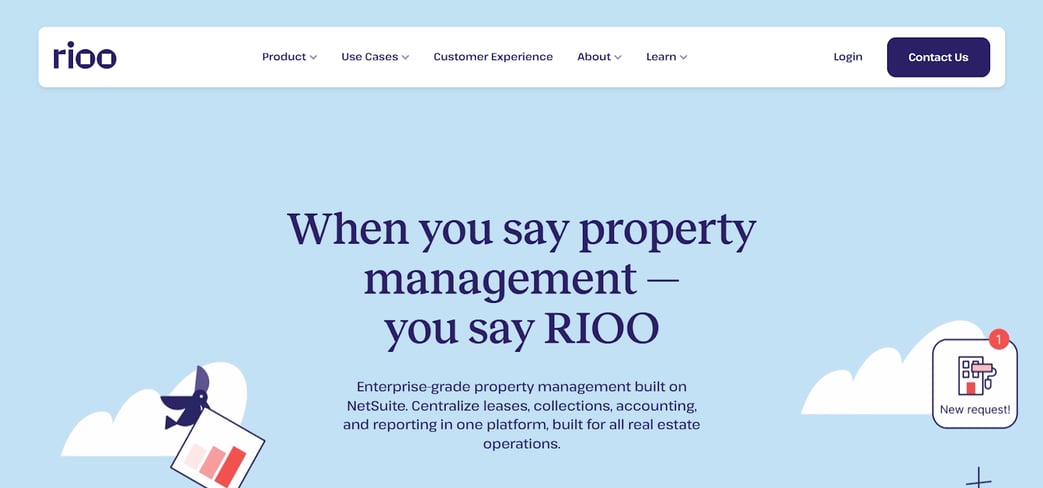
RIOO is a unified property operations platform built for portfolio operators managing multiple property types. It replaces fragmented tools by bringing leasing, maintenance, finance, and communication into one system, without the long implementation cycles of legacy enterprise software.
Key Features
- Unified setup for residential, commercial, and mixed-use properties
- End-to-end leasing lifecycle (inquiry, screening, renewals)
- Preventive and reactive facility management workflows
- Consolidated, real-time financial reporting across portfolios
- Tenant and community manager self-service portals
- Mobile-first interface for field and remote teams
- 30+ integrations with accounting, payments, and listing platforms
Pricing: Not publicly disclosed. Pricing varies based on portfolio size, modules, and integrations.
Demo: Available upon request.
Pros
- True all-in-one platform (not stitched-together modules)
- Handles residential and commercial assets in the same system
- Faster deployment than legacy enterprise platforms
- Strong portfolio-level visibility and reporting
Cons
- Not designed for single-property landlords
- Pricing transparency requires sales engagement
Best For: Medium to enterprise property management firms managing 100–10,000+ units, especially mixed-use or multi-asset portfolios that want to eliminate disconnected systems and centralize operations.
Explore how the RIOO consolidates property setup, leasing workflows, facility management, and financial reporting on a single platform designed for modern property operations.
2. Yardi
Yardi Voyager is the dominant enterprise property management system for large, complex portfolios. It is widely used by institutional owners and operators who need deep accounting, compliance, and global portfolio control.
Key Features
- Enterprise-grade property accounting and general ledger
- Commercial and residential lease administration
- Compliance and audit management
- Owner and tenant portals
- Extensive configuration and custom reporting
- Global support for multiple entities, currencies, and regulations
Pricing: Not publicly disclosed. Pricing is customized based on portfolio size, modules, and geography.
Free Trial / Demo: Demo available on request. No free trial.
Pros
- Industry-leading financial and accounting depth
- Handles very large, multi-entity portfolios
- Strong compliance and audit capabilities
Cons
- Long implementation timelines (3–6 months typical)
- Steep learning curve
- Higher total cost of ownership than mid-market platforms
Best For: Large property management firms with 1,000+ units, institutional operators, and portfolios with complex accounting and compliance needs.
3. AppFolio
AppFolio is a property management platform designed for growing operators who want fast deployment and minimal configuration.
Key Features
- AI-powered leasing assistant (RealmX)
- Organized maintenance workflows
- Online rent collection and payments
- Built-in accounting and reporting
- Mobile-first experience for field teams
- Resident and owner portals
Pricing: Pricing is not publicly listed. Typically charged per unit per month depending on plan (Core, Plus, Max).
Free Trial / Demo: Demo available. No free trial.
Pros
- Very fast implementation (30–45 days)
- Clean, intuitive interface
Cons
- Limited customization compared to enterprise platforms
- Less flexibility for complex commercial portfolios
Best For: Mid-sized property managers (50–5,000 units) prioritize ease of use.
4. RealPage
RealPage is a data-driven property management and revenue optimization platform built for operators who rely heavily on analytics to drive pricing and performance.
Key Features
- AI-based revenue management and pricing tools
- Leasing and prospect management
- Maintenance and facilities workflows
- Advanced portfolio analytics and benchmarking
- Modular architecture for large-scale deployments
Pricing: Not publicly disclosed. Modular, enterprise-level pricing.
Free Trial / Demo: Available upon request. No free trial.
Pros
- Best-in-class revenue and pricing intelligence
- Scales to very large portfolios
- Strong analytics and reporting depth
Cons
- Complexity can be overwhelming for smaller teams
- Higher costs due to modular pricing
Best For: Institutional owners and operators managing large portfolios where revenue optimization is a priority.
5. Zillow
Zillow is the largest consumer real estate marketplace, focused on discovery, listings, and pricing insights rather than property operations.
Key Features
- High-traffic property listings
- Zestimate home valuation engine
- Rental listings and lead generation
- Mortgage pre-approval tools
- Market and neighborhood insights
Pricing: Listing and advertising-based pricing. Costs vary by market and product.
Free Trial / Demo: Not applicable. No traditional demo or trial.
Pros
- Unmatched consumer reach
- Strong brand recognition
- Powerful pricing and market data
Cons
- Not a property management platform
- Limited operational functionality
Best For: Agents, landlords, and sellers seeking visibility and lead generation, not day-to-day management.
6. Redfin
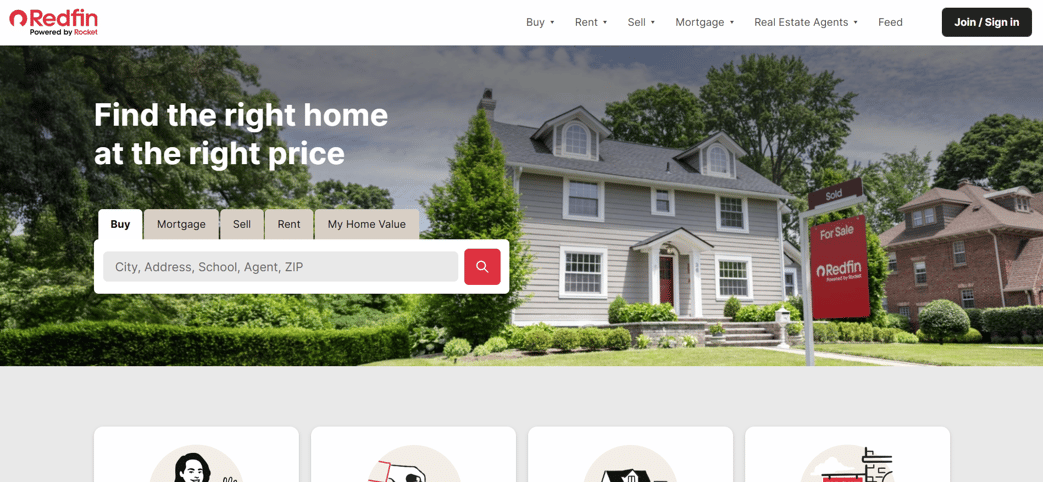
Redfin is a technology-enabled brokerage offering lower commission rates combined with full-service agent support.
Key Features
- MLS-integrated listings
- Agent-backed buying and selling
- Pricing and market analytics
- Integrated mortgage services
- Buyer and seller dashboards
Pricing: 1% listing fee (varies by market). Buyer fees depend on transaction structure.
Free Trial / Demo: Not applicable.
Pros
- Lower commissions than traditional brokers
- Transparent pricing
- Strong consumer experience
Cons
- Not designed for property management operations
- Brokerage-focused rather than portfolio-focused
Best For: Cost-conscious buyers and sellers, not property managers.
7. Opendoor
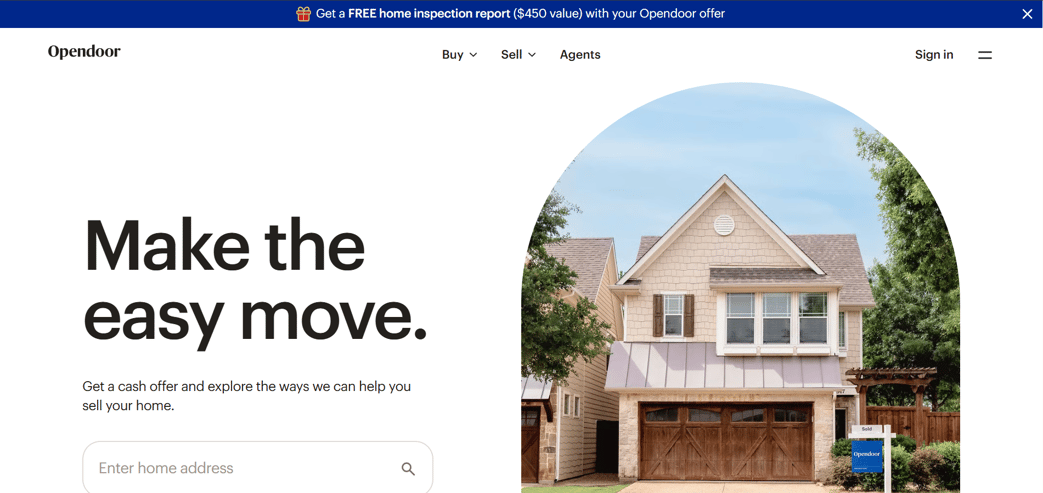
Opendoor pioneered the iBuyer model, offering instant cash offers to homeowners.
Key Features
- Instant home valuations
- Direct home purchases
- Flexible closing timelines
- Digital transaction management
- Inventory marketplace for buyers
Pricing: Service fees vary by market and property. Not publicly standardized.
Free Trial / Demo: Not applicable.
Pros
- Fast, predictable home sales
- Eliminates listing and showing process
Cons
- Limited to eligible properties and markets
- Not a management or leasing platform
Best For: Sellers prioritizing speed and certainty over maximum sale price.
See how RIOO's leasing module simplifies lease creation, renewals, and rent collection to accelerate transaction cycles for property managers.
8. Entrata
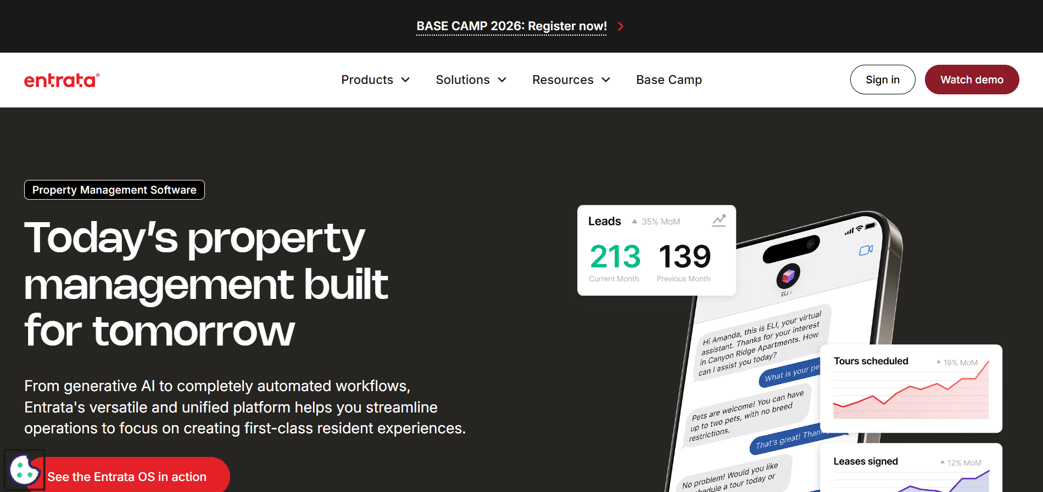
Entrata offers a unified property management platform with strong marketing and resident experience capabilities, especially for multifamily portfolios.
Key Features
- Marketing and lead management
- Resident portals and communication tools
- Integrated accounting
- Leasing and renewals
- Utility management and payments
Pricing: Custom pricing. Not publicly disclosed.
Free Trial / Demo: Demo available. No free trial.
Pros
- Strong marketing and leasing tools
- Faster onboarding than legacy enterprise systems
- Good balance of features and usability
Cons
- Less flexible than Yardi for complex portfolios
- Commercial features are more limited
Best For: Multifamily operators focused on resident experience and leasing performance.
9. Buildium
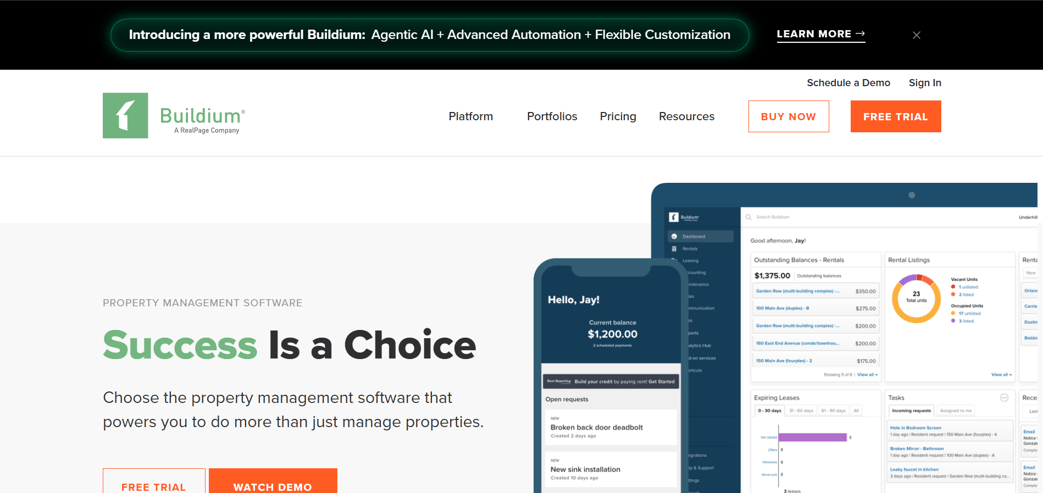
Buildium is a cloud-based property management platform designed for small to mid-sized residential portfolios.
Key Features
- Online rent collection
- Tenant screening
- Digital leasing and e-signatures
- Maintenance tracking
- Accounting and owner reporting
Pricing: Tiered plans starting around $62/month, increasing by feature set.
Free Trial / Demo: 14-day free trial available.
Pros
- Affordable entry point
- Easy to learn and deploy
- Strong for residential use cases
Cons
- Limited scalability for large portfolios
- Less suitable for commercial properties
Best For: Small property managers and landlords managing 10–500 residential units.
10. CoStar Group
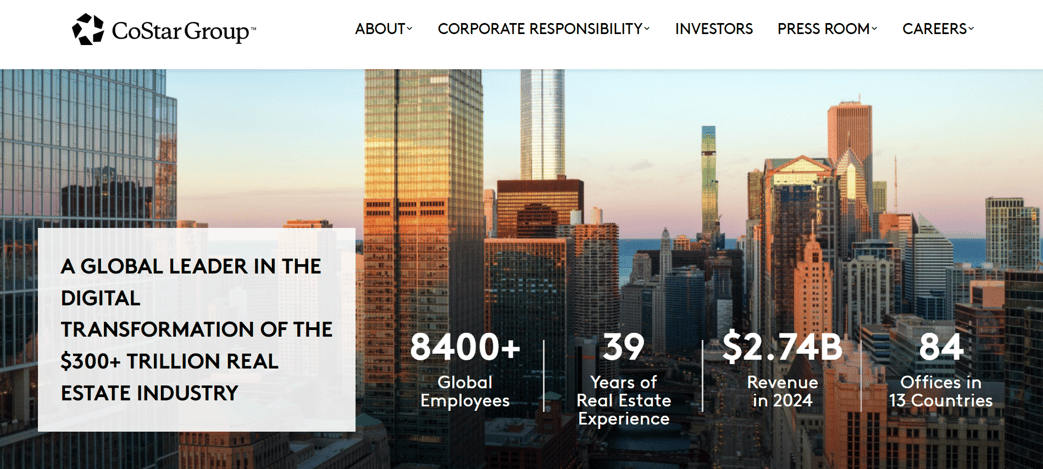
CoStar is the leading commercial real estate data and analytics provider, not an operational management platform.
Key Features
- Commercial market intelligence
- Property and tenant comps
- Forecasting and trend analysis
- LoopNet listing distribution
Pricing: Subscription-based. Pricing not publicly available.
Free Trial / Demo: Demo available. No free trial.
Pros
- Unmatched commercial data depth
- Critical for investment and leasing decisions
Cons
- No property operations or accounting tools
- Expensive for smaller firms
Best For: Commercial brokers, investors, and analysts needing market intelligence, not operational software.
11. VTS
VTS is a commercial leasing and asset management platform focused on deal flow and tenant relationships.
Key Features
- Commercial lease and deal tracking
- Pipeline and forecasting tools
- Tenant engagement analytics
- Portfolio performance dashboards
Pricing: Custom pricing. Not publicly disclosed.
Free Trial / Demo: Demo available on request.
Pros
- Purpose-built for commercial leasing
- Strong visibility into deal pipelines
Cons
- Not a full property management system
- Requires integration with accounting platforms
Best For: Commercial landlords and leasing teams managing office, retail, and industrial assets.
Also read: How Property Management Companies Can Streamline Maintenance with Smart Tools
How Modern Platforms Address Critical Property Management Challenges
Property managers juggle dozens of tasks daily. Lease renewals need tracking. Maintenance requests require routing to appropriate vendors. Rent collection demands follow-up. Financial reports need compilation from multiple sources.
Traditional approaches created information silos. Each task lived in its own system or spreadsheet. Pulling together a complete picture of property performance required manual data aggregation and reconciliation.
Unified Property Operations
Modern platforms consolidate these fragmented processes. Property setup, community management, and unit configuration happen in one place. Dashboards surface key metrics without requiring custom report building.
RIOO exemplifies this approach by centralizing property setup, pricing strategies, and operational workflows. Property managers configure communities, units, and amenities once, then leverage that structure across leasing, maintenance, and financial modules.
Leasing Workflows
Lease management consumes significant time. Creating leases, tracking renewals, managing move-ins and move-outs, screening tenants, and collecting rent each require attention and follow-through.
PropTech platforms organize the repetitive tasks. Digital lease creation pulls property and tenant information. Renewal reminders trigger based on lease end dates. Online rent collection eliminates manual check processing. Tenant screening integrates background checks and credit reports into application workflows.
Proactive Facility Management
Reactive maintenance costs more than preventive care. Waiting for equipment failures creates emergency repair situations, leading to premium pricing and tenant dissatisfaction.
Smart facility management platforms track asset lifecycles, schedule preventive maintenance, and route service requests efficiently. When tenants submit requests through portals or mobile apps, the system assigns tasks to appropriate vendors, tracks progress, and closes loops.
RIOO's facility management module combines service request tracking, preventive maintenance planning, and asset management to reduce emergency repairs and extend equipment life.
Real-Time Financial Visibility
Financial reporting shouldn't lag operations by days or weeks. Property managers need current data to make decisions about pricing, expenses, and capital allocation.
Modern platforms provide real-time financial dashboards. Income and expense tracking updates continuously. Vendor payments flow through approval workflows without leaving the system. Consolidated reporting across multiple properties eliminates the need for manual spreadsheet consolidation.
This visibility transforms financial management from periodic reporting to ongoing monitoring, enabling faster responses to variances and better cash flow management.
Key Benefits Driving PropTech Adoption
Property management companies adopt PropTech platforms for tangible operational improvements, not theoretical advantages.
- Operational Efficiency: Organized workflows reduce time spent on routine tasks. What previously required multiple team members now runs with minimal intervention. Property managers report handling larger portfolios without proportional increases in staff.
- Reduced Manual Work: Data entry, report generation, and routine communications shift from manual tasks to streamlined processes. This frees staff to focus on tenant relationships, strategic decisions, and value-added activities.
- Improved Communication: Tenant portals, vendor management systems, and internal team dashboards ensure information flows to the right people at the right time. Fewer requests fall through the cracks, and response times improve.
- Scalability: Traditional systems break under growth. Modern platforms scale from dozens to thousands of units without requiring complete system overhauls or linear staff additions.
- Financial Accuracy: Data capture and real-time reporting reduce errors from manual entry and consolidation. Financial statements reflect current operations rather than delayed snapshots.
Also read: How Technology is Transforming Property Management for Single & Multifamily Housing
Why Unified Platforms Beat Fragmented Systems?
The choice between integrated platforms and point solutions carries long-term implications.
Fragmented systems create integration headaches. Each vendor upgrade risks breaking connections. Custom integrations require ongoing maintenance. Staff need training on multiple interfaces. Data synchronization issues create discrepancies between systems.
Unified platforms eliminate these friction points. Property data flows naturally between leasing, maintenance, and financial modules. Updates don't break internal integrations. Staff learn one interface that covers all operations.
The integration advantage extends beyond convenience. When all data resides in a single system, analytics become more powerful. Managers can correlate maintenance costs with property performance, link tenant satisfaction to renewal rates, and identify optimization opportunities that fragmented data obscures.
PropTech Market Trends Shaping 2026 and Beyond
The PropTech landscape continues evolving beyond current offerings.
AI Integration: Property management platforms increasingly deploy AI for tasks ranging from lease analysis to maintenance prediction. These systems optimize decisions based on patterns humans struggle to see.
Mobile-First Design: Property managers work from multiple locations. Tenants expect app-based communication. Vendors need mobile access for work orders. Platforms built for desktop-first experiences struggle against competitors designed from the ground up for mobile.
Predictive Analytics: Moving beyond reporting what happened to predicting what will happen. Revenue management tools forecast optimal pricing. Maintenance systems predict equipment failures before they occur. These capabilities transform property management from reactive to proactive.
Smart Building Integration: IoT sensors and connected devices generate real-time data about building performance, occupancy patterns, and energy usage. Platforms that integrate this data enable more responsive management and operational cost reduction.
Payment Integration: Embedded payment processing reduces friction in rent collection, vendor payments, and resident charges. When payments flow through the same platform managing other operations.
Also read: The Future of Commercial Property Management: Trends and Innovations
Conclusion
PropTech companies are fundamentally changing property management operations. The shift from fragmented tools to unified platforms accelerates as portfolio operators recognize the operational advantages and cost savings these systems deliver.
The best platforms don't just digitize existing processes. They reimagine workflows around real-time data and seamless communication. Property managers gain time to focus on strategic decisions rather than administrative tasks. Tenants receive better service through faster response times and modern communication channels. Financial teams access current data to make better decisions.
Whether managing residential apartments, commercial offices, or mixed-use developments, the right PropTech platform becomes operational infrastructure that scales with portfolio growth.
RIOO delivers this comprehensive approach through unified modules for property management, leasing, facility maintenance, and financial operations. Schedule a demo to see how RIOO transforms property management workflows across your entire portfolio.
FAQs
1. Which PropTech platform is best for property management?
The best platform depends on portfolio size and needs. Yardi suits large enterprises requiring deep customization. AppFolio works well for growing firms prioritizing simplification. RealPage excels for data-driven operators. RIOO offers comprehensive features for medium to enterprise portfolios managing diverse property types.
2. How much does PropTech software cost for property managers?
Pricing varies significantly by platform and portfolio size. Enterprise solutions like Yardi require custom quotes and can cost thousands of dollars per month. Mid-market platforms like AppFolio and Buildium typically charge per unit managed. Expect costs from $1-10+ per unit monthly, depending on features and scale.
3. What is the difference between Zillow, Redfin, and Opendoor?
Zillow is primarily a listing marketplace and data platform. Redfin combines technology with traditional brokerage services at reduced commission rates. Opendoor is an iBuyer that purchases homes directly with cash, eliminating traditional listing processes. Each serves different needs in the transaction cycle.
4. Why are property managers switching to unified PropTech platforms?
Fragmented systems create data silos, integration headaches, and manual work. Unified platforms eliminate these issues by consolidating property setup, leasing, maintenance, and financial operations in one system with real-time data flow, reducing errors and enabling portfolio scalability without proportional staff increases.