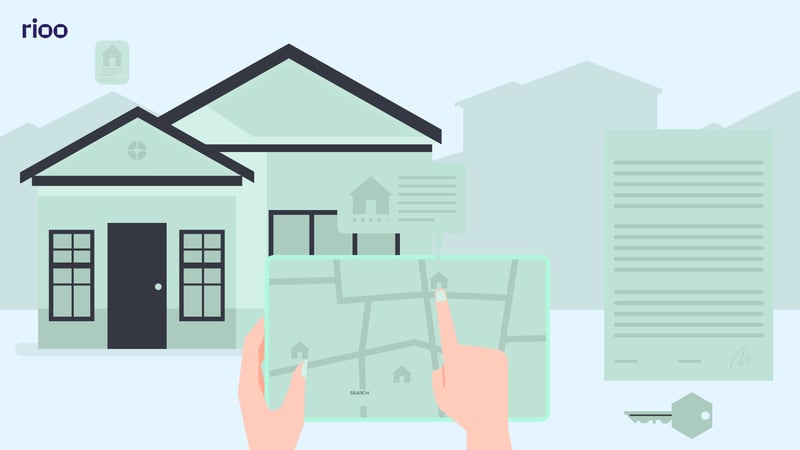
The right property management software for a growing portfolio must handle multi-entity accounting, automated lease billing, real-time budget versus actual reporting, CAM reconciliation, ASC 842 compliance, investor reporting, workflow automation, native architecture, multi-currency support, and a proven data migration process. Most platforms handle one or two of these well. The ones that handle all ten are the ones that scale with you without creating new operational problems as you grow.
There is a moment every growing property company reaches where the tools that worked perfectly at ten properties start working against you at thirty. The month-end close that used to take three days now takes two weeks. The consolidation spreadsheet that once had three tabs now has twenty-eight, and nobody is confident it is right. The investor report that used to take an afternoon now takes three days of pulling data from four different systems, reformatting it, and hoping nothing has moved between export and delivery.
That moment is not a people problem. It is a software problem. And the solution is not adding another tool to the stack. It is choosing one platform that was built to handle what your portfolio is becoming, not what it was when you started.
Here are the ten criteria that separate a platform that grows with you from one that becomes the bottleneck.
Why Most Property Management Software Fails Growing Portfolios
Most property companies start with a purpose-built property management system for operations and a separate general ledger, often QuickBooks or a basic accounting tool, for finance. That combination works at five or ten properties. It is affordable, familiar, and gets the job done.
The problem is structural. The two systems do not share a database. Every piece of data that needs to move from the operational system to the financial system requires a human to move it. At five properties, that is a manageable inconvenience. At thirty properties across fifteen legal entities, it is a full-time job that still produces errors.
Managing a growing portfolio without the right software creates blind spots. Lease data ends up scattered across spreadsheets, critical rent reviews get missed, and finance teams spend hours reconciling reports that should take minutes.
According to Re-Leased's 2026 property management software guide, the result is revenue leakage, operational risk, and a team stretched too thin to focus on what matters.
The ten criteria below are not a wish list. They are the specific capabilities that eliminate the problems that accumulate when a growing portfolio is managed on software that was not built for its current scale.
The 10 Things to Look for in Property Management Software for Growing Portfolios
1. Multi-Entity Accounting and Consolidated Reporting
Most property companies operate through multiple legal entities. One entity per property is standard practice for liability isolation and financing requirements. The platform you choose must handle this structure natively, not through workarounds.
What to look for is a system where each entity has its own general ledger, its own financial statements, and its own chart of accounts, while sharing the same database as every other entity in the group. Intercompany transactions, including management fees, shared service allocations, and intercompany loans, should be created automatically and eliminated at consolidation without manual journal entries. The consolidated P&L across the entire portfolio should be available in real time without any manual aggregation.
If you are currently copying entity-level trial balances into a consolidation spreadsheet every month, this is the capability that will change your close process more than any other single improvement.
For a detailed explanation of how multi-entity accounting works for property groups, see the RIOO guide to NetSuite multi-entity accounting for property groups.
Ask your vendor: How many subsidiaries can the platform manage natively? How are intercompany transactions handled at consolidation?
Red flag if missing: Manual consolidation spreadsheet at every period end.
2. Real-Time Budget Versus Actual Visibility
A budget that cannot be compared to actuals in real time is a historical document, not a management tool. By the time a manually assembled budget versus actual report reaches the asset manager's desk, the data it contains is already outdated.
What to look for is a platform where the annual budget and the live general ledger are held in the same system, with variance reports updating automatically every time a transaction is posted. A CFO reviewing the portfolio at any point during the month should be able to see exactly where each property is tracking against budget without waiting for a report to be prepared.
Ask your vendor: Does the budget versus actual report update in real time, or does it require a manual export and reconciliation?
Red flag if missing: Budget held in a spreadsheet that is reconciled to actuals monthly.
3. Automated Rent Billing From Lease Data
Rent billing should not require manual action every month. In a properly configured platform, the lease record drives the invoice. The contracted rent, the rent escalation schedule, any rent-free periods, and ancillary charges are all configured at lease commencement. The system generates and sends invoices automatically at each billing cycle without a property manager or finance team member initiating the process.
What to look for is a billing engine that reads lease terms directly, handles straight-line rent adjustments for leases with rent-free periods or step rents, and generates accurate invoices across multiple tenancies simultaneously without manual input.
Ask your vendor: Does rent billing run automatically from lease data, or does someone initiate it each month?
Red flag if missing: Manual invoice creation per tenancy each billing cycle.
4. CAM Reconciliation Built Into the Platform
Annual common area maintenance reconciliation is one of the most operationally painful processes in commercial property management. Where it is managed in a spreadsheet that is disconnected from the expense ledger, the reconciliation takes weeks, the calculations are difficult to verify, and the results are routinely disputed by tenants who have no confidence in the numbers.
What to look for is a CAM reconciliation workflow that reads actual expenses from the general ledger, calculates each tenant's proportionate share automatically based on the lease terms, and generates reconciliation statements that can be sent directly to tenants. The process should take hours, not weeks.
Ask your vendor: Is CAM reconciliation built into the platform or is it a spreadsheet process that runs outside the system?
Red flag if missing: Annual CAM reconciliation managed in Excel with manual data pulls from the accounting system.
5. ASC 842 and IFRS 16 Compliance Support
According to the Mordor Intelligence property management software market report, in North America and Europe, mandatory compliance with ASC 842 and IFRS 16 continues to drive strong adoption momentum among property groups upgrading their financial systems.
For property companies, this means straight-line rent calculations for operating leases with rent-free periods or step rents, deferred revenue management for prepaid lease payments, and right-of-use asset recognition for leases the company holds as a lessee. All of these require accurate lease data connected to the accounting system.
What to look for is a platform where straight-line rent schedules are generated automatically from lease data and the adjustment entries are posted at period end without manual journal entries.
Ask your vendor: How does the platform handle straight-line rent for leases with rent-free periods? Are the adjustment entries automated?
Red flag if missing: Straight-line rent managed in a spreadsheet outside the accounting system.
6. Investor and Lender Reporting
As a portfolio grows, so do the reporting expectations of the people who have capital in it. Institutional investors expect property-level P&L statements, fund-level consolidated financials, and distribution calculations on a predictable schedule. Lenders expect covenant compliance reporting, loan-to-value monitoring, and debt service coverage ratios.
A platform that cannot produce these reports directly from live data requires the finance team to assemble them manually from exports, which takes time, introduces errors, and delays the reporting cycle that investors and lenders are depending on.
What to look for is role-based reporting that produces investor-ready financials directly from the live general ledger, with the ability to schedule automated report delivery to investor inboxes without manual preparation each period.
Ask your vendor: Can investor and lender reports be generated directly from the system and scheduled for automated delivery?
Red flag if missing: Investor reports assembled manually in a spreadsheet from data exports each period.
7. Workflow Automation for Approvals and Escalations
As a portfolio grows, the volume of decisions requiring approval grows proportionally. Work order approvals, lease variation approvals, capital expenditure authorisations, and vendor payment releases all need a defined process. Without workflow automation, those decisions pile up in email chains with no tracking, no deadline enforcement, and no escalation when approvals are delayed.
What to look for is a native workflow engine that routes approvals automatically to the correct person based on the transaction type and value, sends reminders when approvals are overdue, and escalates to the next level without manual follow-up. The entire approval history should be stored against the relevant record for audit purposes. For a detailed explanation of how workflow automation works in property management, see the RIOO guide to NetSuite SuiteFlow for property management.
Ask your vendor: How are approval workflows configured? Is escalation automatic when approvals are not completed within a defined timeframe?
Red flag if missing: Approvals managed through email chains with no system tracking or deadline enforcement.
8. Native Architecture Over API Integration
A platform that connects your property management operations to your accounting system through an API is creating a reconciliation problem every time the sync fails, falls behind, or produces a mismatch between the two systems. In a growing portfolio, that reconciliation problem compounds across entities, time zones, and reporting cycles until it is consuming more finance team time than the manual processes the software was supposed to eliminate.
Native architecture means the operational and financial data share the same database. Lease records, rent invoices, maintenance costs, and general ledger entries all live in the same system. There is no sync process, no reconciliation step, and no gap between what the operational team sees and what the finance team reports. The operational transaction is the financial transaction.
Ask your vendor: Does the property management layer run inside the accounting system, or does it connect to it through an integration?
Red flag if missing: Nightly or real-time sync between two separate systems with a reconciliation process to catch mismatches.
9. Multi-Currency Support for International Portfolios
A property group that holds assets in multiple countries needs a platform that handles the full complexity of multi-currency accounting without requiring manual processes at any step. This means currency conversion at the transaction level, period-end revaluation of foreign currency balances with automatic FX gain and loss recognition, and consolidation translation that applies the correct rates to income statement and balance sheet items in accordance with IFRS and US GAAP.
Where these processes are manual, they consume significant finance team time at every period end and introduce translation errors that accumulate across reporting periods.
Ask your vendor: How does the platform handle period-end revaluation of foreign currency balances? Is the consolidation translation automated?
Red flag if missing: Currency translation managed in a spreadsheet at period end.
10. Implementation Track Record and Data Migration Support
The best platform in the world does not deliver value if it is not correctly implemented, and the implementation risk in property management software is concentrated in the data migration. Lease records, historical financial data, tenant information, and open balances must all be migrated accurately from the existing system before go-live. Where that migration is managed poorly, the new platform starts its operational life with incorrect data and the finance team spends months reconciling the discrepancy.
What to look for is a vendor with documented implementations in portfolio types and sizes similar to yours, a structured data migration methodology that includes lease data mapping and historical balance setup, and a parallel run capability that allows the new system to be validated against the existing system before the cutover date.
Ask your vendor: What does the data migration process involve? How are lease records mapped from the existing system? Is parallel running supported?
Red flag if missing: No structured migration methodology and no reference implementations in comparable portfolio types.
How to Use This Checklist When Evaluating Platforms
Use this table as your evaluation framework when comparing platforms. Every criterion where a vendor cannot give you a direct answer is a gap that will cost you time and money after go-live.
| Criterion | What to Ask Your Vendor | Red Flag If Missing |
|---|---|---|
| Multi-entity accounting | How many subsidiaries can the platform manage natively? | Manual consolidation at period end |
| Automated rent billing | Does billing run automatically from lease data? | Manual invoice creation per tenancy |
| CAM reconciliation | Is CAM reconciliation built in or a spreadsheet process? | Annual spreadsheet reconciliation |
| ASC 842 compliance | How does the platform handle straight-line rent? | Manual journal entries for adjustments |
| Investor reporting | Can investor reports be automated and scheduled? | Manual report assembly each period |
| Workflow automation | Is escalation automatic when approvals are delayed? | Approvals managed through email chains |
| Native architecture | Is property management inside the accounting system? | Nightly sync between two separate systems |
| Multi-currency | Is consolidation translation automated at period end? | Manual currency translation in spreadsheet |
| Data migration | What does the lease data migration process involve? | No structured migration methodology |
When Does Your Portfolio Need a More Powerful Platform?
Not every property company needs to change platforms immediately. The right time to evaluate a new system is when you recognise two or more of the following signals in your current operation.
Your month-end close consistently takes longer than five business days. Finance teams at well-run property groups close in three to five days. If your team is regularly running past day eight or ten, the close process is absorbing management time that should be going elsewhere.
You are managing more than five legal entities in a separate consolidation spreadsheet. The moment the consolidation lives in a spreadsheet rather than in the accounting system, every period end carries the risk of a version control error, a formula mistake, or a missing intercompany elimination.
Your investor or lender reporting requires more than two days of manual preparation. If a report that should pull directly from the accounting system requires two days of manual data assembly, the platform is not serving the portfolio's reporting obligations.
Your CAM reconciliation takes more than two weeks per property per year. A CAM reconciliation that takes two weeks is being managed outside the accounting system. A reconciliation that runs inside the system with live expense data should take a fraction of that time.
You are adding headcount to manage portfolio growth rather than adding properties. When the limiting factor on portfolio growth is the number of people required to manage the administrative and reporting workload, the platform is the constraint, not the team.
If you recognise three or more of these signals, the cost of staying on the current platform is already exceeding the cost of changing it. The Property Manager's Guide to NetSuite covers the full decision framework for property companies evaluating whether a move to an ERP-level platform makes sense for their current portfolio size and structure.
Frequently Asked Questions
Q1: What is the most important thing to look for in property management software for a growing portfolio? Multi-entity accounting and consolidated reporting is the most critical criterion because without it the finance team is manually consolidating financial statements across entities in spreadsheets at every reporting period, which creates errors, delays, and audit exposure.
Q2: When should a property company move from a standalone property management system to an ERP?
The right time is when the portfolio has more than five legal entities, when investor reporting requires more than two days of manual preparation, or when the month-end close consistently takes longer than five business days.
Q3: What is the difference between a property management system and a property management ERP?
A property management system handles operational workflows including leasing, rent collection, and maintenance, while a property management ERP combines those operational capabilities with full financial management including multi-entity accounting, consolidated reporting, budgeting, and compliance.
Q4: Does property management software need to handle ASC 842 compliance?
Yes, any platform used by a company with institutional investors or lenders requiring audited financials must support ASC 842 straight-line rent calculations, right-of-use asset recognition, and lease liability amortisation.
Q5: What should I ask a property management software vendor before committing?
Ask whether the platform handles multi-entity consolidation natively, whether rent billing runs automatically from lease data, how CAM reconciliation works, whether ASC 842 compliance is built in, and what the data migration process involves for existing lease records.
Conclusion
The criteria that matter when your portfolio has ten properties are not the same criteria that matter when it has fifty. At ten properties, a platform that handles rent collection and basic accounting is sufficient. At fifty properties across multiple entities, the platform decision is a strategic one that determines how fast you can grow, how accurately you can report, and whether your finance team is spending its time on analysis or on administration.
The ten criteria above represent the difference between property management software that was built for where your portfolio is today and property management software that was built for where your portfolio is going. Native architecture, automated lease billing, multi-entity consolidation, built-in CAM reconciliation, and investor-grade reporting are not premium features. They are the baseline requirements for a professional property portfolio that is serious about scale.
Managing a growing property portfolio on a platform that was built for a smaller operation?
See how RIOO on NetSuite handles multi-entity accounting, automated lease billing, CAM reconciliation, and real-time investor reporting for commercial and residential portfolios at riooapp.com/netsuite-property-accounting-software


.svg)
.svg)


.svg)