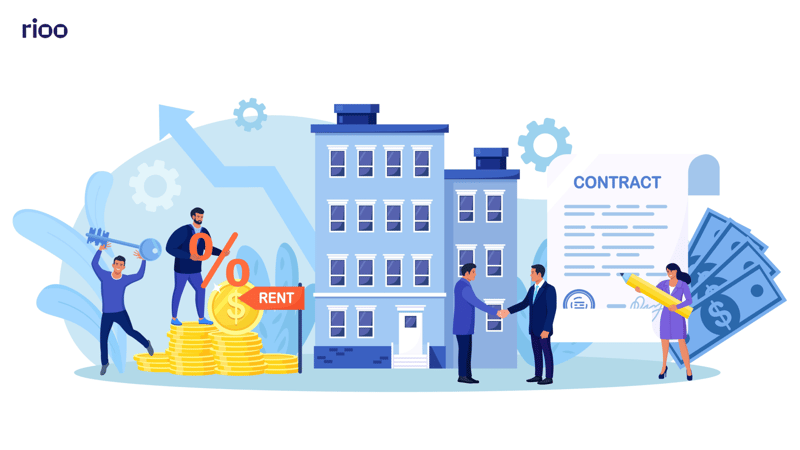
The invoice is the last thing that determines what a repair costs. The first is the payment model. Long before a technician picks up a wrench, your contract has already decided whether speed, efficiency, extra hours, or additional materials will be rewarded. The repair simply follows those incentives.
A garbage disposal fails. It is a common, well-understood repair, the kind a competent technician finishes in under an hour with a part that costs very little. Yet the invoice comes back at three times what you expected. There was a diagnostic visit, then a return visit for the part, followed by time spent checking adjacent fittings while they were already there. Nothing on the bill is obviously unreasonable. The total is simply far higher than it feels like it should be.
The easy explanation is that the vendor is padding the bill. Maybe they are. But look across a hundred invoices from a dozen vendors and a different pattern emerges. The cost of a repair often correlates less with what actually broke than with how the person fixing it gets paid.
The Bill Follows The Incentive, Not The Breakage
Think about what an hourly rate actually rewards. Every additional hour on your job is more money for the vendor and more cost for you. So is every additional part, every check of the adjacent fittings, and every return trip that could have been one visit.
The vendor does not have to be dishonest for this to bend the bill upward. They simply have little reason to finish faster than they need to. The same is true of any arrangement where the fee rises with the cost, including cost-plus and percentage-of-cost contracts commonly used on larger projects, where the contractor earns more by spending more.
Economists have a name for this because it appears almost everywhere incentives and costs become separated. It is called moral hazard, the tendency for people to take more costly actions when someone else bears the consequences. The insured drive a little less carefully. Diners splitting the bill are more likely to order the expensive dish. Vendors whose income rises with every additional hour naturally organize work in ways that produce more hours. None of this requires bad intent. People respond to the incentives in front of them.
That leads to an uncomfortable conclusion. When maintenance costs consistently run high, the invoice often reflects the contract more than the repair itself.
This is not only a vendor problem. Consider an on-site manager approving spending against an owner's budget. If that spending has little effect on the manager's own results, they feel very little of the financial consequence of choosing the more expensive vendor or approving unnecessary work. The same mechanism appears again. Wherever the person making the spending decision is not the person carrying the cost, spending naturally drifts upward.
The Clean Fix Is To Make The Vendor Feel The Cost
The most direct answer is to move the risk back onto the person making the decision. A flat-rate or fixed-price arrangement for a defined job does exactly that. Once the price is agreed, every extra hour and unnecessary part comes out of the vendor's own margin rather than yours. Their incentive immediately changes from extending the work to completing it efficiently. A disposal replacement costs what a disposal replacement costs regardless of how long they take.
There is a catch worth naming because the same incentive now runs in reverse. A vendor working under a fixed price has a reason to cut corners, use cheaper parts, or skip careful checks because every shortcut improves their margin. Fixed pricing therefore works best alongside clear quality standards and accountability for callbacks. Aligning incentives is not simply about reducing cost. It is about making sure vendors benefit from doing the work well and efficiently while losing from doing it slowly or poorly.
Where You Cannot Change The Deal, Remove The Information Gap
You will not always be able to move every vendor onto flat rates. Emergency work, specialized trades, and long-standing relationships often remain on time-and-materials agreements. In those situations, the best alternative is visibility.
A padded invoice survives because it arrives by itself. A single repair rarely looks suspicious on its own. The pattern only becomes obvious when dozens of similar repairs sit beside one another.
One vendor consistently takes twice as many hours to replace a disposal. Another property's routine repairs cost forty percent more than similar buildings. A particular contractor's callback rate quietly keeps rising. None of these patterns are visible from one invoice, but all become obvious when maintenance history lives together in one system.
This is the everyday version of the audit rights owners include in larger contracts for exactly this reason. Holding every repair's cost, duration, and outcome together, which is part of what a platform like RIOO is designed to do, turns private vendor information into operational knowledge. Vendors who know their numbers are being compared against everyone else's tend to behave differently from vendors whose invoices arrive in isolation.
The Question To Ask Of Any Cost
The habit this leaves you with extends well beyond maintenance. Whenever a number comes in higher than expected, ask one question before blaming the vendor or the job itself. Who actually felt the cost of the decisions that produced this bill?
If the person making those decisions also carried the financial consequence, the expense may simply reflect the reality of the work. But if one person decided while someone else paid, the invoice tells you as much about the incentive structure as it does about the repair.
Your maintenance budget contains many of these gaps, and most are not fraud. They are design problems.
Fix the design, either by aligning incentives or by making performance visible, and costs begin falling without anyone needing to become more honest, more disciplined, or more hardworking. Long before the repair ever started, you had already influenced what it was likely to cost. You made that decision when you chose how to pay for it.
FAQ
1. What is moral hazard in property maintenance?
It is the tendency for a vendor or decision-maker to take more costly actions when they do not bear the financial consequences. A contractor paid by the hour or through a cost-plus agreement has an incentive to spend more time and materials because the owner pays for those decisions. This is usually not dishonesty. It is a predictable response to the incentive structure.
2. Why do hourly and cost-plus vendors usually cost more?
Because their compensation increases as the project becomes more expensive. Every additional hour, return visit, or material purchase increases both the vendor's revenue and your expense. The same repair under a fixed-price agreement creates a very different incentive.
3. Is flat-rate pricing always better?
No. Flat-rate pricing removes the incentive to overspend, but it introduces an incentive to cut corners. It works best when combined with clear quality expectations, inspection standards, and accountability for callbacks so vendors benefit from both efficiency and quality.
4. How do I control costs if I cannot change vendor contracts?
Track repair costs, labour hours, completion times, and callback rates across vendors and properties. Individual invoices rarely reveal problems. Patterns across dozens or hundreds of repairs usually do.
5. Does this mean vendors are ripping me off?
Usually not. Most vendors simply respond to the incentives built into their contracts. The goal is not to assume bad faith. It is to recognize that when the person making spending decisions does not bear the financial consequence, costs naturally drift upward. Better incentive design often solves the problem without changing the people involved.


.svg)
.svg)


.svg)