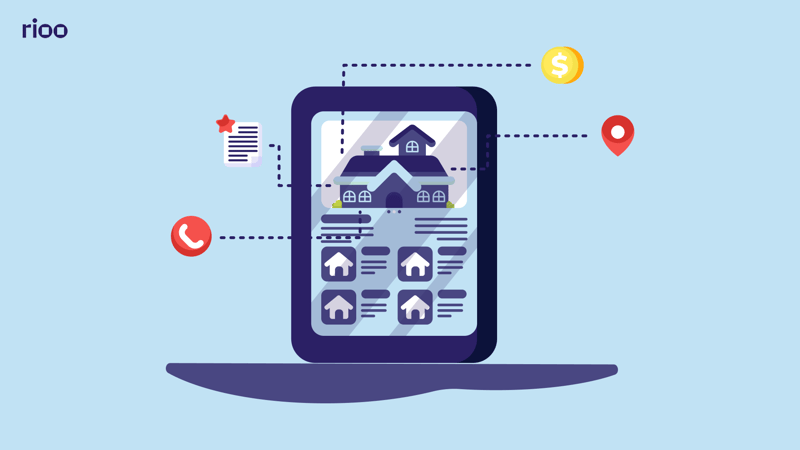
You're managing hundreds of units across residential and commercial properties. Your finance team is in NetSuite. Your leasing team is somewhere else. Your maintenance data is somewhere else entirely.
That disconnect is not just annoying. It quietly costs you in billing errors, delayed closings, and reconciliation hours that should never exist.
NetSuite integrations in 2026 have become a real operational decision for property firms that have grown past the point where disconnected tools still feel manageable. The question isn't really "should we integrate?" anymore. It's "which integrations genuinely move the needle, and how do we build a stack that doesn't fall apart six months in?"
This post breaks that down for property managers, finance controllers, and operations leads who are already on NetSuite or actively evaluating it for their portfolios.
Key Takeaways
- NetSuite integrations in 2026 are most impactful when they connect leasing, payments, documents, tenant workflows, and financial data in a coordinated sequence rather than as isolated add-ons.
- The biggest operational pain for property firms on NetSuite is the gap between property-level activities and the general ledger. Solving that gap is the primary job of a good integration strategy.
- Payment processing, lease document execution, tenant screening, and maintenance workflows are the four integration categories that have the greatest direct impact on daily operations.
- A platform built natively on NetSuite reduces the complexity of maintaining multiple integrations that comes with middleware integrations. For property firms managing mixed portfolios at scale, that architectural difference matters more than feature lists.
- RIOO's 30+ integrations across leasing, payments, tenant screening, and document management are designed to work within NetSuite's financial structure, not alongside it.
The Real Problem With Fragmented Property Tech Stacks
Most property management firms end up with the same story. They started with a few tools that worked fine at 50 units. Then the portfolio grew to 300, then 1,000. Each growth phase added a new tool to fill a gap, and now the tech stack looks like something assembled in the dark.
Your leasing team lives in one platform. Your maintenance team tracks work orders in a spreadsheet or a separate system. Finance lives in NetSuite and spends significant time every month waiting for data to make its way from the operating systems into the ERP.
This isn't a minor inconvenience. Real estate firms running disconnected systems spend more time assembling data than analyzing it. For a firm managing a mixed residential and commercial portfolio across multiple entities, the cost of that friction compounds at every level: billing accuracy, month-end close time, audit readiness, and investor reporting.
The integrations question, then, is really about something more specific than "can these systems talk to each other?" It's about whether the data that matters for your operations and your financials is moving cleanly, on time, and without someone manually pushing it through.
Also Read: NetSuite for Real Estate: The Complete Guide for 2026
How NetSuite Integrations in 2026 Actually Work for Property Teams
Before going through integration categories, it's worth being clear on how the connections work, because not all integrations carry the same risk profile.
Native SuiteApps vs. Middleware vs. Custom API Builds
- SuiteApps are pre-built connectors available through NetSuite's marketplace. These integrations are tested on NetSuite's platform and maintained by the vendor, which typically results in faster deployment and more predictable behavior during NetSuite upgrades.
- Middleware tools like Celigo or Boomi can connect almost any two systems, but they introduce a third layer that has its own update cycle and failure modes. With middleware, you're managing three systems instead of two: the property platform, the middleware layer, and NetSuite. Each has its own update cycle, and changes in any system can affect the integration's behavior.
- Custom API builds give you precise control, but they require ongoing maintenance that internal teams often underestimate.
For property managers choosing integration approaches in 2026, the practical question is: how much maintenance overhead can your IT team realistically absorb? If the answer is "not much," native SuiteApps and purpose-built property platforms that are already within the NetSuite environment deserve first consideration.
The Property Management Platform Layer
NetSuite's strength is its financial architecture. What it doesn't do natively is manage unit records, lease contracts, tenant portals, or work orders. That operational layer has to come from somewhere.
Several third-party applications and SuiteApps designed for property management are available in the NetSuite ecosystem. These property management solutions typically offer features such as lease administration, tenant management, rent collection, maintenance request tracking, and reporting.
The integration between your property management platform and NetSuite is the single most consequential connection in your stack. If that layer is poorly designed, every downstream integration inherits the errors.
The NetSuite Integrations in 2026 That Property Managers Should Prioritize
This isn't a list of every possible connection. It's a sequenced view of integrations by operational impact, written for property management firms with mixed residential and commercial portfolios.
1. Leasing Workflow: From Inquiry to Executed Contract
The leasing pipeline generates the data that feeds everything else in your financial system. When it isn't properly connected to NetSuite, your AR setup is delayed, your rent roll is inaccurate, and your occupancy reporting runs on stale numbers.
In practical terms, here's what a well-built leasing integration looks like for a property manager running a mid-to-large portfolio:
- Vacancy data from your property management system syncs to listing platforms so your team isn't updating availability manually on three different sites.
- Applications come in, move through tenant screening, and get recorded as structured data, not emails and PDFs passed between people.
- Once a lease is executed, the tenant record, rent schedule, and start date are imported into NetSuite, which sets up the billing structure within the system.
The weak point in most stacks: the gap between lease execution and NetSuite setup. If someone has to manually create the tenant in NetSuite after a DocuSign comes back signed, that's a lag point, and a common source of missed first invoices.
Platforms built natively on NetSuite, like RIOO, reduces this gap significantly because the lease and financial records live in the same system. Book a demo now to explore more.
2. Payment Processing: Rent Collection and Reconciliation
Payment processing is where operational ease meets financial accuracy, and small gaps quickly turn into daily friction. What looks simple at the surface often breaks down in reconciliation, compliance, and failure handling.
- Rent collection is easy; reconciliation is not: Ensuring payments hit the correct AR account, updating tenant ledgers, and avoiding duplicate or incorrect receipts is the real challenge.
- Accurate failure handling is critical: Failed payments should be flagged without creating incorrect AR entries, keeping financial records clean.
- Security deposits must be treated correctly: Deposits should be recorded as liabilities, not revenue, an area where manual processes often lead to compliance issues.
- Liability vs revenue impacts financial health: Misclassification affects the balance sheet and audit readiness, especially at scale.
- Set up structured follow-up processes for failed payments: Payment failures should trigger workflows automatically; relying on manual tracking creates operational gaps.
3. Lease Document Execution: Digital Signatures
This one is relatively straightforward but has downstream implications that get underestimated.
DocuSign and similar platforms are now standard in most leasing workflows. The integration question is whether the executed document triggers anything useful or just ends up in a folder somewhere.
A complete lease document integration means the executed lease updates the tenant record, confirms the billing start date, and stores the document against the correct property and unit in a way that's searchable and audit-ready. Once a lease is executed, the tenant record, rent schedule, and lease terms should flow into the financial layer, triggering the billing schedule and AR setup.
For commercial portfolios with complex lease terms, step-up schedules, and CAM clauses, this is especially important. The executed document should be the source of truth for your billing schedule. If those two things live in different systems without a clean connection, discrepancies will accumulate.
4. Tenant Screening: Keeping Risk Out of the Ledger
Tenant screening platforms provide credit, criminal, and eviction history data during the application process. Their connection to your property management system determines whether that data informs your leasing decisions in a structured way or just lives in a separate tab.
For residential property managers handling high application volume, in student housing, multifamily, or public housing contexts, the screening integration needs to be fast and structured. A decision made without complete screening data is a risk that shows up later in your financials.
For commercial property managers, the screening requirements are different but equally important: business credit, guarantor verification, and entity documentation. The integration needs to accommodate that complexity, not just residential consumer credit checks.
5. Maintenance and Work Orders: Where Cost Data Lives
Maintenance workflows often look straightforward on the surface, but they hide critical gaps in cost tracking and financial accuracy. To manage this effectively at scale, property managers need tighter control and smarter integration across the entire process.
- Maintenance is a hidden cost leak: Work orders, execution, and invoices move through multiple steps, and GL coding often becomes inconsistent along the way.
- Categorization is the core challenge: Technicians focus on completing jobs, not accounting. Without automation, accurate GL coding is easily missed.
- Well-structured integrations help address this gap: Rules-based systems can auto-classify costs by work type, thresholds, or property, correctly separating OpEx and CapEx for NetSuite.
- OpEx vs CapEx has real impact: It directly affects depreciation, NOI reporting, and overall asset valuation, not just bookkeeping.
6. Bank Connectivity: Reconciliation Without Manual Imports
Bank feed integration reduces month-end close time more than almost any other single connection, particularly for property firms managing multiple entities and bank accounts.
NetSuite supports bank feed connections through its Bank Connectivity module and through third-party providers. The speed of these feeds depends on the bank. Some financial institutions support same-day or near-real-time connectivity.
For property managers running multiple LLCs or subsidiaries, each with their own operating and reserve accounts, manual bank reconciliation is a significant time sink. Getting bank feeds into NetSuite as a structured data flow, rather than a monthly CSV import exercise, is one of the cleaner wins available in 2026.
Also Read: NetSuite Vendor Management: Key Strategies That Work
A Note on Architecture: Native vs. Connected
There's a meaningful difference between a property management platform that integrates with NetSuite and one that integrates with NetSuite’s financial structure.
When operational functionality is built directly within NetSuite, the additional architectural layer is eliminated. Financial and operational data exist in a single environment, reducing structural complexity rather than managing it.
For property firms managing a few hundred units with a stable tech stack, a well-maintained integration between a standalone platform and NetSuite can work reliably. For firms managing 1,000+ units across residential and commercial portfolios, with multiple entities, multiple currencies, and investor reporting requirements, the maintenance overhead of a multi-system stack starts to show up as real operational cost.
Must Read: NetSuite Property Management vs. Standalone Systems
How RIOO Extends NetSuite for Property Management
RIOO integrates with NetSuite’s financial structure for property management firms handling residential, commercial, or mixed-use portfolios. Here's how the platform handles the operational areas where integration complexity tends to build up.
Core Property and Community Management
RIOO gives property teams a structured setup for properties, communities, units, amenities, and pricing strategies. From single-family homes and multifamily buildings to commercial offices, retail malls, warehouses, and industrial spaces, everything is configured on a single platform. The platform gives finance controllers and property managers a unified view without requiring them to pull reports from multiple systems.
Leasing and Rent Collection
Lease creation, renewals, move-ins, and move-outs are handled in RIOO and are directly connected to NetSuite's financial layer. When a lease is executed, the billing schedule is defined within the system in the same system. Rent collection flows accurately into AR, without manual reconciliation between a property platform and a separate accounting tool.
For commercial portfolios, this matters particularly for step-up rent schedules, CAM billing, and percentage rent calculations. Those structures need to be in the same system as your financial reporting if you want your NOI to be reliable.
Also Read: NetSuite Lease Accounting: Complete Guide for CRE and Real Estate
Facility Management
RIOO's maintenance module handles service request tracking, preventive maintenance planning, and asset management. Work orders are created and tracked within the platform, and the associated costs are recorded within NetSuite’s financial structure with the correct GL coding. Vendor invoices tied to maintenance work go through NetSuite AP without re-entry.
For large portfolios with significant building infrastructure, the preventive maintenance planning tools help shift maintenance from reactive to scheduled, which tends to reduce both emergency costs and asset degradation over time.
Finance and Accounting
RIOO's financial capabilities are built within NetSuite, covering property accounting, income and expense management, vendor management, and accounts payable. Consolidated financial reporting gives finance teams a consolidated view across the portfolio, down to the individual property and unit level.
For property firms managing multiple entities, the multi-entity consolidation works within NetSuite's native structure. Intercompany transactions, management fee calculations, and reserve allocations are handled within the same system as the property-level financial data.
Tenant and Manager Portals
RIOO includes a tenant portal and mobile app for service requests, communication, and payment management. It also provides a community manager portal and app for operational oversight. Both connect to the underlying NetSuite data structure, so activity in the portal/app is reflected in the system of record.
For property managers handling high tenant volumes across residential and commercial properties in the US, UK, Canada, Australia, Singapore, or the UAE, portal availability reduces the volume of inbound communication that would otherwise land on your team's phones and inboxes.
Also Read: NetSuite Asset Depreciation: Methods and Tracking Guide
The Integration Prioritization Question: Where to Start
For property firms currently evaluating or building out their NetSuite integration stack, a practical sequencing approach looks something like this:
|
Priority |
Integration |
Why It Comes First |
|
1 |
Property management platform to NetSuite |
All other integrations depend on clean operational-to-financial data flow |
|
2 |
Payment processing |
Direct impact on AR accuracy and cash position |
|
3 |
Lease document execution |
Connects lease terms to billing triggers |
|
4 |
Bank feeds |
Reduces manual reconciliation and close time |
|
5 |
Tenant screening |
Reduces downstream credit risk |
|
6 |
Maintenance/work order cost flow |
Improves cost accuracy and CapEx vs. OpEx classification |
The sequencing matters. Firms that try to connect payment processors and screening tools before they've sorted out the core property-to-NetSuite data flow end up with accurate payment data hitting an inaccurate tenant ledger. The foundation has to come first.
Must Read: How to Use NetSuite for Property Management: A Data-Driven Framework
Common Challenges Property Managers Face Before Getting This Right
It's worth naming the friction points directly, because they're recognizable if you're in this situation.
- Data lives in too many places
The leasing team knows which units are occupied. The finance team's data is a week behind. The maintenance team's cost data doesn't make it into the P&L until someone manually enters it at month end.
- Month-end close takes too long
When data has to move between systems manually, close cycles stretch. For property firms with investor reporting obligations, that lag is felt.
- Multi-entity complexity compounds everything
One LLC per property is standard for liability isolation. Managing consolidated financials across 15 or 20 entities with manual intercompany allocations is a compliance risk and a reporting burden.
- Vendor and maintenance costs are hard to categorize accurately at scale
When technicians record work orders, they're not thinking about the chart of accounts. Someone else has to translate that later, and the translation isn't always right.
- Tenant communication is fragmented
Maintenance requests come in by text, email, and phone. Follow-up happens inconsistently. Tenants escalate because no one confirmed their request was received.
None of these problems are unsolvable, but they do require a system designed around property management workflows, not just a general ERP with a few property-specific fields added.
Conclusion
NetSuite integrations in 2026 are no longer a nice-to-have for property firms managing complex portfolios. The question has shifted from whether to integrate to how to integrate well.
The firms getting the most out of their NetSuite stacks in property management share a few traits. They prioritized the property management platform layer first, before building out downstream integrations. They are designed for data flow, not just connectivity. And they chose platforms that were built with NetSuite's financial architecture in mind, not layered on top of it.
RIOO integrates with NetSuite to support property management operations alongside financial data that covers leasing, facility management, finance, accounting, and tenant communication in one place, with 30+ integrations built to work within that structure. For portfolios ranging from residential multifamily to commercial mixed-use across the US, UK, Canada, Australia, Singapore, and the UAE, it's a platform designed for the operational reality of managing at scale.
If you're evaluating your current stack or planning a NetSuite implementation, book a personalized RIOO demo to see how the platform handles your specific portfolio type in practice.
Frequently Asked Questions
1. What are NetSuite integrations for property management, and why do they matter in 2026?
NetSuite integrations for property management are connections between NetSuite's ERP and the operational tools property firms use, covering leasing, payments, documents, maintenance, and tenant management. In 2026, they matter because growing property portfolios require clean data flows between operations and finance, and manual data movement across disconnected systems creates billing errors, reporting delays, and compliance risks.
2. Does NetSuite have a built-in property management module?
NetSuite is a cloud ERP designed for financial management, not property operations. It doesn't include native unit records, lease contracts, tenant portals, or work order tracking. Property management firms typically extend NetSuite with a purpose-built SuiteApp, such as RIOO, to add those operational capabilities within the same financial environment.
3. What is the difference between a SuiteApp and a middleware integration for property management?
A SuiteApp is built and maintained within the NetSuite platform ecosystem, tested against NetSuite upgrades, and typically requires less ongoing maintenance. Middleware tools like Celigo or Boomi connect external systems to NetSuite through a separate integration layer, which adds maintenance complexity and can introduce sync delays or failures when any connected system updates.
4. How do NetSuite integrations help with lease accounting compliance?
For property firms operating in the US or UK under ASC 842 or IFRS 16, lease accounting requires tracking Right-of-Use assets, lease liabilities, and escalation schedules with audit-ready precision. A properly configured NetSuite stack with a lease management SuiteApp keeps those calculations within the same system as your general ledger, reducing the risk of discrepancies between what your lease records show and what your financial statements report.
5. How many integrations does RIOO support, and what are the main categories?
RIOO supports 30+ integrations across leasing, payments, tenant screening, and document management. These are built to work within RIOO's native NetSuite architecture, meaning the data from third-party tools flows into the same financial structure as your property operations, rather than syncing to a separate system.



.svg)
.svg)


.svg)