Managing rental properties today demands more than spreadsheets and scattered tools. As portfolios expand, so do the operational pressures, including tracking leases, collecting rent on time, coordinating maintenance, handling tenant communication, and keeping financial records accurate. Without a structured system, everyday workflows can quickly become difficult to control.
Rent manager software brings these moving parts into a single operational framework. Instead of juggling disconnected processes, property managers gain visibility into performance, automate routine tasks, and reduce manual oversight. The result is not just saved time, but stronger decision-making and fewer operational risks.
This guide evaluates the top rent manager software platforms for 2026, breaking down their features, pricing models, and ideal use cases. Whether you oversee a growing residential portfolio or manage diverse property types at scale, the insights ahead will help you identify a platform that supports efficiency today and remains reliable as your operations evolve.
Key Takeaways
- Handles everything from tenant screening and lease management to rent collection and financial reporting, no fragmented systems needed.
- Options range from free plans for small landlords to per-unit fees for mid-sized portfolios, with custom enterprise pricing for large operations.
- Offers mobile access, updates, and scalability beyond traditional systems.
- AI-powered tenant screening, predictive maintenance, and real-time financial dashboards are becoming standard.
- Choose a platform that matches your portfolio type, scales with growth, integrates with existing tools, and offers responsive support.
Understanding Rent Manager Software in 2026
Rent manager software has evolved beyond spreadsheets into complete property management ecosystems. Today’s platforms handle rent collection, maintenance, leasing, and reporting from a single interface.
Core tasks are simplified, payments are processed online, maintenance requests flow through tenant portals, lease renewals trigger reminders, and real-time financial reports are generated instantly. Cloud-based access lets managers work from anywhere, and cloud deployments are increasing year after year.
Modern platforms also integrate with accounting tools, marketing channels, and smart building systems, removing manual data entry and reducing errors caused by disconnected tools.
Also read: How Technology is Helping Property Managers Keep Renters Happy
Common Property Management Challenges Solved by Rent Manager Software
Property managers spend too much time on manual admin work. Late rent payments, rising compliance demands, and communication gaps with tenants create constant friction. Traditional methods don’t scale. Spreadsheets may work for small portfolios, but as portfolios grow, and manual processes break down.
-
Fragmented systems create information silos
Your accounting lives in QuickBooks. Tenant communications happen through email. Maintenance requests arrive via phone calls. Lease documents sit in filing cabinets. No single source of truth exists, making it impossible to see the complete picture of property performance.
-
Manual rent collection drains resources
Chasing down payments, processing checks, recording transactions, and following up on late fees consumes hours each month. Payment delays compound when tenants miss due dates, and tracking becomes a nightmare across multiple properties.
-
Maintenance coordination falls apart
A tenant submits a request. You call vendors. They provide quotes. You approve the work. Someone completes the job. You process payment. Each step requires manual coordination, and nothing gets documented systematically. When issues recur, you have no maintenance history to reference.
Also read: The Impact of Property Management Software on Rental Efficiency
Top 10 Rent Manager Software Options for 2026
Choosing the right rent manager software requires understanding what each platform offers and how it matches your specific needs. The following platforms represent the most comprehensive solutions available in 2026, each excelling in different areas. We've analyzed their features, pricing structures, and ideal use cases to help you make an informed decision.
1. RIOO
Best For: Medium to enterprise property management firms managing hundreds to thousands of units across multiple property types
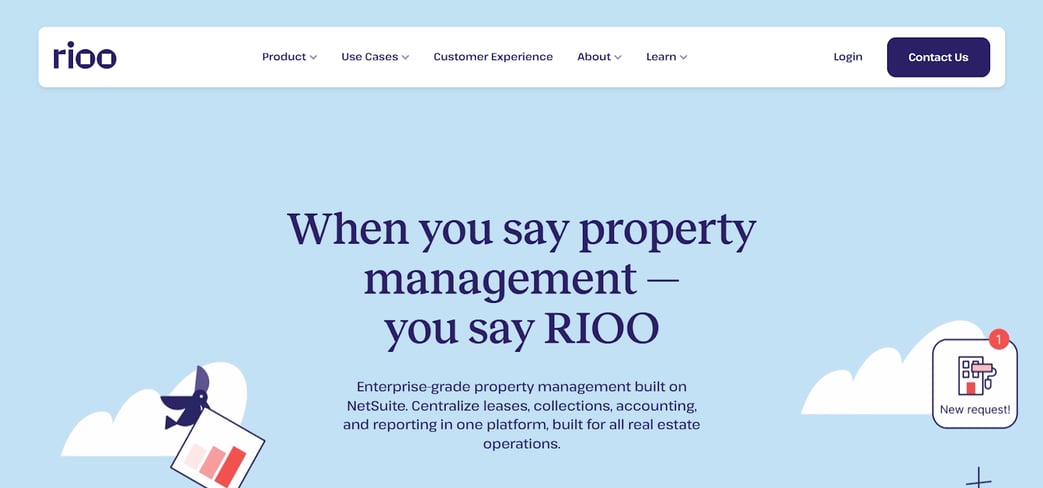
RIOO delivers comprehensive property management software designed for scalability and operational efficiency. The platform handles both residential and commercial portfolios from a unified interface.
Key Features:
- Unified property, community, and unit management
- Lease creation, renewals, and move-in/move-out processes
- Integrated rent collection with multiple payment options
- Service request tracking and preventive maintenance planning
- Asset and utility management capabilities
- Property accounting with real-time financial reporting
- Income and expense management
- Vendor management and accounts payable automation
- Tenant and community manager portals
- Mobile app for on-the-go management
- Over 30 integrations with third-party systems
- Customizable workflows and reporting
- Consolidated financial dashboards across the entire portfolio
Pricing (2026):
- Custom pricing based on portfolio size and requirements
- Scalable pricing model that grows with your business
- Implementation and training included
- Demo available
Why Choose RIOO: Property management at scale requires software that handles complexity without sacrificing ease of use. RIOO’s unified platform eliminates fragmented systems and works seamlessly across diverse property types, multi-family, single-family, commercial, and retail. Real-time financial consolidation gives instant portfolio insights, while streamlining lease renewals, maintenance, and reporting, boosting efficiency and reducing costs.
Experience the difference yourself by scheduling a demo and see how the RIOO simplifies property management, saves time, and drives better results.
2. AppFolio Property Manager
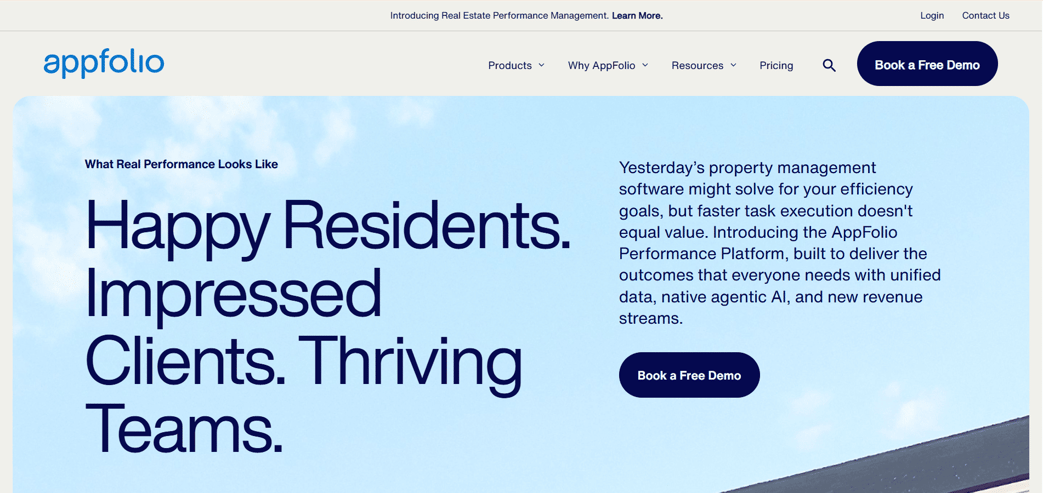
Best For: Mid-to-large property management companies seeking AI-powered automation and premium features
AppFolio delivers sophisticated property management with cutting-edge technology. The platform recently expanded its AI capabilities with features helping property managers work smarter.
Key Features:
- Smart bill entry and maintenance request management
- Integrated accounting with real-time financial dashboards
- Marketing automation across multiple rental listing platforms
- Mobile inspections and work order management
- Performance insights and customizable reports
Pricing (2026):
- Core Plan: Minimum 50 units
- Plus Plan: Minimum spends and units apply
- Max Plan: Minimum spends and units apply
- Pricing available on request
Why Choose AppFolio: Property managers appreciate the intuitive interface and comprehensive feature set that doesn't require extensive training. The platform particularly shines for companies prioritizing tenant experience and operational efficiency.
3. Buildium
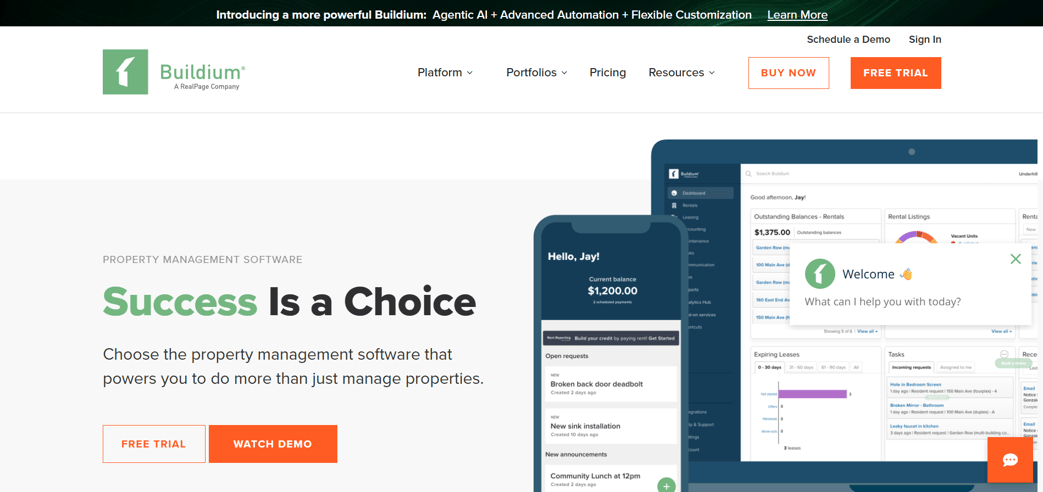
Best For: Small to mid-sized property managers handling residential properties, HOAs, and associations.
Buildium consistently ranks among the top property management platforms for its balanced approach to features and usability. The software provides comprehensive tools without overwhelming smaller operators.
Key Features:
- Online rent collection with multiple payment options
- Tenant and applicant screening via TransUnion
- Maintenance tracking and vendor management
- Marketing tools with automated listing syndication
- Mobile app for on-the-go management
Pricing (2026):
- Essential Plan: Starting at 62 per month (up to 20 units)
- Growth Plan: Starting at $192 per month (up to 150 units)
- Premium Plan: Starting at $400 per month (unlimited units)
Why Choose Buildium: The platform strikes an excellent balance for property managers transitioning from manual systems to comprehensive software. Buildium Academy offers extensive training resources, and its onboarding process consistently receives praise.
Property managers managing residential rentals and community associations find Buildium's feature set well-suited to their daily workflows without requiring extensive customization.
4. Yardi Breeze
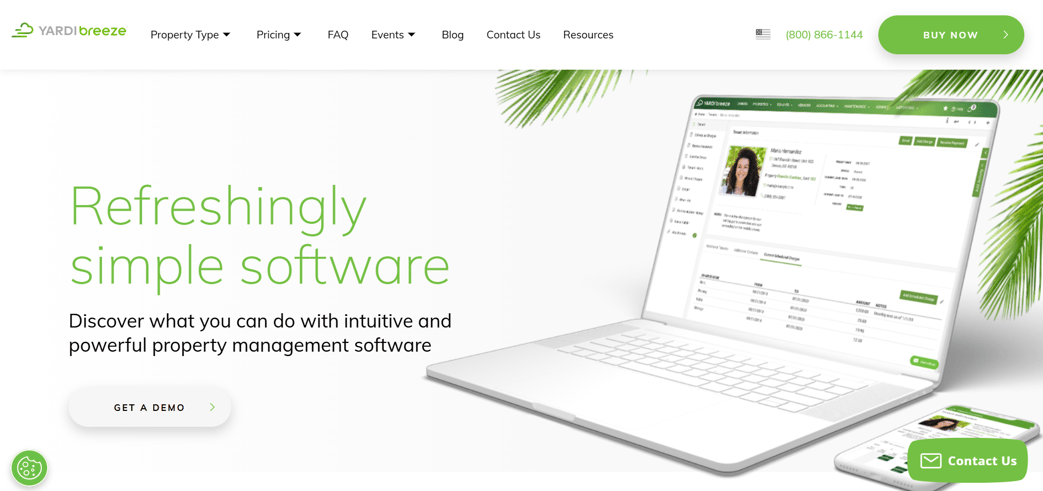
Best For: Small to medium portfolios needing property-specific features across residential and commercial assets
Yardi Breeze simplifies the Yardi ecosystem's power into an accessible cloud-based platform. The software offers property-type-specific features that cater to the unique needs of different asset classes.
Key Features:
- Property-specific tools for residential, commercial, affordable housing, associations, and self-storage
- Integrated accounting with payables, receivables, and the general ledger
- Maintenance request submission and tracking
- Marketing and leasing tools
- Customizable financial statements and reports
Pricing (2026):
- Yardi Breeze Residential: $1 per unit per month ($100 minimum)
- Yardi Breeze Commercial: $2 per unit per month ($200 minimum)
- Yardi Breeze Premier: Starting at $1-3 per unit per month ($400 minimum)
- Free implementation, training, and support
- No free trial; demo available
Why Choose Yardi Breeze: Property managers appreciate the simplified interface while maintaining access to Yardi's robust functionality. The property-type-specific pricing and features ensure you're paying for what you need.
Companies managing mixed portfolios benefit from Yardi's comprehensive approach, though the higher commercial pricing may impact budget calculations for mixed-use properties.
5. Propertyware
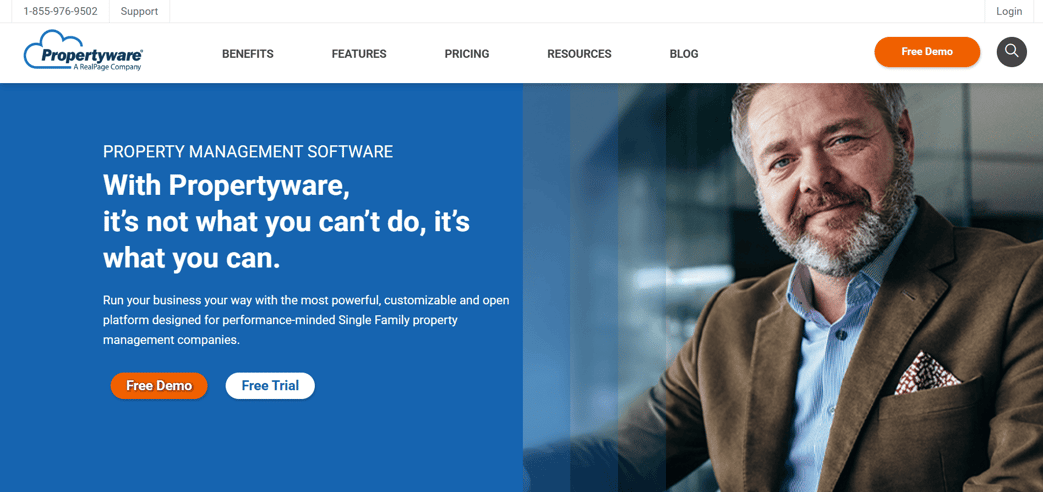
Best For: Property managers requiring extensive customization for single-family and small multifamily portfolios.
Propertyware positions itself as a highly customizable solution for property managers who want control over every aspect of their software experience. The open API architecture enables deep integration with other systems.
Key Features:
- Customizable dashboards, fields, and reports
- Open API for third-party integrations
- Comprehensive accounting and financial reporting
- Marketing automation and listing syndication
- Maintenance management with vendor coordination
- Owner portal with custom reporting options
- Mobile app for property inspections
Pricing (2026):
- Basic Plan: $1 per unit per month ($250 minimum)
- Plus Plan: $1.50 per unit per month ($350 minimum)
- Premium Plan: $2 per unit per month ($450 minimum)
- Add-ons available for websites ($99/month) and asset protection
Why Choose Propertyware: The platform serves property managers who view software as a strategic tool requiring precise configuration. Propertyware University offers comprehensive training, though onboarding is longer than on simpler platforms.
Tech-savvy teams leverage the open API to build custom integrations, creating workflows perfectly aligned with their operational requirements.
6. DoorLoop
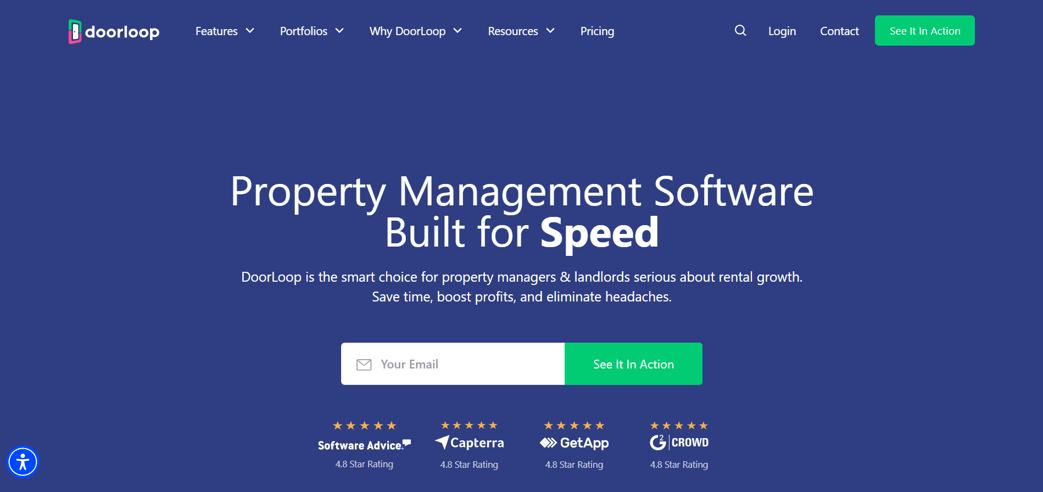
Best For: Landlords and managers with small to mid-sized residential, commercial, or student housing portfolios.
DoorLoop entered the market relatively recently but quickly gained traction with its user-friendly interface and competitive pricing. The platform delivers full-featured property management without extensive learning curves.
Key Features:
- Intuitive interface with minimal training required
- Automated rent collection and payment processing
- Tenant screening and online applications
- Maintenance request tracking with vendor management
- Accounting suite with QuickBooks integration
- Owner and tenant portals
- Lease management and eSignatures
- Mobile app for iOS and Android
Pricing (2026):
- Starter Plan: $69 per month
- Pro Plan: $149 per month
- Premium Plan: $209 per month
- Pricing increases with unit count
- Free trial available
Why Choose DoorLoop: Property managers transitioning to software for the first time appreciate DoorLoop's straightforward setup and logical workflow organization. All plans include the same core capabilities, unlike tiered platforms that gate essential features.
The newer company status means fewer integrations than those of established competitors, but the core feature set comprehensively covers most property management needs.
7. TenantCloud
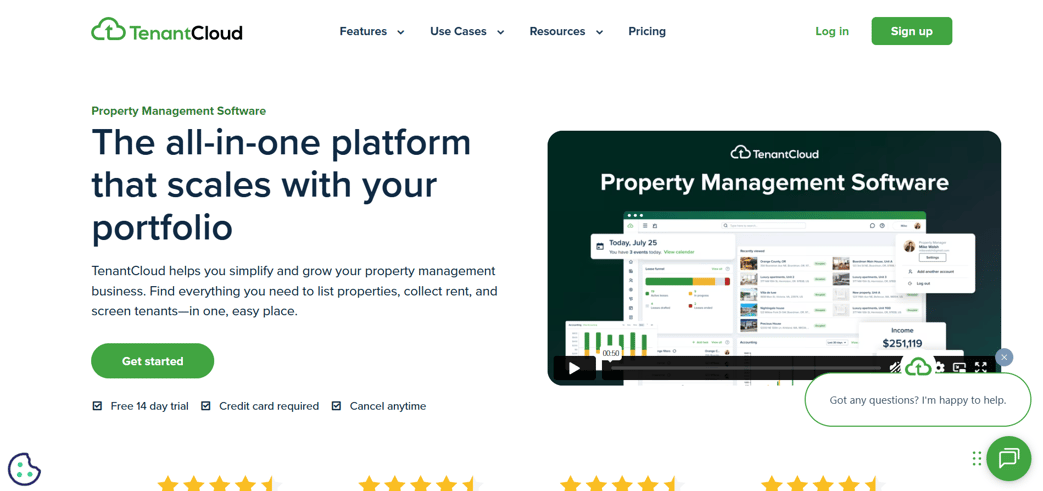
Best For: Individual landlords and small property managers seeking affordable, comprehensive tools
TenantCloud targets do-it-yourself landlords with budget-friendly pricing and essential property management features. The platform balances affordability with functionality that scales as portfolios grow.
Key Features:
- Unlimited properties and rental listings
- Tenant screening with background and credit checks
- Online rent collection with multiple payment methods
- Maintenance request platform with vendor bidding
- QuickBooks Online integration
- Owner portals and property management tools
- Roommate feature for shared occupancy management
Pricing (2026):
- Starter Plan: $16.5 per month
- Growth Plan: $32 per month
- Pro Plan: $55 per month
- Business Plan: Custom pricing (team management, advanced features)
- Free version available for up to 75 units
- 14-day free trial on paid plans
Why Choose TenantCloud: Landlords managing fewer than 30 units find that TenantCloud provides excellent value without sacrificing essential functionality. The free version enables property owners to test the platform extensively before committing.
Users report limitations with more complex lease structures and automated features available in premium platforms, but for straightforward residential properties, TenantCloud delivers solid performance.
8. MRI Software
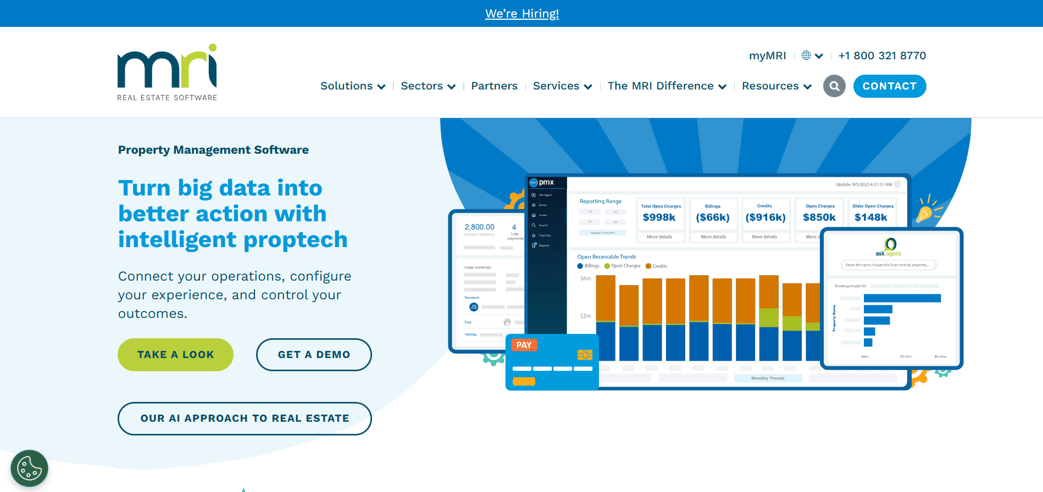
Best For: Commercial property management firms with extensive portfolios requiring enterprise-level capabilities
MRI Software specializes in commercial real estate with advanced features uncommon in standard property management platforms. Investment management reports and strategic planning tools are targeted at sophisticated operators.
Key Features:
- Property Management
- Accounting & Financial Management
- Risk & Screening
- Lease Management
- Investment & Portfolio Analytics
- Tenant & Resident Portals
- Facilities & Maintenance Management
- Integration & Open Architecture
- Reporting & Analytics
- Cloud & Deployment Flexibility
- Mobile Access
- AI & Data Automation
Pricing (2026):
- Custom quotes required
- Enterprise-level pricing structure
- Expect costs similar to AppFolio's premium tiers
- Implementation and training included
- No free trial available
Why Choose MRI Software: Commercial property managers and corporations with diverse holdings benefit from MRI's sophisticated feature set. The platform handles complex lease structures, percentage rent calculations, and multi-tiered ownership arrangements.
The higher price point reflects the specialized capabilities and support infrastructure required for commercial operations at scale.
9. Rentec Direct
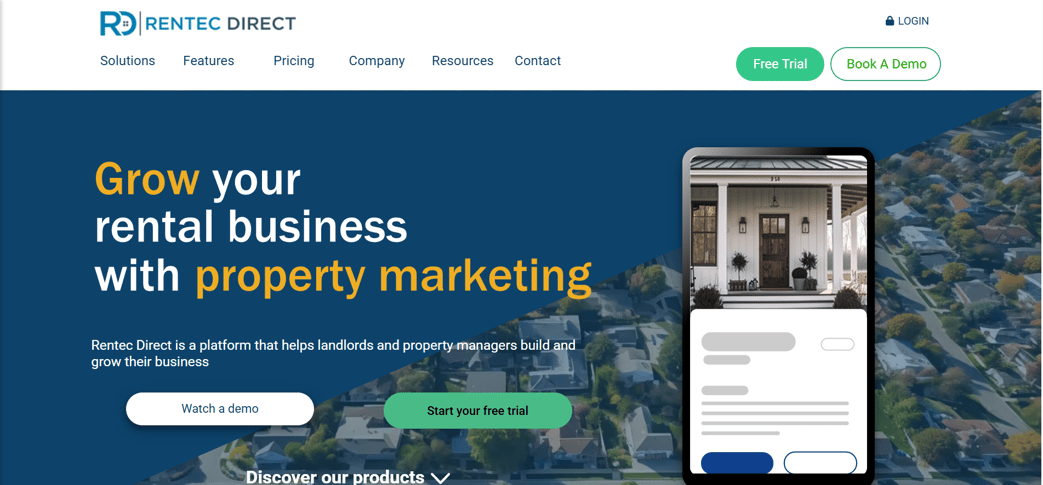
Best For: Independent landlords and small property management companies seeking straightforward functionality
Rentec Direct provides reliable property management tools without overwhelming complexity. The platform focuses on core features that independent landlords need on a daily basis.
Key Features:
- Ledger Accounting
- Online Rent Payments
- Professional Website
- Tenant Portal
- Integration Partners
- Publish Vacancies Online
- Accounting Features
- Operations Features
- Lease & Management Features
Pricing (2026):
- Pricing tiers based on unit count
- Competitive rates for small portfolios
- Transparent pricing structure
- Free trial available
- No hidden fees
Why Choose Rentec Direct: Property managers appreciate the no-nonsense approach that efficiently covers essential functions. The platform doesn't chase every new trend but delivers consistent performance on fundamental tasks.
Support receives positive reviews, with responsive assistance helping users maximize the platform's capabilities.
10. Rent Manager
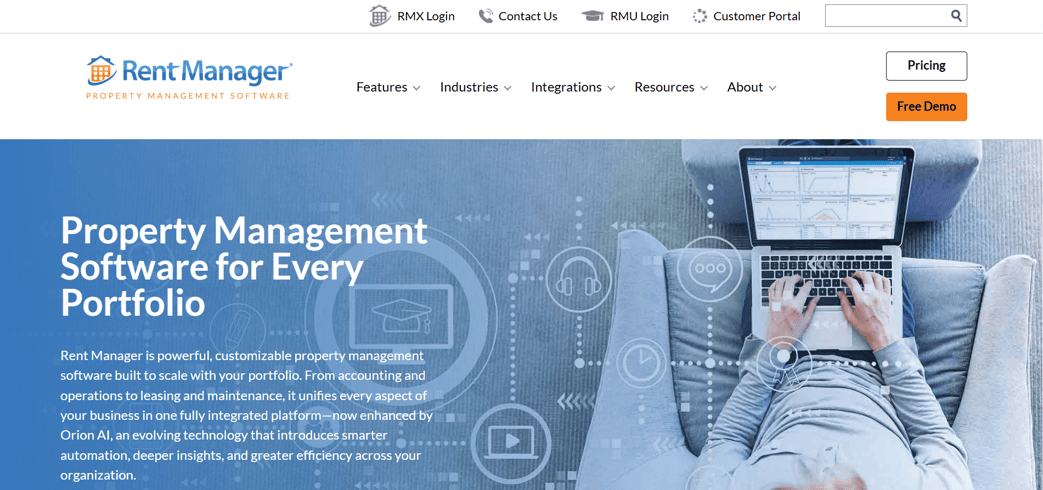
Best For: Property managers with 200+ units needing robust customization across multiple property types
Rent Manager is one of the most established names in property management, serving operators managing residential, commercial, association, manufactured housing, and self-storage portfolios. The platform's strength lies in its extensive customization capabilities and comprehensive feature set.
Key Features:
- 450+ Built-In Financial / Property-Related Reports
- Complete Accounting System
- Work Order Management
- Comprehensive Marketing & Leasing Tools
- Online Applications & Unlimited eSignatures
- Owner / Prospect Portals & Tenant App
- Unlimited Custom Fields
- Live Support
- Vendor Management & No Cost Vendor Pay
- P.O. System & Inventory Management
- Survey Analytics Hub
Pricing (2026):
- 3 types of Plan: Basic Plan, Plus Plan, Premium Plan
- Monthly minimums apply based on plan tier
- Implementation support included
- Get the actual pricing quotation on the website.
Why Choose Rent Manager: The platform excels when you need deep customization options and manage diverse property types under one roof. Users consistently praise the responsive customer support and extensive training resources through Rent Manager University.
The learning curve can be steeper than simpler platforms, but this complexity enables power users to tailor workflows precisely to their needs.
Also read: Beyond Rent Collection: Unexpected Ways Property Management Software Saves Time
Key Features to Evaluate in Rent Manager Software
Choosing the right platform requires understanding which features truly matter for your operation. Marketing materials list endless capabilities, but certain functions separate mediocre software from exceptional tools.
-
Rent collection eliminates payment friction
Tenants pay through secure portals using ACH, credit cards, or digital wallets. The system tracks payments, applies late fees per your policies, and sends gentle reminders before due dates. Research shows that 80% of tenants prefer online payment, making this feature essential rather than optional.
-
Comprehensive tenant screening protects your investment
Background checks, credit reports, eviction history, and income verification happen through integrated services. AI-powered scoring models help predict tenant reliability, reducing risk in your leasing decisions.
-
Financial reporting must deliver real-time insights
Your software should generate profit and loss statements, balance sheets, cash flow reports, and owner statements instantly. Tax-ready reports save hours during filing season. Custom reporting capabilities let you track metrics specific to your business model.
-
Maintenance management prevents small issues from becoming expensive problems
Tenants submit requests through portals. The system automatically routes tasks to the appropriate vendors. You track progress, approve invoices, and document completion, all of which create a maintenance history that informs future decisions.
-
Communication tools centralize all interactions
Email, text, and in-app messaging keep conversations organized by property and tenant. Bulk messaging enables quick communication about emergencies or property-wide announcements. Documentation ensures nothing gets lost in inbox clutter.
-
Integration capabilities extend your software's value
Connections to QuickBooks, Sage, or Xero automatically sync financial data. Marketing integrations push listings to Zillow, Apartments.com, and Craigslist simultaneously. Smart building integrations enable remote access control and utility monitoring.
-
Mobile accessibility keeps you connected everywhere
Property managers don't work only at desks. Your platform needs robust mobile apps that enable rent approval, work order creation, and property inspections from any location.
Also read: Essential Features Every Property Management System Must Include for Efficient Rental Operations
Pricing Models Explained: Finding the Best Value
Understanding how property management software pricing works helps you budget accurately and compare options fairly. Vendors structure fees differently, making direct comparison challenging without knowing the models.
Per-unit pricing scales with your portfolio
Most platforms charge $1- $5 per unit monthly. A 100-unit portfolio might cost $150 per month, while 500 units could cost $750- $2,500, depending on the provider and plan tier. This model aligns costs with revenue, growing in proportion to your expansion.
Monthly minimums protect vendors on small portfolios. Even if you manage only 20 units at $2 per unit ($40), the platform might require a $250 monthly minimum. This ensures sustainable pricing for the vendor while giving you room to grow before hitting true per-unit costs.
Tiered plans gate features progressively
Basic plans cover essential functions like rent collection and basic reporting. Mid-tier plans add advanced analytics, and owner portals. Premium plans unlock API access, custom fields, and white-label capabilities. Choose the tier that matches your current needs and provides room to scale.
Implementation fees cover setup costs
Some vendors charge 2x your monthly subscription for initial implementation. A $350 monthly plan might require a $700 one-time setup fee. This covers data migration, configuration, and initial training. Other platforms include implementation in subscription costs.
Add-on services increase total cost
Professional websites, applicant screening, renters insurance programs, and electronic signature services often carry separate fees. Calculate the total cost, including these services you'll actually use.
Free trials let you test before committing. Most platforms offer 14-day trials with full access. Use this time to evaluate workflow fit, test critical features, and assess support responsiveness. Some providers offer free plans with limited features, excellent for testing but likely inadequate for serious operations.
Annual subscriptions typically save 10-15% compared to monthly billing. If you're confident in your choice, an annual payment reduces costs while providing budget predictability.
Final Thoughts
Property management complexity requires software that can scale with your operations. The top rent manager software options for 2026 range from affordable tools like TenantCloud to enterprise platforms such as MRI Software, Rent Manager, and RIOO, each suited to different portfolio needs.
The right choice depends on your size, property mix, budget, and growth plans. Smaller landlords may prefer simpler tools, while mid-sized and large portfolios need platforms that handle complexity without losing efficiency. With the market rapidly expanding, adopting comprehensive software today helps property managers stay competitive.
Define your requirements, evaluate carefully, test during trials, and implement with proper training. The right rent manager software drives efficiency, better tenant experiences, and long-term growth.
Ready to transform your property management operations? Schedule a personalized RIOO demo to see how our comprehensive platform handles your specific portfolio needs across residential and commercial properties.
FAQs
1. What is the best rent manager software for small landlords?
TenantCloud and DoorLoop are excellent choices for small landlords, offering free or low-cost plans starting at $15- $99 per month, with essential features like online rent collection, tenant screening, and maintenance tracking, without overwhelming complexity.
2. How much does property management software typically cost?
Most rent manager software charges $1- $5 per unit per month, with monthly minimums ranging from $100 to $450, depending on the platform. Small portfolios might pay $50-150 monthly, while large operations could spend $1,000+ based on unit count and feature requirements.
3. Can property management software integrate with QuickBooks?
Yes, most modern rent manager software integrates with QuickBooks Online and QuickBooks Desktop, syncing rent payments, expenses, and financial transactions to eliminate manual data entry and reduce accounting errors.
4. What features should I prioritize in rent manager software?
Essential features include rent collection, tenant screening, maintenance request tracking, financial reporting, and tenant/owner portals. Advanced needs might require custom reports, mobile apps, vendor management, and integration capabilities with existing systems.
5. Is cloud-based property management software secure?
Reputable cloud-based platforms use bank-level encryption, secure data centers, regular backups, and compliance with industry standards. Cloud solutions often provide better security than local servers while enabling access from any device with proper authentication.



.svg)
.svg)


.svg)