For a hundred years, a building was finished the day it opened. The architect handed over the keys, the developer booked the asset, and from that moment the building did only one thing: age. Every year it lost a little value, a little relevance, a little competitiveness. Depreciation was not an accounting convention. It was a physical fact.
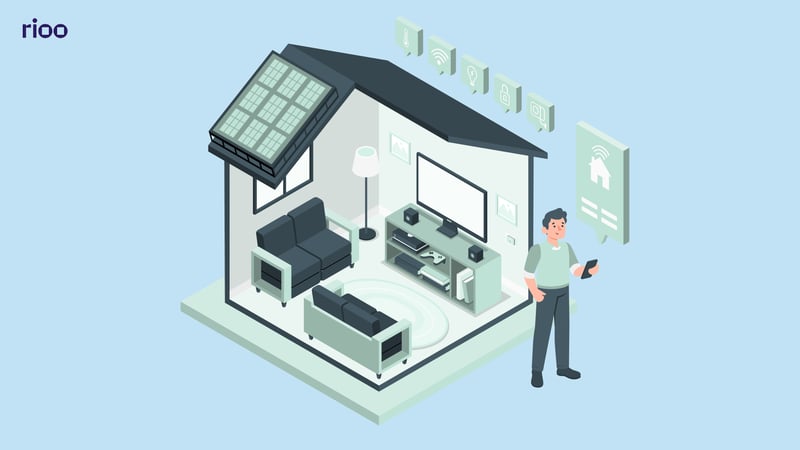
That fact is now breaking. A growing class of buildings gets measurably better after opening day. They learn occupancy patterns, tune their own energy use, receive new capabilities overnight, and expose their operations to software the way a phone exposes itself to apps. The industry has started calling them software-defined buildings, and within a decade the term may sound as redundant as "internet-connected office."
What Is a Software-Defined Building?
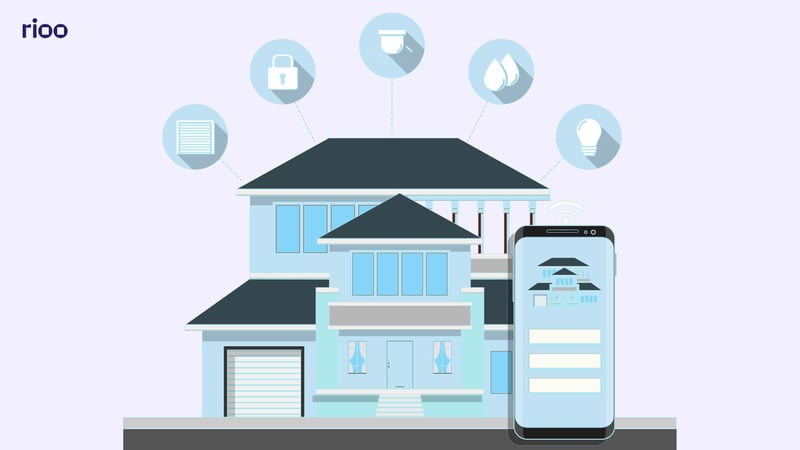
A software-defined building is a building whose systems, operations, and tenant experiences are controlled through a programmable software layer rather than fixed physical infrastructure, allowing the building to be updated, reconfigured, and improved continuously after construction.
The physical structure still matters. But the share of a building's value that lives in its software layer is rising every year, and that shift changes how buildings are designed, operated, valued, and sold.
Key Takeaways
-
The value of a building is migrating from its physical structure to the software layer that runs it, mirroring what happened to cars, phones, and factories.
-
A software-defined building separates physical systems from the logic that controls them, so capabilities can be added or improved without touching concrete or steel.
-
Building operating systems act as the middleware that turns disconnected equipment into a programmable platform, much as mobile operating systems turned phones into smartphones.
-
The economics change fundamentally: static buildings depreciate on a fixed curve, while software-defined buildings can gain capability over time through updates.
-
The buildings that benefit first will be the ones with clean, centralized operational and financial data, because software can only act on what it can read.
The Pattern Every Other Industry Already Followed
The idea that buildings are becoming software sounds radical until you notice it is the third or fourth time this exact story has played out.
Cars were mechanical products for a century. Then the control logic moved into code, and today a vehicle can gain new braking behavior, range, and features overnight through an over-the-air update. The steel did not change. The software did, and with it the value.
Phones followed the same arc. The hardware between one smartphone generation and the next changes modestly. What made phones transformative was the operating system underneath, which turned a fixed device into a platform that improves continuously.
Buildings are the largest asset class on earth and the last to make this transition. The reasons are structural: buildings last decades, their systems come from dozens of vendors speaking incompatible protocols, and the industry has historically treated technology as an amenity rather than as architecture. Computer scientists first proposed the software-defined building concept more than a decade ago as a way to let applications run on building infrastructure the way programs run on a computer. What was an academic idea then is a procurement requirement now.
How Software-Defined Buildings Work: The Building Intelligence Stack
The simplest way to understand a software-defined building is as a stack of three layers. Call it the Building Intelligence Stack.
The first is the physical layer: HVAC, lighting, elevators, access control, meters, and the structure itself. This is the hardware, and on its own it does nothing intelligent.
The second is the building operating system, the middleware that abstracts all of that equipment into a single programmable interface. This is not the same thing as a traditional building management system. A BMS controls equipment within its own closed loop, while a building operating system, when built on open APIs and middleware, sits above vendor-specific systems and opens the building to applications that need to read it or instruct it. PwC's Buildings of the Future report describes building operating systems as the foundation of cognitive buildings, environments that sense, learn, and adapt to the people inside them. The comparison the industry keeps reaching for is deliberate: what iOS and Android did for phones, the building operating system does for real estate. It hides the complexity of the field devices and lets applications be deployed on top.
The third layer is the applications themselves: energy optimization, predictive maintenance, occupancy analytics, tenant experience apps, automated compliance reporting. This is where new value gets created, and critically, this layer can change weekly while the physical layer changes once a generation.
Software-Defined Building vs. Smart Building
The terms get used interchangeably, but they describe different levels of maturity. Sensors and connected equipment are necessary but not sufficient. A building full of IoT devices that cannot talk to each other is not software-defined. It is just instrumented. The foundational layer of connected systems is covered in more depth in this guide to smart building facility management, and the software-defined building is what emerges when that layer gets an operating system on top: a smart building generates data, while a software-defined building can be programmed, updated, and improved through it.
|
Dimension |
Traditional Building |
Software-Defined Building |
|---|---|---|
|
Capabilities at handover |
Fixed for life |
Baseline that expands over time |
|
Improvements |
Physical retrofits, capital projects |
Software updates plus targeted retrofits |
|
Systems |
Siloed, vendor-locked |
Abstracted through a common software layer |
|
Value trajectory |
Depreciates on a fixed curve |
Can gain functional value post-construction |
|
Tenant experience |
Defined by original design |
Continuously tuned to actual behavior |
|
Operating data |
Trapped in separate systems |
Centralized, readable, actionable |
Benefits of Software-Defined Buildings
The business case rests on four advantages that static buildings cannot replicate.
-
Continuous improvement without capital projects. Capabilities arrive as updates, so a building can respond to changing tenant expectations between renovation cycles instead of waiting for one.
-
Energy and cost performance that compounds. According to the International Energy Agency, buildings and construction account for about one third of global energy consumption and energy-related emissions, and software is the primary layer that enables dynamic optimization of that consumption, asset by asset, hour by hour.
-
Defensible asset value. As programmability becomes a leasing expectation, software capability starts protecting rents and valuations the way sustainability certifications did a decade earlier.
-
A foundation for AI. Autonomous agents can only operate on infrastructure they can read and instruct, so the software-defined building is the prerequisite for everything the industry is promising about AI-run operations.
Why This Is Accelerating Now
Three forces are converging on the same point.
The first is economic pressure. JLL's 2026 Global Real Estate Outlook identifies experience as the new value driver in real estate and warns of a rising risk it calls experience obsolescence: assets falling behind not because the structure failed but because the experience they deliver no longer meets expectations. A static building has no answer to experience obsolescence except an expensive renovation. A software-defined building can respond between renovations.
The second is energy. Buildings converging with power systems is now a defining industry theme, as grids strain and energy performance becomes a factor in site selection and asset value. Software is the only mechanism that lets a building participate in that conversation dynamically, shifting loads, storing energy, and proving its performance with data rather than estimates.
The third is AI. Machine learning models and autonomous agents are moving into building operations, and industry research from firms such as JLL suggests AI-ready infrastructure is on track to become as standard in buildings as internet connectivity is today. Meanwhile, industry analysts project the global smart building market to grow at more than 20 percent annually through the early 2030s. AI does not make a building software-defined. It makes being software-defined non-negotiable.
The Timeline: How the Transition Likely Unfolds
What follows is a scenario grounded in current procurement trends and greenfield development patterns, not a forecast.
Now through 2027: the instrumentation phase. New construction increasingly ships with building operating systems specified from day one, particularly in the GCC where greenfield smart city development allows software-first design without retrofit constraints. Existing Class A assets in competitive markets begin middleware retrofits to defend rents.
2027 through 2030: the platform phase. Software capability is likely to start appearing in valuations and lease negotiations the way sustainability certifications did a decade earlier. Tenants begin asking not just what a building has but what it can become. The gap between programmable and static assets starts pricing in.
Beyond 2030: the expectation phase. The term software-defined building may fade because the alternative stops being built. Buildings that cannot receive updates would occupy the market position that non-air-conditioned office space occupies today: functional, financeable at a discount, and quietly obsolete.
These phases will not arrive evenly. Commercial assets in supply-constrained markets move first, residential follows as tenant expectations harden, and older stock in secondary markets moves last or not at all.
Why Operational Data Matters More Than Sensors
Here is the uncomfortable truth beneath the software-defined building: the sensors are the easy part. Software can only manage what it can read, and in most portfolios the operational reality of a building lives nowhere software can reach. Lease terms sit in PDFs. Maintenance history sits in a technician's inbox. Asset registers sit in spreadsheets last updated during an audit. Financials sit in an accounting system disconnected from all of it.
A building operating system can tell you the chiller is degrading. It cannot tell you whether the chiller is under warranty, which vendor serviced it last, what that vendor charged, which tenants its downtime affects, and what the repair does to this quarter's operating budget. Those answers live in the operational and financial record of the building, and if that record is fragmented, the software layer is making decisions half-blind.
This is where the software-defined building meets ordinary property management, and it is why the transition starts with unglamorous groundwork. Platforms like RIOO exist to build exactly this foundation: property, unit, and asset details, maintenance and work order history, lease and tenant data, vendor records, and property financials centralized in one system where they stay current and readable. That centralized operational record is what an intelligent building layer plugs into. The building generates the signals. The record gives them meaning.
The same logic is transforming the management discipline itself, a shift examined in Property Management Is Becoming an Operating System. The two changes are mirror images: the asset is becoming programmable, and the management layer is becoming the system that programs it.
What Owners and Operators Should Do Now
The instinct will be to buy sensors. Resist it, at least at first. The sequencing that works looks different.
Centralize the operational record first. Get properties, units, assets, leases, vendors, work orders, and financials into one system of record, because every subsequent layer depends on this data being clean and connected.
Specify openness in every procurement. Every new system, from HVAC controllers to access control, should expose open APIs and standard protocols. Closed systems installed today are technical debt with a twenty-year maturity.
Pilot the software layer on one asset. Prove the loop from signal to insight to action to financial result on a single building before scaling, and measure it against operating cost and tenant retention rather than dashboard aesthetics.
Reframe the capital plan. Budget for the building's software layer the way you budget for roofs and elevators: as core infrastructure with a lifecycle, not as an IT experiment.
The Building Is Becoming a Product That Ships
The deepest change is philosophical. A static building is a project: designed once, delivered once, and defended against decay. A software-defined building is a product: versioned, updated, measured, and improved for as long as it stands. Owners who internalize that shift will manage buildings the way great software companies manage products, with telemetry, iteration, and a roadmap. Owners who do not will hold assets that still stand perfectly upright while the market walks past them.
The concrete is no longer the product. The concrete is the hardware the product runs on.
Software-defined buildings will not be created by sensors alone. They will be built on connected operational data, and that foundation is something every portfolio can start laying today, long before the first line of building code ships.
Ready to build the operational foundation your portfolio's software layer will depend on? See how RIOO centralizes properties, leases, maintenance, assets, and financials in one platform.
Frequently Asked Questions
1. What is a software-defined building?
A building whose systems and operations are controlled through a programmable software layer, allowing capabilities to be added or improved after construction without physical modification.
2. How is a software-defined building different from a smart building?
A smart building has connected devices and sensors. A software-defined building adds an operating layer that unifies those systems into a single programmable platform that can run applications and receive updates.
3. What is the Building Intelligence Stack?
A three-layer model of the software-defined building: the physical layer of equipment and structure, the building operating system that makes it programmable, and the applications that create value on top.
4. What is a building operating system?
Middleware that sits between a building's physical equipment and its software applications, abstracting vendor-specific systems into one common interface, similar to how a mobile operating system connects hardware to apps.
5. Do existing buildings need to be rebuilt to become software-defined?
No. Most transitions happen through middleware retrofits layered onto existing systems, though buildings with open, non-proprietary equipment adapt faster and at lower cost.
6. Why does operational data matter for software-defined buildings?
Building software can only act on information it can read. Centralized lease, maintenance, asset, vendor, and financial data gives building intelligence the context it needs to produce decisions rather than just alerts.
7. When will software-defined buildings become standard?
Adoption is expected to concentrate in new commercial construction and premium assets through the late 2020s, with programmability increasingly treated as a baseline expectation in competitive markets by around 2030.
This article reflects industry trends and forward-looking analysis as of 2026. Projections are based on cited third-party research and are subject to change as the market evolves.


.svg)
.svg)


.svg)