Every property business runs a version of the same ceremony. Once a year, sometimes once a quarter, leadership sits down, teams prepare the decks, and the portfolio is judged against plan. Budgets are set, asset business plans are approved, capital is committed. It feels like control. Here is the claim this piece defends: the annual operating review, as a decision-making mechanism, is ending. Not the meeting, which will survive in a better form, but its role as the moment when the important calls get made. It is ending because of what it quietly does to decisions. It takes every consequential choice about where money, attention, and effort should go, and batches them to a date on the calendar. In a market where returns increasingly come from execution rather than from owning the right assets, batching decisions to a schedule has stopped being prudent and started being a liability. The firms that recognize this first will compound an advantage over those still governing on a calendar. ...
Property companies are undergoing one of the biggest operational shifts in decades. As AI, automation, and enterprise property management technology mature, leading real estate companies are beginning to reorganize themselves less like traditional operators and more like technology businesses. This piece explores why that shift is happening, what it means for the industry, and how the property company of 2035 is likely to operate. Key Takeaways Property companies are evolving into technology-driven organizations, not just software users. Unified operational platforms are replacing disconnected, department-siloed tools. AI is automating coordination work, not replacing property management expertise. Data infrastructure is becoming a competitive advantage, valued the way physical assets are today. The companies that restructure early will scale further without proportional headcount growth. Walk into the headquarters of a large property company today and you'll still find the org chart ...
A resident in a 300-unit community submits a maintenance request at 11 p.m. on a Tuesday. She doesn't call anyone. She doesn't expect a callback in the morning. She expects what she gets from every other app on her phone: an instant confirmation, a status she can track, and a real answer about when someone is coming. When that doesn't happen, she doesn't conclude that her property manager is understaffed. She concludes that her property manager is behind. That reaction is the real story of where rental housing is headed. For decades, "good property management" meant a responsive human on the other end of the phone. That bar hasn't disappeared, but it's no longer the bar tenants are measuring against. They're measuring landlords against Amazon's delivery tracker, their bank's fraud alerts, and their rideshare app's live ETA. Call it the Consumer Expectation Gap: the widening distance between what tenants have learned to expect from every other digital interaction in their life, and ...
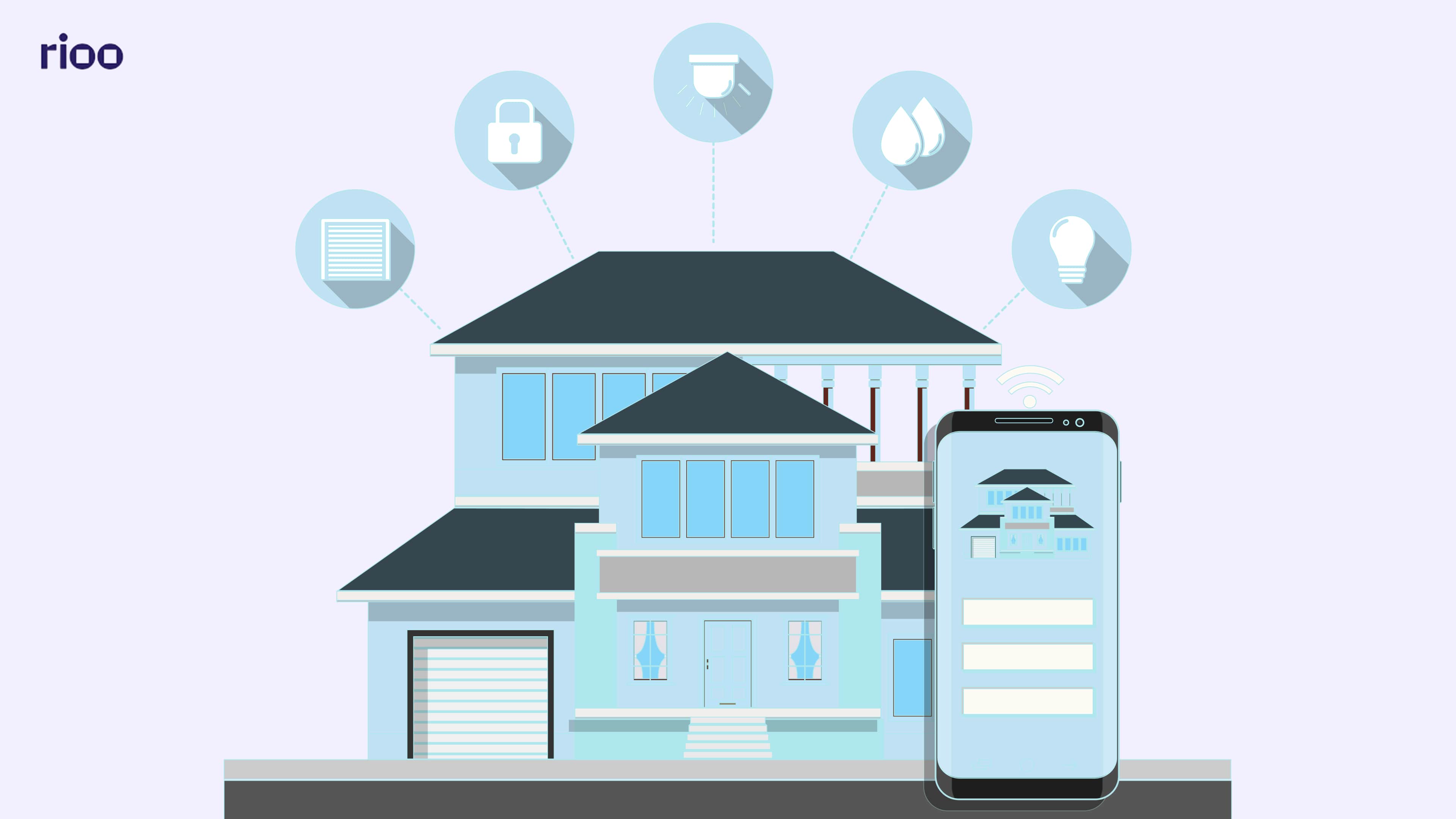
For a hundred years, a building was finished the day it opened. The architect handed over the keys, the developer booked the asset, and from that moment the building did only one thing: age. Every year it lost a little value, a little relevance, a little competitiveness. Depreciation was not an accounting convention. It was a physical fact. That fact is now breaking. A growing class of buildings gets measurably better after opening day. They learn occupancy patterns, tune their own energy use, receive new capabilities overnight, and expose their operations to software the way a phone exposes itself to apps. The industry has started calling them software-defined buildings, and within a decade the term may sound as redundant as "internet-connected office." What Is a Software-Defined Building? A software-defined building is a building whose systems, operations, and tenant experiences are controlled through a programmable software layer rather than fixed physical infrastructure, allowing ...
For most of the last decade, "technology in property management" meant a better dashboard. Something showed you the problem faster: a late payment, a maintenance backlog, a unit sitting vacant. You still did the work. You still made the call, sent the notice, chased the vendor, and updated the ledger. That era is ending. The question every operator will answer over the next five years is no longer "which software gives me better visibility," but "how much of the work am I willing to let the software do." This is what autonomous property operations means, and it is arriving faster than most teams expect, and messier than the marketing suggests. Autonomous property operations is the shift from property management software that assists a person with a task to systems that carry the task out and report back. It is arriving gradually through 2028, automating recurring, rule-bound work like leasing intake, collections, and maintenance triage first, and judgment-heavy decisions last. Gartner ...
Managing a building with residential apartments above and retail or office units below sounds manageable until the first month-end close. You have two rent rolls running on entirely different billing logic, shared corridors and plant rooms whose costs need splitting across tenant types, a residential tenant expecting a consumer app experience and a commercial tenant expecting formal invoicing, and a finance team trying to produce one consolidated P&L across all of it. Most property management software was built for one type of asset. Mixed-use buildings are a different problem entirely and the software you choose needs to reflect that. What is mixed-use property management software? Mixed-use property management software is a platform built to manage buildings that combine residential and commercial tenants in a single structure. It handles the distinct lease structures, billing schedules, expense allocations, compliance requirements, and reporting needs of each tenant type within ...
Connected CRE software is a platform approach where property management, lease administration, accounting, document management, and reporting all operate from a shared data foundation rather than separate systems that require manual export, reconciliation, and re-entry between them. In plain terms, it means the data that drives your operations and the data that drives your financials live in the same place, update together, and are visible to the right people without anyone having to pull it out and pass it along. In simple terms, connected CRE software eliminates the manual work of moving data between systems by building a single environment where every function - leasing, accounting, operations, reporting - reads from and writes to the same source. This matters more in commercial real estate than in most industries because the data dependencies run deep. A lease amendment affects billing. A billing change affects NOI. NOI affects valuation. Valuation affects lender and investor ...
AI lease abstraction is the process of using artificial intelligence to automatically read commercial lease documents and extract key data: rent amounts, critical dates, escalation clauses, and tenant obligations, into structured, searchable fields. It replaces the manual data entry step that sits between a signed lease and the operational system, making extraction faster, more consistent, and far less dependent on individual attention. Lease abstraction has always been one of the most labor-intensive tasks in commercial property management. A single 60-page retail lease might take an experienced administrator four to six hours to review, extract, and enter into a management system. Multiply that across a portfolio of 50 or 100 commercial tenants, factor in amendments, addendums, and mid-term modifications, and the scope becomes clear. Property teams spend thousands of hours each year doing work that is largely mechanical, reading documents and copying numbers into fields, while the ...
The property management industry has been quietly evolving. What used to be a pen-and-paper routine of tracking leases, coordinating maintenance, and collecting rent has shifted to screens—primarily the ones we carry in our pockets. With this shift comes a growing question: are mobile apps for property managers just another tech perk, or are they becoming essential to the job? Let’s unpack what’s really happening in the industry and whether this shift is something you can afford to ignore. The Growing Dependence on Tech in Property Management There was a time when managing a property meant spending hours chasing down rent payments, scheduling repairs manually, and keeping everything organized in filing cabinets. That time is long gone. The complexity of managing multiple tenants, properties, and vendors means that inefficiency can cost real money. It's not just about saving time anymore—it's about avoiding mistakes, improving tenant satisfaction, and staying competitive. This is where ...