.jpg?width=800&height=600&name=fe9d4d2d-03bc-480f-9a50-38407b473a38%20(1).jpg)
Property managers today oversee hundreds or even thousands of units across multiple locations. Yet many teams still depend on static reports and scattered spreadsheets. That approach slows decisions and hides performance gaps across properties.
How do you quickly see which buildings are performing well and which ones need attention? Without clear reporting, portfolio visibility becomes difficult. Property managers often struggle to track leasing activity, expenses, and maintenance across multiple properties.
Customizable dashboards and reporting tools help property teams analyze performance faster and make informed decisions. In this blog, you will learn what features to evaluate, and the best property management software for customizable reporting & dashboards.
Key Takeaways:
- Start with platforms that unify operational data: Tools such as RIOO combine leasing, financial, and facility workflows so reporting dashboards reflect accurate portfolio activity.
- Prioritize essential reporting capabilities: Look for customizable dashboards, role-based views, scheduled reports, and integrations with accounting or analytics tools for reliable portfolio insights.
- Compare tools based on reporting focus: Platforms like Rent Manager, Yardi Voyager, AppFolio, and Buildium differ in strengths. Some emphasize financial analytics while others focus on operational dashboards.
- Recognize when advanced reporting becomes necessary: As portfolios grow across properties or regions, cross-property dashboards and consolidated reporting become critical for performance monitoring.
- Match software to your portfolio structure: Residential portfolios typically require rent tracking and owner reporting, while commercial portfolios benefit from lease analytics and asset performance dashboards.
What to Look for in Property Management Software for Customizable Reporting & Dashboards
Not every reporting system offers the same flexibility. Some platforms limit you to fixed reports that cannot adapt to complex portfolios. Enterprise property teams often need configurable dashboards and advanced reporting controls to track performance across multiple properties.
When evaluating software, you should focus on capabilities that help you analyze portfolio data quickly and accurately. The following criteria help determine whether a platform can support meaningful operational reporting.
Key evaluation areas to review include:
- Customizable dashboards: Allow you to select metrics such as occupancy rates, collections, and maintenance activity. You can build views that highlight the indicators most relevant to your portfolio operations.
- Role-based reporting: Provide different dashboards for leasing managers, finance teams, and property owners. Each user accesses reports that reflect their responsibilities without unnecessary data.
- Portfolio-level reporting: Aggregate information across multiple properties or regions. This makes it easier to compare building performance and identify assets that require attention.
- Owner and investor reporting: Generate owner statements, asset summaries, and financial visibility. Owners receive transparent performance updates without requesting manual reports.
- Accounting integrations: Sync reporting data with tools like QuickBooks or enterprise accounting systems. Financial reports remain consistent with operational data.
- Report exports and scheduling: Export reports in PDF, CSV, or Excel formats and schedule delivery. This reduces the time spent compiling monthly reports.
- Forecasting and KPI tracking: Monitor indicators such as revenue trends, lease renewals, and delinquency rates. These insights support faster operational decisions.
Reporting Capabilities That Separate Basic Tools from the Best Property Management Software for Customizable Reporting & Dashboards
Advanced reporting platforms provide deeper control over property data. Instead of relying on predefined reports, you can configure dashboards and metrics that match operational priorities. These capabilities determine whether reporting tools can support complex portfolios.
Important reporting capabilities include:
- Customizable report builders: Enable you to create reports using selected fields, filters, and property groups. This helps generate focused insights such as lease expirations or delinquency summaries.
- Drag-and-drop dashboards: Allow you to arrange charts, widgets, and KPIs visually. Property managers can design dashboards that track leasing activity, financial performance, and operational metrics.
- Cross-property performance comparison: Compare occupancy, revenue, and expenses across buildings. Portfolio managers can quickly detect underperforming assets.
- Customizable metrics and formulas: Define metrics like revenue per unit or maintenance cost per property. These calculations align reporting with internal performance models.
- Report scheduling: Generate reports on a recurring schedule. Finance teams receive regular updates without manual preparation.
- Owner and investor report sharing: Provide dashboards or scheduled reports for stakeholders. This supports transparency and informed decision making.
- Integrations with BI tools or accounting platforms: Connect reporting data with tools such as Microsoft Power BI or Tableau. This allows deeper analytics and executive reporting.
Now that you know what separates strong reporting platforms from basic ones, the next step is seeing how leading solutions deliver those capabilities. Here are the 15 best property management software for customizable reporting & dashboards to consider.
15 Best Property Management Software for Customizable Reporting & Dashboards
Several property management platforms now offer reporting tools that help you understand portfolio performance clearly. These systems convert operational data into dashboards and structured reports that guide daily decisions. The tools below support residential portfolios, commercial assets, and mixed property management operations.
Each platform provides different reporting strengths. Some focus on financial analytics, while others provide operational dashboards or portfolio-level insights. The following solutions represent widely used options for property managers seeking the best property management software for customizable reporting & dashboards.
1. RIOO
RIOO connects property operations, leasing workflows, and financial activity into a single reporting environment. Instead of relying on disconnected systems, you can monitor portfolio performance through unified dashboards that reflect accurate operational data.
- Unified portfolio dashboards: Combine leasing activity, operational updates, and financial transactions into one reporting interface. Property managers can review occupancy trends, revenue performance, and operational metrics across multiple properties.
- Operational data integration: Leasing inquiries, contracts, renewals, and move-ins update reporting dashboards. Portfolio data stays consistent because operational activity feeds directly into reporting metrics
- Financial performance visibility: Income, expenses, vendor payments, and other transactions connect directly to financial reports. Managers can evaluate portfolio profitability without manual reconciliation.
- Cross-property reporting: Residential and commercial inventory is stored in one structured database. Reports provide visibility across units, buildings, and entire property portfolios.
- Operational workflow connections: Maintenance requests, utilities, and asset activity connect to reporting dashboards. Operational costs appear alongside financial performance metrics.
- System integrations: RIOO integrates with more than 30 operational tools, helping keep leasing data, financial records, and facility operations aligned.
Pros:
- Unified reporting across leasing, operations, and financial data.
- Strong visibility into portfolio-level performance.
- Integrations help maintain consistent operational and financial reporting.
Cons:
- May require onboarding to configure workflows and reporting structures.
- Best value is achieved when multiple operational modules are used together.
Best fit:
Property management companies overseeing residential, commercial, or mixed portfolios that require integrated operational reporting and portfolio-level financial visibility.
2. Rent Manager
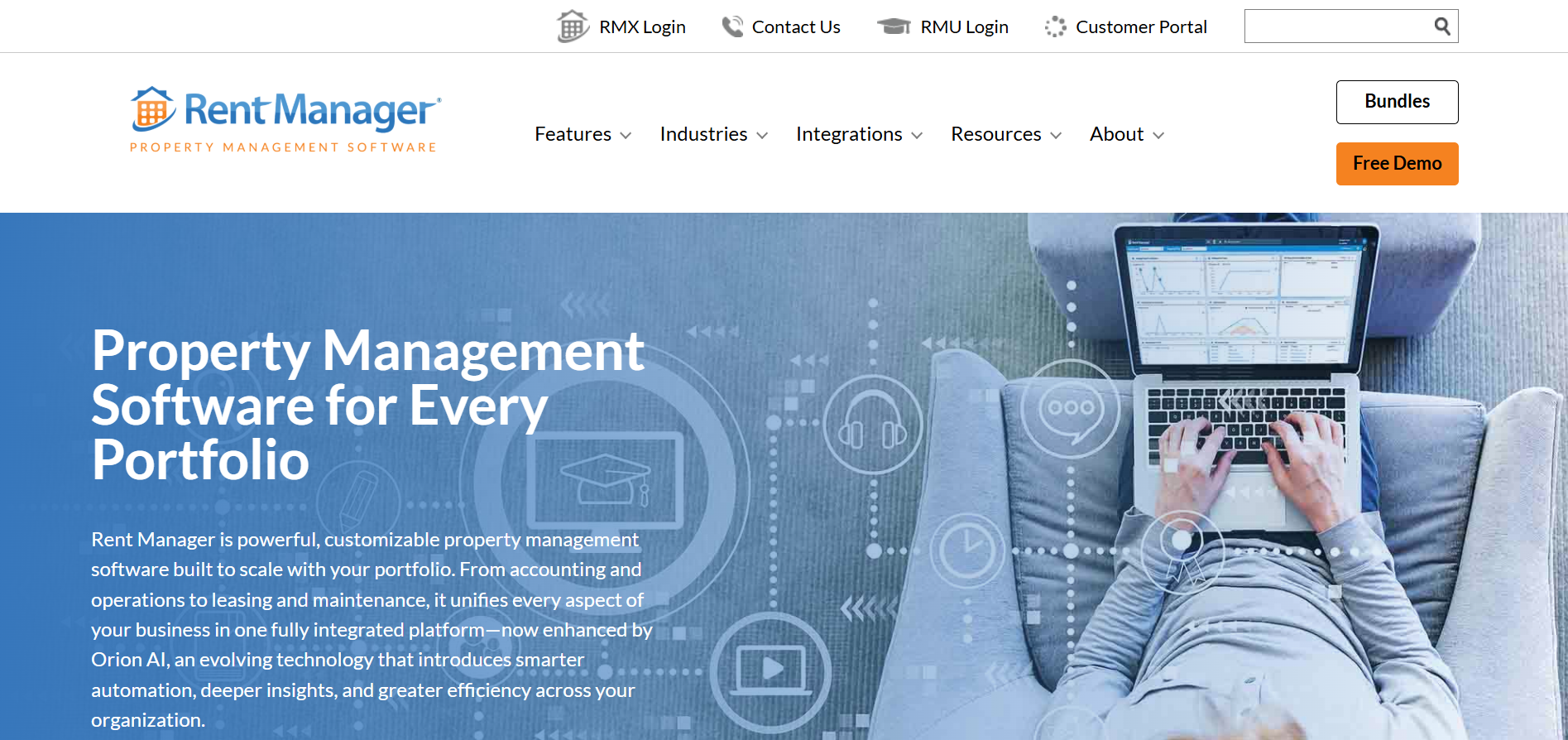
Rent Manager is known for its extensive reporting library and highly configurable reporting engine. Property managers who require detailed financial and operational reporting often use it for complex portfolio analysis.
Key features:
- Large report catalog: The platform includes hundreds of predefined reports covering accounting, leasing, maintenance, and property performance.
- Custom report configuration: Users can adjust report filters, data fields, and layout structures to match portfolio requirements.
- Portfolio analytics dashboards: Managers can monitor rent collections, occupancy rates, and operational activity across multiple properties.
Pros: Flexible reporting configuration. Strong accounting and financial analytics.
Cons: Setup and customization may require training.
Best fit: Property managers who need highly configurable reporting across diverse portfolios.
3. Yardi Voyager
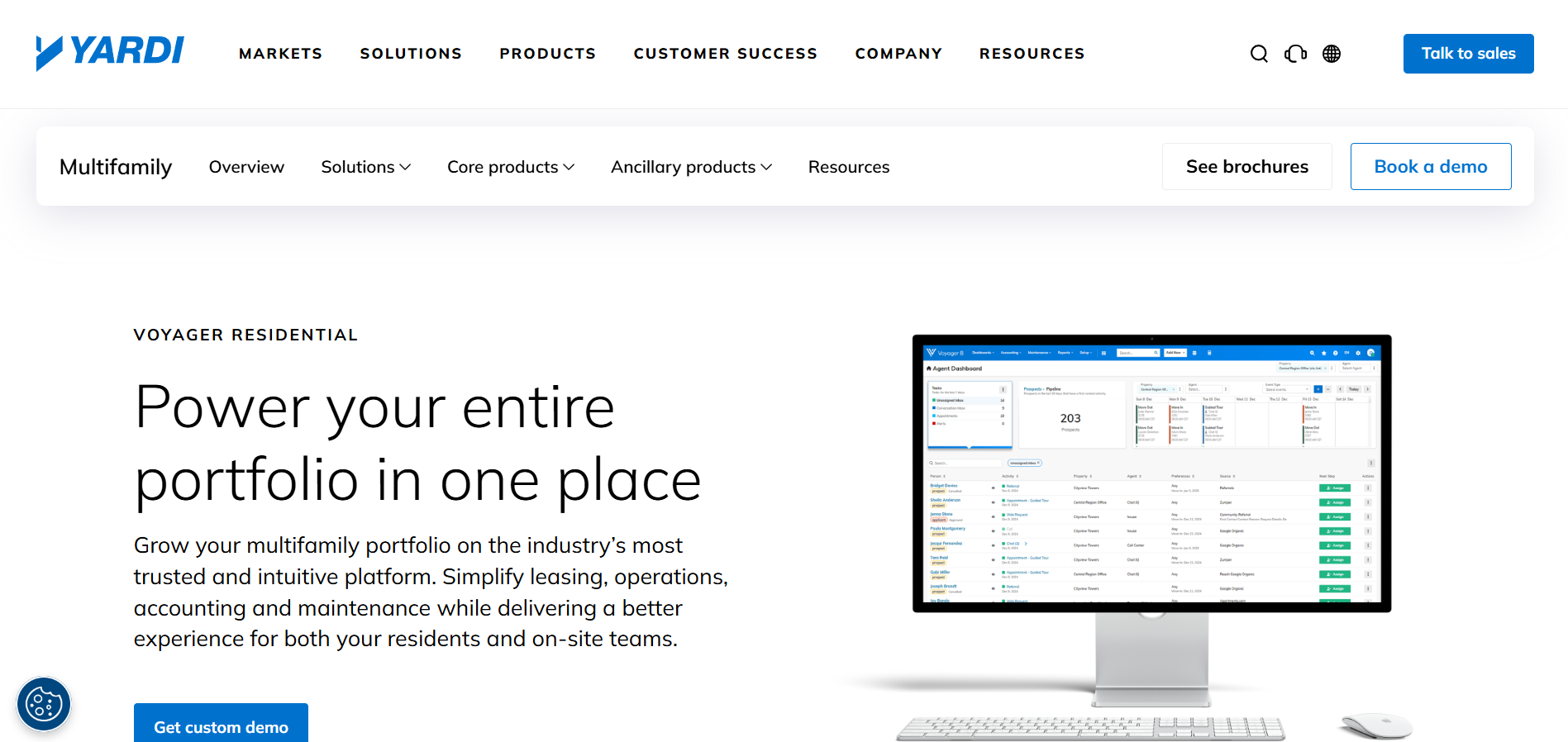
Yardi Voyager is designed for enterprise property operators managing complex commercial or mixed-use portfolios. Its reporting capabilities focus heavily on financial transparency and asset-level analytics.
Key features:
- Enterprise reporting structure: Aggregates financial and operational data across large property portfolios.
- Forecasting dashboards: Tracks revenue projections, occupancy trends, and budgeting performance.
- Asset-level reporting: Provides performance insights for individual buildings within larger portfolios.
Pros: Mature enterprise reporting system. Strong financial visibility.
Cons: Implementation complexity and higher setup costs.
Best fit: Large commercial operators and institutional property portfolios.
Also Read: Top 10 Commercial Property Management Software for 2026
4. MRI Software
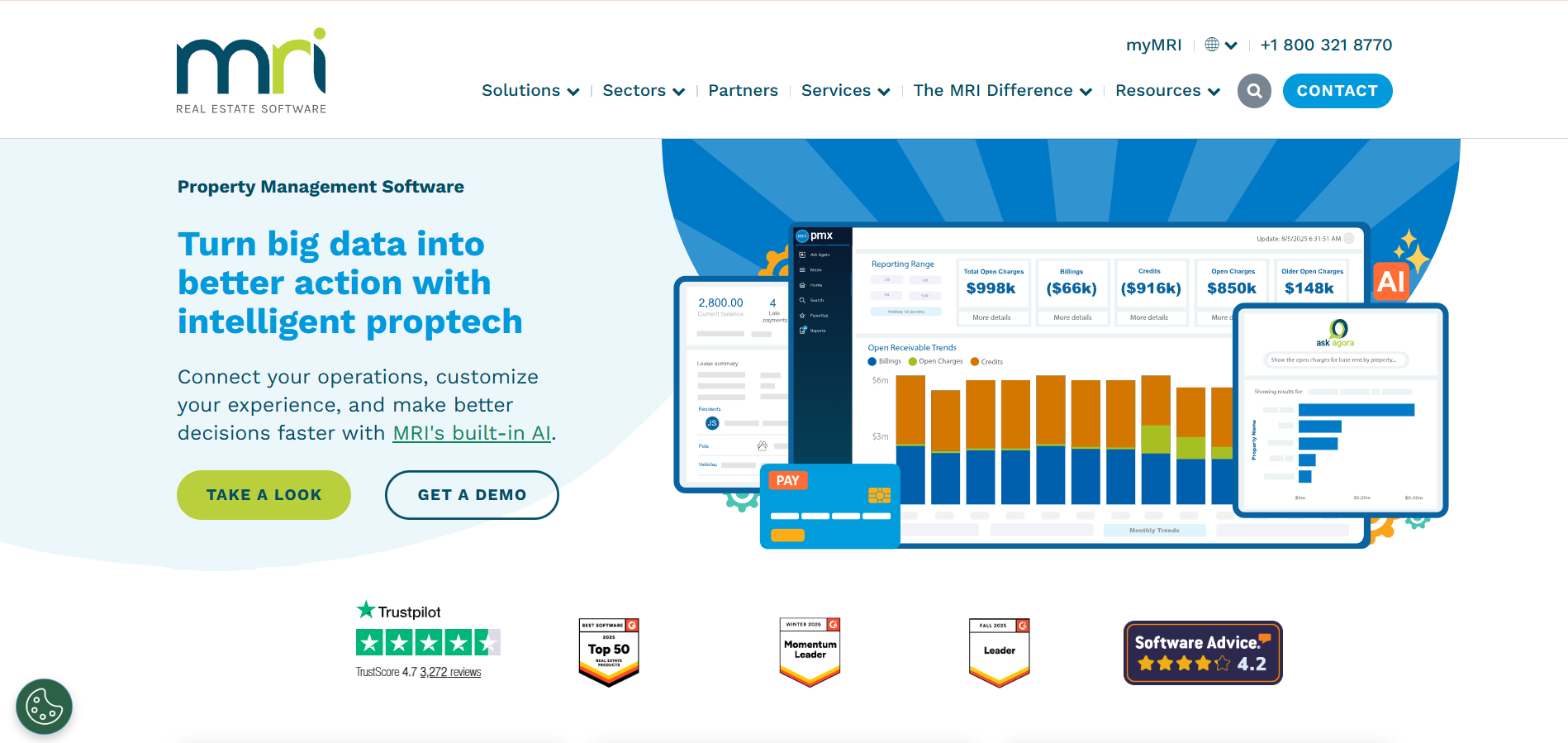
MRI Software provides enterprise-grade reporting tools supported by strong analytics and business intelligence capabilities. It is widely used by institutional property management companies managing complex portfolios.
Key features:
- Business intelligence dashboards: Transform operational and financial property data into strategic insights.
- Custom reporting tools: Generate configurable reports across properties and asset classes.
- Investor reporting dashboards: Provide portfolio summaries for investors, asset managers, and finance teams.
Pros: Advanced analytics and enterprise reporting depth.
Cons: Implementation and configuration may require dedicated technical resources.
Best fit: Institutional investors and enterprise property operators.
5. RealPage
RealPage focuses on analytics-driven property management, particularly for large multifamily and residential portfolios. Its reporting environment emphasizes predictive analytics and revenue performance insights.
Key features:
- Predictive analytics dashboards: Forecast occupancy, rent trends, and revenue performance.
- Portfolio performance reporting: Compare leasing performance across multiple properties.
- Financial analytics tools: Monitor property profitability, expenses, and revenue metrics.
Pros: Strong revenue and occupancy analytics.
Cons: Complex interface for smaller property management teams.
Best fit: Multifamily portfolio managers seeking analytics-driven reporting.
6. AppFolio
AppFolio combines operational dashboards with financial reporting capabilities designed for growing property management companies. The platform provides visibility across leasing, maintenance, and accounting workflows.
Key features:
- Operational dashboards: Track leasing activity, maintenance requests, and tenant communication metrics.
- Financial reporting tools: Generate accounting reports, income summaries, and financial statements.
- Portfolio insights: Display performance metrics across multiple properties.
Pros: User-friendly dashboards and integrated operational reporting.
Cons: Limited deep customization compared to enterprise reporting tools.
Best fit: Mid-sized property management companies expanding their portfolios.
7. Buildium
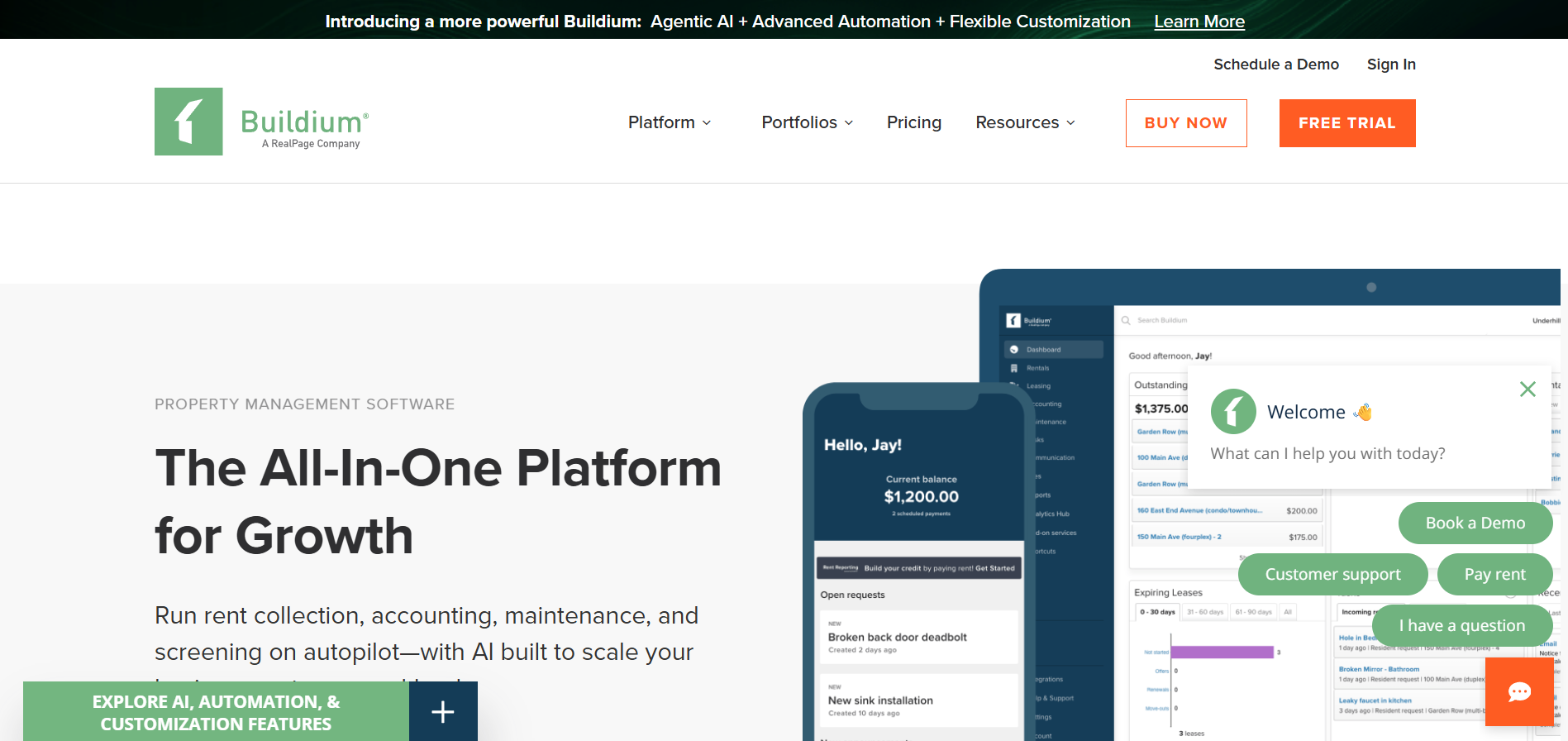
Buildium provides structured reporting capabilities designed primarily for residential property management portfolios. The platform balances financial reporting with owner communication tools.
Key features:
- Financial reporting tools: Generate income statements, rent roll reports, and expense tracking summaries.
- Owner reporting dashboards: Provide property owners with financial updates and portfolio summaries.
- Performance tracking dashboards: Monitor rent payments, occupancy trends, and leasing performance.
Pros: Reliable accounting reporting and owner reporting capabilities.
Cons: Limited customization for enterprise-level reporting.
Best fit: Residential property managers seeking dependable financial reporting tools.
8. Propertyware
Propertyware focuses on reporting capabilities tailored for single-family property management operations. Its system supports customizable workflows and financial reporting.
Key features:
- Flexible reporting controls: Customize operational and financial reports across single-family portfolios.
- Portfolio analytics dashboards: Track performance metrics for individual properties and entire portfolios.
- Workflow reporting: Maintenance activity and vendor performance appear within operational reports.
Pros: Strong customization for single-family portfolio operations.
Cons: Less suited for complex mixed-use or commercial portfolios.
Best fit: Property managers specializing in single-family rental portfolios.
Also Read: What Makes Property Accounting So Messy — And How to Fix It
9. DoorLoop
DoorLoop provides reporting dashboards designed for usability and operational visibility. The platform focuses on simplified financial and portfolio performance tracking.
Key features:
- Visual dashboards: Present property metrics such as rent collections and occupancy in clear graphical formats.
- Accounting reports: Financial data integrates with accounting systems to generate income and expense reports.
- Portfolio summaries: Managers can monitor performance across multiple properties.
Pros: Intuitive dashboard design and simple reporting setup.
Cons: Limited enterprise analytics depth.
Best fit: Small to mid-sized property managers seeking accessible reporting tools.
10. TenantCloud
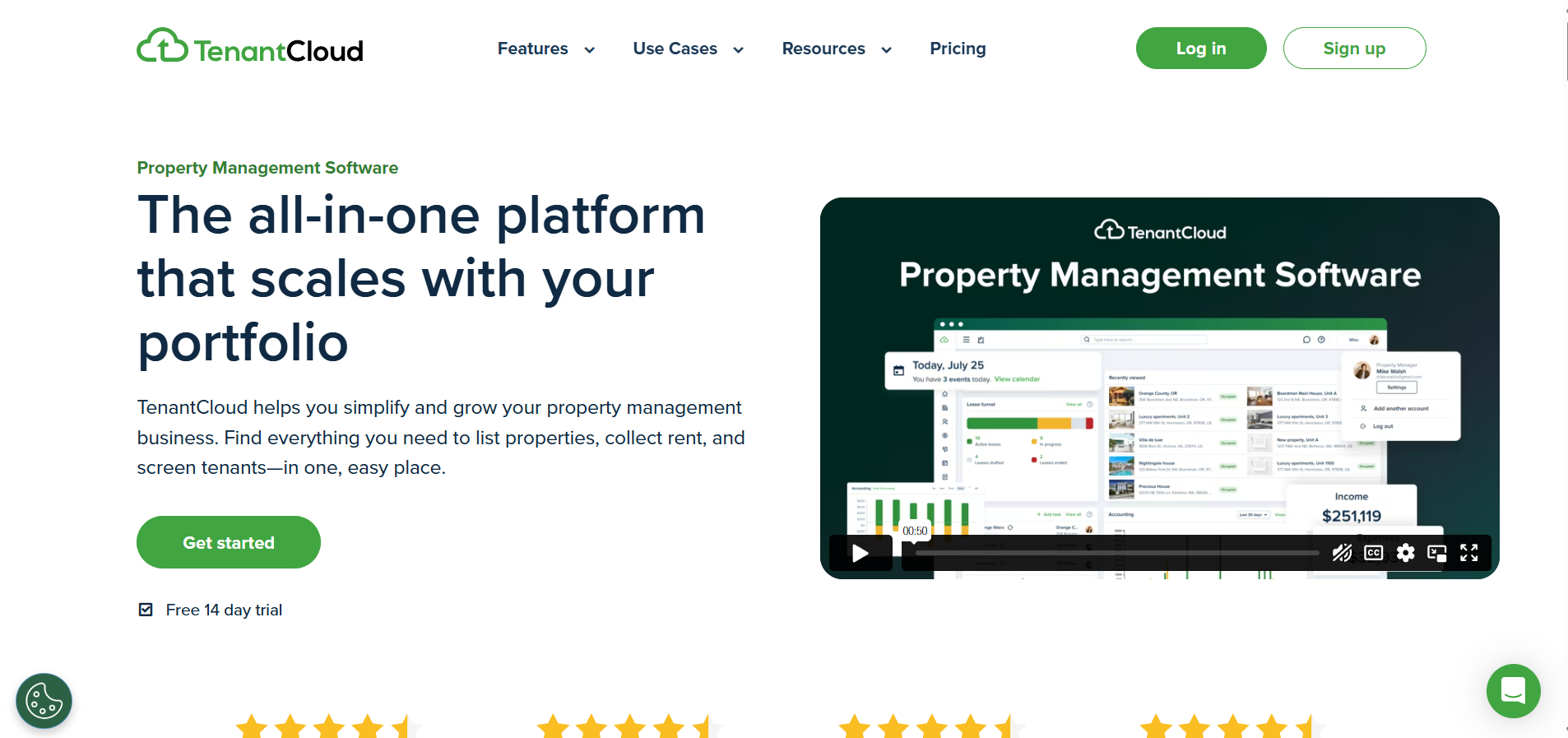
TenantCloud offers reporting tools designed to provide simplified financial analytics for property managers and landlords. The platform focuses on rental income visibility and operational tracking.
Key features:
- Financial reporting tools: Track rental income, expenses, and payment histories.
- Rental performance dashboards: Monitor lease activity and rent payment trends.
- Portfolio summaries: Provide performance insights across multiple properties.
Pros: Straightforward reporting interface and financial tracking.
Cons: Limited advanced analytics capabilities.
Best fit: Small property managers or landlords seeking basic portfolio reporting.
11. Rentec Direct
Rentec Direct focuses on financial reporting and accounting visibility for property management operations. The platform emphasizes financial data accuracy and reporting clarity.
Key features:
- Accounting reports: Generate rent roll reports, general ledger summaries, and financial statements.
- Portfolio dashboards: Monitor rent payments and income performance across properties.
- Owner statements: Generate financial reports for property owners.
Pros: Reliable accounting and financial reporting.
Cons: Limited advanced dashboard customization.
Best fit: Property managers prioritizing accounting accuracy and financial reporting.
12. Entrata
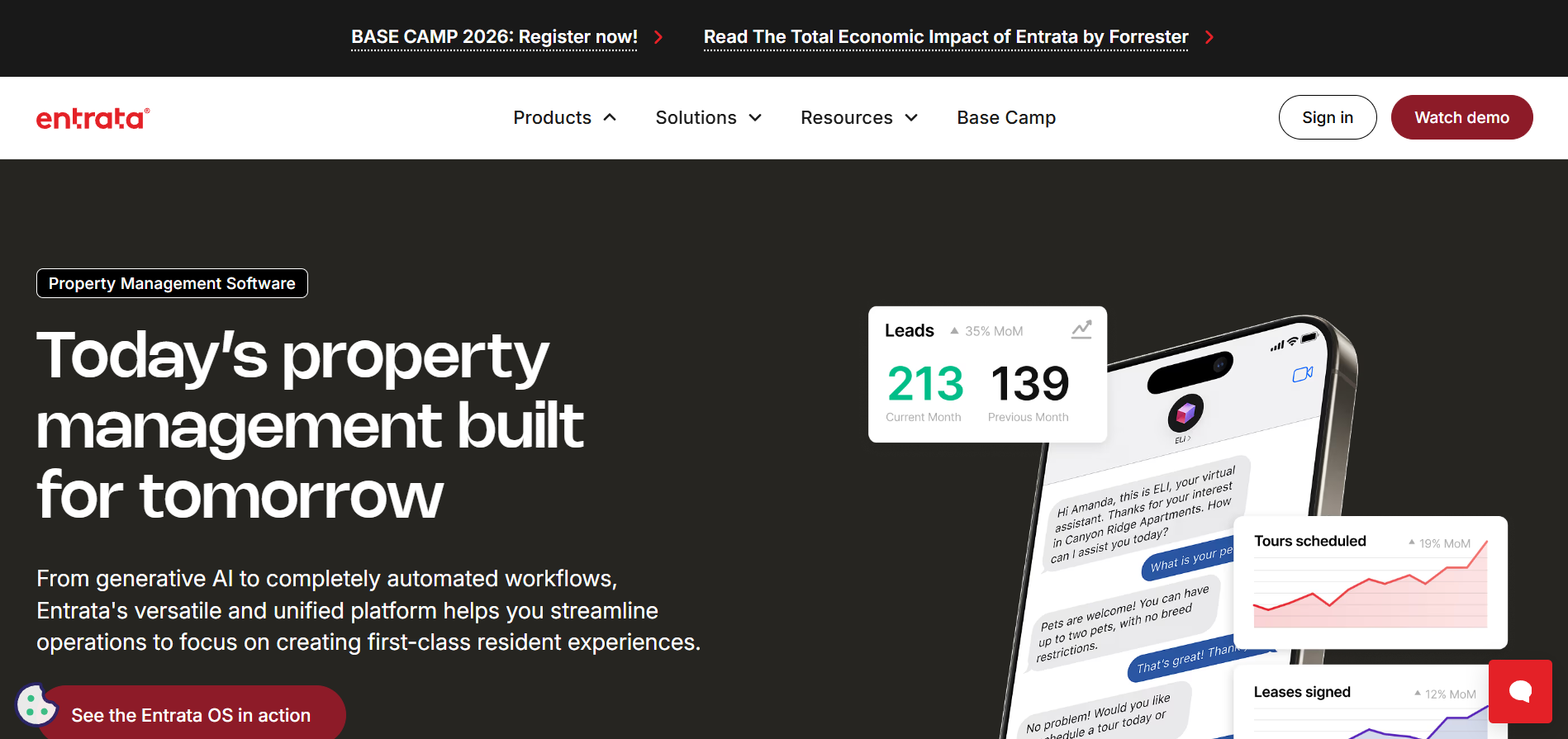
Entrata provides reporting dashboards designed for large residential property portfolios. Its analytics tools help managers track leasing activity and operational performance.
Key features:
- Operational analytics dashboards: Monitor leasing activity, occupancy metrics, and property performance.
- Financial visibility tools: Track revenue and expense performance across properties.
- Portfolio reporting: Evaluate operational and financial performance across multiple assets.
Pros: Strong operational analytics for residential portfolios.
Cons: Less suited for mixed commercial portfolio reporting.
Best fit: Large residential property management companies.
13. ResMan
ResMan offers reporting tools tailored for multifamily property management operations. Its dashboards provide performance visibility across leasing and financial metrics.
Key features:
- Performance analytics dashboards: Track occupancy rates, leasing trends, and revenue performance.
- Operational reporting tools: Maintenance activity and property operations appear in reporting dashboards.
- Financial insight reports: Monitor property profitability and financial activity.
Pros: Focused analytics for multifamily property management.
Cons: Limited reporting flexibility for mixed portfolio operations.
Best fit: Multifamily portfolio operators.
14. Re-Leased
Re-Leased provides reporting tools designed specifically for commercial property management. Its dashboards help property managers monitor lease performance and financial activity.
Key features:
- Commercial asset reporting: Track lease activity, rental revenue, and tenant contracts.
- Financial visibility tools: Monitor income streams and operational costs.
- Portfolio analytics dashboards: Compare performance across commercial properties.
Pros: Strong commercial property reporting capabilities.
Cons: Limited residential property management features.
Best fit: Commercial property managers and real estate investment teams.
15. Console Cloud
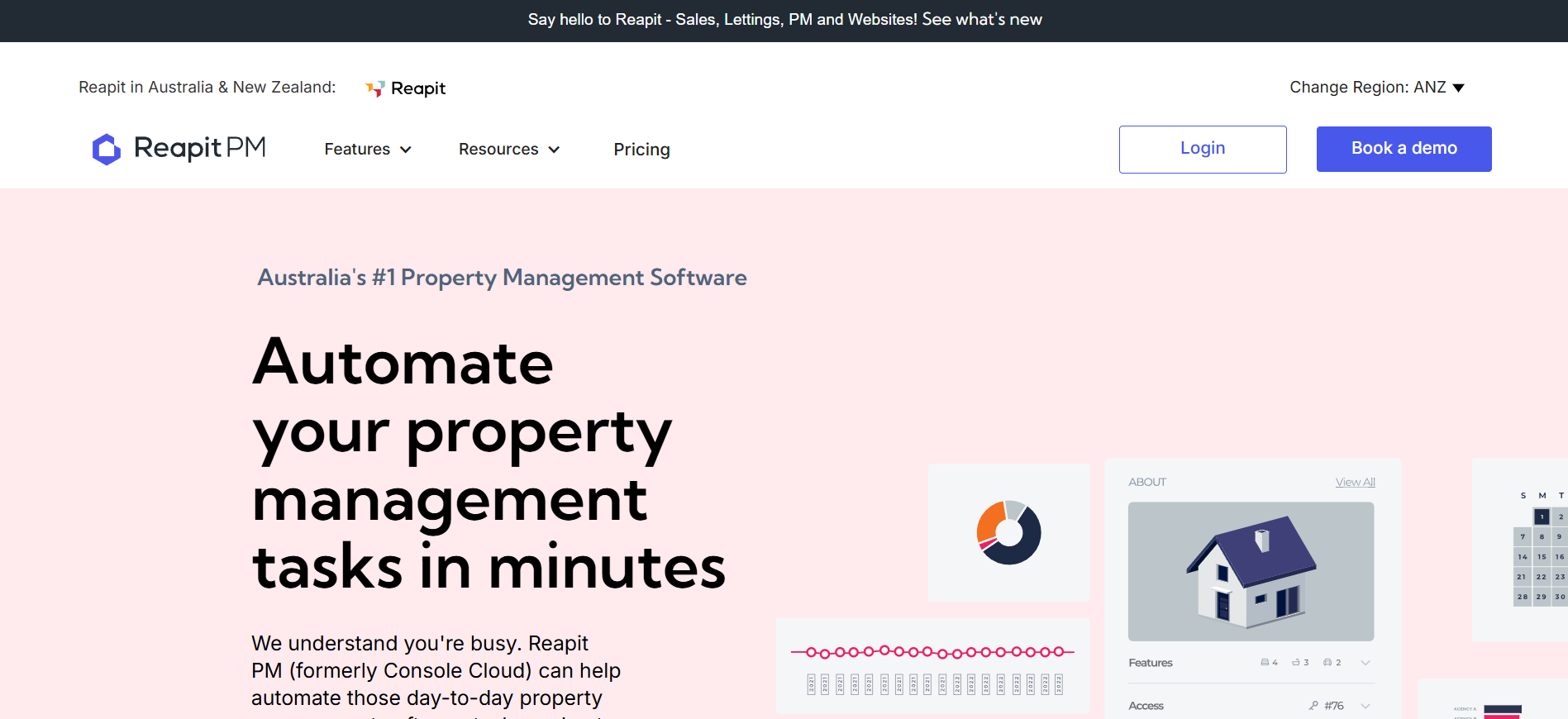
Console Cloud offers reporting dashboards designed for property managers operating across international residential portfolios. The platform provides visibility into property performance and financial activity.
Key features:
- Operational dashboards: Display property activity, leasing updates, and maintenance status.
- Financial reporting tools: Track income, expenses, and portfolio profitability.
- Portfolio insights: Monitor residential property performance across multiple locations.
Pros: Clear reporting dashboards and international portfolio support.
Cons: Limited enterprise analytics depth.
Best fit: Residential property managers operating across regional markets.
Also Read: Best Property Management Apps for iPhone
Seeing the tools is helpful. Choosing the right one is where the real decision begins. Here is how you can select the best property management software for customizable reporting & dashboards for your portfolio.
How to Choose the Best Property Management Software for Customizable Reporting & Dashboards for Your Portfolio
Selecting reporting software should begin with understanding your portfolio structure and operational complexity. Different property portfolios require different reporting depth. You should evaluate your portfolio structure, reporting audience, and operational scale before selecting a platform.
Before choosing a platform, review the decision factors below. These considerations help determine which software aligns with your portfolio structure and reporting needs.
Key decision factors include:
- Portfolio size: The number of properties and units you manage directly affects reporting requirements. Larger portfolios require tools that consolidate financial and operational data across multiple properties.
- Property type mix: Residential, commercial, and mixed portfolios generate different reporting needs. Commercial portfolios often require lease lifecycle analytics, while residential portfolios focus on rent collection and occupancy tracking.
- Reporting audience: Property managers, asset managers, finance teams, and property owners often need different reporting views. Platforms should support structured reporting distribution for each stakeholder group.
- Budget and pricing structure: Enterprise reporting platforms often involve higher licensing and onboarding costs. Smaller portfolios may benefit from platforms with simpler reporting capabilities and lower subscription costs.
- Scalability for future growth: If your portfolio is expected to expand, your reporting system must support additional properties, users, and data volume without requiring a platform change.
- Vendor onboarding and support: Some reporting systems require configuration during implementation. Platforms with onboarding support and documentation can reduce deployment challenges.
- Ease of implementation: Simpler platforms deploy faster but may offer limited customization. Advanced systems require setup but provide deeper reporting capabilities.
Property managers overseeing large or mixed portfolios typically require platforms that can scale reporting across multiple properties and stakeholder groups.
Also Read: NetSuite vs. Yardi vs. MRI Software vs. AppFolio: Which Property Management Platform Wins in 2026?
Conclusion
Reporting dashboards are now central to modern property management. As portfolios grow across residential and commercial assets, clear data visibility helps teams monitor financial performance, track leasing and occupancy trends, compare properties, and make faster operational decisions. The future of property management will rely even more on integrated analytics that connect operational activity with portfolio performance insights.
RIOO supports this shift by bringing leasing, finance, facility management, and property operations into one reporting environment. Its unified dashboards help property teams view portfolio performance without relying on disconnected systems. If you want clearer reporting across every property you manage, RIOO provides integrated tools built for portfolio-level visibility.
Book a demo to see how RIOO simplifies reporting, dashboards, and property operations across your portfolio.
FAQs
Q: Can customizable dashboards help property managers detect revenue leakage across multiple properties?
A: Yes. Custom dashboards highlight anomalies such as declining rent collections or unusual vacancy spikes. These insights allow managers to investigate operational issues before revenue loss escalates.
Q: How can reporting tools support communication between property managers and institutional investors?
A: Structured dashboards present financial and operational performance in clear summaries. Investors can review portfolio trends quickly without requesting separate financial reports from property teams.
Q: Can reporting systems help identify operational inefficiencies in property maintenance workflows?
A: Yes. Maintenance analytics reveal patterns such as repeated repairs or delayed work orders. Managers can review these insights and adjust vendor performance or maintenance scheduling.
Q: How do property managers use reporting data to plan capital improvements across buildings?
A: Property performance dashboards highlight maintenance costs, asset conditions, and operational spending trends. These insights help prioritize upgrades across buildings based on measurable operational data.
Q: Can reporting platforms assist asset managers when evaluating property acquisition opportunities?
A: Yes. Historical performance reports provide reference benchmarks for occupancy, operating costs, and revenue stability. Asset managers use this data to evaluate new investment opportunities.


.svg)
.svg)


.svg)