













Managing residential portfolios involves tracking income, expenses, occupancy, and payments across multiple properties. As portfolios grow, clear reporting becomes essential for making confident decisions. Many property managers are now turning to technology to improve how they monitor financial and operational performance. In fact, AI adoption in property management increased from 21% in 2024 to 34% in 2025, based on a survey of more than 2,000 industry professionals.
But how quickly can you view financial performance across every property you manage?
At the same time, U.S. apartment vacancy rates reached 6.8% at the end of 2024, which highlights the importance of closely tracking occupancy and rental income across portfolios.
When owners or finance teams request updates, are your reports ready to share?
The best property management software for reporting brings together financial data, portfolio insights, and structured reports in one place. In this blog, we review ten tools that help residential portfolio managers strengthen reporting visibility and manage property performance with greater clarity.
Quick Insights for Property Managers
- Effective reporting software connects financial and operational data: The best property management software for reporting combines rent tracking, expenses, occupancy metrics, and maintenance activity in one system.
- Systematic reporting improves visibility across large portfolios: Features like scheduled reports, portfolio dashboards, and property-level financial summaries reduce manual reporting work.
- Top reporting platforms serve different portfolio needs: Tools such as RIOO, AppFolio, Rentec Direct, Buildium, and MRI support reporting for portfolios ranging from growing residential units to enterprise property operations.
- Operational integrations strengthen reporting accuracy: Systems that connect leasing, accounting, maintenance, and tenant portals provide clearer performance insights and reduce reporting errors.
- Choosing the right platform depends on portfolio complexity: Evaluate reporting depth, financial integrations, capabilities, and scalability before selecting a reporting solution.
What the Best Property Management Software for Reporting Should Include
Property reporting software goes beyond simple dashboards. It combines financial reporting, operational tracking, and portfolio visibility across the properties you manage. Strong platforms allow you to review performance at the portfolio level and then drill down to individual properties, units, or transactions. This structure helps you maintain accurate oversight and prepare clear reports for owners and finance teams.
The table below outlines the key reporting areas effective systems should support.
|
Reporting Category |
What You Can Track |
Value for Property Managers |
|
Property revenue, operating costs, and vendor payments. |
Helps monitor profitability and identify unusual spending. |
|
|
Rent collection performance |
Payment history, late payments, and outstanding balances. |
Provides visibility into rent collection trends. |
|
Occupancy and lease reporting |
Occupancy rates, lease dates, and vacancy periods. |
Helps identify underperforming units or properties. |
|
Maintenance activity |
Work orders, repair costs, and vendor assignments. |
Links operational spending with property performance. |
|
Owner and investor reporting |
Owner statements and financial summaries. |
Keeps stakeholders informed about portfolio results. |
|
Financial reporting |
Profit and loss statements and portfolio financial summaries. |
Supports budgeting and financial planning. |
|
Tax-ready accounting records |
Categorized income and expense records. |
Simplifies tax preparation and accounting reviews. |
Key reporting capabilities typically include:
- Financial reports: generate profit and loss statements and income summaries.
- Customizable dashboards: highlight metrics such as revenue performance and rent collection rates.
- Property-level P&L reports: compare financial performance across properties.
- Rent collection tracking: monitor payments and reconcile transactions.
- Portfolio summaries: consolidate financial activity across properties.
- Scheduled reports: generate monthly or quarterly reports for owners or finance teams.
Also Read: Property Management KPI Cheat Sheet: 25 Metrics Every NetSuite User Should Track
Now that you know what strong reporting software should include, let’s look at the platforms that deliver it.
10 Best Property Management Software for Reporting for Residential Portfolios
Residential property managers use reporting platforms to track income, expenses, leasing performance, and operational activity across multiple properties. Clear reporting helps you monitor portfolio performance and prepare financial summaries for owners or finance teams. The best property management software for reporting depends on portfolio size, reporting depth, and how well the platform connects operational and financial data.
The tools below represent widely used property management platforms that support financial reporting and portfolio visibility.
|
Software |
Primary Reporting Strength |
Typical Portfolio Fit |
|
Unified operational and financial reporting across property workflows |
Medium to enterprise residential portfolios |
|
|
Financial dashboards and operational reporting |
Large residential portfolios |
|
|
Accounting-focused financial reporting |
Property managers prioritizing financial accuracy |
|
|
Custom reporting and operational analytics |
Growing portfolios needing tailored reports |
|
|
Financial reporting and owner statements |
Residential portfolio operators |
|
|
Accounting tools with reporting dashboards |
Property managers seeking centralized reporting |
|
|
Multifamily operational and financial reporting |
Large residential communities |
|
|
Reporting and rent payment tracking |
Small to mid-sized property teams |
|
|
Enterprise-level reporting and analytics |
Complex property portfolios |
|
|
Financial tracking and reporting dashboards |
Growing residential portfolios |
1. RIOO
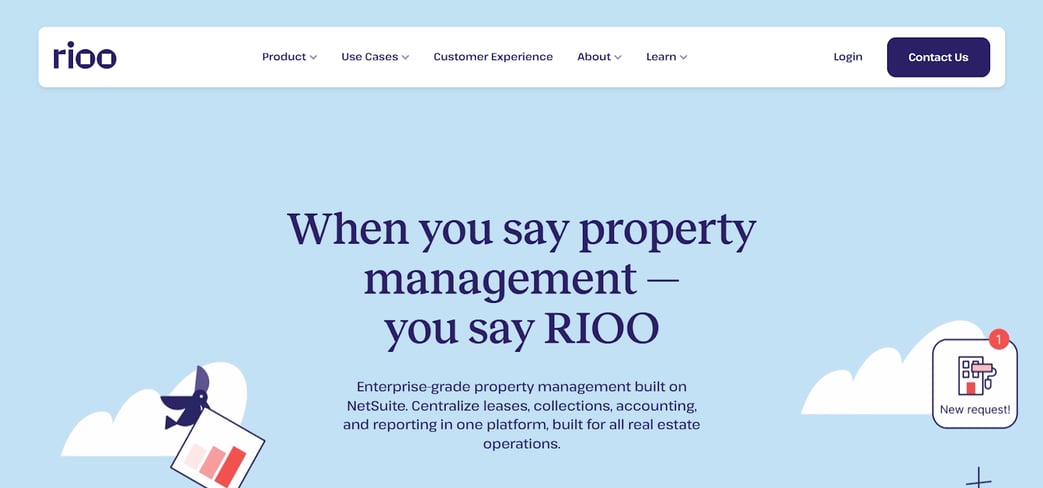
When property, leasing, and financial data live in different systems, reports quickly become inconsistent. Rent values may differ across listings, availability updates lag behind, and property details appear outdated. RIOO solves this by connecting operational systems into a single reporting environment, allowing you to maintain accurate data and reliable portfolio reporting.
The platform centralizes property data and operational activity so that reporting reflects real portfolio performance. The following table shows how RIOO organizes reporting and operational data.
|
Operational Area |
Reporting Benefit |
|
Stores buildings, units, rooms, and amenities in one structured database for accurate reporting |
|
|
Organizes property details used across listings, leasing, and operational reports |
|
|
Aligns rent values and property fees across leasing and financial reporting |
|
|
Tracks residential and commercial inventory and associated financial activity |
|
|
Maintains consistent operational updates and approval processes |
|
|
Converts operational data into portfolio performance insights |
|
|
Connects owner, tenant, and buyer records to the correct property data |
Your daily operational activity also feeds directly into reporting dashboards. The workflows below illustrate how RIOO connects operational systems with financial reporting.
- Leasing and sales workflows: manage inquiries, tenant screening, contracts, renewals, and move-ins. Each activity updates reporting dashboards and portfolio metrics.
- Finance and accounting tracking: records income, expenses, vendor payments, and financial transactions. These records generate portfolio-level financial reports without manual reconciliation.
- Facility management monitoring: tracks maintenance requests, repair activity, utilities, and asset usage. Operational costs connect directly to property financial reports.
- Resident and Community Manager portals: provide tenants, and property teams a shared interface to manage communication, requests, and documentation.
RIOO also integrates with more than 30 operational tools, ensuring your leasing, financial, and operational data remain consistent across the portfolio. This structure keeps portfolio data accurate and makes reporting easier to maintain across large residential portfolios.
If you want clearer financial visibility and consistent operational reporting, explore how RIOO simplifies reporting and portfolio management across every property you manage.
2. AppFolio
Source:https://www.appfolio.com/
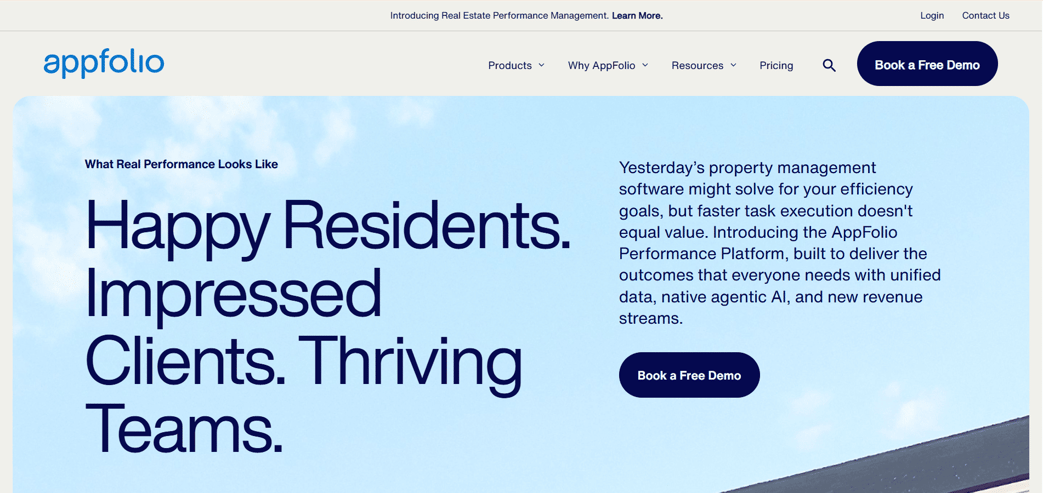
Large residential portfolios require reporting that connects financial records with operational activity. AppFolio combines accounting dashboards, payment analytics, and operational tracking in one reporting system. This structure helps you review portfolio performance while monitoring daily property operations.
The platform supports reporting across several operational areas:
- Financial dashboards: provide portfolio income summaries, expense breakdowns, and financial performance comparisons across properties. These dashboards help you monitor profitability and track financial trends.
- Rent collection analytics: record payment histories, late payments, and tenant balances. Rent activity feeds directly into financial reports so income tracking remains accurate.
- Operational tracking: capture leasing activity, tenant communication logs, and maintenance workflows. Operational reports appear alongside financial data for a complete property overview.
- Portfolio reporting summaries: consolidate revenue, expenses, and occupancy trends across multiple properties. These reports help you review performance without switching between property records.
Also Read: 12 Best Property Management CRM Software Tools for 2026
3. Rentec Direct
Source: https://www.rentecdirect.com/
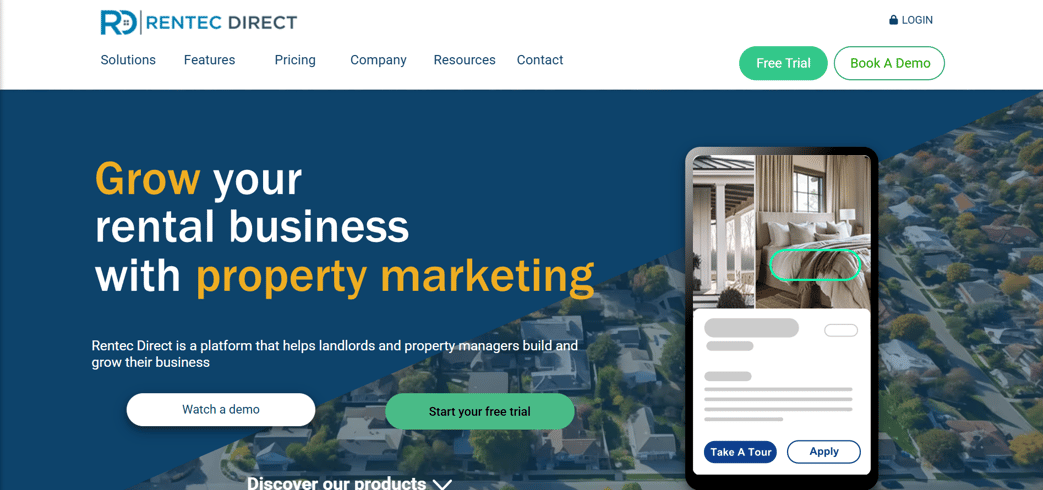
Some property managers prioritize financial accuracy above operational analytics. Rentec Direct focuses heavily on property accounting and financial reporting. Its reporting tools help you maintain organized financial records across residential properties.
Rentec Direct supports reporting through the following accounting functions:
- Property accounting reports: generate income statements, expense summaries, and account ledgers. These reports allow you to monitor financial performance at the property level.
- Transaction record tracking: capture financial transactions from rent payments, vendor invoices, and expense entries. These records support accurate accounting reports.
- Tenant financial reporting: display tenant balances, rent obligations, and payment schedules within financial dashboards. This information supports rent collection monitoring.
- Financial reconciliation tracking: match property payments with recorded transactions. Reconciliation reports ensure financial records remain accurate across the portfolio.
4. Rent Manager
Source:https://www.rentmanager.com/
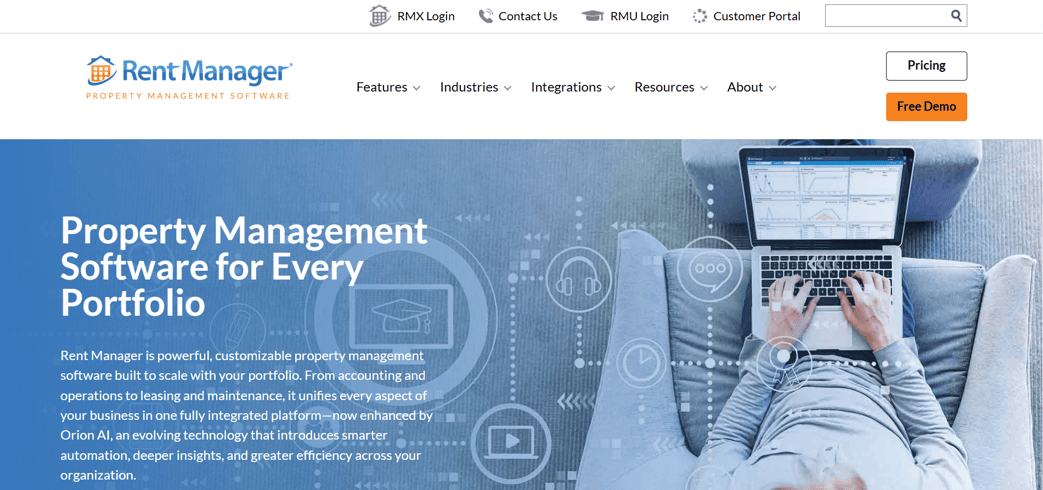
Growing portfolios often require reporting systems that adapt to different reporting needs. Rent Manager offers customizable reporting tools that allow you to generate reports tailored to your portfolio structure. This flexibility helps you analyze financial and operational performance across properties.
The Rent Manager enables reporting through configurable reporting features:
- Custom report creation: generate reports that track selected financial metrics, operational indicators, or property performance trends. Reports can be adjusted based on portfolio requirements.
- Property performance analytics: analyze income, expenses, and leasing activity at the property level. These analytics help you identify high-performing assets.
- Operational reporting dashboards: track leasing workflows, tenant interactions, and maintenance activity through reporting dashboards.
- Multi-property reporting views: summarize financial and operational activity across several properties in one report.
5. Buildium
Source:https://www.buildium.com/
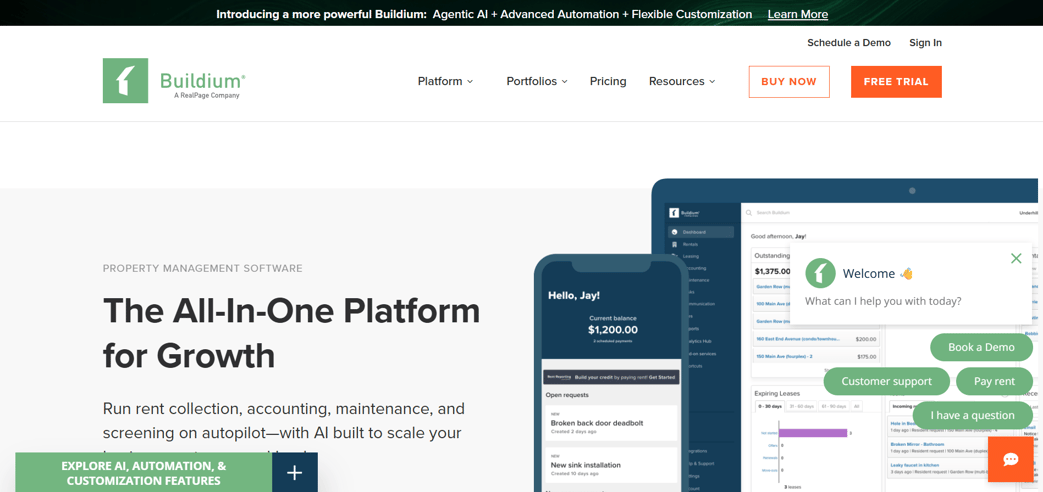
Residential property managers often need reporting tools that combine financial insight with operational management. Buildium provides reporting capabilities that track financial performance while supporting property management workflows. These reports help you review portfolio activity and communicate results with property owners.
Buildium makes it easy to report across several operational areas:
- Financial performance reports: generate summaries of property income, operating costs, and net financial outcomes across residential properties.
- Rent payment tracking: monitor rent payments, outstanding balances, and payment timelines across tenants and properties.
- Owner statement reporting: produce financial summaries that show property revenue, expenses, and owner distributions.
- Portfolio reporting dashboards: consolidate performance data across properties so you can review portfolio financial health quickly.
6. Yardi Breeze
Source:https://www.yardibreeze.com/
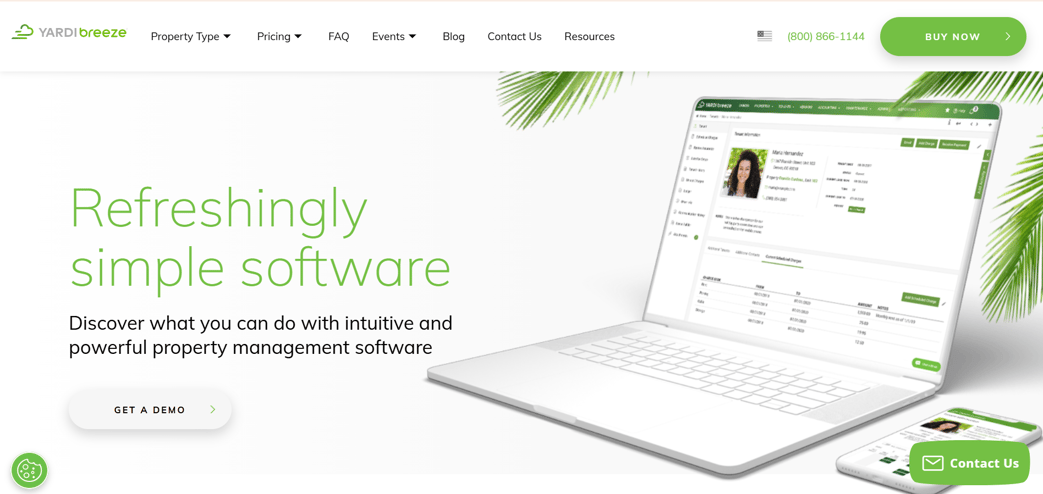
Managing several residential properties requires reporting systems that connect financial and operational activity. Yardi Breeze provides reporting dashboards that combine accounting records, operational metrics, and tenant activity data. These reports help you monitor portfolio performance from a centralized system.
Yardi Breeze provides reporting through several integrated tools:
- Accounting and financial reports: track income, operating costs, and financial summaries using property accounting dashboards.
- Portfolio reporting dashboards: display occupancy trends, revenue performance, and financial metrics across properties.
- Tenant activity reporting: monitor lease events, payment activity, and tenant communication logs.
- Operational performance monitoring: track maintenance requests, service costs, and operational workflows that influence property expenses.
Also Read: Top 10 Rent Manager Software: Features and Pricing Guide for 2026
7. Entrata
source:https://www.entrata.com/
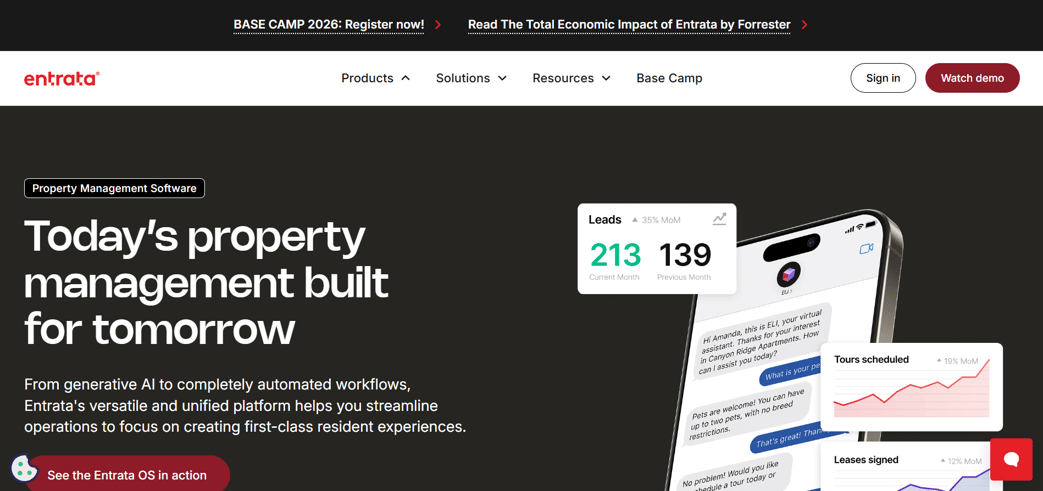
Multifamily portfolios require reporting systems that track resident activity, financial performance, and property operations across large communities. Entrata focuses on centralized reporting for multifamily housing operators. Its dashboards connect resident management data with financial and operational metrics.
Entara makes reporting easy through several operational modules:
- Multifamily performance dashboards: track occupancy levels, leasing activity, and revenue across large residential communities. These dashboards help you monitor property performance without reviewing individual property records.
- Resident management metrics: record tenant activity, lease renewals, and payment behavior. These metrics provide visibility into resident engagement and occupancy trends.
- Financial reporting tools: generate property income reports, expense summaries, and revenue comparisons across communities.
- Operational activity reporting: track service requests, leasing pipelines, and property performance indicators.
8. DoorLoop
Source: https://www.doorloop.com/
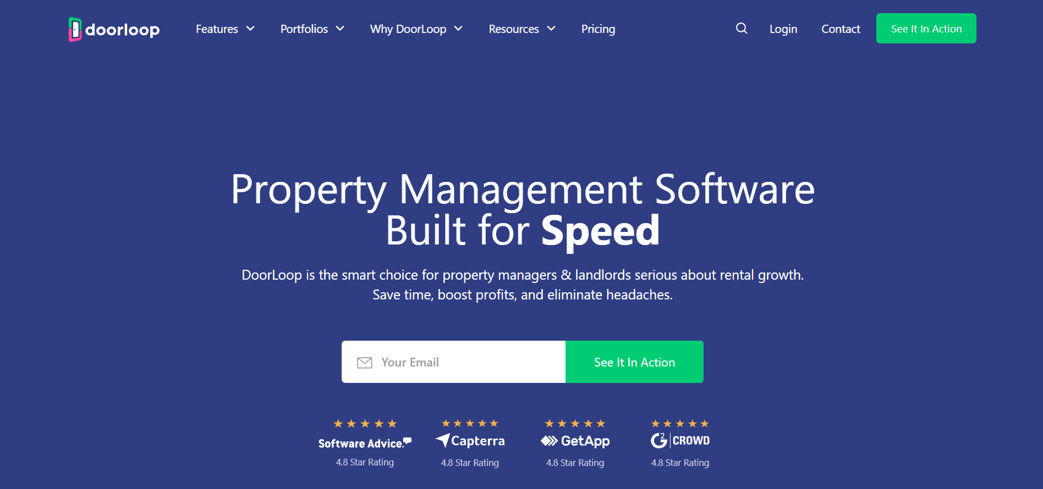
Property managers who want simpler reporting workflows often prefer systems that simplify reporting tasks. DoorLoop combines features with reporting dashboards that track rent payments, expenses, and operational activity. These tools help you monitor portfolio performance with minimal manual reporting work.
DoorLoop is designed to support reporting through simplified features:
- Rent payment tracking: record tenant payments, late fees, and outstanding balances as transactions occur.
- Expense monitoring dashboards: track operating costs and vendor payments across properties.
- Operational workflow monitoring: monitor maintenance requests, service updates, and tenant communication records through reporting tools.
- Portfolio reporting summaries: consolidate revenue, expenses, and operational activity across properties in a single dashboard.
9. MRI Property Management
Source:https://www.mrisoftware.com/
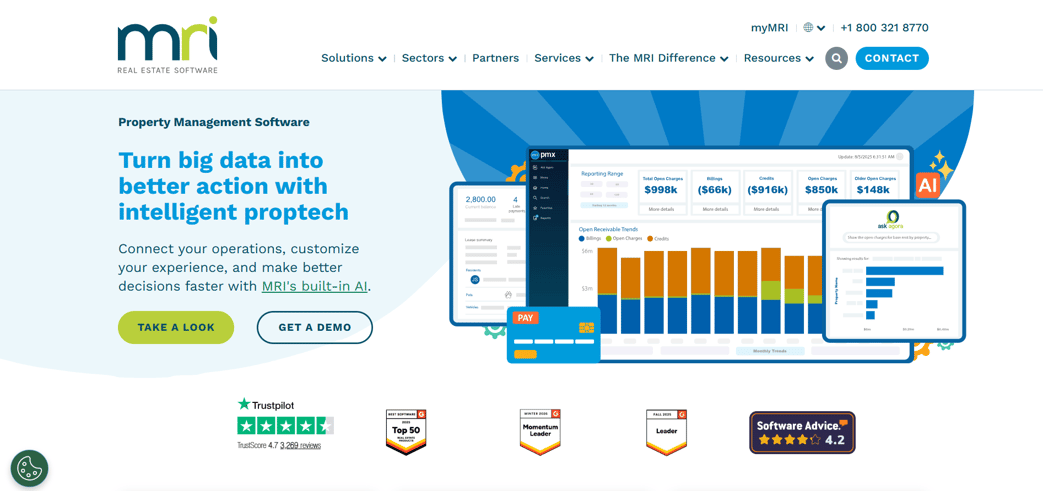
Enterprise property portfolios require reporting systems that support complex financial structures and operational analytics. MRI Property Management focuses on enterprise reporting for large property management organizations. Its reporting tools connect financial tracking with operational data across extensive portfolios.
The MRI Property Management supports reporting through enterprise-level analytics tools:
- Enterprise financial reporting: generate portfolio income statements, operating cost summaries, and financial performance reports across multiple entities.
- Operational analytics dashboards: monitor leasing activity, tenant performance, and maintenance operations through centralized reporting dashboards.
- Portfolio performance analysis: compare financial outcomes across properties and regions within the portfolio.
- Compliance and audit reporting: maintain detailed financial records and transaction histories that support financial audits.
10. TenantCloud
Source:https://www.tenantcloud.com/
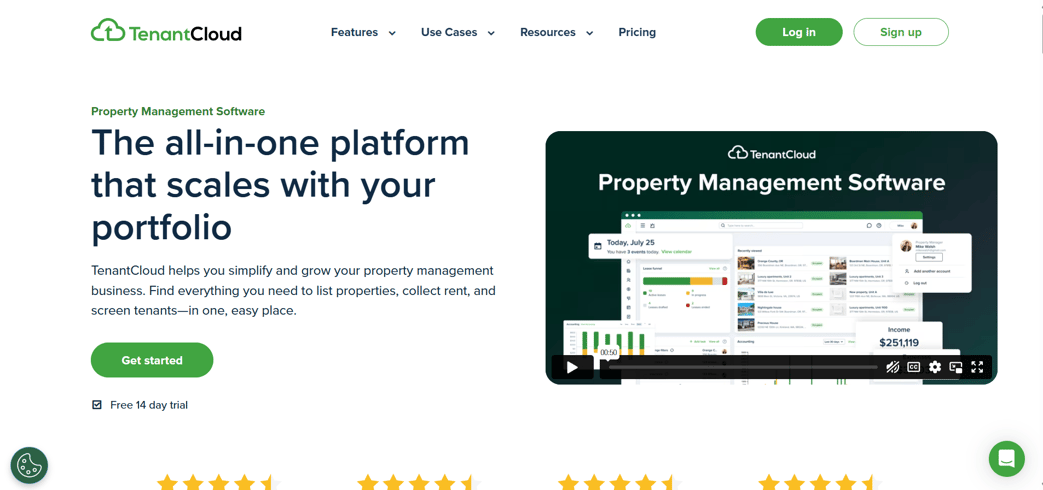
Property managers expanding their residential portfolios often need reporting tools that provide clear financial visibility without complex system setups. TenantCloud provides dashboards that track expenses, rent payments, and portfolio performance. These reports help you maintain organized financial records as your portfolio grows.
The TenantCloud facilitates reporting through several portfolio monitoring tools:
- Expense tracking dashboards: record operating expenses and vendor payments for each property. These dashboards help you monitor spending patterns.
- Rent payment monitoring: track rent payments, payment status, and tenant balances across units.
- Portfolio reporting summaries: consolidate financial activity across properties to review income and expense trends.
- Operational reporting tools: track leasing activity, tenant communications, and property performance indicators.
Also Read: Top 10 Property Management Software for 2026
After reviewing the top platforms, the next step is deciding which one fits your portfolio. Here’s how to choose the best property management software for reporting for your residential portfolio.
How to Choose the Best Property Management Software for Reporting for Your Residential Portfolio
The reporting platform you choose should match the size of your portfolio and the level of financial oversight required. Tools that work for small portfolios may struggle when you manage hundreds of units. You should evaluate reporting software based on financial visibility, operational reporting, and how well it connects leasing, finance, and property workflows. This approach helps you select the best property management software for reporting based on operational needs rather than brand recognition.
The following factors help you evaluate reporting platforms effectively.
- Reporting depth and customization: A strong reporting system should allow you to generate financial statements, operational dashboards, and custom reports that reflect the structure of your portfolio.
- Portfolio-level financial visibility: Reporting tools should allow you to view performance across all properties and then examine individual property results without switching between systems.
- Accounting integrations and financial exports: The software should connect with accounting systems and allow you to export financial records for accountants, auditors, or tax preparation.
- Report generation: Reports reduce manual reporting work by generating monthly, quarterly, or annual summaries.
- Scalability for large residential portfolios: Reporting systems must handle increasing property counts and transaction volumes while maintaining performance and report accuracy.
- Usability for finance teams and property managers: Financial reports should be easy for both property managers and accounting teams to understand without requiring technical training.
- Integration with leasing, maintenance, and payment systems: Reporting accuracy improves when the system captures data from leasing workflows, maintenance operations, and payment processing within one platform.
Also Read: 10 Property Management SEO Tips and Best Practices for 2026
Conclusion
Property reporting software helps you track financial performance, operational activity, and portfolio health in one place. Instead of compiling data from multiple systems, you can review income, expenses, rent collection, and property performance through structured reports. The best property management software for reporting depends on your portfolio size, reporting depth, and how well the platform connects financial and operational workflows.
Platforms that combine reporting and operational tracking provide clearer portfolio visibility and more reliable reporting processes. Solutions such as RIOO bring leasing, financial management, and operational data together, helping you manage residential portfolios with greater clarity and control.
Want clearer reporting across your property portfolio? Book a demo with RIOO to see how unified reporting can simplify your operations.
FAQs
Q: How can property managers use reporting software to identify underperforming rental units?
A: Reporting tools allow you to compare rent growth, vacancy duration, and operating costs across units. These comparisons help you detect units generating lower revenue or experiencing repeated vacancies.
Q: Can reporting software support investor or owner performance reviews for residential properties?
A: Many platforms generate structured financial summaries designed for owners or investment partners. These reports present income distribution, operating expenses, and portfolio returns in a clear format.
Q: How do reporting tools help property managers prepare financial data for external accountants?
A: Reporting platforms organize financial records into categoriz
ed ledgers and structured reports. These formats allow accountants to review income, expenses, and transaction history efficiently.
Q: Can property management reporting systems support multi-city residential portfolios?
A: Advanced reporting systems allow you to segment portfolio data by city, region, or property group. This helps management teams review geographic performance trends across properties.
Q: How can reporting platforms assist property managers during annual budgeting reviews?
A: Historical reports help you review past operating expenses, rental income, and vacancy patterns. These insights help management teams forecast budgets and allocate resources more accurately.