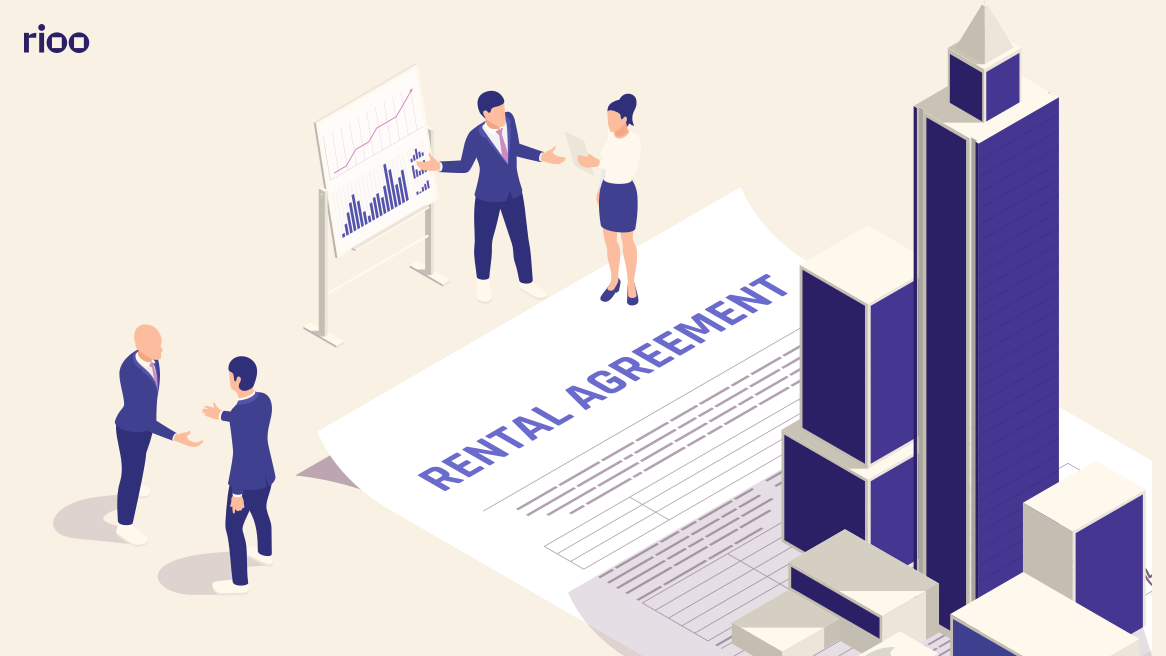
When it comes to managing rental properties, the stakes are higher than ever. Property owners aren't just looking for a decent return — they want to squeeze every possible dollar out of their investments without getting crushed by hidden costs or inefficiencies. And frankly, just setting up a property and waiting for checks to roll in isn't enough anymore. Whether you're handling a single-family rental or a multifamily complex, property management ROI strategies need to be smart, deliberate, and constantly updated. Let's break down what actually moves the needle for single and multifamily units — and what’s just expensive noise. Why Tailored Strategies Matter It’s easy to think a "one-size-fits-all" approach will do. After all, tenants are tenants, right? Not quite. Single family investment returns depend heavily on property appreciation, local demand, and tenant quality. A single bad tenant can wreck your cash flow for a year. Multifamily property profitability, meanwhile, hinges on ...
Property accounting can be a complex task, often involving numerous invoices, payment schedules, and reporting requirements. For property managers, ensuring accuracy and efficiency is critical. Traditionally, accounting tasks are manual and time-consuming, increasing the risk of errors and delays. Fortunately, AP automation for property accounting is a game-changer, providing solutions to streamline processes, save time, and minimize errors. In this blog, we'll explore how AP automation can revolutionize property accounting and how it can help reduce accounting errors, offer time-saving accounting solutions, and enhance property financial processes. What is AP Automation for Property Accounting? AP automation refers to the use of technology to automate the accounts payable process. This includes automating tasks such as invoice capture, approval workflows, payment processing, and reporting. In property accounting, where numerous vendors, contractors, and service providers are ...
Managing property comes with a range of responsibilities, from tenant relations to property maintenance and, of course, handling finances. One crucial financial task that property managers often grapple with is managing accounts payable. Traditionally, this has been a time-consuming and error-prone process, but with the rise of technology, there's a shift toward accounts payable automation in property management. In this blog, we’ll discuss why automating accounts payable is no longer optional for property managers, as well as the challenges of manual invoice processing and the many benefits of adopting AP automation. The Challenges of Manual Invoice Processing For many property managers, manual invoice processing is still the norm. This typically involves paper invoices, spreadsheets, and a lot of manual data entry. However, this process comes with its fair share of challenges. Time-Consuming: The manual entry of data and invoice matching can take up valuable time, which could be ...
Managing accounts payable (AP) in property management can be a time-consuming and error-prone process. With multiple properties, vendors, and invoices to handle, property management teams often struggle to stay organized and ensure timely payments. However, the rise of end-to-end accounts payable automation is changing the game for these teams. This comprehensive solution streamlines the entire AP process, offering numerous advantages that help property managers save time, reduce errors, and improve cash flow management. Let’s explore the key benefits of adopting end-to-end accounts payable automation in property management. 1. Streamlined Invoice Processing One of the primary benefits of end-to-end accounts payable automation is the efficiency it brings to invoice processing. Traditionally, accounts payable teams manually enter invoice data, cross-check it with purchase orders, and ensure the correct amounts are paid. This process can be tedious and prone to mistakes. With automated ...
Property management isn’t just about collecting rent and fixing leaky faucets. Behind every successful residential or commercial building is a set of financial data that tells the real story. For property managers, landlords, and investors, financial KPIs in property management serve as the foundation for making sound decisions. In this article, we’ll explain what financial KPIs are, why they matter so much in the property world, and how focusing on metrics like net operating income (NOI), occupancy rate tracking, and budget forecasting for properties leads to smarter, more strategic operations. Understanding Financial KPIs in Property Management Financial KPIs in property management are measurable values that reflect a property’s financial performance over time. These include data points like rental income, operational expenses, repair costs, and vacancy rates. When tracked consistently, they provide a comprehensive snapshot of a property’s health. For instance, knowing your revenue ...
Managing properties today requires more than just collecting rent. From varied lease agreements to shared utility setups, property managers face a mix of billing needs that demand flexibility. This is where customizable billing features in property management systems come in—they help streamline the billing process while offering the adaptability needed to handle different tenants, lease structures, and property types. Let’s take a closer look at why these features are vital to modern property management operations. What Are Customizable Billing Features? Customizable billing features in property management systems are tools that let property managers tailor billing to meet different tenant and property requirements. These features go far beyond standard invoicing. They give managers the ability to: Set unique due dates per tenant or lease Break down charges (e.g., rent, water, internet) in detailed formats Adjust payment cycles (monthly, quarterly, bi-weekly, etc.) Automate late fees ...
Managing accounts payable (AP) efficiently is a cornerstone of smooth property management. With so many invoices, payment deadlines, and vendor relationships to handle, it’s no surprise that many property managers are turning to automated accounts payable software. Not only does this technology save valuable time, but it also helps reduce errors, streamline workflows, and ensure better cash flow management. If you're in the property management business and looking to implement an automated accounts payable solution, it’s important to understand the key features that can make a real difference to your operations. In this blog, we’ll explore the top accounts payable software features that can transform the way you handle your payments, bringing efficiency and accuracy to your business. Key Features You Need in an Automated Accounts Payable Solution When choosing an accounts payable software, it’s essential to look for features that cater to the specific needs of property management ...
In property management, maintaining smooth operations often depends on efficient financial management. One critical aspect of this is handling accounts payable (AP) processes, which include managing relationships with suppliers and vendors. By keeping detailed records in an accounts payable system, property management companies can enhance their overall financial control and business operations. This is where Vendor Master File Management becomes invaluable. Vendor Master File Management is the practice of organizing and maintaining a centralized database of all supplier and vendor information. Proper management of this file ensures that all necessary details about suppliers are easily accessible, up-to-date, and accurate. In the context of property management, this can significantly streamline operations, improve financial tracking, and enhance supplier relationships. Key Benefits of Detailed Vendor Records in Accounts Payable Systems 1. Improved Vendor Data Accuracy One of the key ...
In the modern business world, finance teams are always seeking ways to optimize their workflows and boost efficiency. One of the most effective solutions to achieve this is through Accounts Payable Automation. By automating the accounts payable (AP) process, businesses can save valuable time and minimize costly errors that typically arise from manual workflows. This blog will examine how Accounts Payable Automation can benefit your finance team, with a focus on improving invoice processing, reducing manual data entry, and enhancing overall finance process efficiency. What is Accounts Payable Automation? Accounts Payable Automation refers to the use of technology to streamline and automate the entire accounts payable process, from invoice receipt to payment. Instead of manually entering data, matching invoices, and approving payments, the system automatically handles tasks such as invoice capture, approval routing, and payment processing. This approach significantly reduces manual ...