Managing large residential and commercial portfolios today means coordinating leasing, maintenance, finances, and tenant communication, often across multiple regions. Many property managers still depend on manual processes or fragmented systems, which slow teams down. Without property management automation, staffing pressure rises, errors become common, and tenant expectations become harder to meet.
Moreover, the shift toward automation is accelerating. The global property management software market is expected to reach $52.21 billion by 2032, with North America accounting for over 35% of adoption in 2024. That signals how critical automation in property management has become for competitive markets.
That's why understanding how to automate property management is essential. This blog outlines the high-impact tasks that are mostly automated in property management.
Quick Takeaways
- Focus on repeatable, rule-based tasks like lease renewals, rent collection, maintenance, reporting, vendor management, and more to reduce manual effort and improve consistency across portfolios.
- Automation works best when leasing, finance, maintenance, utilities, and reporting are integrated, giving teams real-time visibility rather than relying on fragmented systems.
- Successful automation supports staff rather than replacing them and depends on clean data, well-defined workflows, and gradual adoption through pilots.
- Security, system integration, and over-customization are common challenges that you must plan for to ensure automation remains manageable as portfolios grow.
- Build on identified automation-ready tasks, choose scalable tools, map workflows, train teams, and continuously optimize performance using clear KPIs.
Automation in Property Management: Turning Manual Tasks into Smart Processes
Property management automation is the use of technology to reduce manual effort by simplifying routine, rule-based tasks across property operations. Instead of relying on spreadsheets, emails, or disconnected tools, automation centralizes workflows, enabling teams to manage properties more efficiently and consistently.
Automation doesn’t replace on-site staff or leasing teams. It supports them by simplifying the most time-consuming activities and removing repetitive steps from daily operations. Tasks that follow clear policies or predictable workflows are especially well-suited for automation.
Moreover, tenant expectations are changing. Today’s renters, especially millennials and Gen Z, expect digital experiences such as online leasing, self-service portals, and faster responses. Automating property management helps meet these expectations, too.
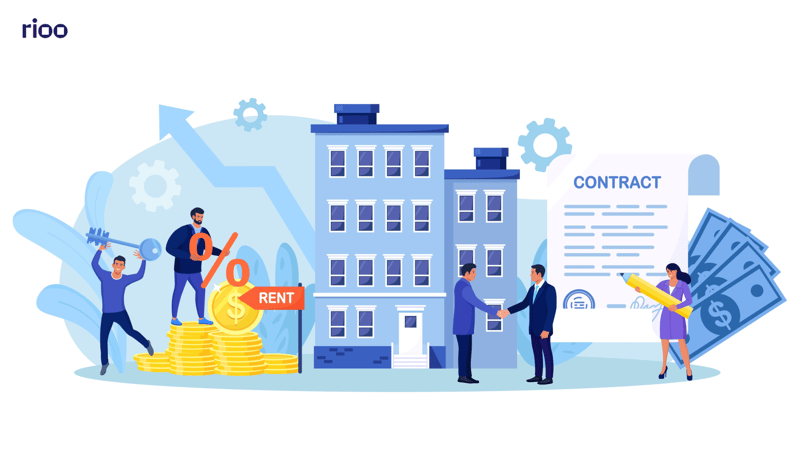
Example: A property management company overseeing 1,000 residential units and multiple commercial buildings can automate lease renewals, maintenance ticket routing, and rent reminders. As a result, leasing teams will reduce manual follow-ups, facility managers will gain real-time visibility, and finance teams will have access to consolidated reports.
Also Read: How Centralized Property Management Can Improve Efficiency for Landlords and Managers
That said, not every task needs automation. Once the fundamentals of automation are clear, the next step is to understand where it delivers the most significant impact.
Core Property Management Operations That Benefit Most From Automation
Property management operations include a wide range of daily, recurring activities, from leasing and maintenance to accounting, and more. The following areas represent the most effective opportunities for property management automation.
1. Lease Renewals
Lease agreement renewals are one of the most predictable processes in property management, making them easy to automate end-to-end. Once lease terms are entered at move-in, automation tools handle reminders, documentation, and signatures without manual follow-up.
What automation handles:
- Advance renewal notifications to residents
- Personalized renewal communications with rent updates
- Auto-generated renewal agreements
- Electronic signatures and approval routing
Why it matters: Missed renewals lead to avoidable vacancies. Property management leasing automation reduces vacancy risk and eliminates the need for manual tracking, allowing leasing teams to focus only on final approvals.
With RIOO’s Contracts & Renewals module, you can manage renewal timelines, generate agreements, and track approvals digitally, without relying on manual reminders or scattered documents.
2. Rent Payments & Collections
Rent collection becomes significantly more efficient when payments and reminders are automated. Digital payment options align with modern tenant preferences while reducing administrative effort.
Automation capabilities include:
- Online rent payments
- Automatic due-date reminders
- Payment confirmation notifications
- Error alerts for failed transactions
- Automated delinquency communication
Key insight: Automated rent collection improves on-time payments and reduces follow-ups, without adding work for property teams. Chatbots further reduce staff involvement by handling routine payment-related questions.
3. Apartment Tours
Tour coordination consumes a large share of leasing teams’ time, especially for multifamily portfolios. Automation allows prospects to schedule and tour properties with minimal staff involvement.
Automated touring includes:
- Online scheduling based on real-time availability
- Digital pre-tour materials (floor plans, photos, virtual tours)
- Self-guided tours using smart access systems
- Automated post-tour follow-ups
4. Maintenance Request Management
Maintenance requests can disrupt daily operations when handled manually. Automation centralizes requests and speeds up response times. That way, it reduces unnecessary site visits.
What can be automated:
- 24/7 maintenance request submission via portals
- Automatic ticket creation and assignment
- Status updates and completion notifications
- Resident follow-ups after work completion
- Alerts for routine or scheduled maintenance
Also Read: From Service Requests to Asset Management: Key Strategies for Facility Management Success
5. Property Access for Residents & Guests
Managing building access manually does not scale well for larger properties. Automated access systems improve security while removing the need for constant staff oversight.
Automated access features:
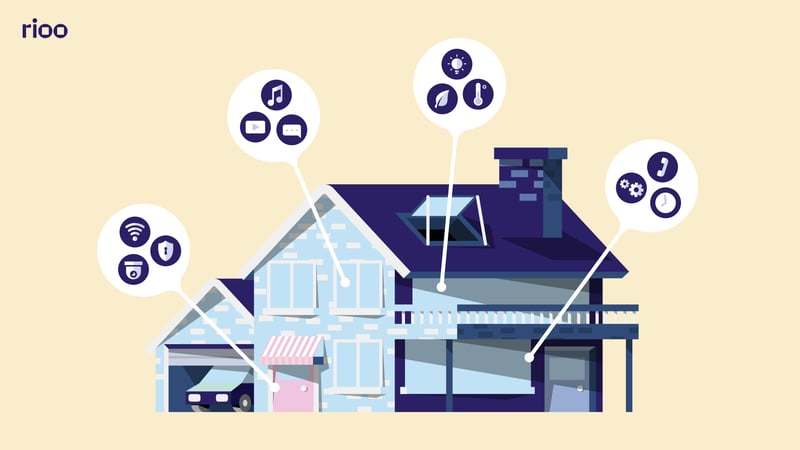
- Smartphone or PIN-based resident entry
- Video intercoms for guest access requests
- One-time or recurring visitor passes
- Time- and date-stamped access logs
6. Tenant Screening
Screening applicants is essential, but it pulls attention away from current residents. Automation simplifies screening while maintaining consistency. Automated tenant screening includes:
- Credit evaluations
- Background checks
- Criminal record reviews
7. Resident Onboarding & Move-In
Move-in processes involve multiple steps that often create unnecessary back-and-forth. Automated tenant onboarding enables residents to complete tasks independently through self-service workflows. Self-service onboarding can include:
- Lease signing and deposits
- Rent payment setup
- Welcome and move-in instructions
8. Inspections, Compliance & Documentation
Inspections and compliance require accuracy and standardization. Automation ensures consistency across properties and teams. They eliminate double entry and reduce compliance risk across large portfolios.
Automation supports:
- Mobile inspection checklists
- Standardized inspection processes
- Instant report generation
- Centralized document storage
Also Read: Why Compliance Shouldn’t Be an Afterthought in Property Management
9. Accounting & Bookkeeping
Property accounting involves high transaction volumes and strict accuracy requirements. Automation eases financial tracking, reporting, and reconciliation across portfolios.
Common automated functions:
- Rent and fee accounting
- Financial statements
- Transaction tracking
- System integrations for extended workflows
10. Managing New Properties & Accounts
Adding new properties triggers multiple setup tasks across teams. Automation ensures standardized onboarding workflows are launched automatically without delays. Automation can:
- Launch property setup checklists
- Notify internal teams automatically
- Trigger standardized onboarding workflows
11. Reporting & Analytics
Manual reporting limits visibility and slows decision-making. Automated analytics provide real-time insight into financial, operational, and property performance metrics.
Automated reporting enables:
- KPI tracking (occupancy, collections, maintenance costs)
- Side-by-side views of portfolio-wide and individual property performance
- Consistent, standardized reports without manual data consolidation
Why it matters: Automation connects transactional data with long-term business objectives.
12. Utility Billing Management
Utility billing is complex and prone to errors when managed manually. Automation improves accuracy while providing clear visibility into utility costs across properties. Automated utility management includes:
- Tracking utility usage across units and properties
- Automatically generating and distributing utility bills
- Consolidated visibility into utility expenses at both property and portfolio levels
Tools like RIOO’s Utility & Assets Management module centralize utility usage, asset data, and related expenses across properties. This gives finance and operations teams clearer cost attribution and fewer billing errors.
13. Lead Generation & Marketing
As inquiry volume increases, manual lead management quickly becomes inefficient. Automation ensures every lead is captured, tracked, and nurtured without relying on manual follow-ups.
Automation supports:
- Digital lead capture forms
- Automated lead tracking and organization
- Email campaigns and nurturing
- Lead scoring and segmentation based on predefined criteria
- Listing platform integrations
Why it matters: Automation allows leasing and sales teams to manage higher lead volumes with fewer resources while maintaining consistent engagement across commercial and residential portfolios.
14. Vendor Management
Coordinating vendors for operations such as front-desk, security, or cleaning involves scheduling, contracts, and payments. Automation simplifies these workflows, improving service reliability and administrative efficiency.
Vendor workflows that can be automated:
- Scheduling and reminders for recurring or upcoming services
- Tracking contract terms and renewal dates
- Invoice processing and payments
These automation opportunities can transform day-to-day operations, but results depend on how well automation is implemented. Below are key considerations to ensure a smooth and effective transition.
Critical Considerations for Successful Property Management Automation
While automation delivers significant operational benefits, implementing it successfully requires awareness of common challenges that you may encounter while modernizing workflows. These include:
- Data Security and Compliance: Property managers handle sensitive tenant, financial, and operational data. Automating workflows increases the importance of strong security controls and regulatory compliance.
- Integration with Existing Systems: Many property management companies rely on multiple tools for accounting, leasing, and facilities. Automation can become inefficient if new systems do not integrate cleanly with existing platforms.
- Initial Setup Costs: Automation often requires upfront investment in software, configuration, and staff training. For organizations with tight budgets, these costs can slow adoption despite long-term efficiency gains.
- Resistance to Change from Teams: Staff may be hesitant to adopt automation due to concerns about role changes or unfamiliar technology. Without proper buy-in, adoption can stall and limit impact.
- Over-Customization of Workflows: Excessive customization can make automated systems harder to manage, update, and scale over time, especially as portfolios grow or processes change.
- Poor Data Quality: Automation depends on accurate data and clearly defined processes. Poor data quality or inconsistent workflows can reduce the effectiveness of automated operations.
Recognizing these challenges is the first step toward avoiding them. The following section outlines a practical, step-by-step framework to help you implement property management automation thoughtfully and effectively.
A Practical Framework for Implementing Property Management Automation
Adopting automation works best when approached methodically. Rather than automating everything at once, successful property managers identify high-impact areas, select the right tools, and integrate automation into existing workflows without disrupting operations. Here's a practical, stepwise approach.
Step 1: Build on the Tasks You’ve Already Identified
Earlier, you came across the core property management tasks best suited for automation, from leasing and maintenance to accounting and reporting. These high-volume, rule-based activities form the foundation of any effective automation strategy.
Prioritizing already-identified, high-impact tasks helps teams see quick wins in time savings, accuracy, and operational consistency.
Step 2: Choose Automation Tools That Fit Your Operations
Once priorities are clear, selecting the right tools becomes critical. Automation software should support your goals, not force teams to work around it.
Key evaluation criteria:
- Integration: Works smoothly with accounting, leasing, and property systems
- Customization: Adapts to existing processes without over-complication
- Scalability: Supports portfolio growth across properties and regions
- Security: Protects sensitive financial and tenant data
Pro Tip: Involve IT, finance, and operations teams early in tool reviews to ensure alignment across departments.
Step 3: Map Current Workflows Before Automating
Automation works best when applied to well-understood processes. Mapping existing workflows helps identify inefficiencies and prevents automation from amplifying existing problems.
Questions to ask:
- Which steps are manual and slow down operations?
- Where do errors or delays occur most often?
- How will automation change handoffs between teams?
Step 4: Train Teams and Manage Change
Even the best automation tools fall short without proper training. Teams need confidence and clarity to work alongside automation. Effective training includes:
- Hands-on practice with real scenarios
- Ongoing support and clear escalation paths
- Transparent communication about how automation supports roles instead of replacing them
Step 5: Start with a Pilot Program
Rolling out automation in phases reduces risk. A pilot allows teams to test functionality before scaling.
Benefits of a pilot approach:
- Validate automation in a controlled environment
- Identify gaps or adjustments early
- Gather user feedback for refinement
Step 6: Monitor Performance and Fine-Tune
Automation is not a one-time setup. Ongoing monitoring ensures it continues delivering value as portfolios keep changing. Track KPIs such as:
- Time saved on manual tasks
- Reduction in errors or discrepancies
- Speed and accuracy of financial reporting
With the right strategy in place, execution becomes the differentiator. This is where RIOO brings these principles together into a unified property management solution.
Manage Property Operations More Efficiently with RIOO
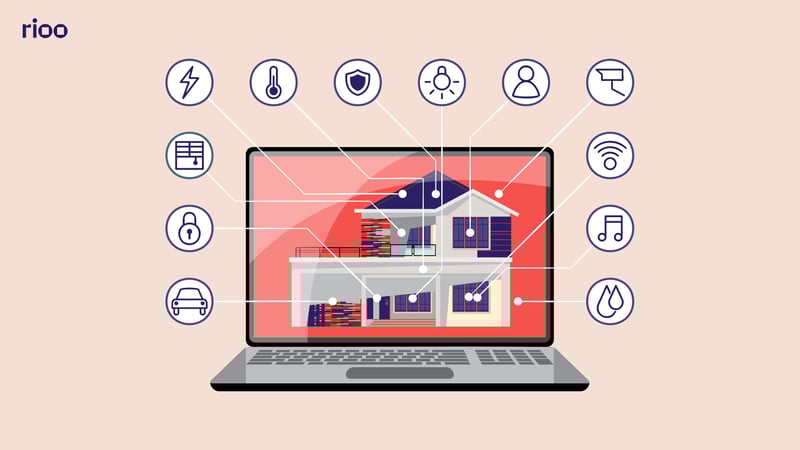
Automating property management tasks is only effective when all workflows operate within a single, connected system. Many property managers struggle with fragmented tools that automate tasks in isolation, failing to deliver end-to-end efficiency. RIOO addresses this gap by simplifying property management for leasing, finance, operations, and reporting onto a single unified platform.
Here are some of the significant ways RIOO supports property management companies:
- Standardizes property and community setup: Quickly configure residential and commercial properties, units, amenities, roles, and permissions in a single system.
- Simplifies rent collection and income tracking: Enable secure online rent payments with reminders and real-time visibility into collections. Integrated income and expense management gives finance teams accurate data without manual reconciliation.
- Automates accounts payable: Eases invoice processing and payments while maintaining clear audit trails and vendor records.
- Centralizes maintenance requests and task management: Residents submit service requests digitally, while facility teams receive task assignments and status updates.
- Customizes property management workflows: Every portfolio operates differently. RIOO allows teams to tailor process workflows to match internal processes without over-engineering systems.
All of these allow property managers, community managers, leasing teams, and financial leaders to reduce administrative overhead while maintaining control as portfolios grow.
Final Thoughts
Property management automation is no longer about replacing manual work with technology. Instead, it involves creating consistency, visibility, and control across every part of your operation. When applied to the right property management tasks, automation reduces administrative pressure, improves accuracy, and allows teams to operate efficiently as portfolios grow.
RIOO brings these capabilities together in a single, connected, enterprise-grade platform. Instead of managing multiple systems or fragmented processes, it enables you to gain a unified view of operations and the flexibility to scale without added complexity.
So, if you’re looking to simplify property management operations and build a more resilient, future-ready operational structure, we can help. Get in touch with our experts to explore how it can support your journey.
FAQs
1. How do I know which property management tasks should not be automated?
Tasks that require frequent human judgment, negotiation, or relationship management, such as dispute resolution or complex lease exceptions, are not well-suited to complete automation.
2. Does automated property management reduce tenant engagement?
No. When implemented correctly, it improves engagement by delivering faster responses, consistent communication, and self-service options. This frees teams to focus on personalized interactions instead of administrative follow-ups.
3. What is one of the biggest mistakes property managers make when automating workflows?
A frequent mistake is automating poorly defined processes. Property management workflow automation works best when workflows are standardized first; otherwise, automation can reinforce inefficiencies rather than eliminate them.
4. Are automation services flexible enough for custom property management processes?
Yes, when built correctly. Modern automation services for the property management industry enable configurable workflows. That allows you to reflect internal processes without hard-coding excessive complexity that limits future adaptability.
5. Is automated property management suitable for mixed residential and commercial portfolios?
Yes. Automated property management platforms are particularly valuable for mixed portfolios. That's because they centralize operations and accommodate diverse leasing structures, maintenance priorities, and financial reporting requirements across asset types.



.svg)
.svg)


.svg)