


Property management, built natively on Oracle NetSuite

Request a demo

Integrations · Utility Billing

Recover utility costs without the spreadsheet

RIOO connects with National Utility Billing System, so utility charges reach tenant ledgers accurately, recovery is reported by property, and usage is visible to residents and your team.

Utility recovery is a margin lever

For many residential operators, especially in manufactured housing and multifamily, utilities are recovered revenue, not just an expense. But recovery leaks: vacant units still drawing power, unbilled common areas, meter drift, rate changes not passed through. Getting utility charges onto the right ledgers, consistently and on time, protects margin and resident trust.

Fewer hand-offsOne recordNetSuite controlsLive reporting

What is utility billing in property management?

Utility billing in property management is the process of passing water, sewer, gas, electricity or trash costs from the property's provider bills to the residents or tenants who use them. Owners recover the cost through submeter readings, allocation formulas such as RUBS or flat fees, and each charge appears on the tenant ledger beside rent.

Utility billing sits awkwardly between operations and accounting. Meter data and allocation rules belong to operations; the provider's invoice, the recovery income and the unrecovered cost belong to finance. When the two live in different systems, recovery rates are calculated in spreadsheets weeks after the fact. With RIOO, the charge to the resident and the invoice from the provider are both NetSuite transactions, so recovery is a report rather than a project.

CCAMRRent rollGGross-upEEstoppel

How it works

How does utility billing work in RIOO?

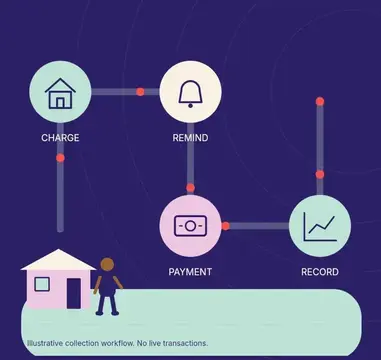
Utility billing in RIOO works as a monthly cycle that starts with usage and ends with finance reviewing recovery. Meter readings or allocation rules produce each unit's charge, the charge posts to the tenant ledger, residents pay in the portal, and the provider's invoice is compared with resident billings by property.

Lease eventNeeds sign-off?YesNoRoute to ownerDueAuto-processInstantUpdate records
  1. 01

    Usage is measured

    by meters or allocation rules.

  2. 02

    Charges are calculated

    by the billing service or RIOO, according to your model.

  3. 03

    Charges post

    to tenant ledgers in RIOO.

  4. 04

    Residents see

    itemized charges and pay through the portal.

  5. 05

    Finance reviews

    recovery against the utility provider's invoices.

How it works

How does a RUBS allocation work?

A RUBS allocation works by dividing a master-metered utility bill among units using a published formula, usually occupants, square footage or a weighting of both. The property first removes the share attributable to common areas and vacant units, then bills each occupied unit its percentage of the remainder, according to the formula in the lease.

1Capture2Validate3Approve4Post5Report
  1. 01

    Start with the provider bill

    For example, a $6,000 water bill for a 60-unit building for the month.

  2. 02

    Remove common-area use

    If the policy deducts 10% for irrigation and shared laundry, $5,400 remains for allocation.

  3. 03

    Remove vacant units

    The owner absorbs the share of units that were vacant during the billing period.

  4. 04

    Apply the formula

    A unit with two occupants in a building weighted by occupants pays its share of the $5,400, based on total occupants in occupied units.

  5. 05

    Add permitted fees

    Any administrative fee is billed as a separate line, where local rules allow it.

  6. 06

    Post and disclose

    The charge posts to the tenant ledger with the calculation basis visible in the portal.

In detail

What the integration does

Smart locksBankingCRMInsuranceUtilitiesScreeningRIOOon NetSuite

Brings utility charges into RIOO

against the right tenant and unit.

Posts charges to tenant ledgers

alongside rent and other charges.

Supports transparent billing

with itemized utility lines residents can see in the portal.

Feeds reporting

on usage and recovery by property.

Recovery models

Properties recover utilities differently: included in rent, flat fees, ratio billing (RUBS) or submetering. RIOO supports configurable billing for your setup. For manufactured housing communities, RIOO reconciles resident billings against the master-meter invoice and reports recovery rate by community and month.

Manufactured housing

Portfolio51 propertiesPropertyRiverside LoftsBuildingBlock EUnit / spaceUnit 12AOne record, every level

Compliance considerations

Several jurisdictions regulate utility resale, ratio billing and markups. RIOO supports configurable rules and notices, and your policies and local requirements govern what you bill.

Policy checksUp to dateAudit trailEvidence storedRole permissionsTracked on recordDocument retentionUp to date

Compare

How do teams put utility billing into practice?

Teams put utility billing into practice by configuring RIOO to their own policies, training each role on real scenarios and starting with one property or workflow before rolling out further. The examples below show how that typically looks, from set-up to day-to-day use, and which team owns each part of the work.

Several jurisdictions restrict RUBS, cap markups on resold utilities or require specific disclosures. Configure models to your legal guidance.

When recovery falls short, the causes are usually operational:

Reconciling resident billings against the provider's invoice each month turns these into specific, fixable items. Tracking recovery rate by property and month shows whether fixes worked.

Residents are far more likely to accept a utility charge they can see itemized, with usage history, in their portal.

Tenant ledger · Unit G04Maple CourtRefDescriptionAmountL-01Model$45.00L-02How it works$80.00L-03Typical use$120.00L-04Included in rent$1,700.00L-05Flat fee$125.00Payment posted
ModelHow it worksTypical use
Included in rentUtility cost built into rentSimple properties, all-inclusive offers
Flat feeFixed monthly charge per unitPredictable, low-admin recovery
RUBS (ratio utility billing)Master bill allocated by a formula such as occupants or square footageProperties without submeters
SubmeteringEach unit billed on measured consumptionProperties with unit-level meters
Master-meter reconciliationResident billings compared with the provider's master invoiceMeasuring recovery rate and finding leaks

Mapped to NetSuite

How does utility billing post to the NetSuite general ledger?

Utility billing posts to the NetSuite general ledger as two sides of one property's activity: the provider's bill is a vendor bill to a utility expense account, and each resident charge is an invoice line using a utility recovery item. Because both carry the property and unit, NetSuite reports show recovery and leakage by property without a reconciliation file.

  1. Utility eventProvider master-meter billRIOO recordVendor bill coded to the propertyDebit utility expense, credit accounts payable
  2. Utility eventResident utility chargeRIOO recordInvoice line with a utility recovery itemDebit receivables, credit utility recovery income
  3. Utility eventResident paymentRIOO recordCustomer payment, often through the portalDebit cash, credit receivables
  4. Utility eventVacant-unit shareRIOO recordNo resident chargeRemains as owner utility cost
  5. Utility eventAdministrative feeRIOO recordSeparate fee itemCredit fee income account

In detail

Which utility recovery patterns differ by property type?

Utility recovery patterns differ by property type because metering, lease terms and resident expectations differ. Manufactured housing, multifamily, student housing, build-to-rent and commercial buildings each tend to use a different mix of submetering, ratio billing and inclusive rents, and RIOO is configured per property rather than with one portfolio-wide rule.

MultifamilyCommercialStudentHOAIndustrialMixed-use

Manufactured housing

Many communities buy water or power on a master meter and bill each home site, so reconciling resident billings against the master invoice each month is the main control. See manufactured housing.

Multifamily

Older buildings often use RUBS for water and trash, while newer buildings submeter electricity per unit.

Student housing

Utilities are often included in a per-bed rent with a cap, and overage above the cap is billed per bedroom or unit. See student housing.

Build-to-rent

Homes usually have individual utility accounts in the resident's name, so the operator bills only shared services, such as trash or amenity energy.

Commercial buildings

Tenant electricity is often submetered, while common-area utilities are recovered through service charges or CAM. See CAM reconciliation.

Who is RIOO utility billing NOT for?

RIOO utility billing is not a metering hardware service or an energy procurement platform. RIOO does not install or read meters, buy energy or negotiate supply contracts; it records charges, posts them to tenant ledgers and reports recovery. Meter reading and calculation can come from a connected billing provider such as National Utility Billing System.

It is also not a way around local utility resale rules. Several US states and cities restrict ratio billing, cap administrative fees or require disclosures in the lease, and some markets prohibit resale above cost. RIOO can store the rules and notices your advisers approve, but your legal guidance decides what each property may bill.

Strong fitNot a fitFinance-led teamsSingle small…Mixed portfoliosVacation rentalsRuns NetSuiteEquipment rentalHonest fit check

What changes

What changes when utility billing runs on NetSuite?

When utility billing runs on NetSuite through RIOO, operational work and accounting stop being two separate jobs. Transactions post to the general ledger as they happen, reports use the same records as daily work, and controls come from NetSuite roles and approvals. The changes below are the ones teams usually notice first.

BeforeWith RIOOSystems to updateOne recordManual hand-offsRules and alertsReports built by handLive reports
  • Higher utility recovery
  • Fewer billing disputeswith itemized charges.
  • Utility income on the same ledgeras rent.
  • Visibilityinto consumption trends and anomalies.

Use cases

Which utility billing reports should finance review monthly?

Finance should review four utility reports every month to keep recovery high and disputes low. Each report uses NetSuite data from RIOO, so it can be built as a saved search by property and period, and each one points to a specific operational fix rather than a general concern.

Portfolio dashboard · Bayfront TowerThis monthBudgetOn budgetCloseIn progressBank recsMatchedNOI trend
01

Recovery rate by property

Resident utility income divided by provider cost, by month, showing which communities are leaking.

02

Vacancy utility cost

Provider cost attributable to vacant units, which also signals slow turns.

03

Unbilled units

Occupied units with no utility charge in the period, usually caused by a missed move-in.

04

Consumption outliers

Units or meters far above their history, which can mean a leak, a fault or a reading error.

Checklist

Utility billing setup checklist

Building meter7,392m³ waterRead this cycleauto-importedAllocated to unitsUnit 4BUnit 12AUnit 305Unit 7CUnit 1102Unit 2FBilled to 56 units
  • Choose the recovery model per property and utility: inclusive, flat fee, RUBS or submeter.
  • Confirm the allocation formula and common-area deduction with counsel.
  • Create utility recovery items mapped to the right income accounts.
  • Code each provider account to its property for vendor bills.
  • Add utility clauses and disclosures to lease templates.
  • Decide how move-in and move-out periods are prorated.
  • Set up the provider integration or meter data import.
  • Build the monthly recovery-rate report by property.

Talk to a specialist

See utility billing on your own portfolio.

RIOO connects with National Utility Billing System, so utility charges reach tenant ledgers accurately, recovery is reported by property, and usage is visible to residents and your team.

FAQ

Utility billing FAQs

Still curious? Ask the team.

Which utility billing provider does RIOO integrate with?

RIOO lists National Utility Billing System in its current integrations directory for utility billing. The provider can calculate charges from meter readings or allocation rules, and the resulting charges reach tenant ledgers in RIOO alongside rent. Ask about other providers in your demo, since integration options change as RIOO adds connections.

Can residents see their utility charges?

Yes. Residents see itemised utility charges in the RIOO tenant portal, on the same statement as rent and other charges, and can pay them together online. Showing each utility as its own line, with the billing period and basis, makes charges easier to understand and tends to reduce disputes and calls to the leasing office.

Does RIOO support RUBS and submetering?

RIOO supports configurable utility recovery models, including flat fees, ratio utility billing (RUBS) and submetered charges, set per property and utility. Some calculations may run in a connected billing provider rather than in RIOO itself, so confirm which models apply to your portfolio during the demo.

Can we flag unusual consumption?

RIOO can alert on unusual consumption when meter or usage data is available for the unit, so teams can investigate leaks, faulty meters or reading errors before they reach a resident bill. Alerts are most reliable on submetered properties, where each unit has its own consumption history to compare against.

How are utility charges prorated at move-in and move-out?

Utility charges at move-in and move-out are prorated by the days the resident occupied the unit within the billing period, following the method in your lease. RIOO uses the lease start and end dates on the record, so the resident is billed only for the occupied days and the owner absorbs the vacant remainder.

Put every utility dollar back where it belongs.