- Usage and cost dataOn track
- Allocation methodsApproved
- Common area and vacancyLive
- Itemised resident chargesSynced
- Admin feesPosted
Platform · Finances
Utility Billing Software for Property Management
Resident utility billing system with clear, itemised charges
RIOO helps property teams bill utilities to residents accurately: submetered usage or RUBS allocations, itemised charges on each tenant ledger, and utility costs and recoveries tracked in NetSuite. Residents see what they are paying for; finance sees how much of the utility bill was recovered.
Utility billing & submetering
Water bill · June$600.00Split by occupants
- Unit 1A · 1 occ · 650 sq ft$85.71
- Unit 1B · 2 occ · 900 sq ft$142.86
- Unit 2A · 3 occ · 1,100 sq ft$228.57
- Unit 2B · 2 occ · 1,050 sq ft$142.86
What is a resident utility billing system?
A resident utility billing system calculates each unit's share of water, sewer, gas, electricity, trash or other utility costs and bills it to the resident. Shares come from individual meters or submeters, or from a ratio utility billing system (RUBS) that allocates a building's bill by a formula such as occupants, square footage or bedrooms.
Utility billing sounds simple, but it touches resident trust, local regulation and the property P&L. Charges must be explainable, consistent and legally permitted, and every dollar billed should reconcile to what the utility charged.
Why do itemised utility bills matter?
Most utility disputes come from charges residents can't understand. Itemised charges with the period, method and basis, visible in the portal, answer the question before it is asked. Consistent allocation rules also protect you when a regulator or resident challenges a charge.
Why bill utilities back to residents?
Utility costs are one of the largest operating expenses in multifamily property. Billing them back recovers cost, makes rents comparable with properties that already bill back, and, especially with submetering, encourages residents to use less water and energy. The key is a transparent, lawful method that residents understand.
How it works
How do you calculate a RUBS charge?
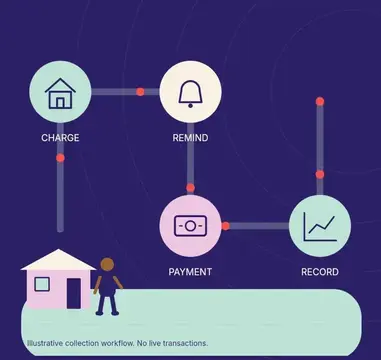
To calculate a RUBS charge, take the building's utility bill for the period, deduct common-area usage if required, apply each unit's factor such as occupants or square footage as a share, prorate for move-ins and move-outs, add any allowed admin fee, and bill each resident with the calculation shown.
- 01
Take the building's utility bill for the period.
- 02
Deduct common-area usage, often a fixed percentage, if your policy or local rules require it.
- 03
Apply each unit's factor, such as occupants or square feet, as a share of the total.
- 04
Prorate for move-ins and move-outs during the billing period.
- 05
Add any allowed admin fee.
- 06
Bill each resident on their next invoice with the calculation shown.
In detail
What does RIOO handle?
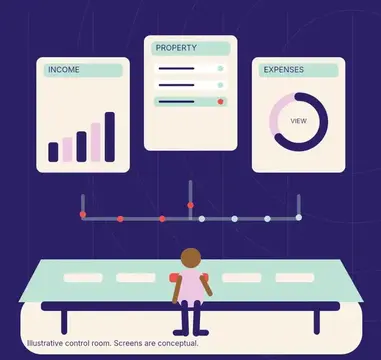
RIOO handles utility usage and cost data, allocation by submeter, RUBS or flat fee, common-area exclusions and vacant-unit absorption, itemised resident charges, admin fees where allowed, and accounting that posts utility expense and recovery income to NetSuite by property, so recovery rates are visible.
Usage and cost data
Utility bills and meter reads captured from your utility billing partner or uploads. See utility billing integrations.
Allocation methods
Submetered usage, RUBS by occupants, square footage or a weighted formula, and flat fees, configured per property.
Common area and vacancy
Exclude common-area usage and absorb vacant-unit shares according to policy.
Itemised resident charges
Utility charges appear on the tenant ledger and statement with period, usage or allocation basis and amount.
Admin fees
Billing fees where leases and local law allow.
Accounting
Utility expense and recovery income post to NetSuite by property, so recovery rates are visible.
Reporting
Utility cost trends, recovery percentage, and consumption by property and unit.
Compare
What does a RUBS allocation look like?
A RUBS allocation splits one building bill across units by agreed factors. In this sample, a 4-unit building's $800 water bill is allocated 50% by occupants and 50% by square footage, so larger, fuller units pay more. The table shows each unit's share and total charge.
Totals reconcile to the $800 bill. Rules on RUBS and submetering vary by state and city; check local requirements.
| Unit | Occupants | Sq ft | Occupant share | Area share | Total charge |
|---|---|---|---|---|---|
| 1 | 1 | 600 | $57.14 | $85.71 | $142.86 |
| 2 | 2 | 800 | $114.29 | $114.29 | $228.57 |
| 3 | 3 | 900 | $171.43 | $128.57 | $300.00 |
| 4 | 1 | 500 | $57.14 | $71.43 | $128.57 |
Use cases
Which utilities are commonly billed back?
The utilities most commonly billed back are water and sewer, trash and recycling, gas, common-area electricity, stormwater and other municipal fees, and EV charging. Methods vary: submeters where installed, RUBS or flat fees otherwise, always subject to leases and local rules.
Water and sewer
The most common bill-back, by submeter or RUBS.
Trash and recycling
Usually a flat fee or RUBS share.
Gas
Submetered where possible, sometimes RUBS for central boilers.
Electricity
Usually direct-metered to residents; common-area power may be recovered.
Stormwater and other municipal fees
Allocated where allowed.
EV charging
Metered sessions billed to the user.
What should a utility bill to residents show?
An itemised utility charge should show the service period, total building cost or meter reading, the allocation method and factor, any common-area deduction, admin fees and the resulting amount. Clear itemisation reduces disputes and is required in some states for RUBS billing.
Why does NetSuite-native matter for utilities?
NetSuite-native matters for utilities because the utility bill, the allocation and the resident charges are all NetSuite transactions, so recovery is measurable. You can see by property how much of each expense was billed back and spot leakage from vacant units, caps or missed meters.
When the utility bill, the allocation and the resident charges are all NetSuite transactions, recovery is measurable: you can see by property how much of each utility expense was billed back, spot leakage from vacant units or meter faults, and drill from a resident's charge to the bill behind it. RIOO reports 180k+ units managed across the US & Canada on riooapp.com.
How do utility charges reach the ledger?
The building's utility bill posts in NetSuite as a vendor bill to the property. Resident charges post as invoice lines to each tenant, credited to a recovery account. Reports compare total cost with total recovered by property so under-recovery is visible every month.
Compare
What is the difference between submetering and RUBS?
Submetering bills each unit for its actual measured consumption from a meter on that unit. RUBS, the ratio utility billing system, allocates a building's total bill to units by a formula such as occupants, square footage or a mix. Submetering is more precise and encourages conservation; RUBS needs no meters but must follow local rules on allowed methods and disclosures.
| Method | How the charge is set | Best for | Watch for |
|---|---|---|---|
| Submetering | Unit meter reading times rate | Buildings with meters installed | Meter reading accuracy |
| RUBS by occupants | Share by number of residents | Water and sewer | Keeping occupant counts current |
| RUBS by square footage | Share by unit size | Common-area energy | Fairness for small households |
| RUBS combined | Weighted mix of factors | Mixed unit types | Explaining the formula |
| Flat fee | Fixed monthly amount | Simple recovery | Under or over recovery |
Who is RIOO utility billing NOT for?
It is designed for operators who bill utilities through the resident ledger. It is not a utility provider, it does not read meters itself, and buildings where residents contract directly with utilities for every service do not need it. Meter reading data comes from your metering partner.
How it works
How does a monthly utility billing cycle work?
A monthly utility billing cycle runs in six steps: enter the utility bill as a NetSuite vendor bill, capture submeter reads or occupancy data, allocate each unit's share, review exceptions such as unusual usage or mid-period moves, bill residents, and report recovery against the expense.
- 01
Receive the utility bill
The bill is entered as a NetSuite vendor bill for the property.
- 02
Capture usage
Submeter reads or occupancy data arrive from the billing partner or upload.
- 03
Allocate
RIOO calculates each unit's share by the property's method.
- 04
Review exceptions
Unusual usage, vacant units and move-ins mid-period are checked.
- 05
Bill residents
Charges post to tenant ledgers and appear on statements and in the portal.
- 06
Report recovery
Billed recoveries are compared with the utility expense.
Checklist
Utility billing compliance checklist
- Confirm that RUBS is allowed in each state or city and which methods are permitted.
- Disclose the billing method in the lease.
- Cap admin fees where local rules require.
- Keep source utility bills for resident audits.
- Do not bill more than the actual cost unless allowed.
- Review allocation factors when occupancy changes.
Talk to a specialist
See utility billing & submetering on your own portfolio.
Residents see what they are paying for; finance sees how much of the utility bill was recovered.
What is RUBS billing?
RUBS, or ratio utility billing system, allocates a building's utility bill to units using a formula, such as number of occupants, square footage or bedrooms, instead of individual meters. It is common where submetering is impractical, subject to local rules.
Can RIOO bill submetered utilities?
Yes. Submeter readings from your utility billing partner, or from uploaded files, can drive unit-level charges on tenant ledgers, calculated per billing period and shown with usage on the resident's statement. Each charge posts to NetSuite as recovery income for the property.
How are vacant units handled in utility billing?
Vacant units' share of a utility bill is absorbed by the property according to your policy, so residents are never charged for vacant space. The absorbed amount stays as a property expense, and reporting shows it separately, so owners can see how vacancy affects utility recovery each month.
Do residents see utility charges in the portal?
Yes. Utility charges appear itemised on the resident's ledger and statement in the portal, showing the service, billing period, usage or allocation basis and amount. Residents can pay them together with rent using the same payment methods, and payments are applied in NetSuite automatically.
Can we track how much of our utility cost we recover?
Yes. Utility expenses post as vendor bills and recovery charges as income, both by property in NetSuite, so reports compare what each utility cost with what was billed back. That makes recovery percentage and leakage, such as vacant units, caps or missed meters, visible every month.
Can utility charges appear on the same invoice as rent?
Yes. Utility charges can be billed on the monthly rent invoice, so residents receive one bill, or on a separate utility invoice, depending on your property settings and lease terms. Either way the charges post to the tenant ledger and NetSuite with their own items for reporting.
Can residents see their usage?
Yes. Submetered residents can see their meter readings, usage for the period and resulting charges on their invoice and in the tenant portal. Seeing consumption alongside the charge reduces disputes, and staff can point to the same figures when residents ask questions about a bill.
What if a resident disputes a utility charge?
Show the resident the source utility bill, the allocation method and the factor used, such as occupants, square footage or meter readings. If a correction is due, it posts as a credit on the resident's account with a recorded reason, so the adjustment is visible in reports and the audit trail.
Can utility charges be capped?
Yes. Caps per unit or per month can be applied where your policy, leases or local rules require them, and any amount above the cap is absorbed by the property. Reports show capped amounts separately, so you can see how much recovery the caps cost each property.
Can RUBS factors change mid-year?
Yes. When occupant counts or unit areas change, the updated RUBS factors apply from the next billing period, while earlier periods keep the factors used at the time. That keeps past charges consistent with the calculation shown on each resident's earlier statements.
How are vacant units treated in a RUBS allocation?
Vacant units are normally left out of the resident allocation, so their share of the building bill stays with the owner as an operating cost. That stops occupied units from paying for empty ones, which is unfair and is not allowed in some places. RIOO excludes units with no active lease for the billing period.
Related
Related to utility billing & submetering