Property management, built natively on Oracle NetSuite

Request a demo

Platform

Six connected areas on one NetSuite system of record.

Solutions

Start from the places you manage, the business you run, your role or the workflow you want to fix.

NetSuite

Property management built natively on NetSuite, not synced to it.

Integrations

External tools exchange data with RIOO. Core property and financial records stay in NetSuite.

Markets

Localised pages for the five markets RIOO serves, with the rules that change how property is run.

Resources

Answers for choosing, implementing and running property management on NetSuite.

Company

The team behind the NetSuite-native property platform.

Resources · Glossary

What is a rent escalation?

A rent escalation is a scheduled increase in rent, either fixed (for example 3% a year) or variable (for example linked to CPI). The escalation clause in the lease sets when increases apply and how they are calculated.

How do rent escalations work?

Common types include fixed-step increases (a set dollar amount or percentage on each anniversary), index-linked increases tied to an inflation measure such as CPI, and market reviews where rent resets to market value at set dates. Some leases combine them, for example CPI with a floor and a cap.

The clause should state the base amount, the effective date, the index and its publication month if one is used, any caps or floors, and how the new rent is notified. Residential escalations can also be limited by local rent regulation.

See also: Leasing management and Contracts & renewals.
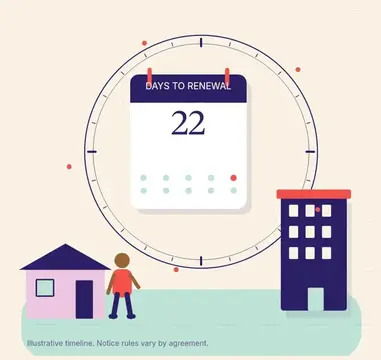
Illustration for rent escalation in property management

What does an escalation schedule look like?

Example (illustrative figures). A 5-year office lease starts at $10,000 a month with a fixed 3% annual escalation. Rent becomes $10,300 in year 2, $10,609 in year 3, about $10,927 in year 4 and about $11,255 in year 5. With CPI escalation instead, each year's increase would follow the named index, within any cap or floor.

Illustration for rent escalation in property management

FAQ

Rent escalation FAQs

Still curious? Ask the team.

What is the difference between fixed and CPI escalations?

A fixed escalation is known at signing, so both sides can budget exactly. A CPI escalation follows inflation, which protects the landlord's real income but makes future rent uncertain for the tenant. Caps and floors are often added to CPI clauses to limit that uncertainty.

Can landlords raise rent at any time?

Generally no. During a fixed-term lease, rent changes only as the lease allows, such as through an escalation clause. For periodic or renewing tenancies, increases usually require written notice, and many jurisdictions regulate notice periods, frequency or the size of increases. Check local law before applying an increase.

How do escalations affect lease accounting?

Fixed escalations known at signing are included in total fixed rent, which landlords usually recognise on a straight-line basis. Variable increases linked to an index are generally treated differently, often recognised when they occur. Finance teams should confirm the treatment with their auditors.

See Rent escalation on live NetSuite data.