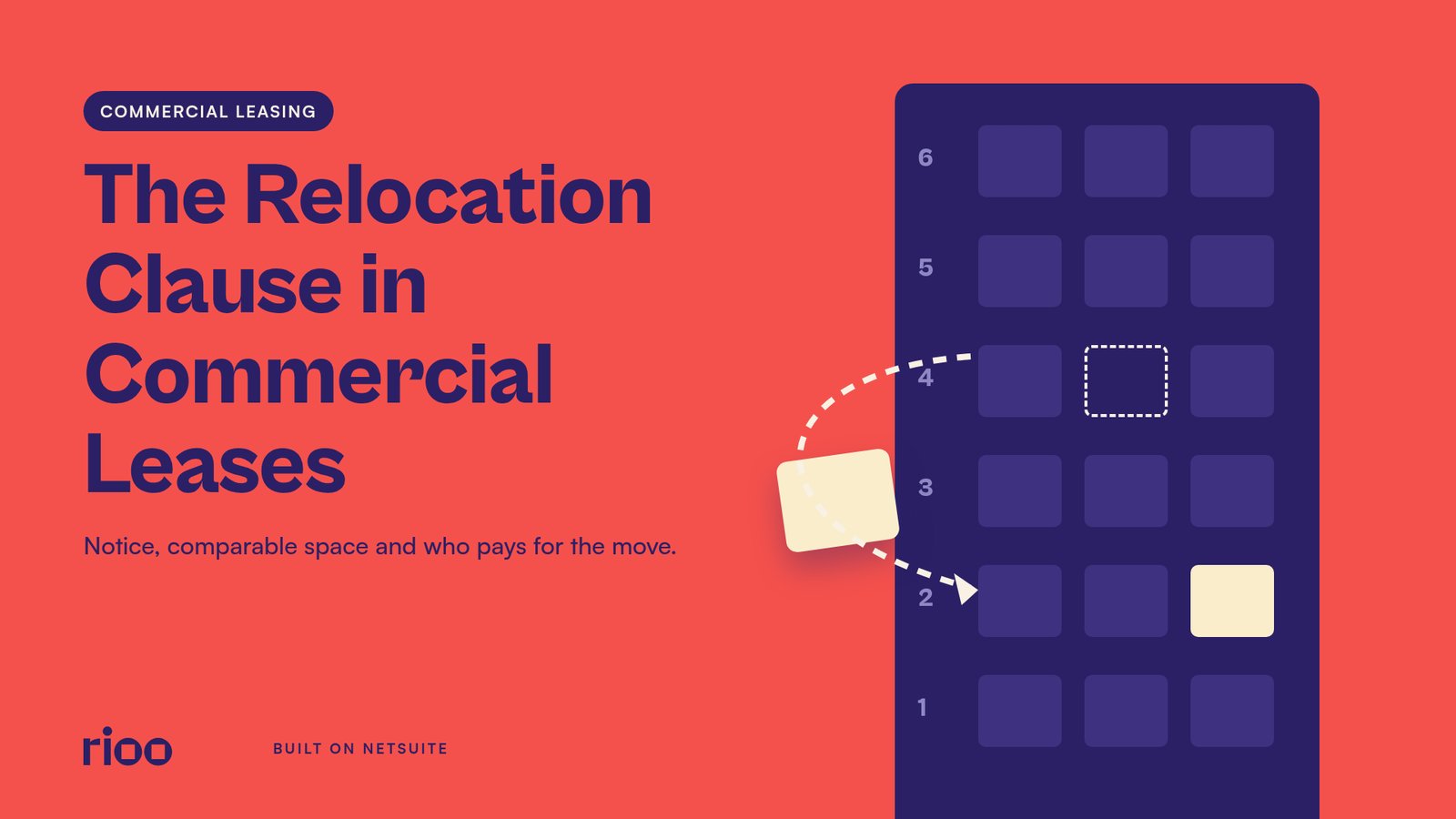
A relocation clause in a commercial lease lets the landlord move a tenant to other space in the same building or property. It usually requires written notice, comparable premises and the landlord paying the moving costs. Landlords use it to keep the option of leasing a full floor or a large block to a bigger tenant. Tenants accept it when the clause is fair about notice, the size and quality of the new space, and who pays for the move.
I work on commercial real estate operations at RIOO, and relocation clauses are one of the lease terms people forget until the day they matter. Then they matter a lot. A tenant signs a five year office lease in 2024. In 2026 a notice arrives that says, in effect, "pack up by March." Whether that goes well depends on six or seven words in the clause.
This guide is for landlords, asset managers and lease administrators. It covers what the clause usually says, the terms that cause disputes, a worked cost example, and how to run a relocation without losing the tenant.
What a relocation clause contains
Relocation clauses tend to share the same building blocks. The differences between a clause that works and one that ends in a dispute are in the details of each.
| Term | Typical landlord draft | Typical tenant ask |
|---|---|---|
| Notice period | 30 to 60 days | 90 to 120 days |
| Replacement space | "Substantially similar" space in the project | Same or larger area, same floor or higher, similar view and access |
| Rent | Same rent per square foot | Total rent no higher, even if the new space is larger |
| Moving costs | "Reasonable" costs paid by landlord | All costs, including cabling, signage, stationery and downtime |
| Build out | Landlord delivers space in similar condition | Improvements equal to or better than current space, done before the move |
| Frequency | Not limited | Once per term, not in the first or last year |
| Tenant exit | None | Right to terminate if the tenant rejects the new space |
Put these fields in your lease abstract. A clause that sits only in a PDF is a clause nobody checks before a big deal. The lease abstraction checklist lists where relocation rights fit with the other options and rights.
Why landlords want it, and why tenants push back
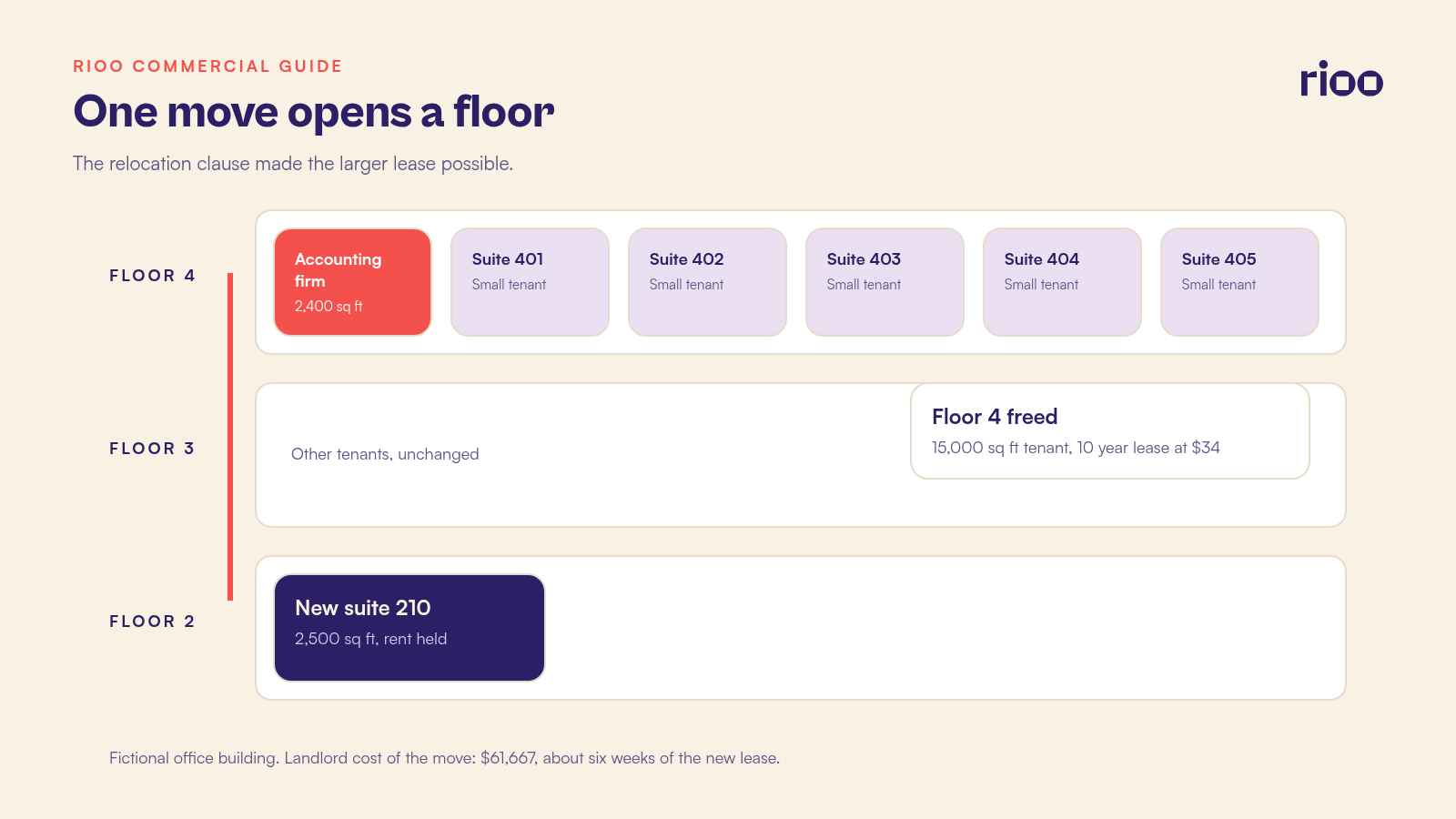
For a landlord, the clause is a planning tool. Picture a 60,000 square foot office building with six small suites scattered across the fourth floor. A tenant wants the whole floor. Without relocation rights, the landlord has to buy out leases or say no. With them, the landlord can move the small tenants to the second floor and sign the bigger lease.
For a tenant, the clause is a real business risk. Moving means downtime, new cabling, new signage, updated addresses on every document and sometimes lost customers who walk in. A small professional office or a retail tenant that depends on foot traffic feels this hardest. That is why retail tenants often refuse relocation clauses entirely, or limit them to space with similar frontage. If you manage retail, this connects to co tenancy clauses, where location and neighbours also drive the deal.
A fair clause is in both sides' interest. A tenant who feels pushed out at relocation time rarely renews.
The terms that cause disputes
"Substantially similar" space
This phrase causes more arguments than any other in the clause. Does a suite with no windows count as similar to one with a view? Is 2,200 square feet similar to 2,400? Define it with numbers where you can: area within 5 to 10 percent, same or higher floor, similar natural light, similar access to elevators and restrooms.
Which costs count as "moving costs"
Landlords often think of a moving truck. Tenants think of the truck plus IT cabling, phone and internet transfer, new signage, reprinted materials, and the days staff cannot work. Listing the cost categories in the clause settles the argument early.
Rent on a larger space
If the landlord moves a tenant into a larger suite because nothing smaller is free, tenants usually expect total rent to stay the same. Leases that say "same rent per square foot" can raise the tenant's rent without anyone intending it. Make the clause say which one applies.
Timing of the build out
The new space should be ready before the move date. Tenants often ask that relocation not start until the landlord's work is complete and inspected. The tenant improvement build out process shows the steps and the sign offs to plan for.
The numbers on one office move
Here is a fictional example for an office building. A 2,400 square foot accounting firm on the fourth floor has 28 months left on a lease at $32 per square foot a year. The landlord wants the floor for a 15,000 square foot tenant on a 10 year lease. It moves the firm to a 2,500 square foot suite on the second floor.
| Cost line | Amount | Who pays under a fair clause |
|---|---|---|
| Build out of the new suite | $37,500 ($15 per square foot) | Landlord |
| Movers and packing | $6,200 | Landlord |
| IT cabling and network transfer | $8,400 | Landlord |
| Signage and printed materials | $2,100 | Landlord |
| Rent on the extra 100 square feet, 28 months | $7,467 | Landlord (rent held at the old total) |
| Total cost to landlord | $61,667 |
That looks large until you set it against the new lease. A 15,000 square foot lease at $34 per square foot is $510,000 a year. The relocation cost is about six weeks of that rent. The clause made the deal possible, and paying the full move kept the accounting firm in the building. In this example, the firm later renewed for five years.
Drafting tips for each side
A clause written with numbers ages well. A clause written with adjectives ends up in a dispute. Here is what I would put in front of each side before the lease is signed.
If you are the landlord
- Keep the right, but limit it to once per term. Tenants accept a limited right far more easily.
- Offer a defined cost list up front. It costs you little at signing and saves weeks later.
- Avoid relocating in the first 12 months or the last 12 months of the term. Tenants rarely accept a move right after fit out or right before expiry.
- Exclude anchor and ground floor retail tenants if your leasing plan does not need them to move.
If you are the tenant
- Ask for a minimum floor area and a floor level, not only "comparable" space.
- Ask that total rent cannot rise because of the move.
- Ask for a termination right if you reject the new space, with the landlord repaying any unamortized improvements you paid for.
- Ask that the move happen on a weekend or outside your busy season.
Running a relocation, step by step
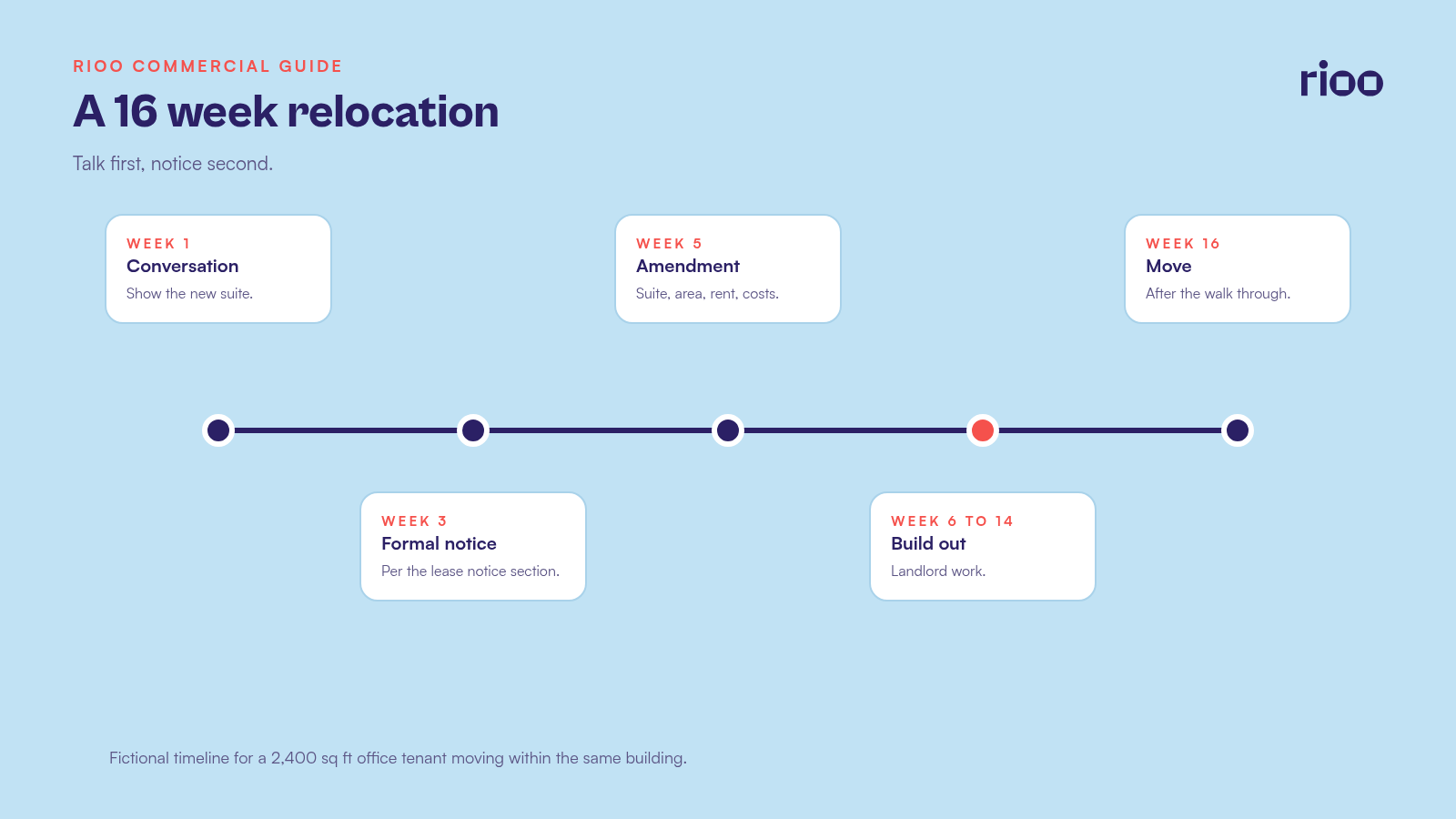
- Read the clause and the abstract. Confirm notice period, frequency limits and any blackout years. Check if the tenant has a termination right.
- Talk before you send notice. A phone call or a meeting first. Show the new space and explain the reason.
- Agree the cost list in writing. Even if the clause is vague, list what you will pay. It costs little and avoids weeks of back and forth.
- Send the formal notice. Follow the lease notice section exactly: address, method and timing.
- Sign a relocation amendment. Record the new suite number, area, rent, commencement date for the new space and the cost terms. A lease amendment is the usual form.
- Build out, inspect, then move. The tenant moves after the new space passes a walk through.
- Update every system. Unit records, rent schedules, CAM shares, critical dates, insurance certificates and the tenant's address for notices.
Questions about relocation clauses
Can a landlord move a commercial tenant without a relocation clause?
Generally no. Without a clause, the landlord needs the tenant's agreement, which usually means paying for it through a lease amendment or a buyout.
Is a relocation clause enforceable?
Relocation clauses are a matter of contract, and courts generally enforce them as written. Vague terms such as "comparable space" invite disputes, so define them. Confirm with counsel in your state.
Do retail leases have relocation clauses?
Some do, mostly in malls and shopping centers. Retail tenants often negotiate them out or limit them to space with similar frontage and visibility, because location drives their sales.
What should a tenant ask for?
Longer notice and a defined replacement space. Full moving costs and rent held at the old total. A limit of one relocation per term, and a right to terminate if the new space is not acceptable.
Does relocation change the lease term?
Usually not. The lease term and expiry stay the same, and the amendment updates the premises. Keep the expiry date in your critical lease dates tracker unchanged unless the parties agree otherwise.
Where RIOO fits
A relocation touches the premises, the rent schedule, CAM shares and critical dates at the same time. In RIOO Professional, the relocation right and its notice terms can sit in the lease abstract. That makes them easy to find when an asset manager is planning a large deal. When the move happens, the amendment updates the unit and the rent schedule in one place, and the landlord's moving costs post to the property in NetSuite. See how commercial lease administration works in RIOO.