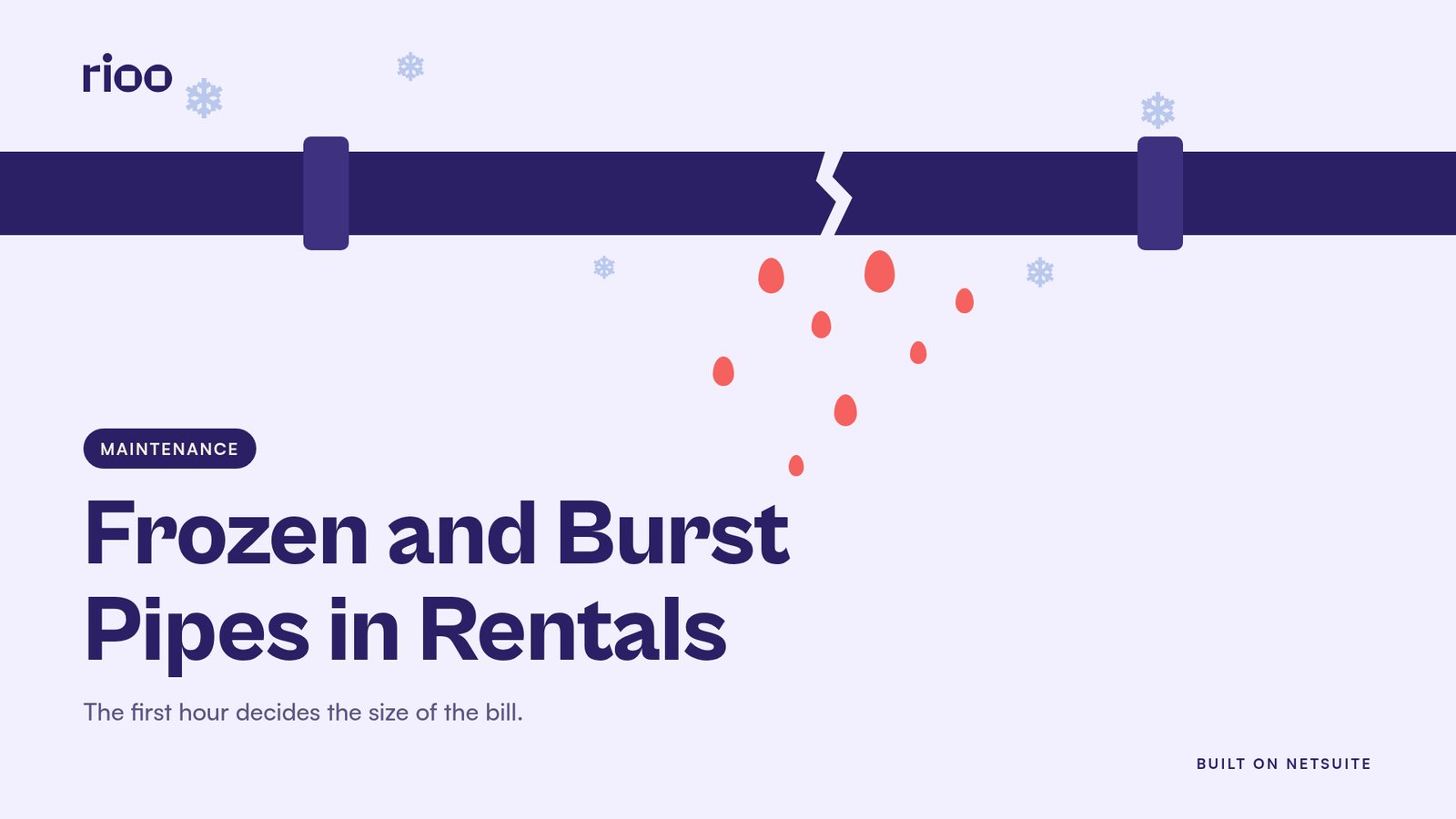
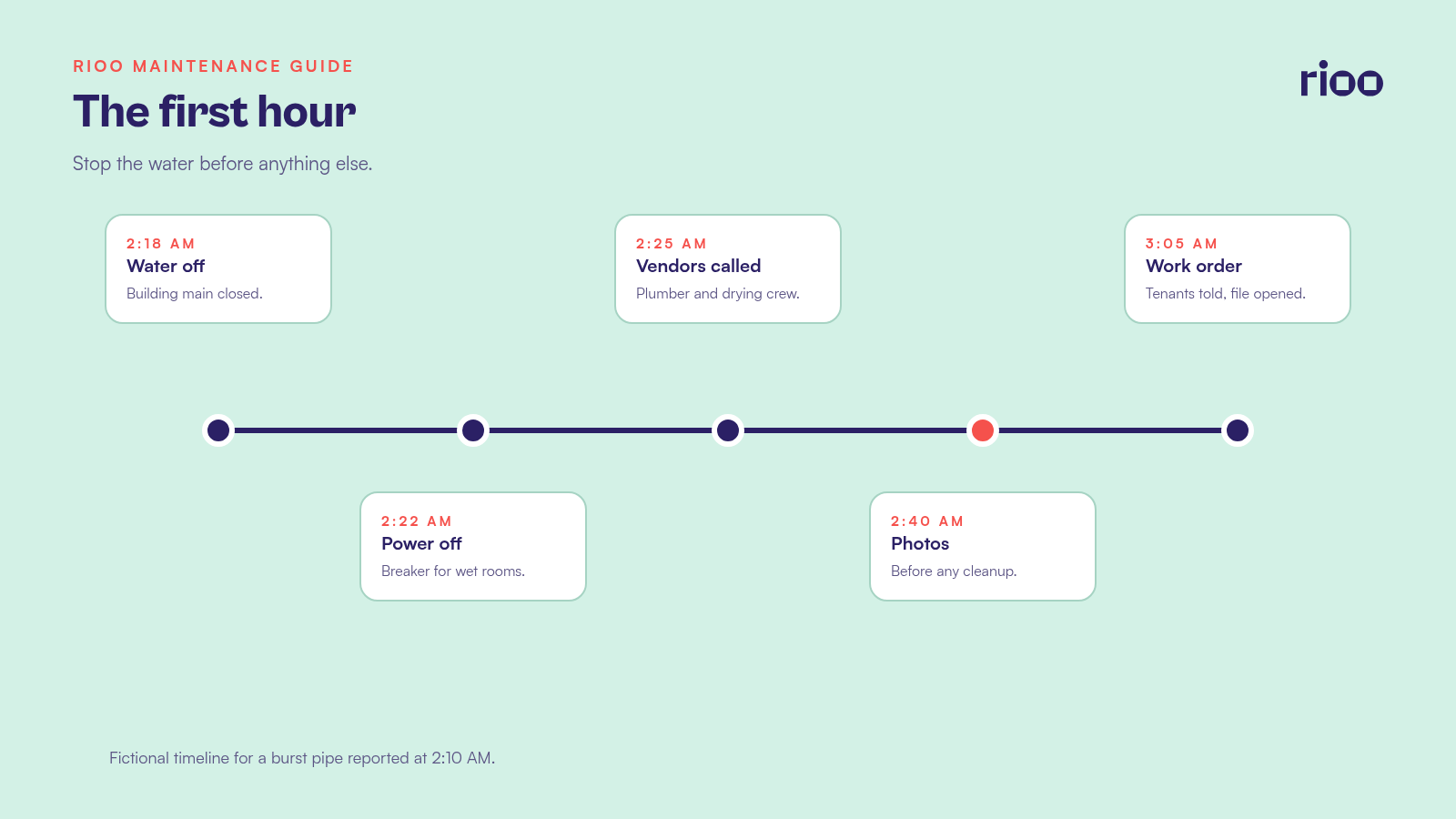
The call comes in at 2:10 AM on the coldest night of the year. Water is coming through the ceiling of unit 2A, and the tenant upstairs in 3A has no idea, because the pipe that burst sits inside an outside wall. What happens in the next hour decides whether this is a $1,500 repair or a $15,000 claim.
The short answer: when a pipe bursts in a rental, shut off the water first. Then cut power to any wet area, call a plumber and a water mitigation vendor, and document everything before cleanup starts. Prevention comes down to heat and moving water. Keep units heated even when vacant. Open cabinet doors on outside walls and insulate pipes in unheated spaces. Tell tenants what to do when a hard freeze is forecast. Who pays depends on the cause. The landlord usually covers the building repair, and the tenant's renters insurance covers their belongings.
I run maintenance and facilities content at RIOO, and I have seen the same pattern every winter. The damage is rarely the pipe. It is the minutes before someone finds the main shutoff. This guide is the playbook I would hand a new maintenance lead in November.
The first hour after a pipe bursts
Speed matters more than perfection here. Water moves fast through ceilings and floor cavities, and every minute adds drywall and flooring to the bill.
- Stop the water. Close the unit shutoff if the unit has one. If not, or if you cannot find it in two minutes, close the building main. Every technician on call should know where the main is in each building, with a photo in the work order system.
- Make it safe. If water is near outlets, light fixtures or the electrical panel, switch off power to that area at the breaker. If anyone is unsure, keep people out of the wet rooms.
- Call the right vendors. A plumber fixes the pipe. A water mitigation company extracts water and sets up drying equipment. Calling both at once saves hours.
- Photograph before anyone cleans. Wide shots of each room, close ups of the break, the ceiling, the floor and any damaged belongings. Note the time. Insurers ask for this.
- Tell every affected tenant in writing. A short text or email: what happened, when water will be back, and who to call. Include the units below and beside the leak.
- Open the work order and the claim file. One record with the timeline, photos, vendor names and costs. You will need it for the insurer and for any charge back.
If the leak is in a vacant unit, the same steps apply, but expect more damage, because nobody noticed it for days. That is why vacant units sit at the top of the prevention list below.
Which pipes freeze first
Pipes freeze where cold air reaches them and heat does not. In a typical building that means a short, predictable list.
| Location | Why it freezes | What to do before a freeze |
|---|---|---|
| Sinks on outside walls | Cold wall cavity, closed cabinet | Ask tenants to open cabinet doors and let a cold tap drip |
| Crawl spaces and basements | Unheated, often drafty | Insulate pipes, close vents, check heat tape works |
| Hose bibs and irrigation lines | Exposed outside | Shut off the inside valve and drain the line in the fall |
| Attics and garages | Little or no heat | Pipe insulation; move lines inside the heated envelope at the next renovation |
| Vacant units | Heat turned down or off | Keep heat on, check weekly, or drain and winterize the plumbing |
| Fire sprinkler branches near exterior doors | Cold air at entries and stairwells | Have your sprinkler vendor check dry systems and low point drains |
Climate changes the order, but not the list. Buildings in milder regions often suffer more, because their pipes were never built for a hard freeze. Our winterization checklist by climate zone covers that in more detail.
A freeze warning plan you can send in ten minutes
Many frozen pipes can be prevented with one message sent at the right time. Set a trigger, such as a forecast low below 20°F, and send a short notice to every resident 24 hours ahead.
- Keep the heat on, day and night. A common rule of thumb is no lower than 55°F, even if you travel.
- Open cabinet doors under sinks on outside walls.
- Let a cold tap drip slowly overnight if the sink is on an outside wall.
- Know where your unit shutoff is (include a photo or a sentence on where to find it).
- Report no heat or no water right away, at any hour, using the emergency line.
Then do the staff side: walk vacant units, check boiler rooms and crawl spaces, and confirm who is on call. Federal guidance on cold weather prep, including keeping pipes from freezing, is on Ready.gov. Heat is also a legal duty in many places. If you manage in colder cities, check the minimum heat rules by city before the season starts.
Worked example: one burst pipe, two outcomes
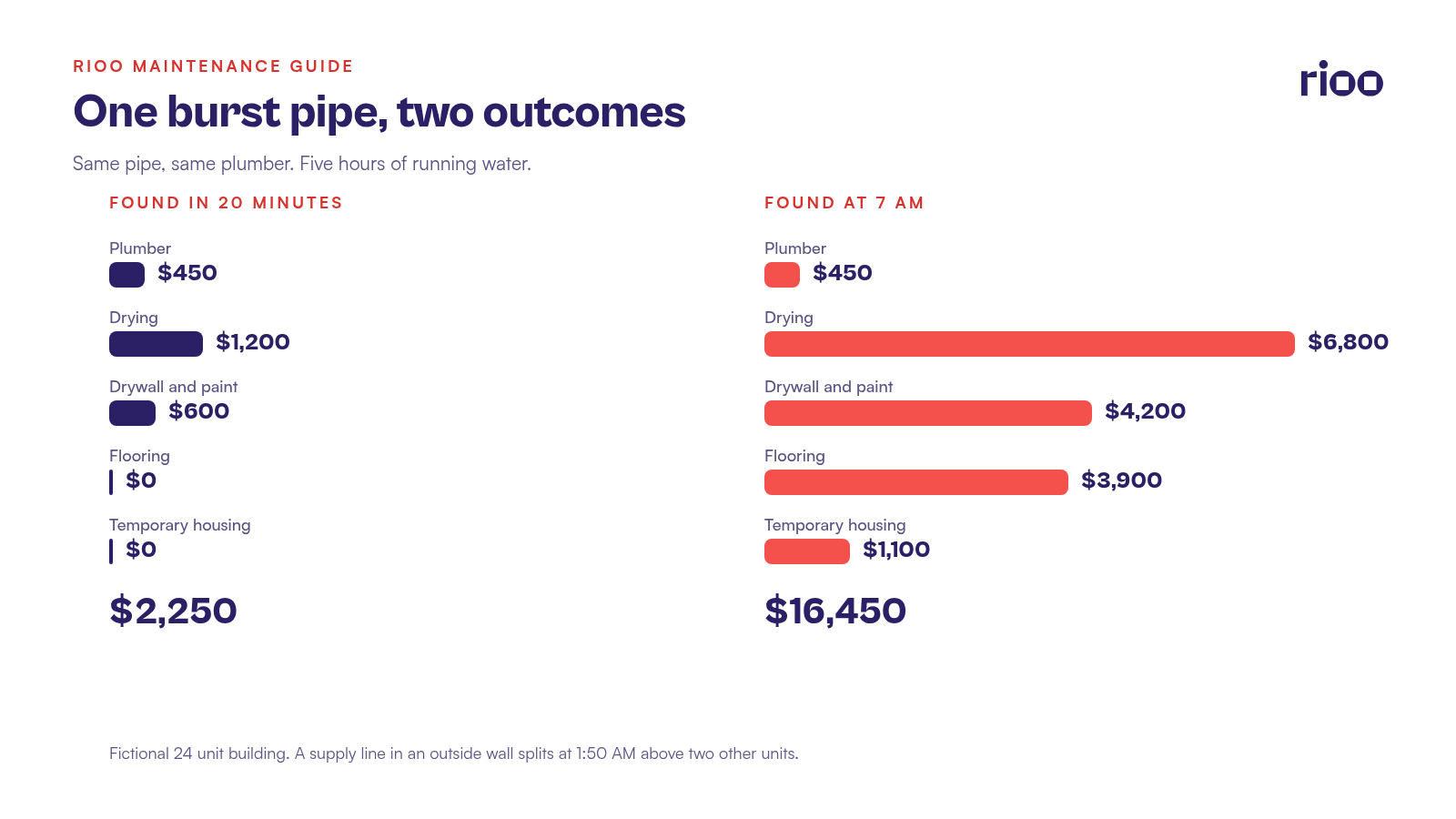
Here is a fictional example to show why the first hour matters. A supply line freezes and splits in a 24 unit building at 1:50 AM. The pipe runs in an outside wall of a third floor unit, above two other units.
| Cost line | Found in 20 minutes, main closed fast | Found at 7 AM |
|---|---|---|
| Emergency plumber, after hours | $450 | $450 |
| Water extraction and drying | $1,200 (one unit) | $6,800 (three units, hallway) |
| Drywall and paint | $600 | $4,200 |
| Flooring | $0 | $3,900 |
| Temporary housing for one household | $0 | $1,100 (five nights) |
| Total | $2,250 | $16,450 |
The pipe and the plumber cost the same in both cases. The difference is five hours of running water. With a typical property insurance deductible of $5,000 or $10,000, the fast case is paid fully by the owner, while the slow case becomes a claim. Neither outcome is good, but one is far smaller. The property insurance claim process walks through what happens once a claim is filed.
Who pays for a frozen pipe
Responsibility follows the cause and the lease. These are the usual patterns in the US, though leases and state law vary, so check yours.
The building and the pipe
The landlord is normally responsible for the plumbing and the structure, and the owner's property policy usually covers sudden water damage after the deductible. Many policies exclude freeze damage in a vacant building if heat was not maintained, so read that clause before winter.
The tenant's belongings
A tenant's furniture, clothes and electronics are usually covered by their renters insurance, not the landlord's policy. This is one reason many leases require renters insurance.
When the tenant caused it
Say a tenant turned off the heat, left a window open for days, or ignored a written freeze notice. The lease may then let you charge them for the repair. Keep the notice you sent and the work order record. Charge backs work best when the lease says so plainly and the evidence is dated.
Where RIOO fits
A burst pipe is a maintenance job, an insurance file and sometimes a tenant charge, all at once. In RIOO, the emergency request becomes a work order with photos, vendor assignments and time stamps, so the first hour is on record. Vendor invoices post to the property in NetSuite, and if a charge back applies, it goes to the tenant ledger with the work order attached. Freeze notices can go to residents through the tenant portal. See how work order management runs in RIOO.
Frozen pipe questions
Should tenants drip their faucets?
On a hard freeze night, a slow drip from a cold tap on an outside wall helps. Moving water is less likely to freeze, and the open tap relieves pressure if ice does form.
What temperature do pipes freeze at?
Water freezes at 32°F, but pipes in a heated building usually do not freeze until the outside air stays well below that for several hours. Pipes in outside walls, crawl spaces and attics are at risk first.
Can I thaw a frozen pipe myself?
Staff can use warm air from a hair dryer or a space heater kept at a safe distance, starting near the tap and working back. Never use an open flame. If the pipe is already split, close the water first.
Is a frozen pipe a maintenance emergency?
Yes, when water is leaking or a unit has no water or heat. Our guide to what counts as emergency maintenance covers how to sort after hours calls.
What should I do with vacant units in winter?
Keep the heat on and check them weekly, or have a plumber drain and winterize the lines. A vacant unit with the heat off is a common source of large freeze claims.
One thing to do this week
Walk every building with your on call team and photograph the main water shutoff. Put the photo and the location in each building record. It is the cheapest winter task on the list, and it is the one that pays off fastest at 2 AM.