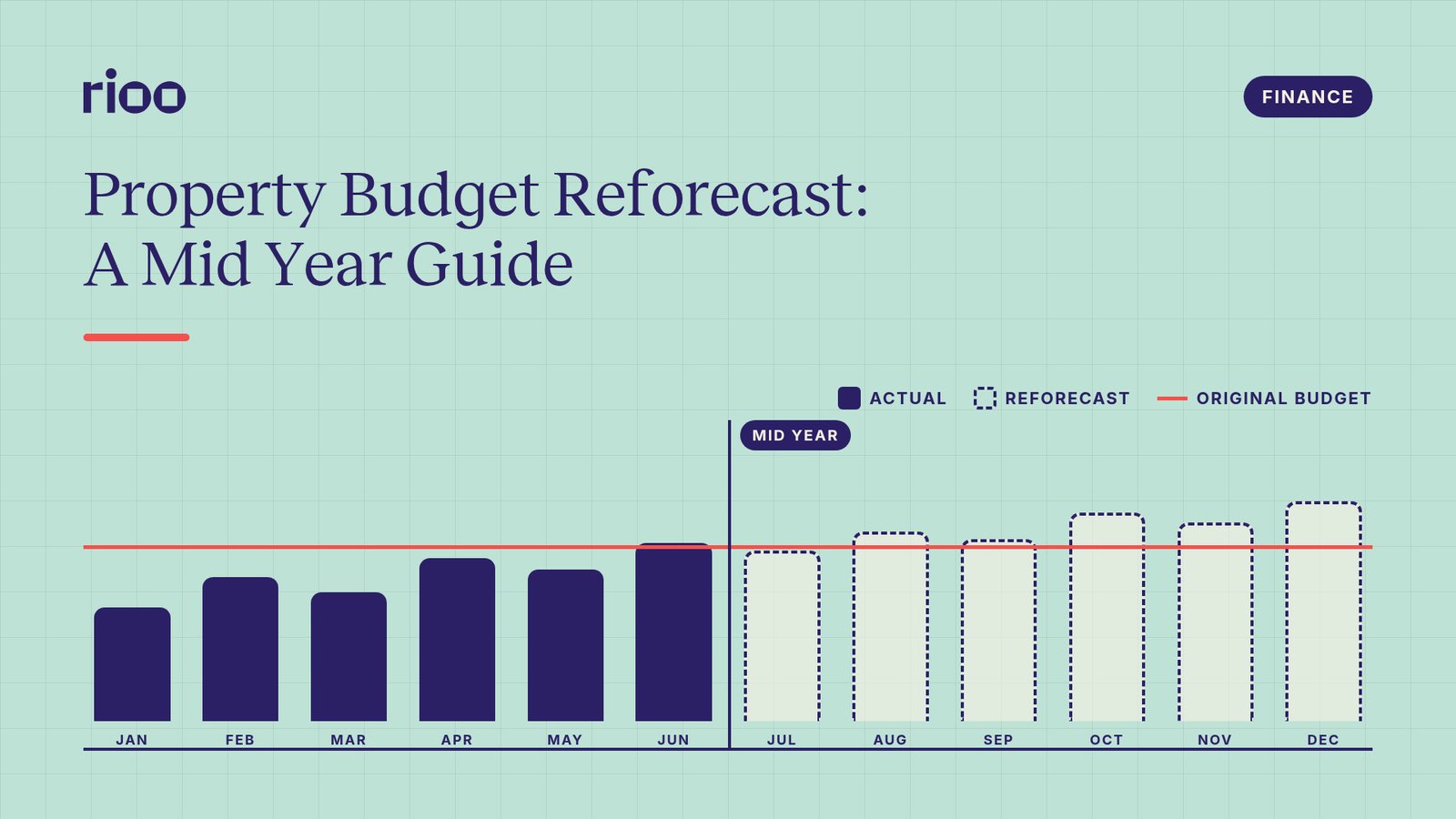
Short answer: a property budget reforecast keeps the actual results you already have and replaces the budget for the remaining months with a fresh estimate. It then shows the new full year number next to the budget. At mid year this is often called a 6 plus 6 reforecast: six months of actuals plus six months of forecast. Start with revenue drivers like occupancy, rent and collections, then fixed costs you now know, then controllable spend. Explain every big change in plain words.
The annual budget was built months before the year started. By June, insurance has renewed, a few large tenants have made decisions, and the repair bill for that roof is real. Owners and lenders still want to know one thing: where will this property land by year end? The reforecast is how you answer that honestly, without rewriting the budget you will be measured against.
Budget, forecast and reforecast: what is the difference?
- Budget: the plan approved before the year began. It stays fixed so you can measure against it.
- Forecast: your best current estimate of the full year.
- Reforecast: the act of updating that estimate at a set point, usually each quarter or at mid year.
Keep the original budget unchanged. The reforecast sits beside it. Variance reports then show actual vs budget, and forecast vs budget, so readers can see both what happened and what you now expect.
When should you reforecast?
Many operators reforecast every quarter, with the mid year version getting the most attention because it shapes the rest of the year and feeds next year's budget. You should also reforecast outside the normal cycle when something material happens, for example:
- A large tenant gives notice or a big lease signs earlier than planned.
- Insurance or property tax comes in well above budget.
- A major repair or capital item becomes unavoidable.
- Occupancy or collections move away from plan for two or three months in a row.
Some teams set a simple trigger to look again. Examples are any line off by more than 5 to 10 percent, or any change above a set dollar amount.
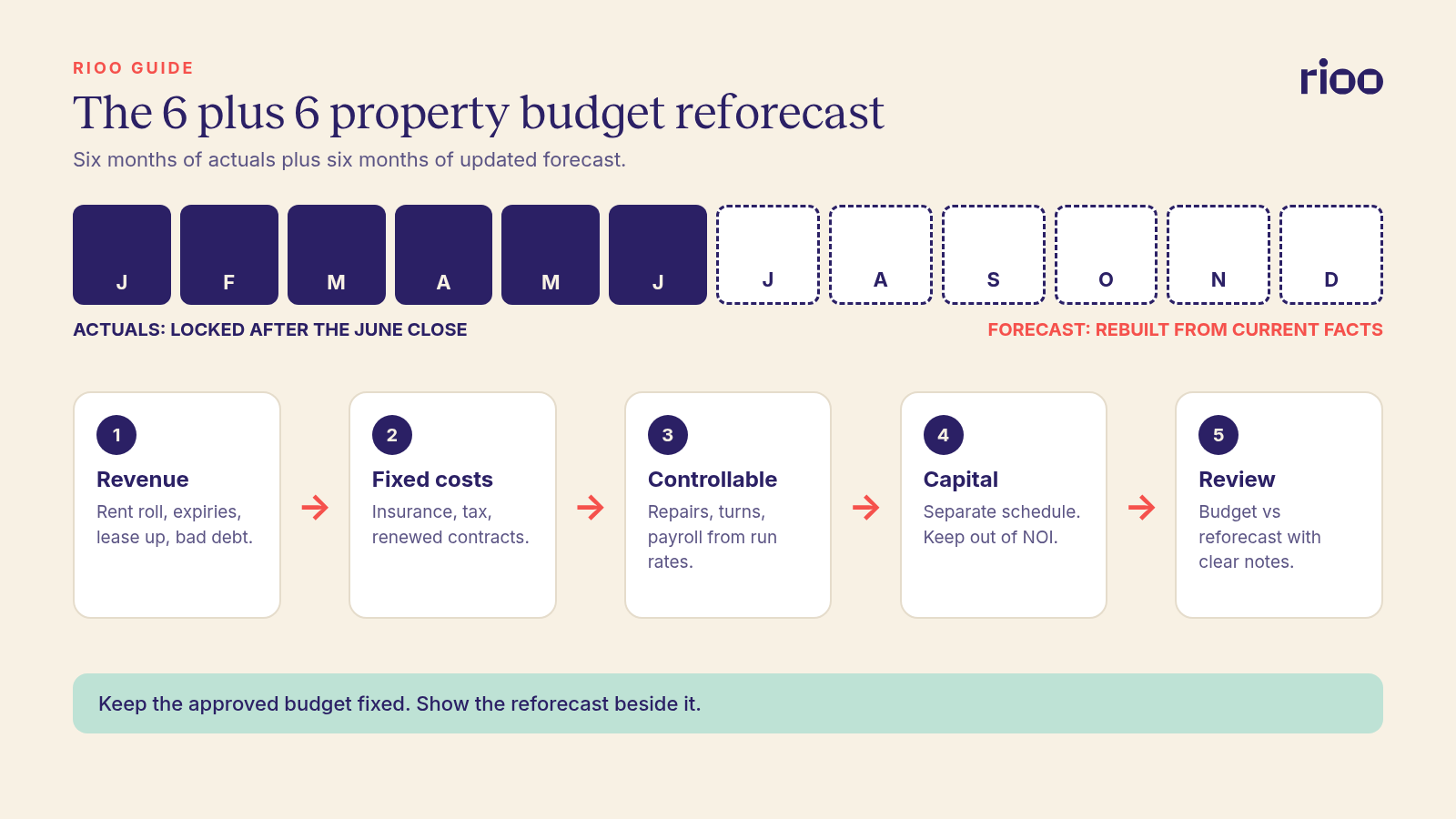
The 6 plus 6 reforecast, step by step
Step 1: Close the books on the first half
A reforecast built on unreconciled numbers will be wrong twice. Make sure the June close is complete, accruals are in, and big invoices are posted to the right months. Check your committed costs and open purchase orders so you know what is already promised but not yet billed.
Step 2: Lock the actuals
Copy January to June actuals into the reforecast and do not change them. If you find an error in an actual, fix it in the books, then refresh.
Step 3: Rebuild revenue from the rent roll
Revenue is where most of the change usually sits, so start here. Work from the current rent roll, not from the budget.
- Leases in place: current rent for each unit or suite through December, including known rent steps.
- Expiries: for each lease that ends in the second half, decide renew, vacate or unknown. Use what the leasing team actually knows.
- Vacancy and lease up: realistic dates for new leases on vacant space, including any free rent.
- Collections and bad debt: use the trend from the first half. If delinquency rose, carry that forward unless something has changed.
- Other income: parking, fees, utility recoveries and service charges based on current run rates.
Step 4: Update fixed and known costs
These are the costs you can now see clearly. Replace budget amounts with known figures:
- Insurance at the renewed premium.
- Property tax at the latest bill or assessment.
- Contracts that renewed at a new price, such as cleaning, security or lifts.
- Utilities, adjusted for occupancy and the season ahead.
Step 5: Rebuild controllable costs
Repairs, turns, payroll and marketing depend on decisions. Use first half run rates as a starting point, then adjust for what you plan to do. If you have more move outs coming, turn costs go up. If you are holding a vacant post open, payroll goes down for those months.
Step 6: Review capital spending separately
Capital projects should have their own schedule. Note which projects will finish this year, which will slip, and what each will cost now. Keep capital out of operating lines so NOI stays clean.
Step 7: Compare, explain and approve
Put the original budget, the reforecast and the variance side by side for the full year. Then write short notes for every line that moved materially. Have the property manager, the asset manager or owner rep, and finance review it together before it goes out.
A worked example
A 120 unit apartment property budgeted full year NOI of $1,200,000. The numbers below are illustrative.
| Line | Budget | Reforecast | Change | Reason |
|---|---|---|---|---|
| Rental income | $2,300,000 | $2,265,000 | ($35,000) | Two months slower lease up after the spring renovation |
| Bad debt | ($46,000) | ($58,000) | ($12,000) | Delinquency higher than plan since March |
| Other income | $120,000 | $128,000 | $8,000 | New parking fee from May |
| Insurance | ($90,000) | ($112,000) | ($22,000) | Renewal premium in May |
| Repairs and turns | ($240,000) | ($228,000) | $12,000 | Fewer move outs expected in the second half |
| All other expenses | ($844,000) | ($844,000) | $0 | On plan |
| NOI | $1,200,000 | $1,151,000 | ($49,000) | About 4 percent below budget |
The story is short and clear: slower lease up, higher bad debt and a higher insurance premium, partly offset by parking income and lower turn costs. That is what an owner wants to read. A page of line items with no reasons does not help them decide anything.
How to write variance notes people trust
Good notes do four things. They name the cause, give the number, say whether it is a timing difference or a permanent change, and say what you are doing about it. For example: "Insurance is $22,000 over budget for the year. The May renewal premium rose with the market. This is permanent for this policy year. We will get quotes from more carriers at next renewal." For more on structure, see our guide to budget vs actual variance reporting.
What to send owners and lenders
Keep the pack short. Most readers want five things on two or three pages:
- The headline. Full year NOI, budget vs reforecast, in one sentence.
- The bridge. A simple walk from budget NOI to reforecast NOI, showing the four or five lines that explain most of the change.
- Leasing outlook. Expiries in the second half, what is renewed, what is at risk, and the vacancy you have assumed.
- Risks and upsides. Items that could still move the number, with a rough size for each.
- Actions. What the team will do about the main gaps, and by when.
If the property has a loan, check any covenant that uses NOI or cash flow against the reforecast. It is far better to raise a possible issue with a lender in July than to surprise them in January.
Allow for seasonality
The second half rarely looks like the first. Heating costs rise in winter in cold climates. Student housing has its big turnover around the academic year. Retail centres may see higher income from percentage rent late in the year. Spread forecast amounts across the months when they will actually happen, so the monthly variance reports in the second half stay useful.
Common reforecast mistakes
- Changing the budget instead of adding a forecast. You lose the yardstick.
- Straight lining the first half. Doubling six months of actuals ignores lease expiries, seasonality and known renewals.
- Optimistic lease up. Use dates the leasing team will stand behind.
- Ignoring bad debt trends. If collections slipped, the second half will usually look similar.
- Mixing capital and operating costs. This makes NOI look better or worse than it is.
- Building it in a spreadsheet nobody else can follow. The next person needs to see where each number came from.
Reforecasting across many properties
With a portfolio, use one template and one calendar. Ask each property team for their revenue view and known cost changes, then let finance consolidate. Roll the result up by entity, region and asset type so leaders can see where the movement is. The same structure makes next year's annual budget across multiple properties and entities faster, because the second half forecast becomes the starting point.
Where RIOO fits
RIOO is built natively on Oracle NetSuite, so rent rolls, leases, work orders and the general ledger share one database. Your reforecast starts from actuals that are already posted, not from an export that has to be checked against the books. With RIOO budgets and forecasting on NetSuite, finance can save each reforecast as a new version and compare it with the original budget. RIOO dashboards and reports show occupancy, collections and NOI by property and entity from the same records.
Frequently asked questions
What is a 6 plus 6 reforecast?
It is a full year view made of six months of actual results and six months of updated forecast. A 9 plus 3 reforecast does the same thing after the third quarter.
Should a reforecast replace the budget?
No. Keep the approved budget fixed and show the reforecast next to it, so performance can still be measured against the original plan.
How often should property budgets be reforecast?
Quarterly is common, with mid year as the main one. Reforecast sooner if a material event changes the year.
Which lines matter most in a property reforecast?
Rental income, vacancy, bad debt, insurance, property tax, utilities, payroll and repairs usually drive most of the change.
Who should approve a reforecast?
Typically the property manager prepares it, finance checks it, and the asset manager or owner approves it.