Somewhere in Dubai right now, a tenant is scrolling months of WhatsApp history to find out whether anyone
ever answered their AC complaint.
Quick answer: A tenant portal is a private app or web login where tenants submit maintenance requests, track their status, see payment schedules and receipts, and hold their tenancy documents — replacing the scattered WhatsApp-email-phone mess with one accountable channel. In Dubai's digital-first rental market, portals have moved from luxury to expectation, and management firms that offer them measurably reduce complaint chaos and dispute risk.
Portal vs WhatsApp: the difference is accountability
| The job | The WhatsApp way | The portal way |
|---|---|---|
| Report a leak | A message someone saw, maybe | A logged request with a number, a status and a photo |
| "What's happening with my repair?" | Ask again, wait again | Open the app: assigned, scheduled, done |
| Rent schedule | "Which cheque was that?" | Payment calendar and receipts, always visible |
| Tenancy documents | Buried in email | Contract, Ejari certificate, inspection reports in one place |
| Proof, later, in a dispute | Screenshots and memory | A timestamped record both sides can rely on |
That last row is the quiet one that matters. Tenancy friction — deposit arguments, "I reported that months ago" — is usually an evidence problem, and a portal manufactures evidence automatically, protecting both sides at once.
Do Dubai tenants actually use them?
Yes — and Dubai is arguably the easiest adoption market in the world for them. The tenant base is overwhelmingly expat, young, and already runs life through apps; the government itself pushes property services digital through platforms like the Dubai REST app, so a tenancy managed through an app feels normal, not novel. Adoption in practice follows one rule: tenants use portals when the portal is where things actually happen — if a request logged in the app gets fixed faster than a WhatsApp message, usage takes care of itself; if staff quietly work around the portal, tenants learn to do the same. Portal success is an operations decision, not a software feature — the request must flow into a real work-order process behind the screen.
What a good tenant portal includes
- Maintenance requests with photos, status tracking and completion confirmation
- Payment schedule visibility — cheques and digital — with receipts
- Document vault: contract, Ejari certificate, inspection reports
- Announcements that reach every tenant in a building at once
- Move-in/move-out flows, so the messiest moments are the most documented
For tenants, the checklist is a way to judge a building before signing — asking "do you have a tenant app?" at viewing stage tells you a lot about how the next twelve months will feel. For landlords choosing a manager, it's one of the five demands worth making; for firms choosing software, it's a standard module to expect.
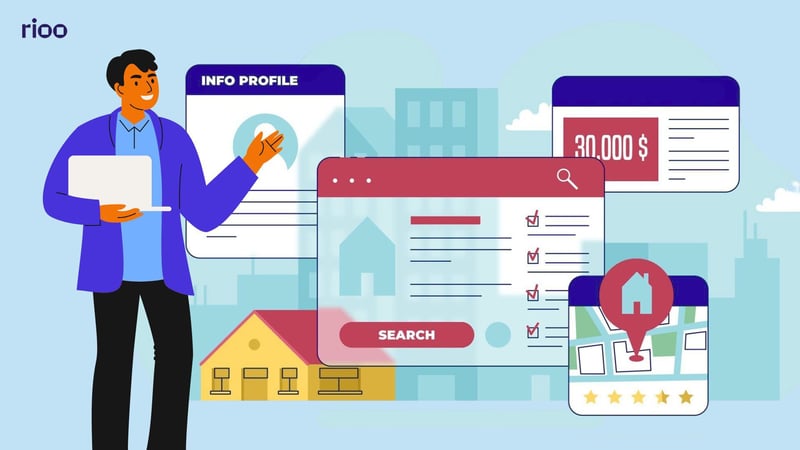
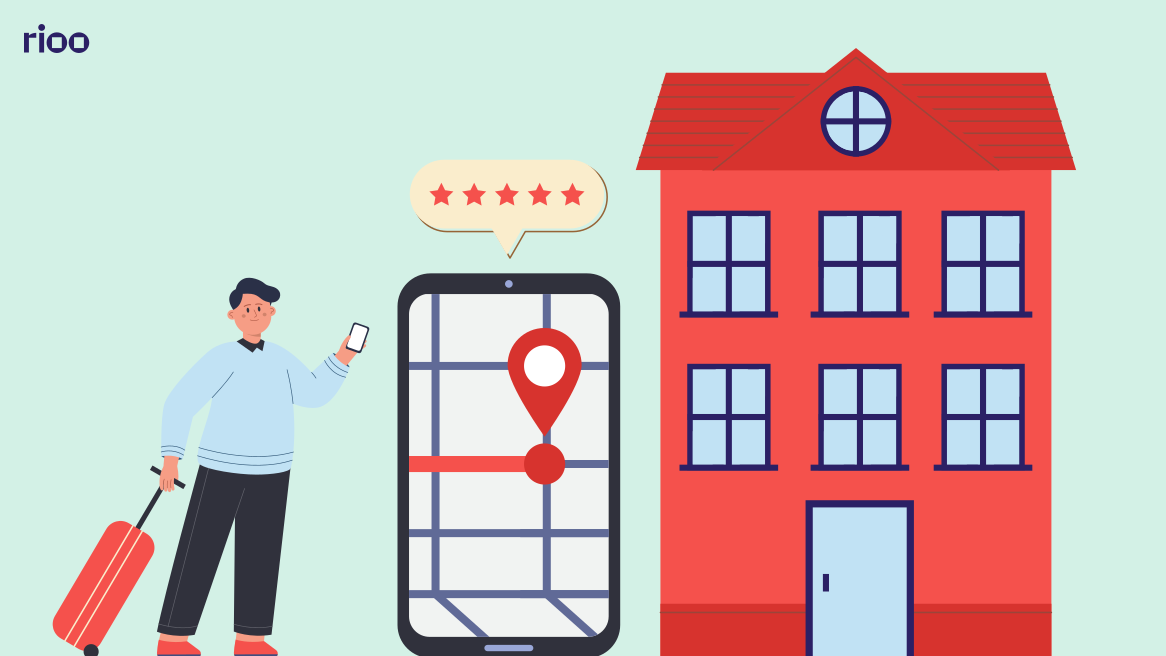
RIOO's tenant app is a working example of the pattern: tenants submit and track requests, receive updates and see their payment position, while every action lands in the management system's work orders and records on the other side — one channel, both sides accountable.
Frequently asked questions
Q1. Do tenants pay rent through portals in Dubai?
Increasingly — digital payments through portals sit alongside the traditional cheque cycle, and many firms now offer both. Even where rent stays on cheques, the portal shows the schedule and receipts, which ends most "which payment was that?" confusion.
Q2. Are tenant portals secure?
Reputable platforms hold tenancy data on established cloud infrastructure with per-tenant logins — generally far safer than contracts and Emirates ID copies floating through WhatsApp and email, which is the actual alternative.
Q3. Can a small landlord offer a tenant portal?
Portals come bundled with management software rather than sold alone, so in practice tenants get one when the landlord uses a platform or hires a firm that runs one. It's becoming a reason tenants prefer professionally managed buildings.
The bottom line
A tenant portal is accountability infrastructure: requests that can't vanish, payments that can't confuse, documents that can't get lost. Dubai's tenants are ready — the only question is whether the building's management is.


.svg)
.svg)


.svg)