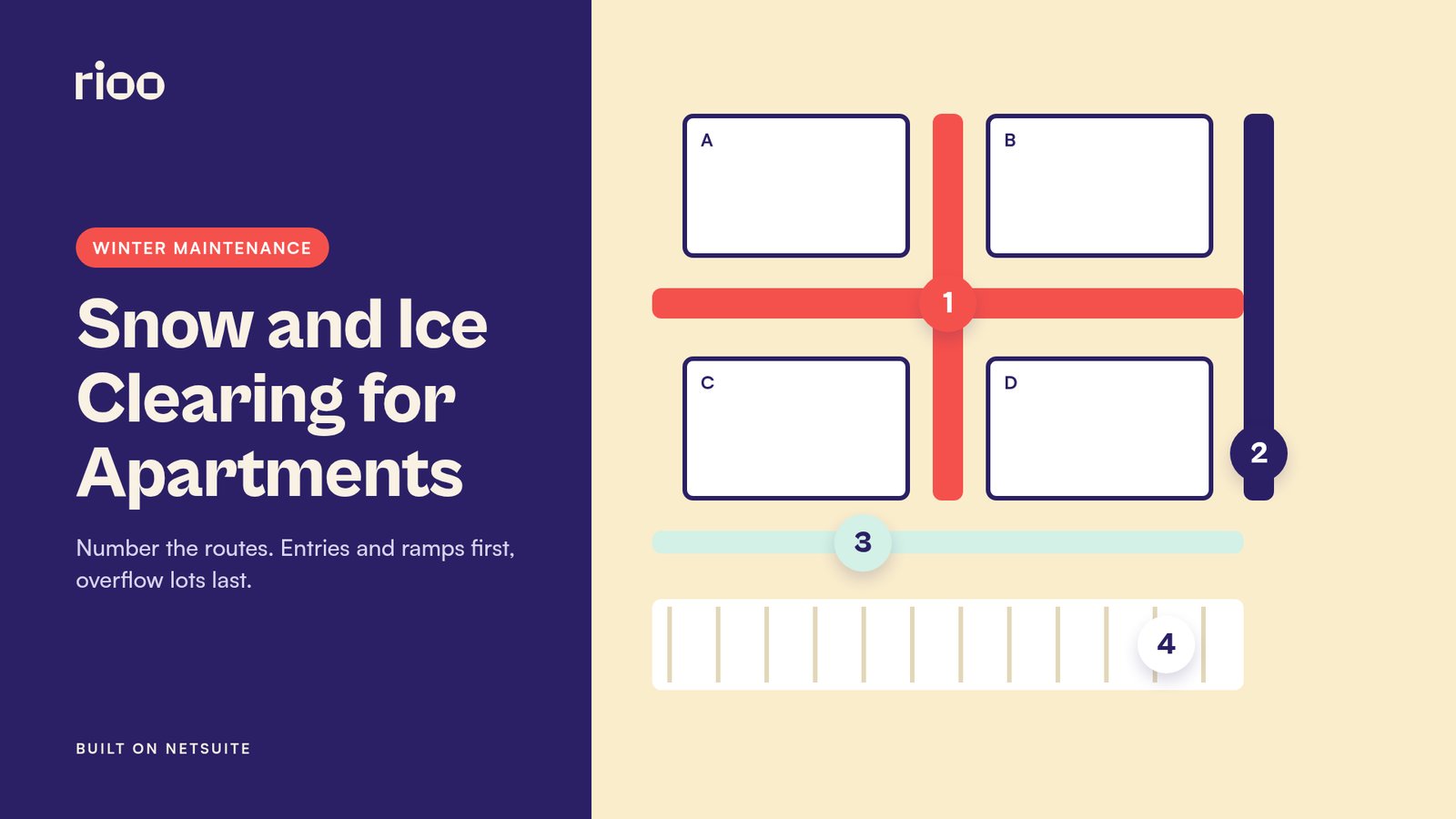
Treat front entries, fire exits and the accessible ramp first. Do stairs, mailbox pads and package rooms in the same shift. Clear resident drive lanes before the 7 AM rush, and leave overflow lots for last. Then go back for a second pass, because refreeze undoes the first one.
That order is the core of a multifamily snow and ice plan: a priority map plus a clock. You decide which walks, stairs, ramps and lots get treated first. You set how soon after snow or ice starts. You name who does the work and how you prove it was done. Commercial sites often have a full snow contract. Garden and mid rise apartments need the same clarity on a smaller footprint. On these sites, the slip report usually comes from a front stoop or a mailbox pad.
Why apartments need their own plan
At 6:15 AM after a night of freezing rain, the front walk is glass. A resident with a stroller waits at the curb. A delivery driver slips near the mailboxes. The snow vendor texted "on the way" forty minutes ago. Without a written ice plan, your staff are guessing which path to salt first and who to call next.
Our commercial snow removal plan covers retail and office lots. Multifamily sites add overnight foot traffic, school runs, package drivers and dog walks before dawn. The dangerous hour is often the refreeze after a sunny afternoon. Blizzard nights get attention; quiet glaze mornings get claims.
- Residents exit for work while vendors are still staging.
- Stairs and ramp handrails matter as much as the driving lane.
- Pet areas and mailbox pads create short paths that trucks skip.
- City sidewalk rules may set a clearing deadline after snow stops.
Ready.gov tells households to keep walkways and steps clear of snow and ice and to light outdoor stairs. Treat that as the resident facing standard your site should meet, then layer local ordinance deadlines on top. Confirm those deadlines with your city and with counsel.
Draw the priority map
Walk the property once in November with a printed site plan. Number the routes.
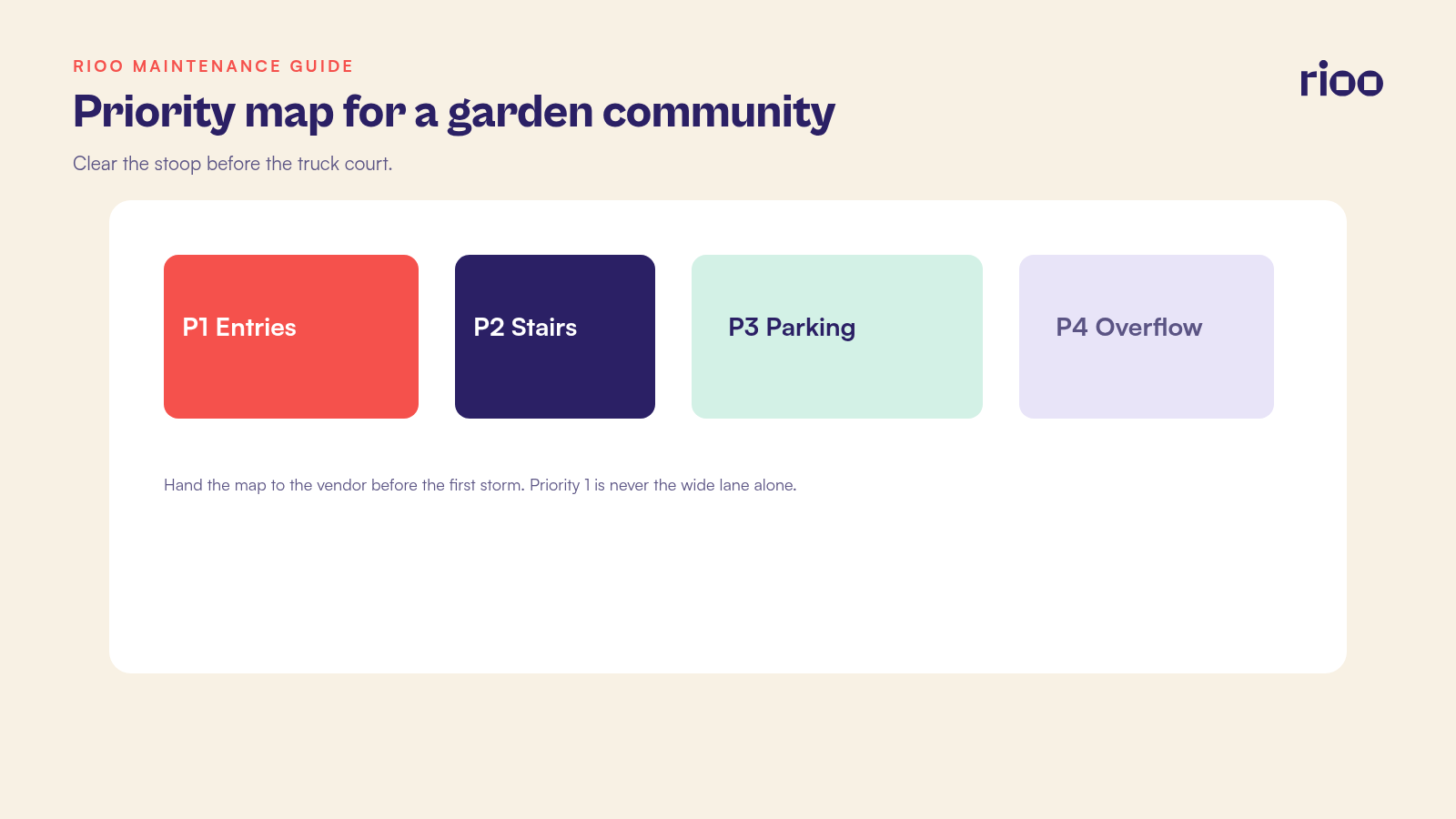
| Priority | Examples | Target |
|---|---|---|
| 1 | Front entries, fire exits, accessible ramps, main sidewalk to the street | First pass after snow or ice starts, then again after it stops |
| 2 | Stairs between buildings, mailbox pads, package rooms, trash enclosures | Same shift as Priority 1 |
| 3 | Resident parking drive lanes and main walks to carports | Before morning peak, often 7 AM |
| 4 | Secondary lots, overflow parking, low use paths | After Priority 1 to 3 are safe |
Photograph the map, tape it in the shop, and send it to the vendor. A vendor without a map will clear the wide lane they can plow and leave the icy stoop that residents actually use.
Mark accessible routes in a second colour on the printed map. If Priority 1 and the accessible path ever compete for the first bag of melt, the accessible path wins.
Triggers, products and who does the work
Write triggers in inches and in ice conditions, not in feelings.
- Snow: start when accumulation reaches your trigger, often one inch, or sooner if a storm is forecast overnight.
- Ice: treat when walks are slick, including black ice and refreeze, even if no new snow fell.
- Products: name what is approved near pets, concrete and landscaping. Keep pet safer melt at entries where dogs walk.
- Stock: count bags and shovels before Thanksgiving. A Sunday ice event with empty shelves is a planning failure.
Decide what staff do in house and what the vendor owns. Many communities keep staff on Priority 1 handwork and let the vendor own lots and long drives. Put that split in the work order type so invoices match the map. Use your vendor onboarding checklist before the first storm, including a current certificate of insurance.
One January ice morning, timed
Take a fictional 140 unit garden community with three stair banks, one accessible ramp, two mailbox pads and a 90 space lot. Trigger: any glaze ice, or snow at one inch. Vendor response goal: on site within 90 minutes of the call. Staff start Priority 1 by hand if the vendor is delayed.
Sunday 10 January, freezing rain ends at 5:40 AM. The on call tech walks the front entry at 5:55 AM, finds glaze on the ramp and both mailbox pads, and calls the vendor at 6:00 AM. Staff salt Priority 1 routes by 6:25 AM. The vendor arrives at 7:10 AM, 70 minutes after the call, and finishes the lot and secondary walks by 8:40 AM.
They take time stamped photos at 6:25 AM and 8:40 AM and file them on the work order. At 9:15 AM a resident reports a slip near building C stairs. The work order shows staff salted that stair bank at 6:20 AM and the vendor treated it again at 8:15 AM, with photos from both passes. The claim still needs care, but the file shows a working plan, not a blank morning.
Cost that morning: staff overtime two hours at $32, $64. Vendor invoice $480 for ice treatment. Total $544. One serious injury claim would dwarf that number. The photos cost nothing once the habit is set.
Resident notes and indoor risk
Tell residents how you clear, where to report ice, and to use handrails. Ask them to keep entry mats and shoe trays inside so melt water does not turn the lobby into a second rink. Outdoor lighting belongs on the same checklist; dark ice is how morning falls happen. Tie this to your building winterization checklist so heat, hose bibs and walks are one winter pack.
If a storm is due overnight, send a portal note before bed. Silence overnight is what fills the 6 AM phone line.
Offer a simple text line for ice reports during storms so residents are not stuck in a phone tree. Log those texts on the same work order as the vendor pass. Duplicate reports of the same stairs bank are useful; they show which spot keeps refreezing.
When schools close and residents stay home, midday traffic on the walks rises. Plan a noon check on Priority 1 after overnight storms, even if the morning pass looked fine. Assign that noon check to a named person on the roster so it does not fall between shifts. Write the name on the storm work order when the event opens.
After the pass: documentation
- Open one work order per storm event, not per building, unless buildings are miles apart.
- Log call time, arrival time, products used and routes completed.
- Attach photos of Priority 1 routes after the first pass and after the final pass.
- Note any leftover drift or refreeze for a day shift check.
- Send the invoice to AP with the work order number so the cost lands on the right property.
That file also helps if your insurer asks how the site handles winter walks. Keep it next to your property insurance claim process notes.
Common failure points
- No second pass. Morning melt and evening refreeze need a check, not only the first plow.
- Windrows at exits. Plowed piles that block doors or accessible ramps recreate the hazard you just cleared.
- Salt on deep snow. Product waste with little traction gain. Shovel or plow first.
- Unlit stairs. Replace failed exterior bulbs as part of the storm close out.
- Silent residents. If nobody knows how to report ice, you learn about it from a claim.
Run a short drill in November: call the vendor, walk Priority 1 with a bag of melt, and take one practice photo set. Fix wrong phone numbers before the first real glaze.
Snow and ice questions
How soon after snow stops should apartment walks be cleared?
Follow your city deadline if one exists, then your site trigger. Many teams aim to finish Priority 1 before morning peak, often before 7 or 8 AM on weekdays.
Is salting enough without shoveling?
Ice melt helps on thin glaze. Deep snow needs removal first, then treatment. Write both steps into the vendor scope so you do not pay for salt on top of six inches of untouched snow.
Who is responsible for the city sidewalk in front of the building?
Local rules vary. Some cities require the abutting owner or manager to clear a path within a set number of hours after snow stops. Confirm your city rule and put it on the priority map.
Should we close outdoor amenities during ice events?
Yes when stairs or decks cannot be made safe in time. Post the close on doors and in the portal, and reopen only after a staff check. Leave one treated path to the building entry so residents are not forced onto closed decks to reach the street.
How this ties to heat and pipes
Ice weeks often arrive with hard freezes. While walks are treated, staff should also glance at make up air intakes, hose bib covers and known cold corners inside. Keep the clearing plan beside your heat outage and pipe guides so one overnight team is not opening three different binders. The maintenance request guide is the spine for both weather work orders and indoor emergencies.
Keeping the storm file in RIOO
Ice events are easy to lose in texts. In RIOO, the storm work order holds the vendor, the times, the photos and the cost on the property record, all on NetSuite. Residents can report slick spots through the portal, and managers see which sites have open winter work. See resident portals and how service requests run on RIOO.