Can you make an apartment community smoke free? In the US, a private landlord can usually adopt a smoke free policy, as long as it is written into each lease and introduced with proper notice. Public housing must already be smoke free under a federal rule. The hard part is the rollout, because existing leases do not change on the day you decide.
A smoke free apartment policy is a lease rule that bans smoking inside units and in named outdoor areas. The cleanest rollout puts it in every new lease and renewal from a set date. Common areas go smoke free on a fixed day, and residents get months of notice. This guide sets out that timeline with a worked example. State and city rules vary, so check yours and have counsel review the addendum.
Decide what the policy covers
Write down the scope before you announce anything. Vague policies are the ones residents argue with.
| Question | Common choice | Why it matters |
|---|---|---|
| Which products? | Cigarettes, cigars, pipes and hookahs, plus vapes | Vapes are a separate decision. Name them either way. |
| Cannabis? | Name it if state law allows you to restrict it | State cannabis laws differ on what a landlord can ban |
| Inside units? | Yes | Smoke moves through walls, vents and plumbing gaps |
| Balconies and patios? | Yes | This is where neighbour complaints usually start |
| Common areas? | Yes, including hallways, laundry and the leasing office | Often covered by your community rules clause already, and some may be covered by state law |
| Outdoor buffer? | 25 feet from buildings | Matches the distance in the federal public housing rule |
| Smoking area? | One marked spot outside the buffer, or none | A spot gives residents who smoke somewhere to go |
Put the answers into a short lease addendum. Our guide to lease amendments and addendums explains which document fits a new rule like this one.
The rollout, month by month
Plan the rollout backwards from two dates. One is the day common areas go smoke free. The other is the date of the last lease renewal that picks up the addendum. The headings below count back from the common area date, as in the worked example.
Eight months before: survey and decide
Ask residents two short questions in the portal or by letter. Does anyone in your home smoke indoors or on the balcony? Would you prefer a smoke free building? You learn roughly how many homes are affected and where the complaints come from. Then confirm the scope above and have the addendum reviewed.
Four months before: announce
Send every household the same letter. Give the effective date for common areas, the date new leases start including the addendum, and a copy of the addendum itself. Post it in the portal and on notice boards. Name the person who answers questions.
Three months before: new leases and renewals
From the addendum date, every new lease and every renewal term that starts on or after it includes the addendum. Add a line to your lease renewal offer letter so nobody signs without seeing it. Offers for the first month or two of renewals may have gone out before the announcement. Send those residents the addendum with a short cover note before they sign.
Month to month residents
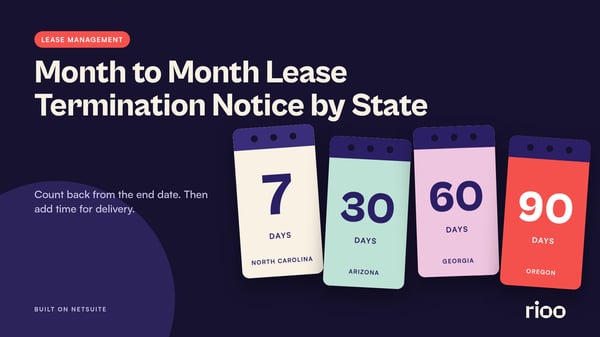
Residents without a fixed term can be moved onto the policy with a written change of terms. Give at least the notice your state requires to change a periodic tenancy. Our month to month notice guide compares notice periods across ten states.
Effective date: common areas
Signs go up, ashtrays come down by the doors, and the smoking area opens if you have one. Check that your existing leases let you set reasonable community rules with notice. If they do not, common areas wait for renewals too.
Some of this may already be state law. In Ohio, Revised Code section 3794.02 bars smoking in enclosed places of employment, such as a leasing office or maintenance shop. It also covers the areas right by their entrances. Private residences are exempt under section 3794.03, so the units themselves remain a lease question.
Twelve months after the addendum date: full coverage
Once a full year of renewals has passed, every fixed term lease carries the addendum. From then on the policy is simply part of the lease.
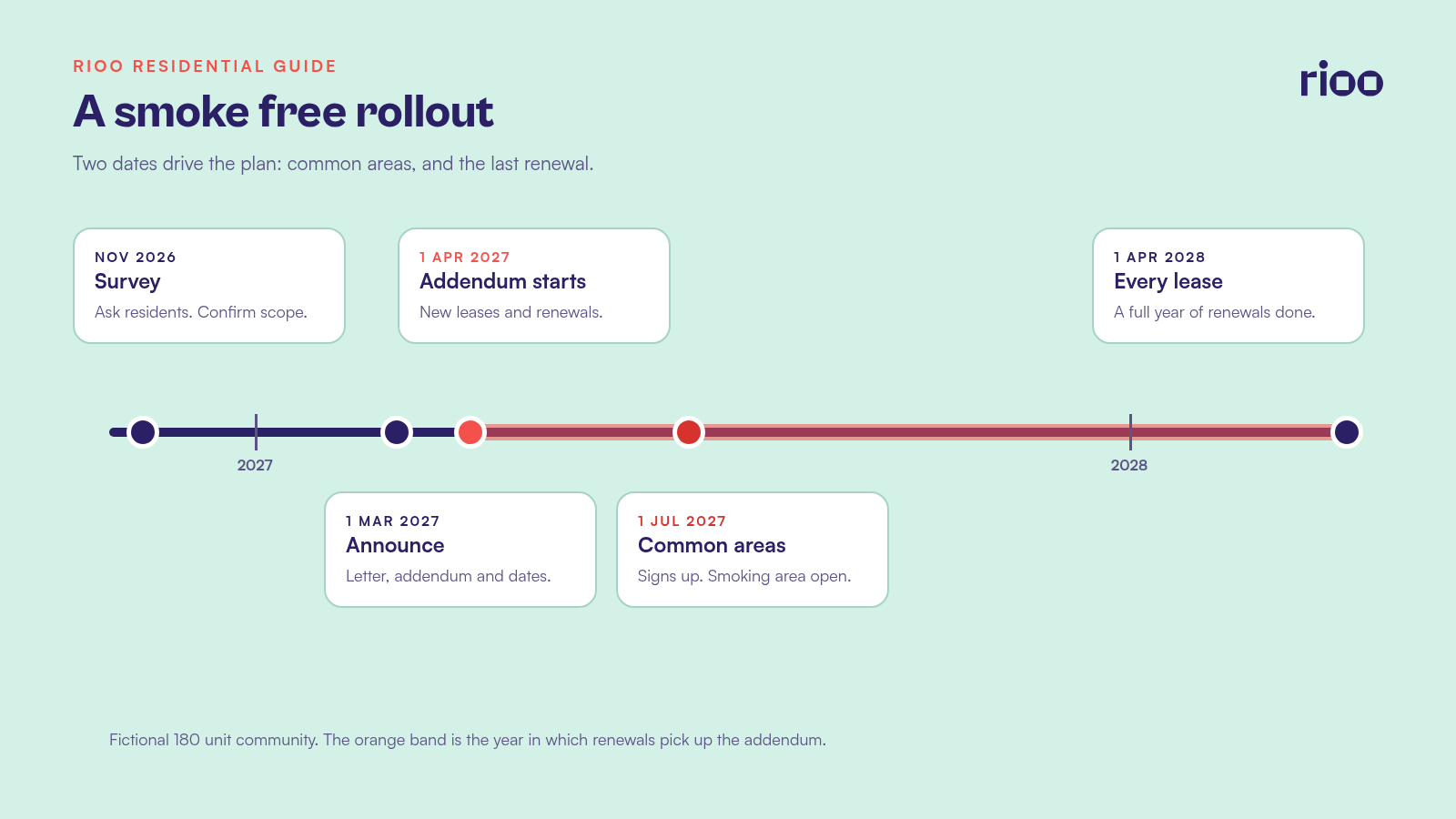
A worked rollout at a 180 unit community
This example is fictional. It shows how coverage builds when the policy rides on renewals.
A 180 unit garden community in Columbus, Ohio has 168 residents on 12 month leases, with about 14 ending each month. Twelve more are month to month. The manager runs the survey in November 2026, announces on 1 March 2027, and starts the addendum on 1 April. Common areas go smoke free on 1 July 2027. The month to month households get written notice of the change in April, effective 1 June.
| Date | Fixed term leases with addendum | Month to month | Units covered | Share |
|---|---|---|---|---|
| 1 July 2027 | 42 | 12 | 54 | 30% |
| 1 October 2027 | 84 | 12 | 96 | 53% |
| 1 January 2028 | 126 | 12 | 138 | 77% |
| 1 April 2028 | 168 | 12 | 180 | 100% |
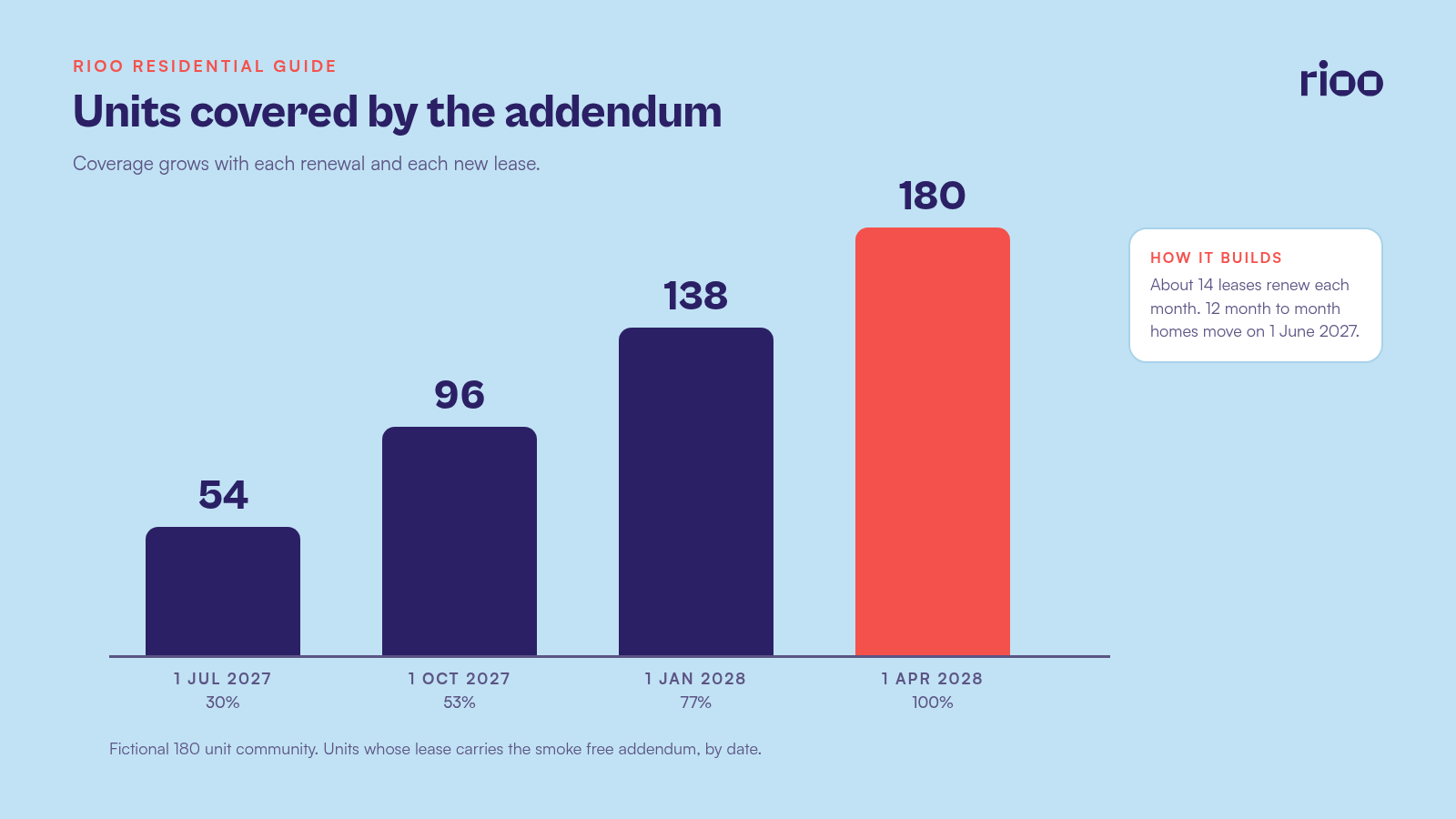
Residents who move out are replaced by new residents who sign the addendum, so turnover only speeds coverage up. In the meantime, a unit that still allows smoking can be flagged on the rent roll. That way leasing staff can tell a new neighbour honestly what to expect.
One conversation shows how the renewal step works. In June 2027, a resident says: "I have lived here nine years. I smoke on my balcony, and I always have." The manager answers: "That stays allowed until your lease ends on 31 July. The renewal from 1 August includes the smoke free addendum, which covers the balcony. The bench by the east parking lot, about 40 feet from the building, stays open for smoking." The resident renews. The rule did not surprise them, because the letter had arrived in March.
Track the turn costs as well. In this example, the last turn of a unit with heavy smoke damage cost $3,850, against $1,400 for a typical turn. That covered sealing primer, two coats of paint, new carpet and a deep clean of the vents. Our apartment make ready checklist lists the work in a standard turn.
Residents who already smoke
Decide early whether current residents get to finish their lease term or the policy applies to everyone on a fixed date. Renewal based rollout, as in the example, is the gentler path and avoids changing a lease mid term.
Small practical steps help residents adjust. Mention local quit support in the announcement, without pressure. Light the smoking area and give it a bin, so it actually gets used. Name one staff contact for questions during the first three months.
A resident may ask for an exception because of a disability. Treat that as a reasonable accommodation request under fair housing rules, and get advice before you answer.
Enforcing the policy without a fight
Enforcement works when it follows the same steps for everyone and every step is written down.
- Record the report. Who reported it, when, which unit or area, and what they saw or smelled.
- Look for evidence you can show. Butts on a balcony, smoke seen from a common area, or notes from an inspection with proper notice.
- Start with a reminder. A friendly note pointing to the addendum and the smoking area often ends it.
- Send a written warning for a repeat. Our lease violation warning letter guide includes a template.
- Escalate under the lease. Any further notice follows the lease and state law. Speak to counsel before notices that could end a tenancy.
Keep the tone the same for every resident. A policy enforced hard on one floor and ignored on another is the one that ends up in a dispute.
What RIOO keeps on record during a rollout
In RIOO, the community manager portal lets on site teams send announcements and targeted notices to residents. The tenant portal holds the lease, community rules, guides and notices, and residents can sign renewals digitally there. The smoke free addendum can sit with the renewal documents, so each signed renewal carries it. Each announcement is logged on resident profiles, so you can show who received the notice. Staff can also open a task for each smoke report and track it to close, which keeps a dated record if enforcement is needed. The community manager portal page shows how announcements and documents work.
Public housing follows a federal rule
Public housing agencies do not choose whether to go smoke free. Under 24 CFR part 965, subpart G, they must ban lit tobacco products, such as cigarettes, cigars and pipes, and hookahs in all living units and interior areas. The ban also covers outdoor areas within 25 feet of public housing and administrative office buildings. Agencies may set designated smoking areas outside that zone, and the policy must be written into tenant leases.
The rule covers public housing units. Private buildings that accept housing vouchers fall outside it, and so do mixed finance units. If you manage both kinds of property, run two policies and label each building clearly.
Smoke free policy FAQ
Can a landlord ban smoking in an apartment?
In the US, private landlords can usually ban smoking through the lease. Add it to new leases and renewals, and give notice for month to month tenancies. Check state and city rules first.
Can I ban smoking on balconies?
Yes, if the addendum names balconies and patios. Balconies are where neighbour complaints usually start, so include them.
Does a smoke free policy cover vaping?
Not unless you say so. Decide up front and name vapes in the addendum either way, so nobody has to guess.
Can I apply the policy to current residents straight away?
Changing a fixed term lease mid term usually needs the resident's agreement. The usual route is to apply the policy at renewal and give month to month residents proper notice.
What if a resident keeps smoking after the policy starts?
Follow your written steps: reminder, written warning, then the lease process. Get legal advice before any notice that could end the tenancy.
Do I have to provide a smoking area?
Private landlords generally do not. Many choose to, because it gives residents who smoke a clear alternative.