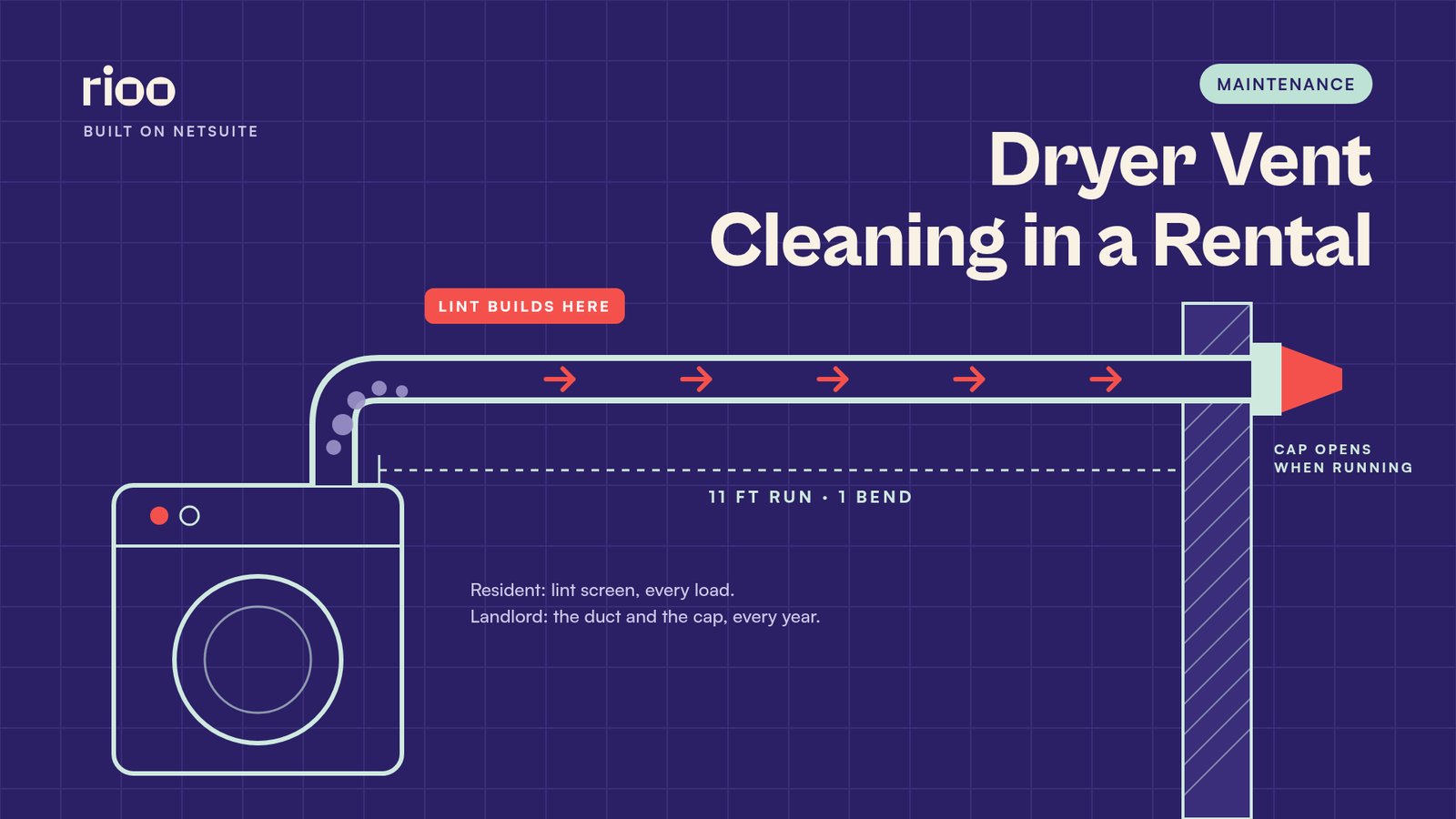
Unit 3B reports that towels now take two full cycles to dry. The dryer is fine. Behind the wall, eleven feet of duct is half full of lint, and the cap on the outside wall has stuck shut. That slow load is the cheapest warning a building will ever give you.
Dryer vent cleaning in a rental usually splits like this. The resident cleans the lint screen after every load and reports slow drying. The landlord cleans the duct inside the walls and the cap outside, because the landlord controls them. Check your lease first, then plan a yearly clean of every duct, with a record of each one.
Who cleans which part
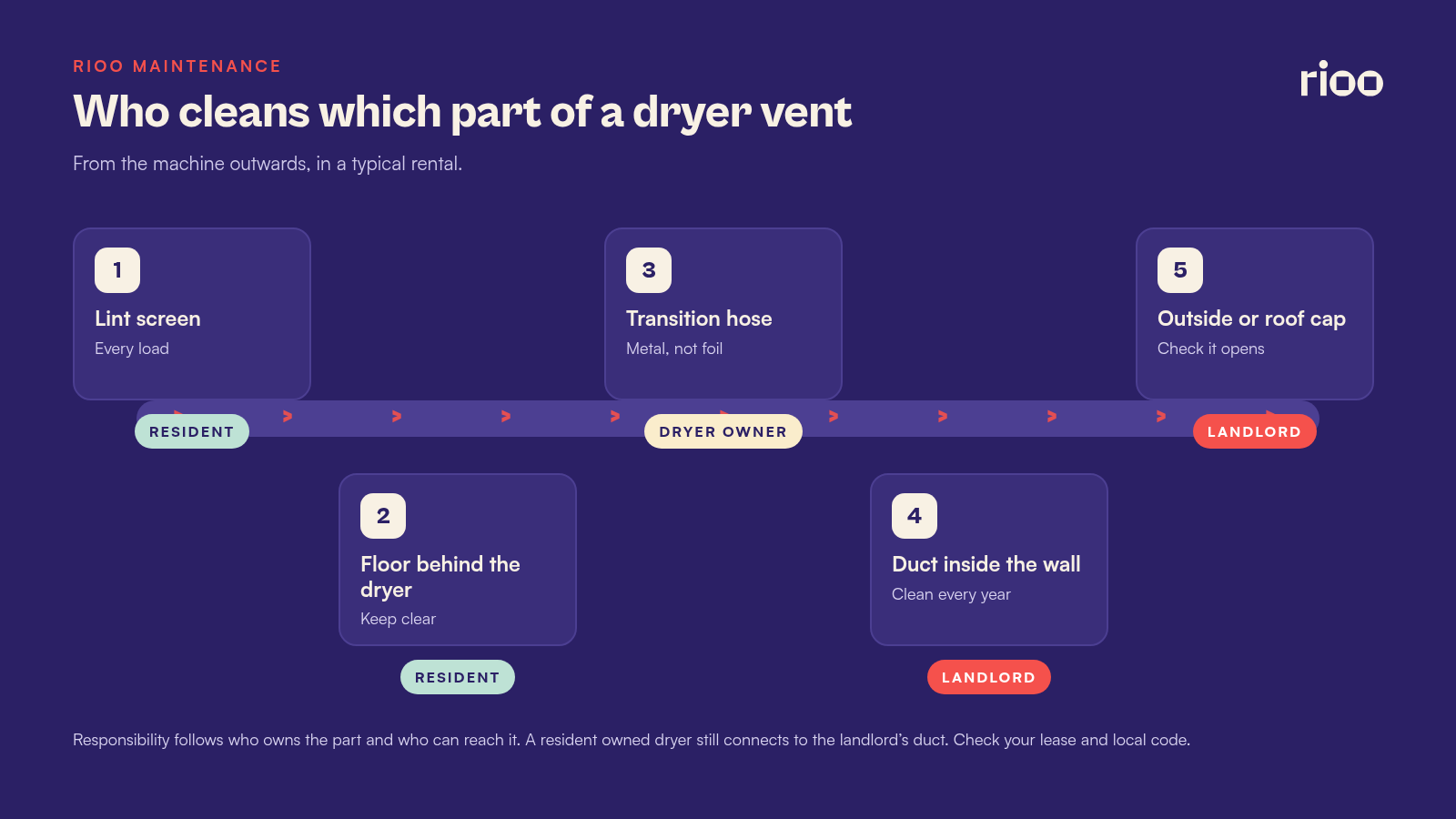
Work through the vent from the machine outwards. Responsibility follows who owns the part and who can reach it safely. The lease can shift some of it, so read the maintenance clause before you decide.
The lint screen and the floor behind the dryer
This is normally the resident's job. Clean the screen before or after each load. Keep the floor behind the machine clear of lint and stored items. Put it in the move in packet in plain words.
The transition hose
The short flexible piece between the dryer and the wall gets crushed when machines are pushed back. If the landlord supplied the dryer, the landlord should own this part too. If the resident brought their own dryer, the lease can make the hose theirs, as long as it meets code. Foil or plastic hoses should go. Use a listed metal transition duct.
The duct inside the walls and the cap outside
Residents cannot reach these safely, and they belong to the building. Clean them on a schedule, at the landlord's cost, whoever owns the dryer. On a two or three storey building, the cap may sit on the roof. That needs a ladder or a lift, which is a vendor job.
When the dryer belongs to the resident
The machine and its own lint trap are theirs. The duct in your wall is still yours. A resident owned dryer connected to a blocked building duct is a building problem.
How often, by building type
There is no single federal schedule for rental dryer vents. The U.S. Fire Administration lists failure to clean as the top factor in home clothes dryer fires, at 31 percent of those fires from 2018 to 2020. A yearly clean is a sound starting point. Long runs and roof caps need more attention.
| Building | Typical vent | Suggested routine |
|---|---|---|
| Single family home or townhome | Short run to a side wall | Clean every 12 months, and at every turnover |
| Garden apartments, two or three storeys | Longer runs, some to roof caps | Clean every 12 months. Check roof caps for lint and nests every 6 months |
| Mid rise with a shared riser or booster fan | Common duct serving several floors | Follow the fan maker's instructions and the engineer's plan, often every 6 to 12 months |
| Common laundry room | Commercial dryers, heavy use | Lint compartments weekly. Ducts on the vendor's schedule, often more than once a year |
Your local fire code or rental inspection program may set its own rule. Check it before you settle the schedule.
Signs to put in the resident handbook
Residents notice problems weeks before a technician would. Tell them exactly what to report, and make reporting easy.
- A normal load takes more than one cycle to dry.
- The top of the dryer or the clothes feel very hot at the end of a cycle.
- A burning smell, or lint collecting around the door seal.
- The flap on the outside cap does not open when the dryer runs.
- For gas dryers, any smell of gas. That means leave the unit and call the emergency line.
Each report should open a work order, even if the fix turns out to be the lint screen. The pattern across units tells you which runs clog fastest.
Dayton, 36 units: complaint calls or one booked clean
This is a fictional example with made up quotes. A three storey building in Dayton, Ohio, has 36 units with landlord supplied dryers. Thirty units vent to a side wall. The six top floor units vent to roof caps.
Last year the manager cleaned vents only when residents complained. There were 11 calls. Each one cost a $95 trip charge plus a $129 cleaning, so $224 a call and $2,464 for the year. Only 11 of 36 ducts were cleaned.
This year the manager asked for a single quote for the whole building:
| Item | Count | Price | Total |
|---|---|---|---|
| Side wall vents, cleaned and tested | 30 | $129 | $3,870 |
| Roof cap vents, with lift access | 6 | $249 | $1,494 |
| Crushed or stuck caps replaced | 4 | $65 | $260 |
| Trip charge, two days on site | 1 | $0, waived on volume | $0 |
| Total | $5,624 |
That works out at about $156 a unit, against $224 for each complaint call. The total is higher than last year's $2,464, but it covers all 36 ducts instead of 11, on two booked days, with one notice to residents. The manager also sees which four caps failed.
Ohio also matters here in two ways. Under Ohio Revised Code 5321.04, a landlord must keep ventilating fixtures and appliances it supplies in good and safe working order. The same section asks for reasonable notice before entry, and presumes 24 hours is reasonable. The vendor did 18 units a day, and the manager sent notices four days ahead, listing which floors were on which day.
What a finished job should show
Ask the vendor for a short report for each unit. Close the work order only when you have it. Our work order closeout checklist applies here too.
- Unit number, date, and the technician's name.
- Duct material. Inside walls the duct should be rigid metal. Foil or plastic should be replaced and noted.
- Approximate run length and number of bends. The International Residential Code, adopted in many places, caps a typical dryer exhaust duct at 35 feet, reduced for each bend. Longer runs need the dryer maker's approval or a booster fan.
- Airflow at the cap before and after, if the vendor measures it.
- Photos of the cap open and clear, and the transition hose behind the machine.
- Anything that needs a repair, such as a crushed section inside a wall, with a quote.
Store the reports against the unit. A buyer's inspector, an insurer or a fire marshal may ask for them.
Lease and notice wording
One clear clause settles the usual argument about who does what. A sample, to adapt with your counsel:
Dryer venting. Resident will clean the dryer lint screen with each use, keep the area behind the dryer clear, and promptly report slow drying, overheating or a burning smell. Landlord will have the dryer exhaust duct and exterior cap inspected and cleaned at least once a year. Resident will allow access for this work after notice.
And a resident notice for the clean:
Dryer vent cleaning, Tuesday 8 December, floors 1 and 2. A technician will clean the dryer duct in your unit between 9 a.m. and 4 p.m. The work takes about 30 minutes and is at no cost to you. Please clear the space in front of the dryer. Questions? Reply to this message or call the office.
Choosing the vendor
Quotes for the same building can differ a lot, because vendors price roof access, repairs and reporting differently. Ask each vendor the same questions and compare the answers side by side.
- Do you clean from the cap end, the dryer end, or both? Long runs usually need both.
- How do you reach roof caps, and who supplies the lift?
- Will you give a written report and photos for every unit?
- Can you replace foil hoses and broken caps on the same visit, at a price agreed in advance?
- Do you carry liability insurance, and will you name the owner on the certificate?
Collect the insurance certificate and the W9 before the first visit. Our vendor onboarding checklist lists the rest.
Dryer vents at turnover
A vacant unit is the easiest time to clean a duct. Add it to the make ready list if the duct was not cleaned in the last six months. Pull the dryer out, check the transition hose, and photograph the cap. Our post on normal wear and tear vs damage helps when a crushed hose or a broken cap raises the question of a charge to the departing resident.
Dryer vent FAQ
Is the landlord responsible for dryer vent cleaning?
For the duct inside the walls and the outside cap, usually yes. Residents clean the lint screen. The lease can assign smaller tasks, but the building's ductwork stays with the owner.
How often should dryer vents be cleaned in an apartment?
At least once a year is a common rule. Long runs, roof caps and shared risers may need checks every six months.
Can I charge residents for dryer vent cleaning?
Only if your lease and local law allow it. Routine cleaning of building ducts is usually treated as an owner cost. A charge for damage the resident caused is a separate question.
Who pays if a blocked vent causes a fire?
That depends on the facts and the insurance policies. A dated cleaning record for each unit is the best evidence you did your part.
Tracking vent cleaning in RIOO
In RIOO, a yearly dryer vent clean can be set up as a recurring task for each building or unit. RIOO turns the plan into work orders on schedule, assigns them to a vendor, and records completion against the unit. Vendor bills are recorded against the same work orders and post to the property's accounts in NetSuite. Resident reports of slow drying become service requests on the same unit history. See how preventive maintenance planning works in RIOO, along with the wider life safety inspection schedule it sits beside.