The wire clears on a Thursday afternoon. By Friday morning the asset manager owns a business plan, a loan, a capital budget and 120 apartments that someone else ran until yesterday. What happens over the next 100 days decides whether that plan survives contact with the building.
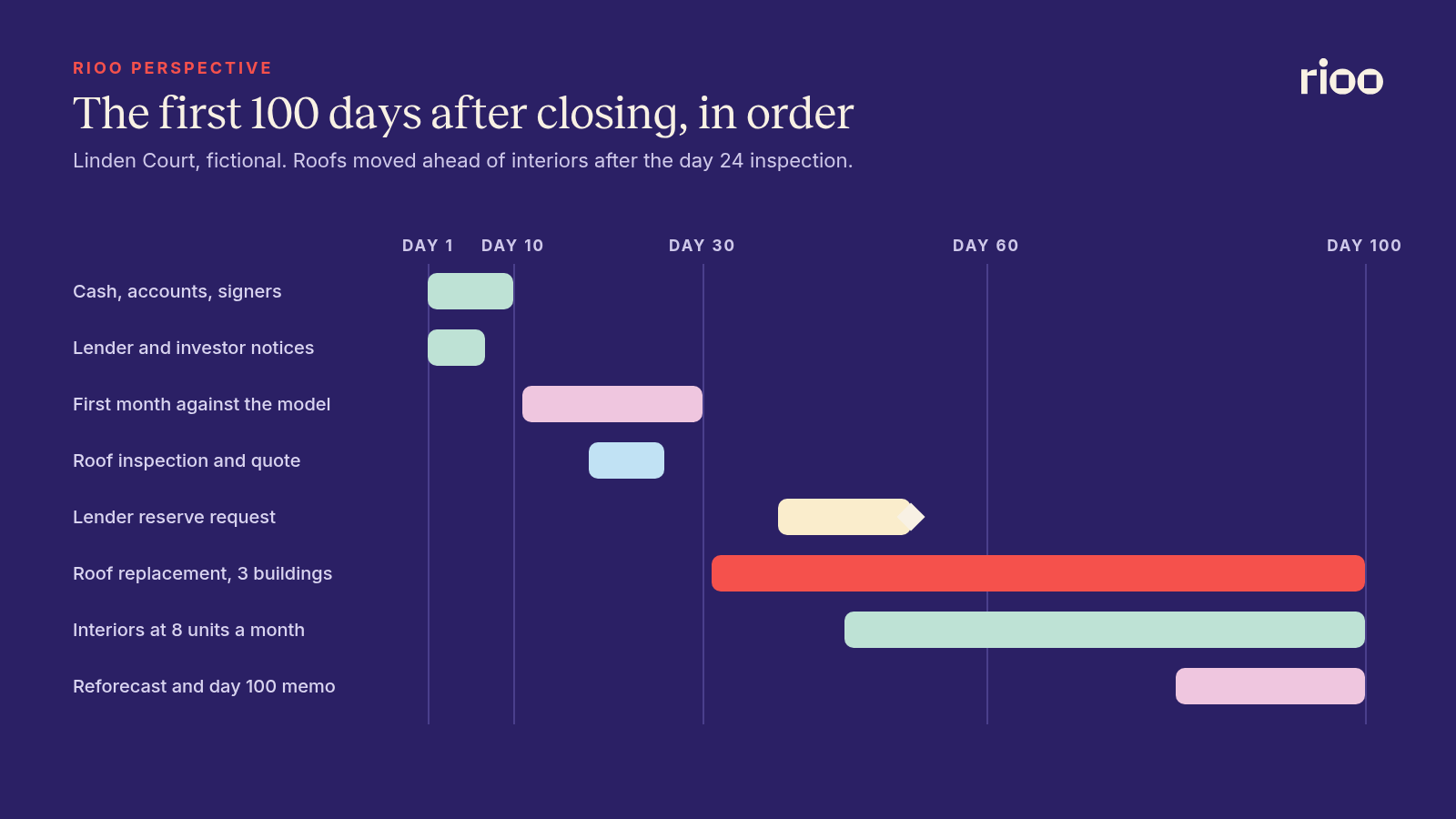
After a multifamily acquisition, the asset manager's first 100 days have one job. Test the underwriting against real cash and real buildings, then reset the plan before the money starts moving. That means taking control of cash and reporting in the first ten days. Next comes comparing the first full month to the model, then putting the capital plan back in order. By day 100 you should have a reporting rhythm with the property manager and a short memo to investors on what changed.
The plan you bought and the plan you have
Every acquisition model is a set of guesses made from outside the building. The rent roll came from the seller. The capital budget came from a walk through and a few contractor bids. The expense line came from a trailing twelve month statement prepared by someone with a reason to make it look tidy.
Closing does not make those guesses true. It only makes them yours. A team that starts the renovation program on day one is spending money against numbers nobody has checked from the inside. A team that spends the first 100 days testing those numbers spends a little time and keeps the right to change course while it is still cheap.
So treat the first 100 days as a test of the business plan. Do the urgent work, such as safety items, collections and open work orders, from day one. Hold the big discretionary spend until the first month of real cash has come in and the main building systems have been seen by your own people.
Linden Court on closing day
To show what that looks like, follow one example. Linden Court is a fictional 120 unit garden community built in 1994, with nine two story buildings. It was bought on a value add plan that renovates unit interiors over 30 months and raises rents on the renovated units.
| Underwriting line | Figure in the model |
|---|---|
| Units and occupancy | 120 units, 114 occupied (95%) |
| Average in place rent | $1,400 a month |
| Expected monthly collections | $159,600 |
| Interior renovation budget | $9,500 a unit, 12 units a month |
| Target rent on a renovated unit | $1,575, a $175 premium |
| Roof replacement | $180,000, planned for year three |
| Closing date | Thursday 15 January 2026 |
Before closing, the buyer tested the seller's rent roll, as set out in our guide to rent roll analysis. That work cuts risk. It cannot replace a month of your own bank deposits.
Days 1 to 10: owner controls and the management agreement
The first ten days are about control. Nothing strategic happens until you know where the money goes and who can spend it.
Cash and bank accounts
Confirm the operating account, the security deposit account and any lender reserve accounts are in the new owner's name. Check who can sign and who can approve payments. Then compare the deposits the seller transferred against the deposit ledger, unit by unit. Your state's rules on transferring deposits to a new owner apply here, and some states set a deadline for telling residents who now holds them.
The management agreement
Whether you keep the existing manager or bring in a new one, read the management agreement for spending limits, reporting dates and approval rules. At Linden Court the asset manager set a $5,000 limit for any single repair without approval. The same memo asked for a weekly leasing and collections report in the first quarter. The property manager's own handover list is a separate job, covered in our plan for a property management takeover.
Lender and investor notices
Loan documents often list what the borrower must send after closing, such as insurance certificates, a first rent roll and an operating budget. Put each item and its due date on one list with a named owner. Investors should get a short closing note too: what was bought, the plan, and when they will hear next. Letters to residents and vendors sit on the property manager's takeover list.
Days 11 to 30: the first month against the model
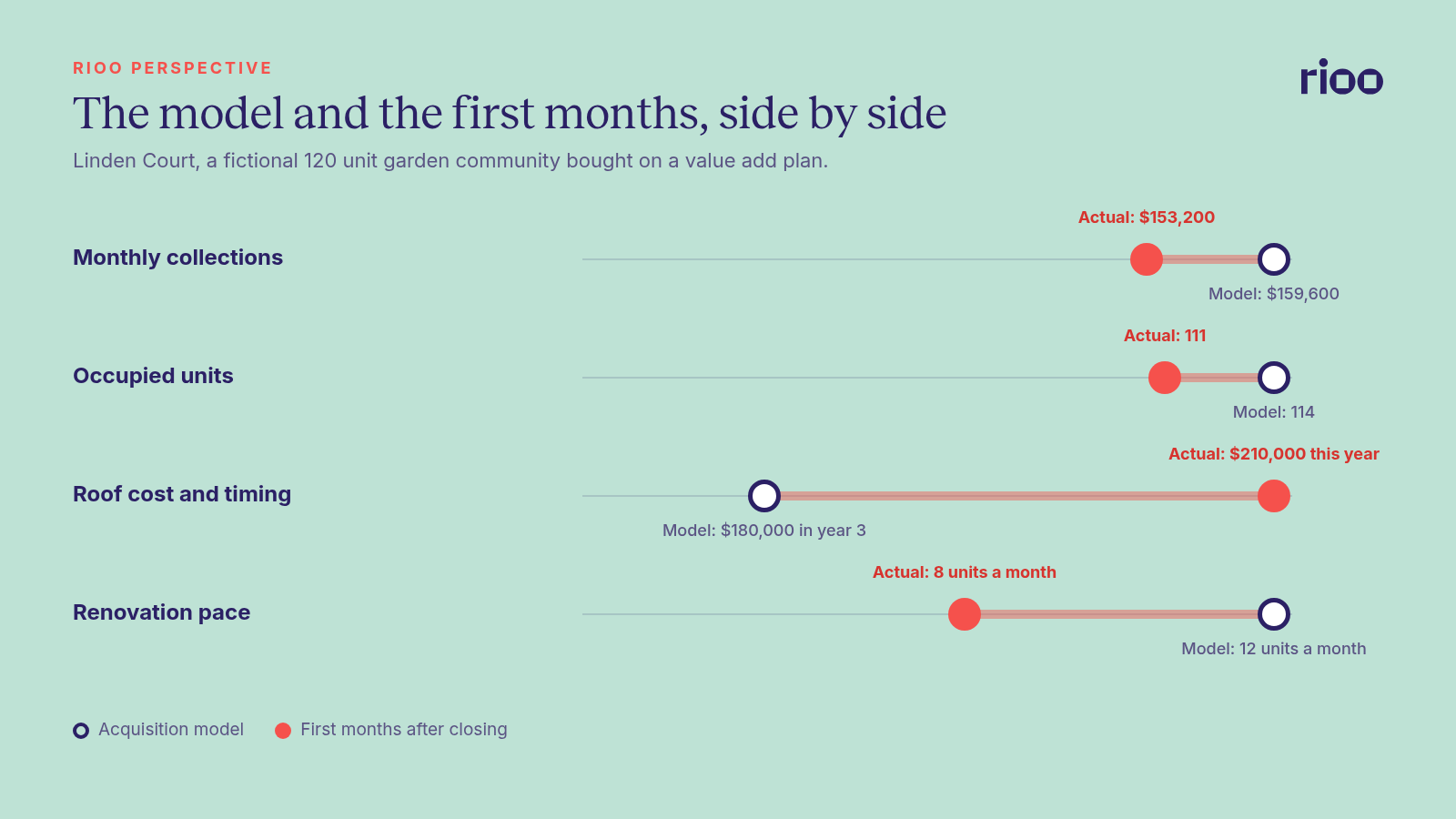
The first full month of cash tells you more than the whole data room did. At Linden Court, February bank deposits came in at $153,200. The model expected $159,600. That is $6,400 a month, or 4% below the underwriting.
The asset manager asked the property manager for a ledger by unit and found three causes.
| Cause | Monthly effect |
|---|---|
| Three units shown as occupied had given notice before closing and moved out in the first three weeks | $4,200 |
| Two new leases signed in December carried free rent that the rent roll did not flag | $1,100 |
| Two residents were on payment plans paying less than full rent | $1,100 |
| Total gap | $6,400 |
None of this is a disaster. All of it changes the plan. The free rent and payment plans will burn off. The three vacant units are the important finding, because they change the question about the renovation program.
The same month is when you test expenses. Compare the first month's utility bills, payroll and contract services to the model line by line. Ask why for any gap over 10%. Look out for a service contract the seller let lapse, or one paid a year in advance that now falls to you.
Days 31 to 60: put the capital plan in a new order
By the second month, your own contractors should have looked at the roofs, the building envelope and the main plumbing and electrical systems. At Linden Court the roofer's report on day 24 found that three of the nine buildings needed new roofs this year. The quote was $210,000. The model had $180,000 for roofs in year three.
So the capital plan changed order. Roofs moved to the front. The interior program started at eight units a month for the first quarter instead of twelve, which kept enough cash on hand for the roof work. The three units that had just gone vacant became the first renovated units, because they could be turned without moving anyone.
If the loan holds a capital reserve, check the loan agreement before you move money between budget lines. At Linden Court, the lender had to approve putting reserve funds toward the roofs. The request went in on day 38 with the roofer's report and the revised schedule, and approval came back on day 52.
Two of the three renovated units leased by day 85 at $1,560. That is $15 short of the $1,575 target, on a sample of two. It is too early to call the rent premium wrong. It is the right time to start tracking it unit by unit.
Days 61 to 100: a reporting rhythm and the day 100 memo
The last stretch turns the work into a routine. The property manager should send the same pack on the same day each month: rent roll, aged receivables, budget against actual, the renovation tracker and open work orders. Our guide to a mid year property budget reforecast shows how to roll the new facts into the forecast without rebuilding it.
At Linden Court the reforecast moved year one NOI from $1,010,000 to $955,000. The bulk of the drop came from the slower renovation pace and the three vacant units. The roof change moved cash earlier, but the total plan cost rose by only $30,000.
The day 100 memo to investors fits on two pages. It covers what the first month of cash showed and what changed in the capital plan and why. Then it gives the revised year one forecast and what you will report each quarter from here. Investors take a 5% revision at day 100 far better than a surprise at month nine.
Asset manager or property manager: who decides what
People new to the role often ask how asset management differs from day to day property management on an apartment community. After an acquisition, the split looks like this.
| Area | Asset manager | Property manager |
|---|---|---|
| Business plan | Owns it and changes it | Carries it out on site |
| Budget | Approves it and the reforecast | Prepares it and reports against it |
| Capital projects | Sets the order and approves spend | Gets bids and manages the work |
| Leasing and rents | Sets targets and the rent premium | Leases units and collects rent |
| Lender and investors | Reports and asks for approvals | Supplies the data |
| Residents and vendors | Sets service standards | Runs the daily relationship |
For a longer view of the role, see the role of a real estate asset manager.
Running the hold from one ledger
The Linden Court gap took a ledger by unit to explain. When that ledger lives in the manager's system and the owner's books sit somewhere else, every question takes a round of emails.
RIOO runs property operations and accounting inside NetSuite. Leases, rent, work orders and vendor bills post to the same records the owner's finance team reports from. The RIOO asset management software for owners page shows occupancy, income, expenses and NOI by property and entity. You can drill down from a portfolio figure to the transaction behind it. Scheduled reports can go to investors and lenders by email without a login.
Questions from the first quarter of a hold
What does an asset manager do after a multifamily property is acquired?
They take control of cash, accounts and reporting, then test the underwriting against the first months of real results. They reset the business plan and capital order where the facts differ, and set the reporting rhythm with the property manager, lender and investors.
Should renovations start right after closing?
Safety and habitability work should start at once. Discretionary renovation spend is often better held until the first month of cash and your own inspection of roofs and building systems are in. A few weeks of delay costs less than renovating to the wrong plan.
How long should the asset manager stay this close to the property?
Weekly contact through the first quarter works well, moving to a monthly pack and a quarterly review once the reforecast is done. Our guide to a quarterly real estate portfolio review covers that later rhythm.
What goes in the day 100 memo?
What the first months of cash showed, what changed in the capital plan, the revised forecast and the reporting schedule from here. Two pages is enough. Attach the reforecast as backup.
Is the first 100 days different for a stabilised property?
The steps are the same. The capital plan is smaller, so more weight falls on expenses, renewals and the management agreement. The first month against the model still matters.