Walk into a vacant rental in October and the hearth usually tells you what the last resident believed. Soot on the firebox floor and a log rack by the wall mean they burned wood all winter. Nobody may have looked at the flue in years. The trouble starts when the owner thought the fireplace was decorative and the lease never said so.
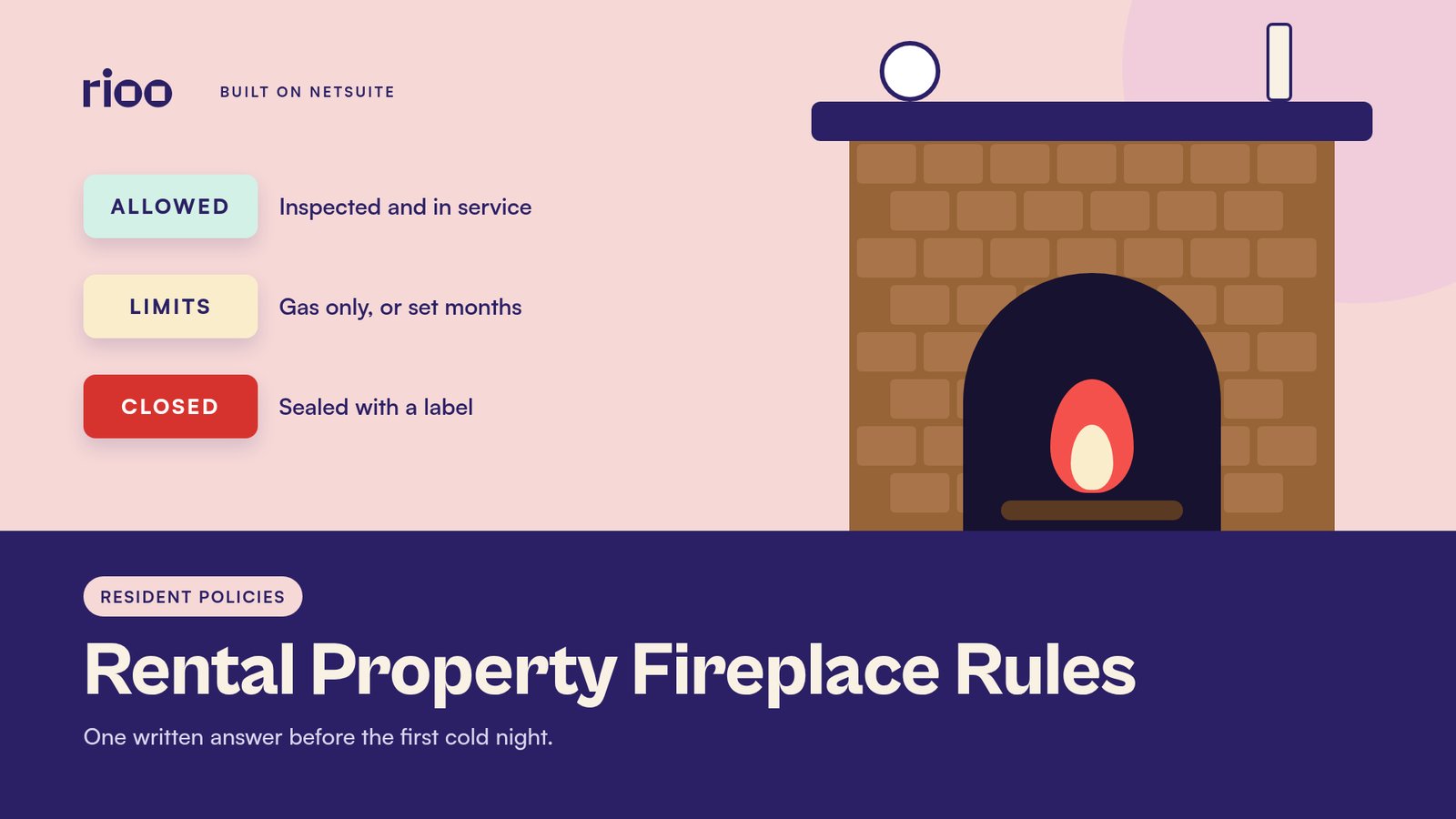
So write the answer down before the first cold night. Pick one: open for use, open with limits, or closed.
The rules for a rental property fireplace come down to a few duties. The owner keeps the chimney, flue and any supplied appliance safe, which in practice means an annual inspection and repairs when the inspector finds a problem. The resident uses it the way the lease allows, burns the right fuel, handles ashes safely and reports smoke, smells or debris in writing. A short fireplace addendum, signed at move in, records which of the three answers applies. State and local codes vary, so treat this as a working guide and check your own rules.
Open, limited or closed: when each fits
I see the same three choices across single family homes, duplexes and older walkups. The right one depends on the condition of the chimney and how much the owner wants to spend.
| Answer | Fits when | What the owner pays for |
|---|---|---|
| Open for use | The chimney passed a recent inspection and the owner is happy to keep it in service | Annual inspection, sweeping when deposits build up, repairs |
| Open with limits | Gas logs or a sealed insert only, or wood fires limited to certain months | Gas appliance service, inspection, signage and the limit in writing |
| Closed | The flue is damaged, the cost of repair is high, or the owner does not want the risk | A proper closure by a professional, a label on the fireplace, the rule in the lease |
"Closed" has to mean physically closed. A sentence in the lease is not enough if the damper still opens and there is a stack of logs on the hearth. Have a chimney professional seal it, then put a plain label inside the opening that says it must not be used.
Who owns which job
Disputes about fireplaces usually come from unclear duties. A simple split avoids them.
| Task | Owner | Property manager | Resident |
|---|---|---|---|
| Annual chimney inspection | Pays for it | Books it and files the report | Gives access |
| Sweeping | Pays when the report calls for it | Schedules it before the season | Clears the hearth |
| Flue, liner, cap and masonry repairs | Approves and pays | Gets quotes and oversees the work | Reports leaks, falling debris, animal noises |
| Smoke and carbon monoxide alarms | Installs working units | Tests at move in and inspections | Tests monthly, reports faults |
| Ash can with a lid | Supplies it | Shows the resident where it lives | Uses it every time |
| Fuel | States what is allowed | Explains it at move in | Buys and burns approved fuel |
Our post on life safety inspection schedules covers alarm testing in more detail, and fireplaces fit into the same calendar.
Before anyone lights a fire
Turnover is the easiest time to deal with a chimney. The home is empty, nobody is waiting to light a fire, and crews do not have to work around a resident's furniture.
Book the inspection while the unit is vacant
The industry standard for chimneys, NFPA 211, calls for an inspection at least once a year. If the fireplace has not been used for years, or the home just changed hands, ask for a camera inspection of the flue. Nests, cracked tiles and loose mortar hide where a flashlight cannot reach.
Fix what the report flags
Repairs deferred in October become emergency calls in January, when chimney crews are booked weeks out. Get quotes in writing and decide quickly.
Check alarms and the damper
Confirm smoke and carbon monoxide alarms work and are within their printed expiry date. Open and close the damper. It should move freely and seal.
Walk the new resident through it
Show them the damper, the screen or doors, the ash can and the approved fuel. Tell them who to call if smoke comes into the room. Then have them sign the addendum.
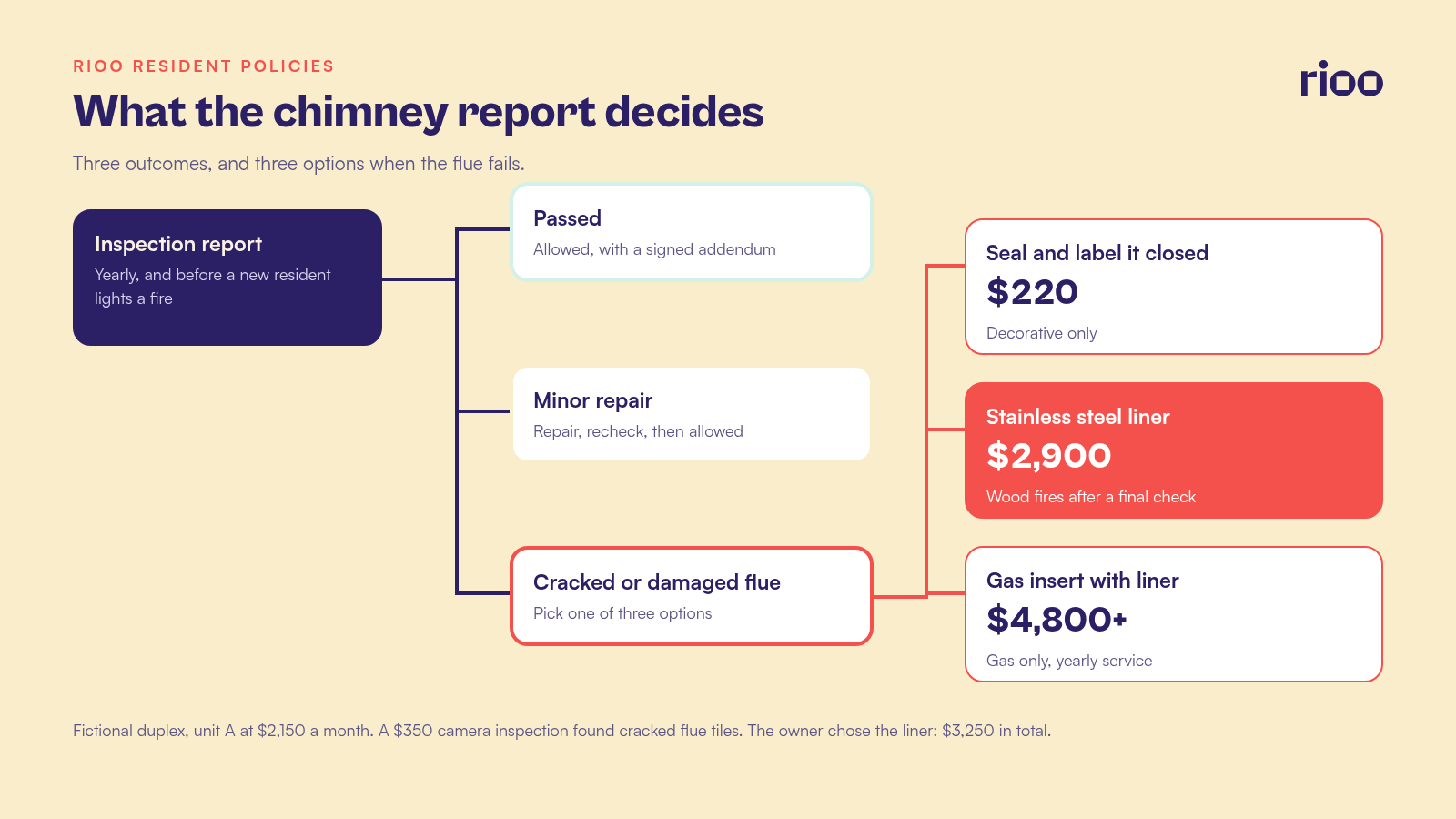
One duplex, one cracked flue: the numbers
Here is a made up example. A side by side duplex rents unit A for $2,150 a month. Unit A has a wood burning fireplace that the last resident never used. On 2 November, the new resident emails to ask whether she can light a fire for Thanksgiving.
The manager replies the same day: "Not yet. We are booking an inspection this week and will confirm in writing." A camera inspection on 5 November costs $350 and finds two cracked clay flue tiles. The inspector marks the fireplace unsafe for use.
The owner now has three quotes to choose from:
| Option | Cost | Result |
|---|---|---|
| Seal the fireplace and label it closed | $220 | Decorative only. Lease addendum updated. |
| Install a stainless steel liner | $2,900 | Wood fires allowed after a final inspection. |
| Fit a gas insert with its own liner | $4,800 plus a gas line | Gas only, on a switch. Annual service needed. |
The liner costs about 1.35 months of rent. The owner asks whether a working fireplace helps the rent. The manager looks at three comparable duplexes nearby. Two with working fireplaces are listed at $2,200 and $2,250. One without is listed at $2,100. That is a small gap, and not a reliable one. The owner picks the liner because the house is a long term hold and the chimney would need it eventually.
The liner goes in on 16 November. A follow up inspection signs it off. The manager sends the resident an updated addendum, the report and a note on approved fuel. She lights her first fire on 26 November. Total cost to the owner: $350 plus $2,900, or $3,250, all filed against unit A with the report attached.
Suppose the owner had picked the $220 closure instead. The resident would have needed a clear written answer that week, and the fireplace would have needed a proper label.
Gas fireplaces and inserts
Gas units are simpler for residents but still need care. The owner arranges an annual service by a qualified gas technician. The pilot, the glass front and the venting all get checked. Residents should know where the shutoff is, never cover the vents and never burn anything in a gas firebox. If a gas fireplace has a remote, the addendum should say who replaces the batteries, because that tiny question turns into a service request every winter.
Some homes have gas logs fitted into an old wood fireplace. Those still use the original chimney, so the chimney still needs inspecting.
What to put in the fireplace addendum
A short, specific addendum works better than a paragraph buried in a long lease. Have your attorney review the wording for your state. A good addendum covers:
- Whether the fireplace is open, limited or closed, in one sentence.
- Approved fuel, such as seasoned firewood or manufactured logs, and what is banned.
- Screen or glass doors closed while a fire burns, and the damper open until the coals are cold.
- Ashes go into the metal can with a lid, outside on a noncombustible surface.
- No changes to the fireplace, damper, flue or alarms.
- Report smoke in the room, odors, water in the firebox, animal noises or falling debris, in writing, the same day.
- Access for the yearly inspection with the notice your state requires.
If you add the fireplace rule partway through a tenancy, use a proper amendment and keep it with the lease. Our guide to the lease amendment vs addendum shows how to keep the records in step.
Where RIOO fits: chimney reports on the unit record
RIOO records inspections, service requests and work orders against the unit, on NetSuite. The chimney report, photos and the signed addendum can sit on the unit record, so the next manager sees the history. With RIOO inspections, the yearly chimney check can be scheduled ahead of the heating season, and repair costs post against the property for the owner statement.
Burn rules residents can actually follow
Residents are more likely to follow rules they understand. The EPA Burn Wise best practices page gives clear guidance you can repeat in your welcome note. Wood should be seasoned for at least six months, and it burns well when its moisture is under 20 percent. Never burn household trash, cardboard, painted or treated wood, or plywood. Ashes go into a covered metal container stored outdoors on a nonflammable surface.
Some areas also limit wood burning on poor air quality days. If yours does, add one line to the welcome note explaining where residents can check the day's status.
Space heaters raise similar questions in winter. If you are writing both rules at once, our space heater policy for rentals uses a matching format.
When a resident ignores the rule
Treat a breach of a closed fireplace rule as a safety issue first. If you see smoke from a sealed chimney, or soot on the label, contact the resident the same day and ask them to stop. Inspect within the notice period. Record what you found with photos. If the fire damaged the closure or the chimney, repair costs may be charged back under the lease. Soot from normal use of an allowed fireplace is ordinary wear. Our guide to normal wear and tear vs damage covers the line between the two.
Quick answers for owners and residents
Can a tenant use a fireplace if the lease says nothing?
Often, yes. If the lease is silent and the fireplace looks usable, residents tend to assume it is allowed. That is why the written answer matters so much.
Who pays for chimney cleaning in a rental?
Usually the owner pays for the annual inspection and any sweeping it calls for. Some single family leases shift routine sweeping to the resident. If yours does, say so clearly and set the standard of proof, such as a receipt from a chimney professional.
How often should a rental chimney be inspected?
Once a year is the common standard, and before a new resident uses it for the first time.
Can a landlord ban fireplace use?
Generally, yes, as long as the rule is in the lease or a signed addendum and the heating system meets local heat requirements without the fireplace.