Washington gives a landlord 24 hours to start work once a tenant reports no hot water in writing. California treats a home without hot and cold running water as untenantable. Other states use softer words, such as "promptly" or "within a reasonable time". A dead water heater is an urgent repair almost everywhere.
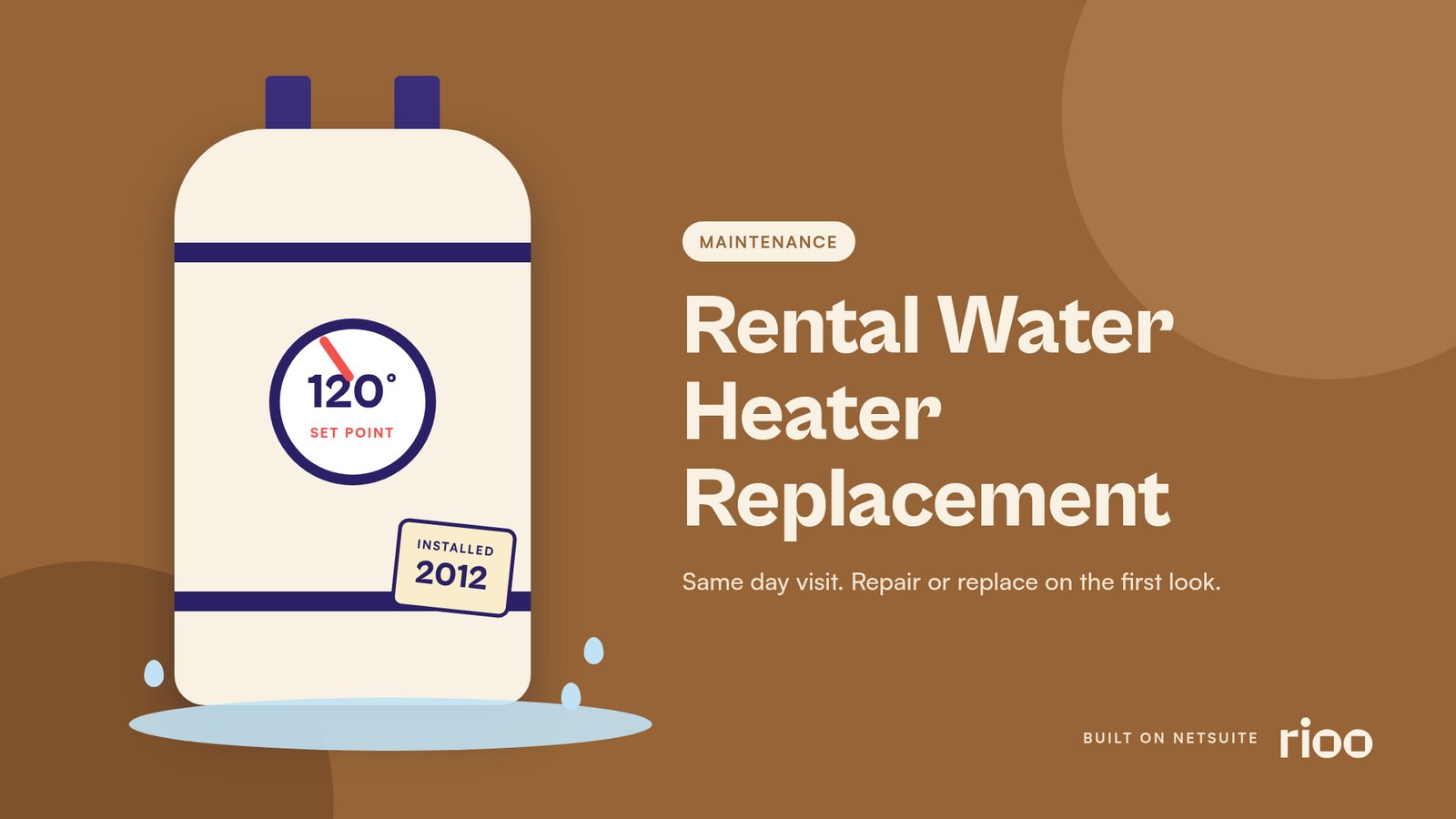
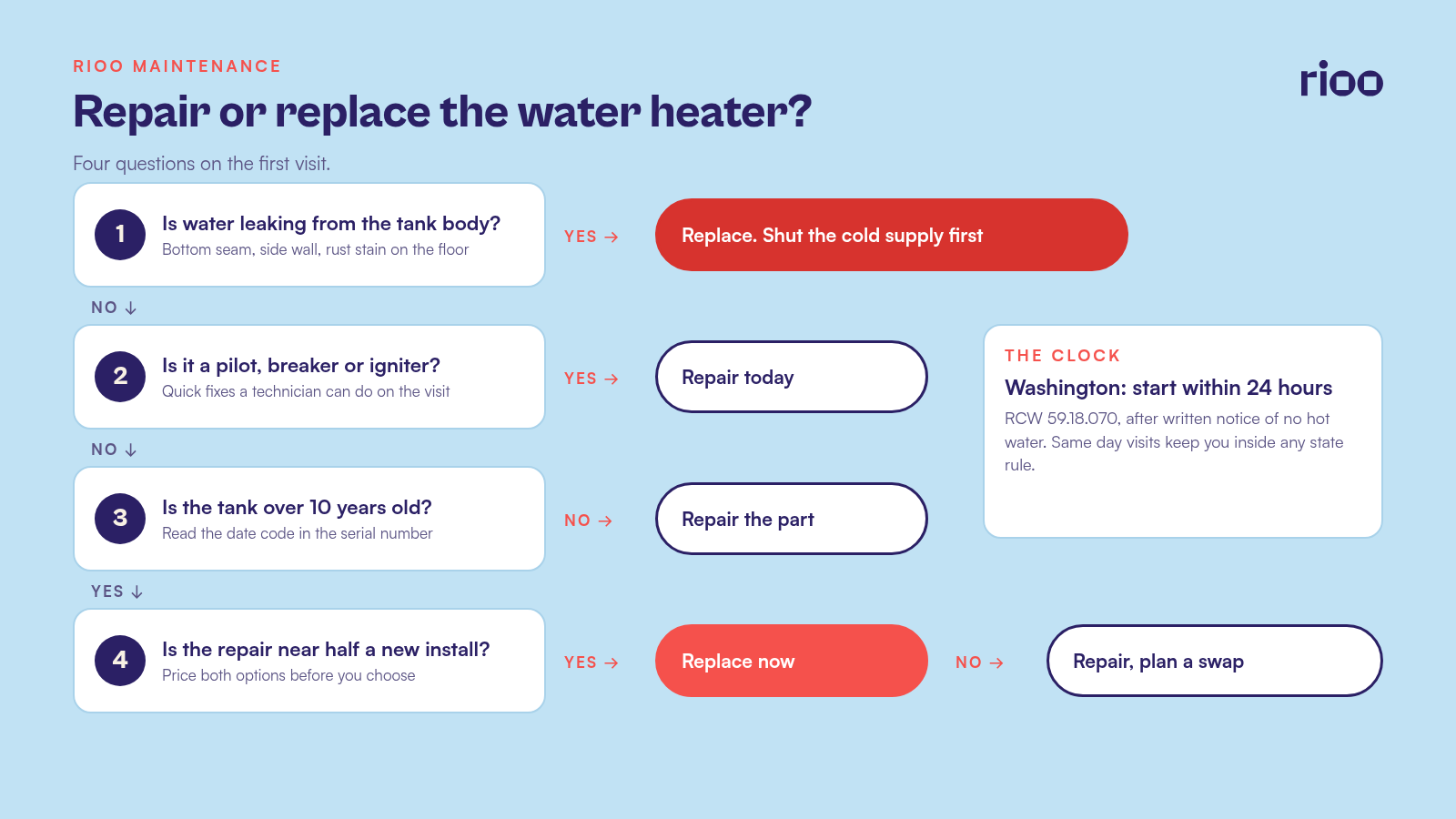
So the working rule for a rental water heater replacement is simple. Get someone on site the same day. Decide repair or replace on that first visit, using the tank's age and where it failed. Tell the resident when hot water will be back, and offer a fair fix if the wait runs past a day. The owner pays for normal failure. The resident pays only if they caused the damage.
How fast does a landlord have to restore hot water?
The deadline depends on the state, then on the city. Two clear examples, as of November 2026:
- Washington. Under RCW 59.18.070, the landlord must begin remedial action within 24 hours of written notice when a defect cuts off hot or cold water, heat or electricity. The work must then be finished promptly.
- California. Civil Code 1941.1 lists a water supply able to produce hot and cold running water among the basics a dwelling must have. Our California warranty of habitability guide covers the rest of that list.
Many cities add their own housing code timelines. Check both levels before you write a response standard. Then set an internal target that beats the strictest rule in your portfolio. Our Washington repair obligations guide walks through the full set of RCW deadlines.
What should happen in the first four hours?
A no hot water call comes in two kinds. One is a cold tap. The other is water on the floor. Triage on the phone tells you which.
- Ask about water first. Is the tank leaking? Is the pressure relief valve dripping or spraying? If yes, talk the resident through closing the cold supply valve on top of the tank, if it is safe to reach.
- Ask about gas or power. On a gas unit, a smell of gas means leave the unit and call the gas company. On an electric unit, ask the resident to check the breaker once.
- Open the work order and dispatch. Mark it urgent. Send a technician or plumber the same day. Log the time of the first report, because the legal clock starts there.
- Give the resident a time. "A plumber will be there between 11 and 1" is better than "soon". Send it in writing.
- Check the neighbours. In a building where tanks were installed together, ask the next units whether their water is still hot.
Leaks sit in the emergency tier of our emergency maintenance request guide. A cold tap with no leak is urgent, but it can usually wait for business hours if the call comes in late at night.
Repair or replace: how do you decide?
Look at two facts on the first visit: where the failure is and how old the tank is. The tank's age is coded in the serial number on the label. Each maker uses its own format, so look up the format before you guess. The Department of Energy puts a storage tank's life at roughly 10 to 15 years.
| What the technician finds | Usual answer |
|---|---|
| Pilot out, tripped breaker, failed igniter | Repair the same day |
| Failed thermostat, heating element or gas valve on a tank under 10 years old | Repair |
| Same part failure on a tank 10 years old or more | Price both. Replace if the repair is near half the cost of a new install |
| Water leaking from the tank body or bottom seam | Replace. A leaking tank cannot be patched |
| Rusty hot water and a worn out anode on an old tank | Plan a replacement within weeks |
The half rule is a habit, so adjust it to your owners. The same thinking appears in our piece on HVAC repair or replace decisions. The quote that looks cheap today can cost more over the next three years.
Who pays for a water heater replacement?
The lease and the cause decide it.
Normal failure
Tanks wear out. When a tank fails from age or ordinary use, the owner pays. This is the common case. A lease clause that pushes the cost of normal failure onto the resident may not hold up. Many states do not let a lease waive basic repair duties. Check your state before you rely on one.
Damage the resident caused
If the resident damaged the unit, for example by stacking boxes against a gas burner or tampering with the controls, the owner may be able to bill them. You need the technician's written finding and photos. Without them, treat it as normal failure.
Accounting for the cost
A new water heater is often a capital item rather than a repair expense. How you record it depends on the owner's accounting policy and tax advice. Ask the owner's accountant once, write down the answer, and apply it the same way every time.
What does a replacement look like on the calendar?
A fictional fourplex in Spokane, Washington shows the timing. Each unit has its own 40 gallon gas tank. All four were installed in 2012. Rent is $1,400 a month.
At 6:40 AM on Thursday 14 January 2027, the resident in unit 3 texts the maintenance line:
"No hot water this morning and there's a puddle under the heater closet."
The coordinator calls back at 7:05 AM and walks her through closing the cold supply valve. She sends a photo of the valve and the puddle. At 7:20 AM the work order is marked urgent and a plumber is booked for 9:00 AM.
| Time | What happens |
|---|---|
| Thu 6:40 AM | Report received by text. Clock starts. |
| Thu 9:15 AM | Plumber on site. Tank leaking from the bottom seam. Replace. |
| Thu 10:30 AM | Quote approved by the owner: $1,850 installed, with permit and haul away. |
| Thu 11:00 AM | Resident told: new tank Friday by noon, hot water by mid afternoon. |
| Fri 12:10 PM | New tank installed and inspected for leaks. |
| Fri 2:45 PM | Resident confirms hot water. Work order closed. |
Work started within three hours of the report, well inside Washington's 24 hour limit. Hot water was off for about 32 hours from the first report. The manager offered a $45 credit, roughly one day's rent, and the resident accepted. The credit was a goodwill choice. A written credit also closes the matter cleanly.
The useful decision came next. The other three tanks share the same 2012 install date. The manager asked the plumber to quote a planned replacement for all three in April, during business hours. The quote came back at $1,650 per tank. That is $200 less per tank than the emergency job, or $600 across the three, and nobody goes without a shower.
Should the new unit be tankless?
Sometimes. A gas tankless heater costs more to buy and install, and it may need a larger gas line and new venting. The Department of Energy expects it to last more than 20 years. That is longer than a standard tank. In a unit you plan to hold for a decade, the longer life can justify the cost. For an emergency swap, stick with a like for like tank and revisit the choice at the planned replacement.
Heat pump water heaters are another option where the space and climate suit them. They need room and air around them, so a tight closet may rule them out.
Questions owners and residents ask
How long can a landlord leave a tenant without hot water?
Not long. Washington requires work to start within 24 hours of written notice. Other states say promptly or within a reasonable time, and local codes may be stricter. Same day action is the safe standard.
Can a tenant replace the water heater and deduct the cost from rent?
Some states allow repair and deduct after proper notice, with limits on the amount. Others do not. Check your state's repair statute before you answer the resident.
What temperature should a rental water heater be set to?
The Department of Energy suggests 120 degrees Fahrenheit, which lowers the risk of scalding and saves energy. Note the setting on the work order at every visit.
Does the owner have to pay for a hotel while the water heater is out?
Usually not for a one day outage, unless the lease or local law says so. For a longer outage, check local rules and offer a credit or other fix in writing.
Where RIOO fits on a no hot water call
RIOO handles maintenance inside the same NetSuite system that holds the property's books. The resident can report the problem through the tenant portal or mobile app. The request becomes a work order with a time stamp, a priority and an assigned vendor. Photos and notes stay on the work order, and the vendor invoice flows into accounts payable against the same property. RIOO also tracks utility assets, so install dates and serial numbers for each tank can sit with the unit. That is how a manager spots the other three tanks from 2012 before they fail. See the RIOO work order management page for the workflow.