










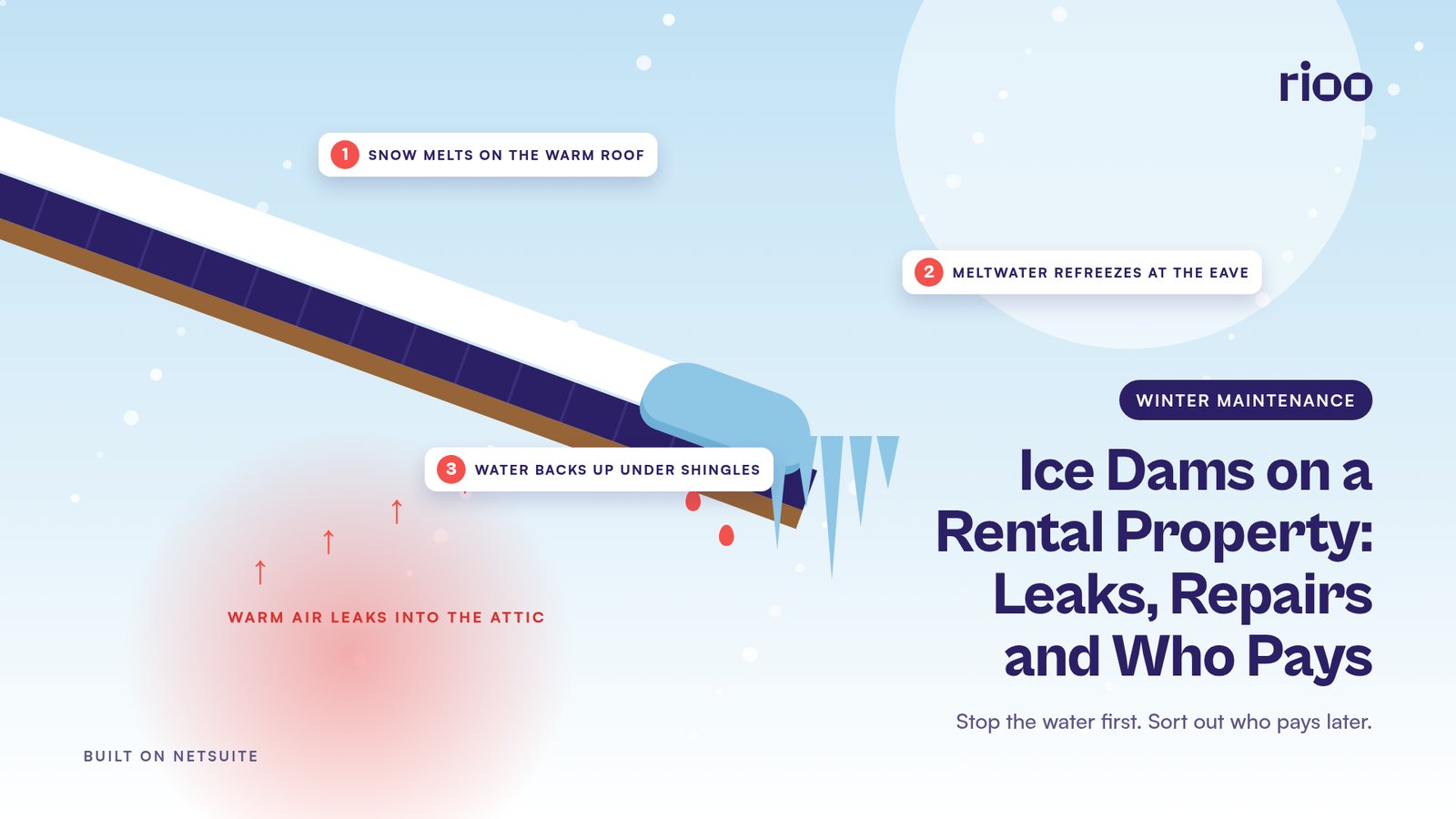
An ice dam is a ridge of ice along the eaves that stops melting snow from draining off the roof. The water pools behind it, works under the shingles and shows up as a stain on a top floor ceiling or a drip down an outside wall. On a rental, preventing and fixing ice dams usually falls to the owner, because the roof, attic, insulation and gutters are building systems.
The resident's part is to report water quickly and protect their own belongings. When a leak starts, stop the water, dry the building within two days and document everything. Settle insurance and cost questions after the unit is safe. This playbook runs in season order: before the snow, after each snowfall, during a leak and after the thaw.
Before snow: three jobs for the fall list
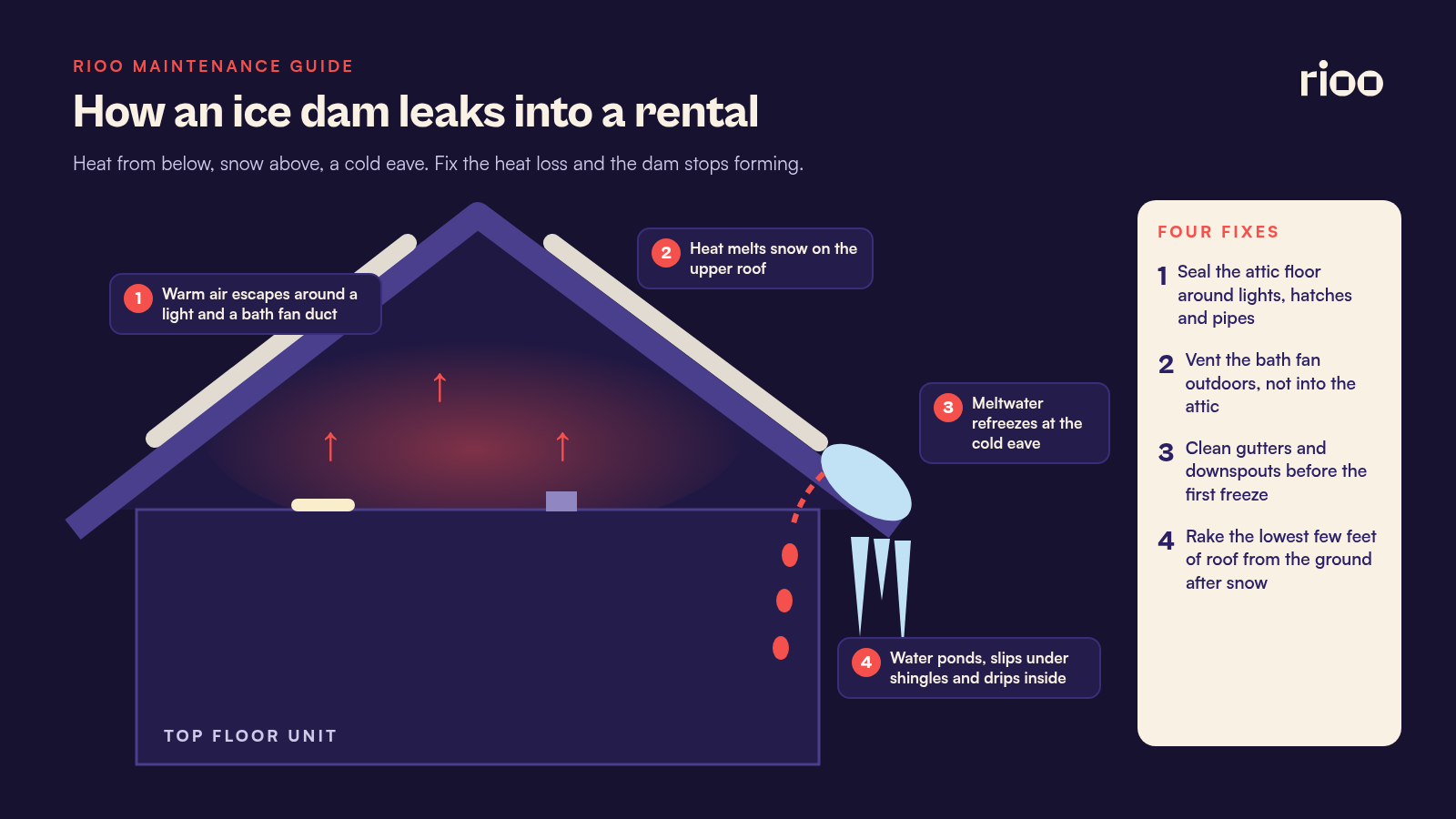
Ice dams start with heat. Warm air leaks from the top floor into the attic and melts snow on the upper roof. The meltwater runs down to the cold eaves and freezes there. Our winterization checklist by climate zone explains the attic side in detail. For a rental, three jobs cover the ground.
Seal and insulate the attic floor
Have a contractor or energy auditor check for warm air leaks into the attic. Typical culprits are gaps around recessed lights, attic hatches, plumbing stacks and bath fan ducts. A bath fan that vents into the attic instead of outdoors puts warm, wet air right where you don't want it.
Clean gutters and downspouts before the first freeze
Leaves frozen in a gutter give ice a head start. Schedule the cleaning for late fall and keep the invoice. Insurers and courts both ask whether the roof was maintained.
Walk the roof edge with your inspector
Look for past water stains on fascia boards, gaps in the roof edge flashing and soft spots near the eaves. Fold this into your regular cadence from our guide on how often to inspect a roof and building envelope.
After each snowfall: a ten minute walk
Ice dams build over days, not minutes. A short walk around the building one or two days after a snowfall catches them early. Look for these signs:
- Thick icicles along the eaves, especially over warm rooms such as kitchens and bathrooms.
- A ridge of ice along the roof edge with snow piled behind it.
- Bare patches high on the roof while the eaves stay white. That points to heat escaping into the attic.
- Ice filling the gutters, or water dripping behind the gutter instead of from it.
- Fresh stains on top floor ceilings near outside walls, or damp window frames.
Ask top floor residents to report any new stain or drip the same day. A two line message after each storm does more than a long winter newsletter.
When ice builds: removing it safely
Ice removal is roof work in winter, which makes it dangerous work. Keep staff off icy roofs unless they are trained and equipped for fall protection.
- Rake from the ground. A long handled roof rake pulls snow off the lowest few feet of the roof. Less snow means less meltwater feeding the dam.
- Use a roofing contractor for the ice itself. Contractors often use low pressure steam to cut channels through the dam without damaging shingles.
- Do not chip at it. Hammers, axes and shovels crack shingles and gutters, and the repair bill lands in spring.
- Cordon off the drop zone. Falling icicles and sliding snow can hurt people. Tape off walkways and entrances under the eaves until the edge is clear.
Heat cables along the eaves can help on a problem section. They need a safe power source and inspection each fall. Treat them as a patch while you fix the attic.
Your snow crew should know which walkways sit under the eaves. Our snow and ice clearing priority map for apartments shows how to fit those zones into the plan.
When water gets in: the first two days
Treat an active ice dam leak as urgent. Water near light fixtures and wiring is a safety problem, and wet drywall grows mold quickly.
First hour
- Ask the resident to stay away from wet light fixtures and outlets. If water is near electrical fittings, a technician should shut off that circuit at the panel.
- Catch the water with buckets and tarps. Move furniture and electronics out of the drip path.
- If the ceiling is sagging with water, keep people out from under it until a technician deals with it.
- Take dated photos of the ceiling, the walls, the eaves outside and any damaged belongings.
Same day
- Get a roofing contractor to open channels in the dam so the water drains off the roof.
- Check the attic above the leak for wet insulation and dripping sheathing.
- Check the units next door and below. Water travels along framing before it shows.
Within 48 hours
- Start drying. Federal guidance from the EPA says to dry wet building materials within 24 to 48 hours to prevent mold growth.
- Remove insulation and drywall that cannot dry in place. Take moisture readings and log them each day.
- Notify your insurer or broker if the damage may go above your deductible.
The same order applies to other winter water losses. Our guide to frozen pipes in a rental covers the plumbing side.
Who pays when an ice dam leaks
Lease terms and state law decide the details, so check yours with counsel. Under a typical residential lease, costs split like this.
| Cost | Usually paid by | Notes |
|---|---|---|
| Ice removal and roof repair | Owner | Part of keeping the building in repair |
| Ceiling, drywall, insulation and paint | Owner | Often through the property policy, subject to the deductible |
| Attic air sealing or venting fixes | Owner | The fix that stops next winter's dam |
| Resident's furniture and electronics | Resident, through renters insurance | The owner's policy does not usually cover tenant belongings |
| Temporary housing if the unit is unusable | Depends on the lease, local law and policy | Some property policies include loss of rents cover |
| Damage the resident caused | Resident | For example, climbing on the roof or ignoring a leak for weeks |
Many property policies cover sudden water damage from an ice dam. Policies may exclude wear and tear, gradual leaks or poor maintenance. The cleaning invoices and inspection notes from the fall become your evidence. Our guide to the property insurance claim process explains why records decide claims.
If part of the unit becomes unusable, the resident may be entitled to a rent reduction under your state's habitability rules. Agree any abatement in writing.
What to tell the resident
Send a short written message once the leak is under control. It should say what happened, what you did and what comes next. Here is a sample:
Hi Dana, thanks for reporting the leak in your bedroom this afternoon. Ice on the roof edge was trapping meltwater. Our roofer cleared channels at 5 p.m. and the drip has stopped. A drying crew will set fans in the bedroom tomorrow at 9 a.m. and check moisture each day. We will repair the ceiling once the readings are dry, likely next week. If you see new water, call our maintenance line right away. If any of your belongings were damaged, your renters insurance is the place to start a claim.
Give notice before each entry as your lease and local rules require. Keep the message and every reply on the unit record.
One leak, costed out
This example is fictional. Birch Lane is an 18 unit, three storey walkup. Nine inches of snow fall on Saturday 6 February 2027. Nobody rakes the roof edge. On Tuesday afternoon the resident in 3B messages the office about a brown stain spreading across the bedroom ceiling, close to the outside wall.
The technician is there within the hour. He shuts off the bedroom light circuit, catches the drip and photographs the ceiling and the eave. A roofer steams channels through the dam at 5 p.m. Here is what the next ten days cost.
| Item | When | Cost |
|---|---|---|
| Roofer steams channels through the dam | Tuesday evening | $650 |
| Fans and a dehumidifier, three days | Wednesday to Friday | $1,200 |
| Wet attic insulation over 3B replaced | Following week | $400 |
| Ceiling drywall and paint | Following week | $1,850 |
| Building damage total | $4,100 |
The policy deductible is $2,500, so a claim could recover up to $1,600. That is small enough that the owner talks it through with the broker before filing, because a claim can affect future premiums. The resident's damaged rug and laptop, about $900, go to the resident's renters insurer.
The attic check finds the cause. The bath fan over 3B vents into the attic. Rerouting it outdoors costs $380, the cheapest line on the job and the only one that stops next winter's leak.
The ice dam file in RIOO
A winter leak touches maintenance, accounts payable and sometimes an insurance claim. In RIOO, the resident's request becomes a work order on the unit, and each invoice flows to accounts payable against the same property. The fall gutter cleaning and attic checks can run as planned maintenance, so the evidence of upkeep sits on the building record before the snow arrives. See how scheduling works on our maintenance planning and scheduling page.
When the same eave leaks two winters running, the history shows it. That turns a repeat repair into a capital decision.
Ice dam questions
Can a tenant remove an ice dam themselves?
They should not. Roof work in ice is dangerous, and chipping damages the roof. Ask residents to report ice and leaks, and send a contractor.
Are icicles a landlord's responsibility?
Icicles over walkways and entrances are a hazard on property the owner controls. Knock down low ones from the ground and cordon off the zone below the rest.
Does insurance cover ice dam damage on a rental?
Many property policies cover sudden water damage from ice dams, subject to the deductible and exclusions. Check your policy wording and keep maintenance records.
Can I charge the tenant for gutter cleaning?
Only if the lease clearly assigns it and local law allows it. In multifamily buildings, gutters and roofs normally stay with the owner.
Do heat cables stop ice dams?
They can keep a channel open on a problem section. They do not fix the heat loss that causes the dam, and they need yearly checks.