"Why do you need to come in? Nothing is broken."
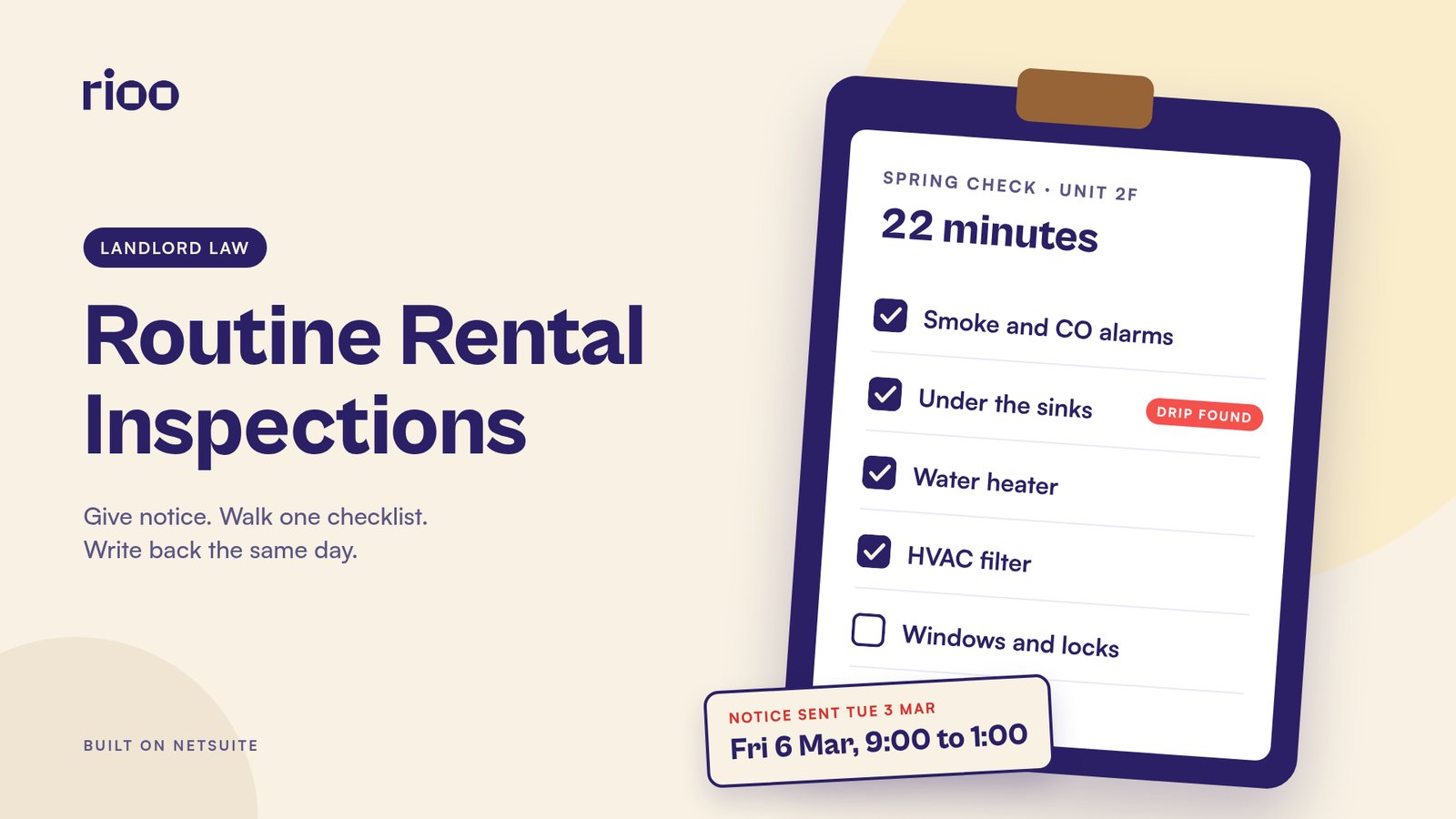
"It is the spring check. Smoke alarms, under the sinks, the water heater and the filter. About twenty minutes, and you are welcome to be there."
That exchange happens at front desks every week. A routine rental inspection is a scheduled visit during a tenancy to check the condition and safety of a unit. A landlord can usually inspect for a legitimate reason, at a reasonable time, after giving the notice that state law and the lease require. Many states set a minimum notice period, such as 24 hours in Minnesota or two days in Washington. Once or twice a year is a common rhythm. The visit should follow a fixed checklist, stay within its stated purpose and end with a written result for the resident.
This guide covers the notice rules in five states, a sensible frequency, a seven step process and what to do when a resident says no. Laws change and cities can add their own rules, so confirm current requirements with local counsel. The statutes below were checked in November 2026.
Entry notice rules in five states
Each state words its access rule differently. Some give a number of hours. Some say "reasonable notice" and leave the rest to the lease. The Florida, Virginia and Washington statutes also bar a landlord from abusing access or using it to harass a resident.
| State | Notice before entry | Time of day and other limits | Source |
|---|---|---|---|
| Florida | At least 24 hours for repairs. For inspections the tenant may not unreasonably withhold consent. | Repair entry between 7:30 a.m. and 8:00 p.m. | Fla. Stat. 83.53 |
| Minnesota | A good faith effort to give at least 24 hours, for a reasonable business purpose. | Between 8:00 a.m. and 8:00 p.m. The notice must give a time or window. | Minn. Stat. 504B.211 |
| Virginia | Notice of intent to enter at reasonable times. At least 72 hours for routine maintenance the tenant did not request. | That maintenance must happen within 14 days, and the notice must state the last possible date. | Code of Virginia, access section |
| Washington | At least two days' written notice. | The notice must state the date and time or a window, and a phone number for objections. | RCW 59.18.150 |
| Texas | No general entry notice section in the residential landlord chapter. | The lease sets the rule, so write a clear notice clause. | Your lease |
Where a state is silent, follow the lease. A good default for a routine inspection is written notice at least 48 hours ahead, a two to four hour window and daytime hours. That meets or beats every rule in the table above except Virginia's 72 hours for routine maintenance.
How often to inspect
Twice a year suits many multifamily buildings. One visit can fall in spring and one in autumn, lined up with smoke alarm tests and filter changes. Single family rentals with a yard, a garage and a furnace may justify the same rhythm, since problems there stay hidden longer.
Inspecting more often than quarterly starts to feel like monitoring, and a resident may argue it is unreasonable. Extra visits make sense in narrow cases. A new resident's first year, a reported leak or a unit with a past lease violation are examples. Write the frequency into the lease so nobody is surprised.
Inspections during the tenancy are different from the move in and move out walks. Those two set the baseline for the deposit. Our move in checklist guide covers that first record.
The inspection, step by step
1. Put the right to inspect in the lease
The lease should say that routine inspections happen, how often, how much notice you give and how notice is delivered. Name the purposes: safety devices, plumbing, HVAC, smoke and carbon monoxide alarms, and general condition. A clause the resident signed is your first answer to "why do you need to come in?"
2. Build the calendar building by building
Group units by building and floor so a technician can walk a whole stack in one morning. Pair the visit with work you already owe, such as filter changes. Our guide to changing air filters in a rental sets out a route those visits can share.
3. Send a notice that says what, when and who
Give the date, a time window, the purpose, the staff or vendor coming and a number to call with a question or a request to reschedule. Use the delivery method your lease allows. Keep a copy with the date and time it was sent. Our notice of entry guide has wording you can adapt.
4. Walk the unit with the same checklist every time
A fixed list keeps the visit short and fair. Check alarms, the water heater, under the sinks, around the toilet base, windows and locks, the electrical panel, the filter and visible signs of pests or moisture. Do not open drawers, closets or personal containers unless a specific item on the list sits inside.
5. Photograph conditions, not belongings
Take photos of the item you are checking. Keep personal papers, screens and family photos out of the frame. If a resident is present, say what you are photographing.
6. Turn every finding into an action
Repairs become work orders the same day. Resident caused damage gets a written note with the cost basis. A lease breach, such as an unauthorized pet, gets a letter. Our lease violation warning letter guide covers the wording.
7. Close the visit in writing
Leave a card in the unit saying the visit happened and what staff checked. Follow with a short message listing any repairs booked. A resident who hears back has less reason to object next time.
Spokane, unit 2F, from notice to closed file
This is a fictional example with rounded figures. A 48 unit building in Spokane, Washington runs spring inspections in March. Unit 2F rents for $1,380 a month.
| Date | What happened |
|---|---|
| Tuesday 3 March | Written notice delivered by portal and taped to the door. It gives Friday 6 March, 9:00 a.m. to 1:00 p.m., the purpose and the office number for objections. |
| Friday 6 March, 10:20 a.m. | Technician knocks, announces, enters. Resident is at work. Visit takes 22 minutes. |
| Same visit | Bedroom smoke alarm has a dead battery. Slow drip under the kitchen sink has stained the cabinet floor. Filter is grey. A cat bowl and litter tray are in the bathroom. |
| Friday afternoon | Battery replaced on the spot. Plumbing work order raised. Filter changed. Resident emailed a summary with two photos. |
| Monday 9 March | Plumber replaces a supply line for $185. A cabinet replacement later would have cost about $1,200. |
| Tuesday 10 March | Pet letter sent. The lease allows pets with a $300 deposit and $35 monthly pet rent. Resident signs the pet addendum by 20 March. |
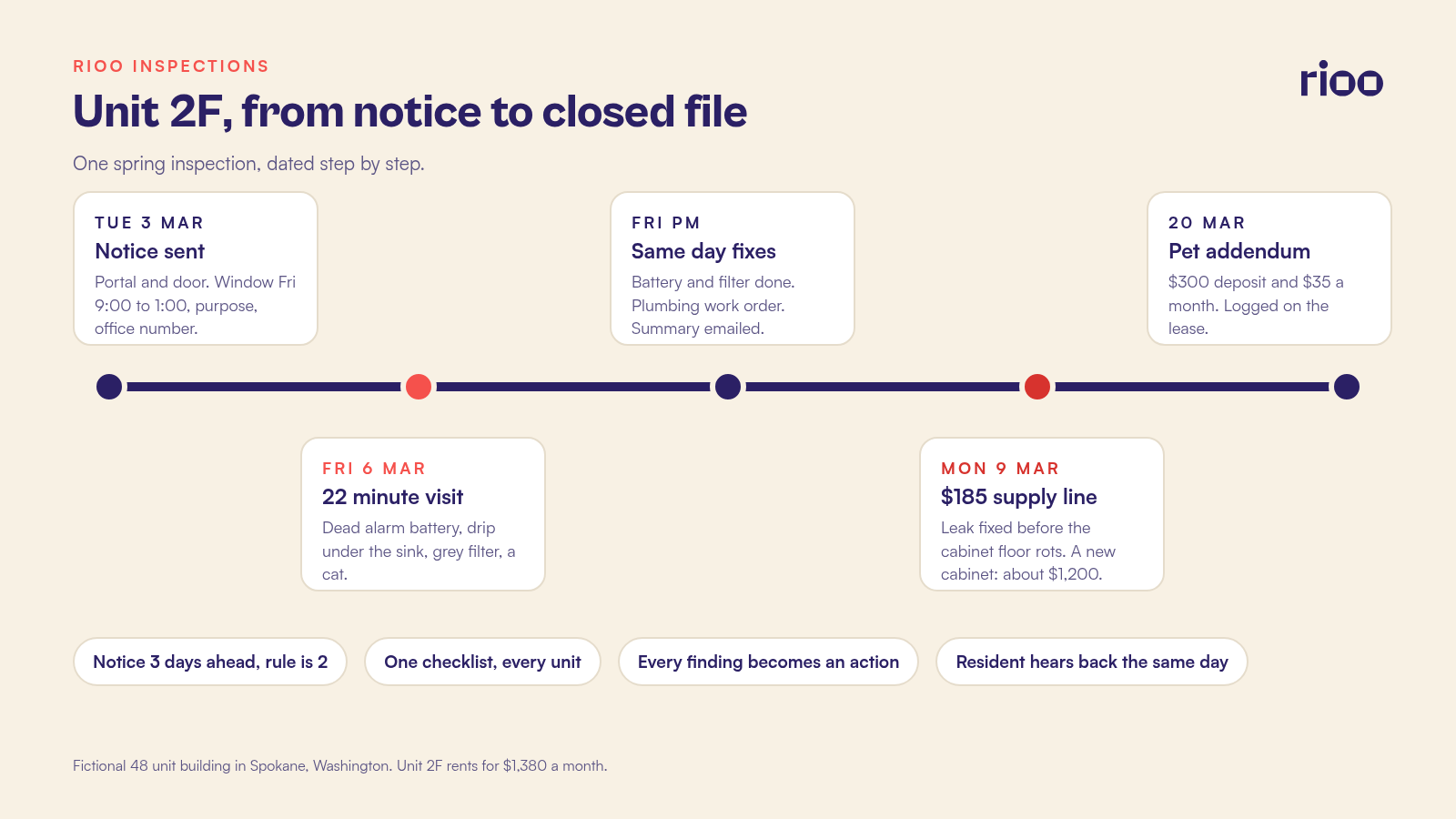
The notice went out three days ahead, so it beat Washington's two day minimum with a margin. Catching the drip early saved about $1,000 of cabinet work, which pays for a good share of the building's inspection day. The cat became an extra $35 a month and a deposit instead of a dispute at move out.
When a resident says no
Start with a conversation. Many refusals are about timing or worry about privacy. Offer a different window within the next week and let the resident be present.
If the resident still refuses, put the request and the refusal in writing. Florida, Virginia and Washington all say a tenant may not unreasonably withhold consent to an inspection. Repeated refusal of a properly noticed visit may become a lease violation in many places. That path runs through a warning letter and, if needed, the formal notice your state requires.
Do not enter over an objection unless the law allows it, as in a genuine emergency. Do not change locks or cut services to force access. If a resident is away for a long time, different rules may apply. Our guide to a tenant's extended absence covers entry in that case.
Running inspections from the unit record in RIOO
RIOO includes digital checklists for routine, seasonal and compliance visits, alongside move in and move out reports. Inspections can be scheduled from lease dates and completed on mobile with photos and notes. Each finding can become a work order, a chargeback or a deposit deduction on the same unit and lease record in NetSuite.
That keeps the condition history in one place. When a resident disputes a charge at move out, the spring and autumn reports sit next to the lease and the work orders. See property inspection software for the details.
Short answers on rental inspections
How often can a landlord inspect a rental?
Few states set a number. Once or twice a year is common and easy to defend. Visits beyond quarterly need a clear reason, such as a reported leak or a safety concern.
Can a landlord inspect when the tenant is not home?
Often yes, if proper notice was given and the visit is at a reasonable time. Some leases and local rules say otherwise, so check yours. Leave a card that records the visit.
Can a landlord take photos during an inspection?
Photos of the condition of the unit and its fixtures are standard. Avoid photographing personal belongings, documents or people. Store the photos with the inspection record, not on a personal phone.
What is a landlord not allowed to look at?
Personal papers, drawers, closets and containers that have nothing to do with the checklist. Stay with the items you named in the notice.
Can a resident refuse a routine inspection?
A resident can ask to reschedule. In several states a tenant may not unreasonably refuse a properly noticed visit. Persistent refusal may become a lease issue, handled in writing.