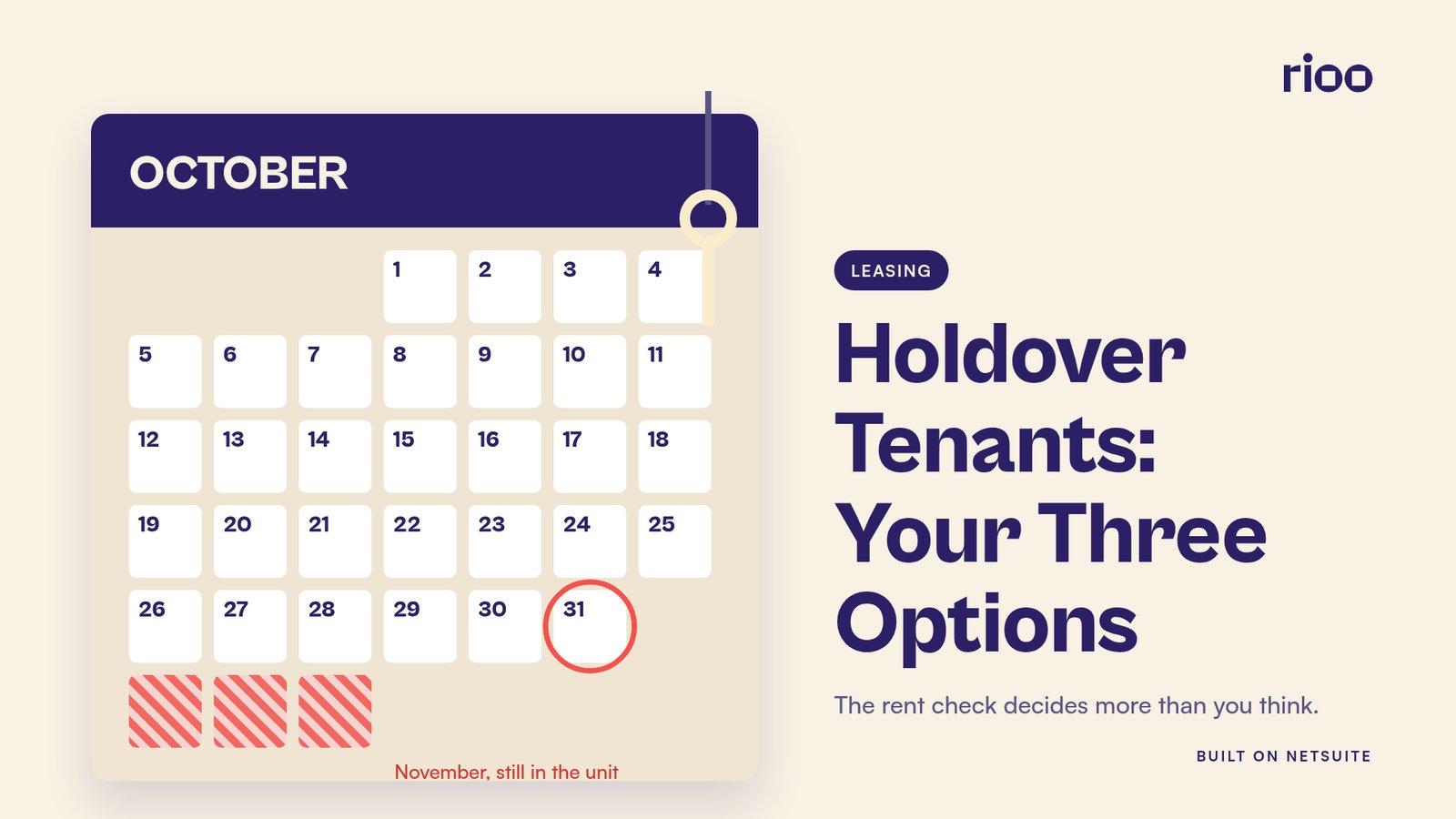
The lease ended on 31 October. It is now 5 November, the tenant is still in the suite, and a rent payment for November just arrived. Do you deposit it? That one decision shapes everything else in a holdover.
A holdover tenant is a tenant who stays in the property after the lease ends without signing a renewal or a new lease. The landlord has three paths. Agree to a new term. Let the tenant stay on a periodic basis, such as month to month. Or treat the tenant as staying without consent and give notice to leave. Taking rent can turn a holdover into a periodic tenancy in many states, so decide what you want before you cash anything. Commercial leases often charge holdover rent of 150 to 200 percent of the last rent. Residential holdover rules are set by state law and vary a lot, so confirm yours with counsel.
I work on leasing and lease economics at RIOO, and nearly every holdover I have worked through could have been caught 90 days earlier.
The rent check decides more than you think
In many states, if the landlord accepts rent after the lease ends, the law treats it as consent. The tenant then holds a periodic tenancy, often month to month, on the same terms as the old lease. To end it, you need the full notice for that tenancy type. Some states treat it differently, and some leases say what happens on holdover. Read the holdover clause first. Then read the notice section, because it tells you how any letter must be delivered.
If you want the tenant out, many landlords return the payment or accept it with a written reservation of rights. Whether a reservation works depends on your state. Ask your attorney before you deposit post term rent from a tenant you plan to remove.
Residential and commercial holdovers compared
| Residential | Commercial | |
|---|---|---|
| Rent during holdover | Usually the old rent, unless state law or the lease allows more | Set by the holdover clause, commonly 150% to 200% |
| Effect of accepting rent | Often creates a month to month tenancy | Often creates a month to month tenancy unless the lease says otherwise |
| Damages | Limited by state law; some states allow double rent for a willful holdover | Lease may make the tenant liable for losses, such as a delayed incoming tenant |
| Removal | Notice, then an eviction case. Never change the locks yourself | Notice, then a court process for possession |
Your three options
1. Sign a new term
If the tenant is good and you want them, put a renewal or extension in writing now. Even a three month extension is better than an unwritten month to month. The lease amendment guide shows how to write one cleanly.
2. Allow a periodic tenancy
This is the easy default, and it is fine for a stable residential tenant you plan to keep. Write a short letter confirming the month to month terms and the new rent, if the law allows a change. Then diary the notice period you would need to end it. Our guide to month to month termination notice by state has the periods.
3. Ask the tenant to leave
Send written notice that the lease has ended and you do not consent to the tenant staying. State the date you expect possession. If they do not leave, the next step is a court case. Some landlords also offer a short negotiated exit, which is often cheaper than a lawsuit. See how a cash for keys deal is priced.
A worked example: an office holdover that cost more than it paid
Here is a fictional case. A 6,000 square foot office suite leases at $30 per square foot per year, which is $15,000 a month. The lease ends on 31 October. The tenant's new building is late, so they stay until 15 January. The holdover clause sets rent at 150 percent, $22,500 a month.
A new tenant signed in August for the suite at $16,500 a month, starting 1 November. That start now slips. The old tenant leaves on 15 January, the suite needs two weeks of turnover work, and the new tenant moves in on 1 February. Because of the delay, the new tenant negotiates one month of free rent.
| Item | Amount |
|---|---|
| Holdover rent collected (2.5 months x $22,500) | $56,250 |
| New tenant rent lost, 1 November to 1 February (3 months x $16,500) | ($49,500) |
| Free month given to the new tenant for the delay | ($16,500) |
| Net shortfall to the landlord | ($9,750) |
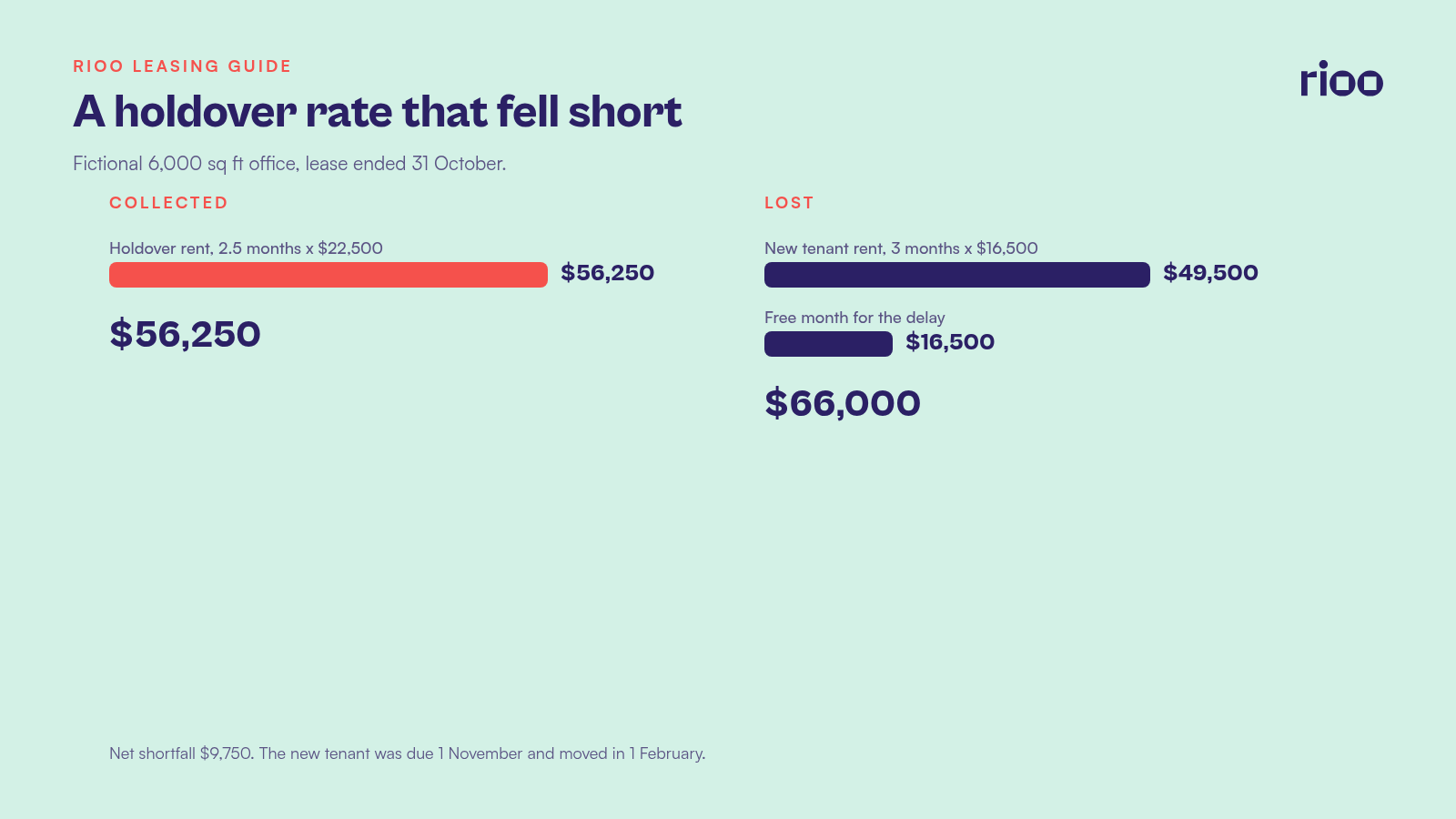
The 150 percent rate sounded strong. It still left the landlord $9,750 short, and that is before broker time, legal fees and the risk that the new tenant walks away. The fix sits in the lease. Add a clause making the tenant liable for losses if a holdover runs past 30 days. Add a firm date for written notice of whether the tenant will renew.
What a strong holdover clause covers
If you write commercial leases, the holdover clause is where you get your bargaining power back. Read yours against this list before your next renewal cycle.
- The rate. A percentage of the last month's total rent, including additional rent, not base rent alone.
- No consent. A line saying that accepting holdover rent does not create a new tenancy or extend the lease.
- Losses. Tenant liability for losses caused by the holdover, such as a delayed incoming tenant, often starting after a grace period of 30 or 60 days.
- Term. Whether the holdover is month to month or at will, and the notice either side must give.
- Surrender. What "vacated" means: keys returned, furniture removed, and the space in the condition the lease requires.
Residential leases usually have far less room here, because state law sets the rules. A residential lease can still state the holdover rent, if your state allows it, and say clearly that the tenancy ends on the lease end date.
What to send when you do not consent
If you want the space back, send a short letter the first business day after the lease ends. Keep the tone plain.
- The lease end date and that the lease has ended.
- That you do not consent to the tenant staying.
- The date by which you expect keys and possession.
- The holdover rate that applies under the lease, if any.
- That any payment you receive is accepted subject to your rights, if your attorney approves this wording.
Send it the way the lease notice section requires. A letter sent to the wrong address can cost you weeks. For the residential version, see our guide to the written notice to move out.
Stopping holdovers before they start
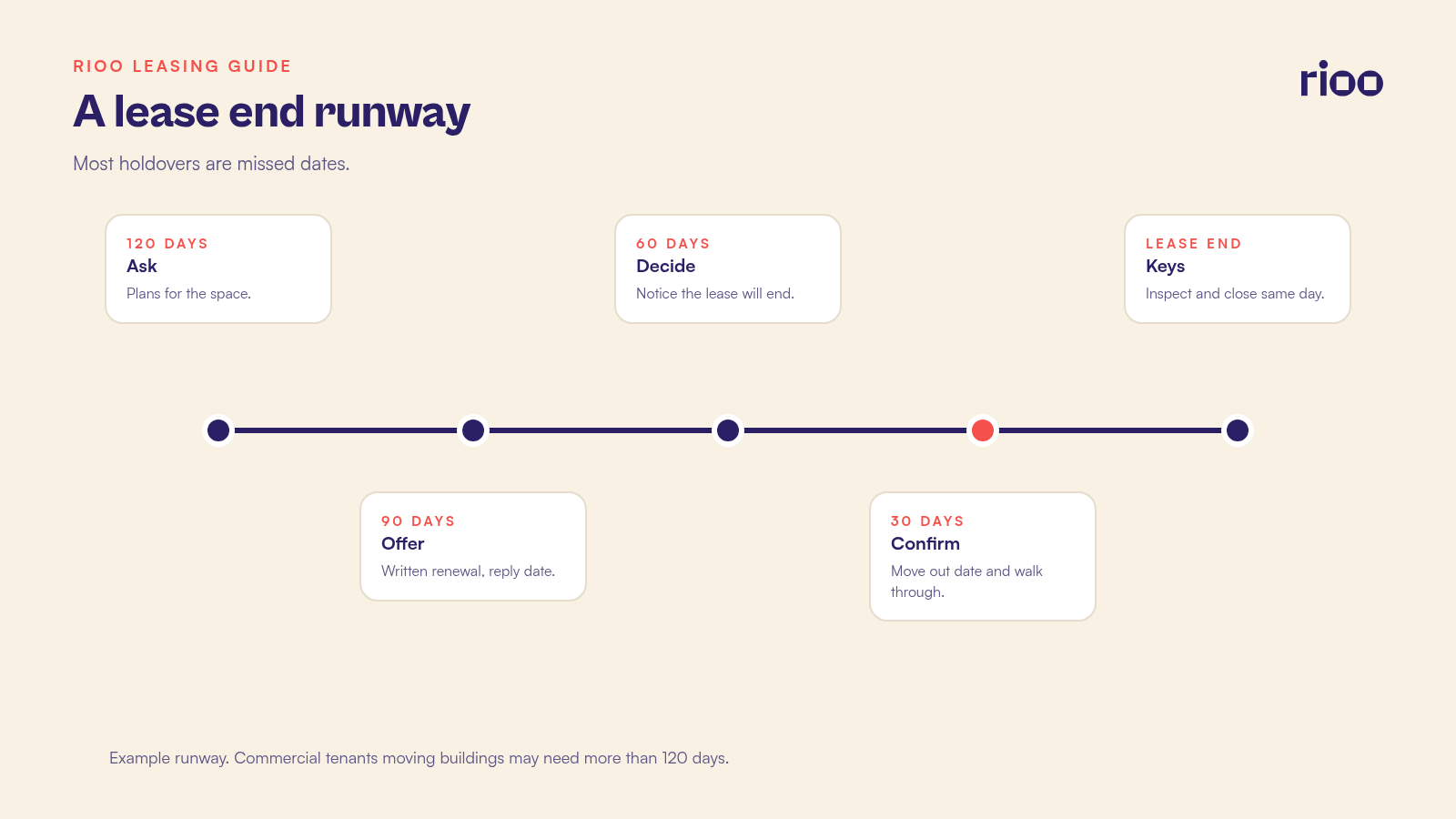
- 120 days out: ask the tenant about their plans. Commercial tenants moving buildings need this long.
- 90 days out: send a written renewal offer with a reply date.
- 60 days out: if no answer, send a written notice that the lease will end and the expected move out date.
- 30 days out: confirm the move out date, walk through time and key return.
- Lease end: inspect, collect keys and close the unit in your system the same day.
The runway depends on knowing your dates. If expirations live in a spreadsheet, start with how to track critical lease dates.
Where RIOO fits
Holdovers start as missed dates. For the short definition, see the holdover tenant glossary entry. In RIOO, lease end dates, renewal notice dates and holdover terms sit on the lease record, and reminders go out on the runway you set. If a tenant holds over, the rent schedule can be updated to the holdover rate on the lease record. The charges post to the tenant ledger in NetSuite, so nobody bills the premium by hand. See how leasing management works in RIOO.
Holdover questions
Is a holdover tenant trespassing?
Not at first, in many states. The tenant came in lawfully, so the law usually treats them as a tenant at sufferance or a periodic tenant. You still need the legal process to remove them.
What if the tenant leaves but leaves belongings behind?
Treat it as abandoned property under your state's rules, which often require written notice and a storage period before disposal. Do not throw things out the day after the lease ends. Photograph everything and keep a list.
Should a holdover tenant still pay utilities and CAM?
Yes, if the lease says additional rent continues during a holdover, which a well drafted clause does. Bill it the same way you did during the term so there is no gap in the record.
Can I charge double rent to a holdover tenant?
Some states allow double rent for a willful holdover after notice. Commercial leases commonly set 150 to 200 percent. Check your state statute and lease before you bill it.
Can I change the locks on a holdover tenant?
No. Self help removal is illegal for residential tenants in nearly every state and risky for commercial ones. Use the court process.
How long can a tenant hold over?
Until the tenancy is ended by notice or a court order, or until both sides sign a new lease. There is no automatic cutoff.
Does a holdover tenant keep the old lease terms?
Usually the same terms carry over to the periodic tenancy, except the length. The holdover clause in the lease can change the rent.